By Fiona Gallagher · permaculture designer · food, animals and preservation on 12 acres in Tassie
“My first batch of 40 jars of tomato sauce burst in the pressure canner when I forgot to account for the 1200m altitude on my Tasmanian farm.”
By Fiona Gallagher · permaculture designer · food, animals and preservation on 12 acres in Tassie
“My first batch of 40 jars of tomato sauce burst in the pressure canner when I forgot to account for the 1200m altitude on my Tasmanian farm.”
No fluff. Just what you need to can food properly when the grid’s down. Botulism kills. Don’t be that bloke.
Home canning in Australia comes down to two things: matching equipment to the method, and matching the method to the food's acidity. The facts below are the working kit, the working method, and the working warnings — nothing else matters as much.
Before any equipment list, you need the method that matches your food.
If the food sits low on the acid scale, the gear list shifts from a $60 kettle setup to a proper weighted-gauge pressure canner, gauge tester, and a different jar system. Choose the wrong method and you choose the wrong equipment — and the wrong outcome.
A basic water bath kit pulls together from kitchen and laundry supplies. Basic water bath canning equipment includes a large pot, jar rack, mason jars, headspace measuring tool, canning rings, ladle, chopsticks or wooden skewers, jar lifters, funnel, and jar lids.
| Item | Spec / Requirement | Notes |
|---|---|---|
| Large pot | Must be deep enough for jars covered by 2–3 cm of water with headroom for a rolling boil | Granite Ware canning pots are inexpensive and widely available but rust easily and have an uneven bottom not suited for glass or ceramic cooktops. |
| Jar rack | Fits inside the pot, keeps jars off the base | A jar rack is needed to keep glass mason jars off the bottom of the pot and allow hot water to circulate around the jars. |
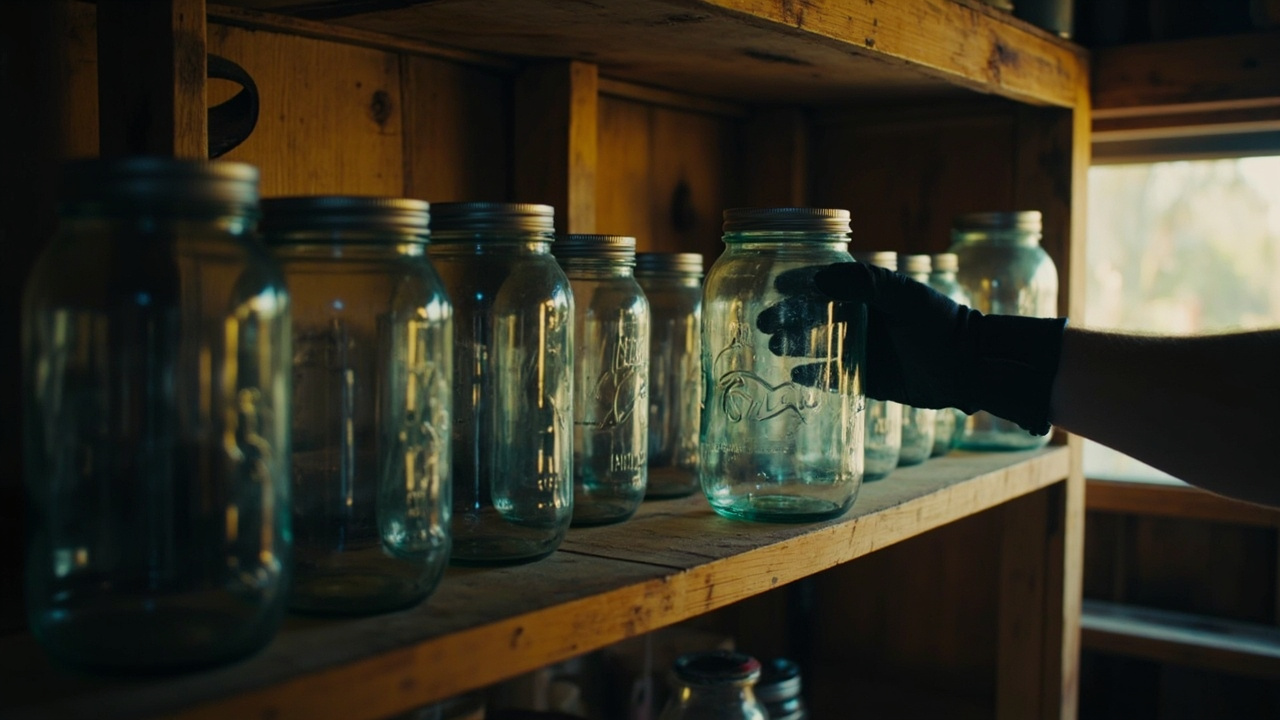
| Jars | Clear glass only | Mason jars used for canning should be clear glass, not colored, as colored jars are meant for other uses. The most commonly used mason jar sizes for canning are half-pint, pint, and quart, available in regular or wide mouth. |
| Lids | New, single-use, flat sealing discs | Canning lids should not be reused; new lids should be used each time to ensure a proper seal and reduce botulism risk. |
| Rings / bands | Reusable screw bands | Hold the lid in place during processing; remove once jars have cooled. |
| Headspace tool | Bubble remover / measuring stick | Maintains correct headspace per recipe. |
| Jar lifter | Rubber-grip tongs for hot jars | Minimises hand burns. |
| Funnel | Wide-mouth stainless or food-grade plastic | Keeps jar rims clean. |
| Skewer or chopstick | Wooden or food-grade plastic | Removes trapped air bubbles before sealing. |
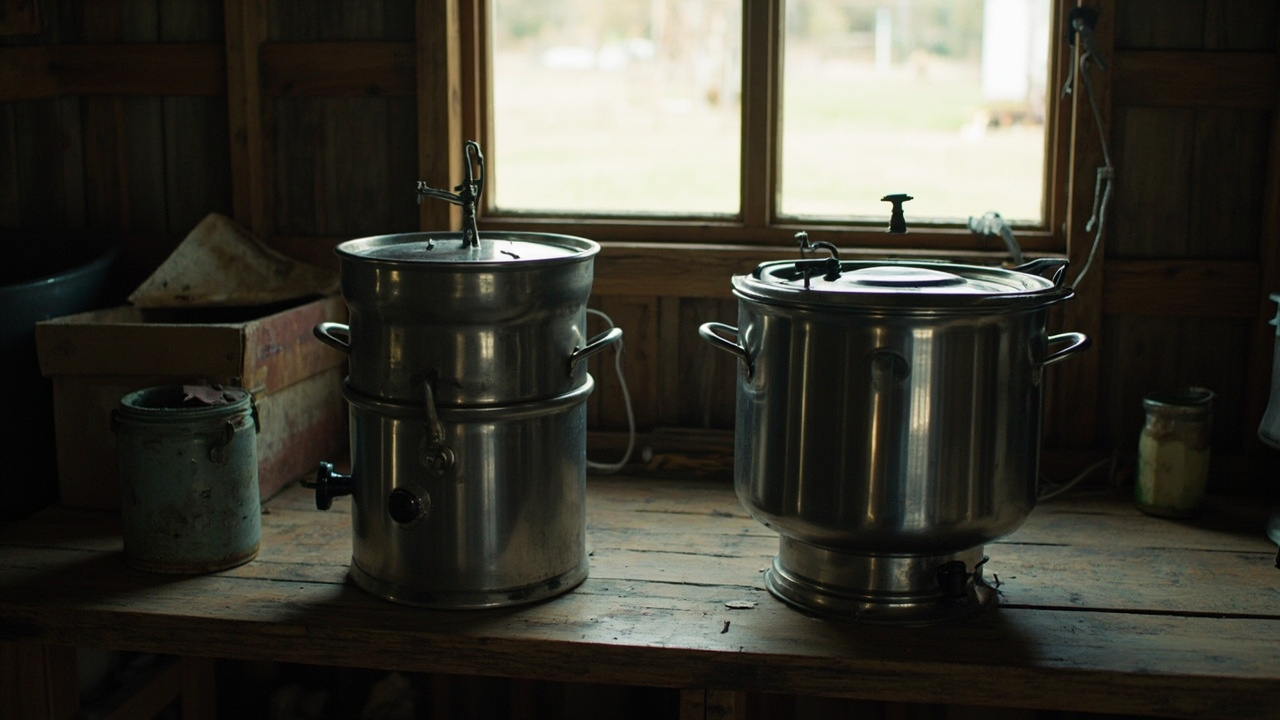
For vegetables, meat, and soups, the water bath is not enough — you need a pressure canner that holds a steady 15 PSI and reaches the temperatures required to kill Clostridium botulinum spores.
| Item | Spec / Requirement | Notes |
|---|---|---|
| Pressure canner | Weighted-gauge or dial-gauge, holds 15 PSI minimum; large enough for jar rack with clearance for lid lock | Avoid cheap or unverified pressure canners from non-reputable sources; stick to recognised brands such as Presto or T-Fal. |
| Jar rack | Designed for the specific canner model | Same function as water bath — keeps jars off the base for even heat circulation. |
| Jars | Mason or Fowlers Vacola depending on system (see below) | Inspect every jar — chips and cracks cause seal failure and breakage under pressure. |
| Canning lids | New each run | Canning lids should not be reused; new lids should be used each time to ensure a proper seal and reduce botulism risk. |
| Pressure canner gauge tester | Provided by retailers such as Bunnings | Pressure canner gauges should be tested annually, with testers available from retailers such as Bunnings. An inaccurate gauge makes pressure canning unsafe. |
In Australia, two jar systems dominate shelves, and they are not interchangeable.
Threaded neck, two-piece closure (flat lid + screw band). Standard in North America, available from specialty retailers and online suppliers in Australia. Sizes: half-pint, pint, quart, regular or wide mouth. Lids are single-use; bands are reusable.
Fowlers Vacola has been the main home canning supplier in Australia since 1915, founded by Joseph Fowler. Their system differs structurally. Fowlers Vacola jars have smooth necks (not threaded like Mason jars) and use a three-piece closure: a single-use rubber sealing ring, a reusable metal lid, and a metal preserving clip.
| Feature | Fowlers Vacola | Mason (Ball / Kerr) |
|---|---|---|
| Neck | Smooth | Threaded |
| Closure | Rubber ring + lid + clip | Flat lid + screw band |
| Rubber ring | Single-use | N/A (flat lid is single-use) |
| Clip | Reusable; Fowlers preserving clips are removed 12–18 hours after processing once a vacuum seal is confirmed. | N/A |
| Lid | Reusable metal lid | Single-use lid |
| Availability | Australian heritage supplier; widespread retail | Specialty / online in Australia |
Fowlers Vacola has recently updated its recommendations to align more closely with USDA guidelines, including water bath canning for high-acid items only, pressure canning for low-acid items, and acidification of tomato products. This brings the system in line with what modern food-safety research considers safe.
Fowlers Vacola states rubber rings should only be used once because reuse hinders or prevents sealing.
The single most failure-prone component in low-acid canning is the dial or weight that tells you the pot is at 15 PSI. Pressure canner gauges should be tested annually, with testers available from retailers such as Bunnings. A gauge that reads 12 PSI when the pot is actually at 15 is giving you 116 °C instead of the target — and C. botulinum doesn't care about your optimism. Replace or repair inaccurate gauges before each season's run.
Food safety for canning is unforgiving because the hazard (botulism) is invisible. Follow the rules below without improvisation.
Most canning is a straightforward home task — but a few situations call for outside help:
Mason jars and lids: stocked by specialty preservers, some hardware chains, and online importers. Pricing fluctuates with AUD/USD movement and shipping. Fowlers Vacola jars, rings, lids, clips, and replacement parts remain widely available through Australian retailers and the Fowlers Vacola direct channel. Pressure canners from Presto and T-Fal are imported and occasionally out of stock — plan ahead.
Australia and New Zealand have joint official food safety guidelines for commercial operations but have not invested in research for home preservers comparable to the United States. The practical consequence: most Australian home-canners follow USDA guidelines or the Fowlers Vacola updated recommendations, because no government-issued Australian home-canning manual exists.
Can I water-bath can green beans, carrots, or corn?
No. These are low-acid (pH above 4.6) and require pressure canning at 116 °C / 15 PSI. Water bath processing leaves botulism spores viable.
Can I reuse my canning lids?
No. Canning lids should not be reused; new lids should be used each time to ensure a proper seal and reduce botulism risk. With Fowlers Vacola, the rubber ring is single-use; the metal lid and clip are reusable.
Are coloured mason jars safe for canning?
Mason jars used for canning should be clear glass, not colored, as colored jars are meant for other uses. Stick to clear.
Do I need to test my pressure canner gauge?
Yes — annually. Pressure canner gauges should be tested annually, with testers available from retailers such as Bunnings. An inaccurate gauge makes pressure canning unsafe.
Why are Fowlers Vacola clips removed so soon after processing?
Fowlers preserving clips are removed 12–18 hours after processing once a vacuum seal is confirmed. The vacuum holds the lid down; the clip is only there during cooling.
Is Australia behind the US on canning safety guidance?
Australia and New Zealand have joint official food safety guidelines for commercial operations but have not invested in research for home preservers comparable to the United States. Use USDA-based guidance or the current Fowlers Vacola recommendations.
Worth a watch: Canning Equipment in Australia - how to source equipment, even during the canning gear shortages · Bush Edge Homesteading Australia