Guide · Solar
Complete Solar Panel Guide 2026
Everything you need to know about designing, sizing, and installing a solar power system for off-grid living.
Why Solar?
Solar energy is the most popular choice for off-grid living due to its reliability, scalability, and decreasing costs. With a properly sized system, you can power everything from lights to heavy appliances.
Pros
- Silent operation
- Low maintenance
- Long lifespan (25+ years)
- Modular and scalable
Cons
- Dependent on weather
- High upfront cost
- Requires battery storage for night
- Space requirements
System Components
Solar Panels
Capture sunlight and convert it into DC electricity. Monocrystalline panels are most efficient but more expensive, while polycrystalline are cheaper but require more space.
Charge Controller
Regulates the voltage and current coming from the solar panels going to the battery. MPPT controllers are recommended for maximum efficiency.
Battery Bank
Stores energy for use when the sun isn't shining. LiFePO4 (Lithium Iron Phosphate) is the current gold standard for off-grid systems due to longevity and depth of discharge.
Compare Solar Options (At a Glance)
These are the trade-offs that matter when you want the differences to be instantly visible.
Panel types comparison
| Type | Typical efficiency | Shade tolerance | Heat tolerance | Best for | Notes |
|---|---|---|---|---|---|
| Monocrystalline (rigid) | 19–23% | Good | Good | Most rooftops + ground mounts | Highest efficiency per m². |
| Polycrystalline (rigid) | 15–18% | OK | OK | Budget builds with space | Cheaper; needs more area for same watts. |
| Thin-film (rigid) | 10–13% | Better | Better | Hot sites + diffuse light | Lower efficiency; sometimes better in heat. |
| Flexible (ETFE) | 10–18% | OK | OK | Vans, boats, curved surfaces | Lightweight; shorter lifespan vs rigid. |
| Active-cooled panels (fan/duct) | Depends | Depends | Best | Niche: extreme heat + constrained area | More complexity; helps when heat derates output. |
Typical efficiency by panel family
Sizing Your System
To size your system correctly, you need to know your daily energy consumption in watt-hours (Wh).
Want the full DIY install playbook?
Deep dive on system voltage, PV strings, MPPT sizing, battery options (including upcycled EV modules), and the protection/wiring that stops gear from cooking itself.
Read DIY Solar InstallsVideos worth watching
Offgrid Solar Beginner Crash Course
Complete Off-Grid Solar Install (Playlist)
Build Your First Solar Power System (12V basics)
Off-Grid Solar 1 Year | Regrets & Walk-through
Recommended Solar Gear
We've curated the best-in-class equipment to get your system running reliably.

Anker SOLIX PS100 Solar Panel (100W)
100W foldable portable solar panel with adjustable kickstand.
EF ECOFLOW 400W Portable Solar Panel
400W foldable portable solar panel with adjustable kickstand case.
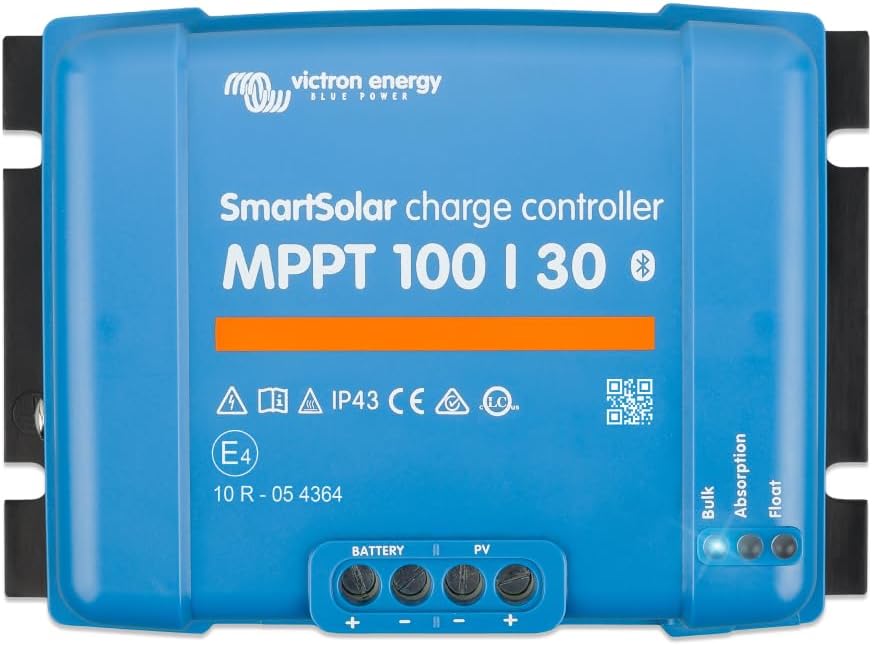
Victron Energy SmartSolar MPPT 100V 30A (Bluetooth)
MPPT solar charge controller with Bluetooth for monitoring and configuration.

Victron Energy SmartShunt 500A (Bluetooth)
Bluetooth battery shunt monitor for accurate state-of-charge tracking.

Renogy 48V 50Ah LiFePO4 Battery (Self-Heating)
48V LiFePO4 battery with integrated BMS and self-heating feature.

Inverter DC 48V to AC 240V Pure Sine Wave 1500W
48V to 240V pure sine inverter for off-grid loads and appliances.
Installation Steps
- Site Assessment: Determine the best location with maximum sun exposure (face North in the Southern Hemisphere; face South in the Northern Hemisphere).
- Mounting: Install racking system on roof or ground mount.
- Wiring: Connect panels in series/parallel configuration based on voltage needs.
- Connection: Connect to charge controller, then battery bank, then inverter.
- Safety: Install proper fusing and breakers at each connection point.