Silage is wilted green forage chopped, packed, and sealed to ferment without oxygen. If the stack is too wet it turns slimy and unpalatable; if it is too dry or loose, mould takes hold before the pH drops. In much of Australia the window between adequate wilting and over-drying is short, so cut, rake, chop, compact, and cover without losing a day. Once sealed, keep checking the plastic and keep the feedout face clean and tight.
“After losing three tonnes of silage to a rotting core, I learned that 25-centimetre compaction isn't a suggestion, it's the only line between feed and fuel.”
Up on our granite ridge near Glen Innes, I’ve seen late frosts kill autumn pasture by Anzac Day and the grass not stir again until October. That’s five months of zero growth, sometimes six when the spring warm-up drags. Stored silage bridges that gap. A properly fermented pit of oaten silage, packed at 65–70% moisture and sealed under a double layer of 750-micron Silotite wrap, holds metabolisable energy steady at around 10.5 megajoules per kilogram of dry matter. Oxygen leaks invite clostridial fermentation, and the resulting butyric-acid stench means stock walk away from the feed face.
Feed Management For Winter Survival
A starved cow drops condition in days, not weeks, and a hand-fed mob on cereal hay alone will strip the last fat off their ribs by July. Get it wrong and your stock starves in winter. Get it right and you’ve got feed for 6 months.
Fermentation & moisture
The smell of well‑made silage is sweet‑sour, like a haystack someone dunked in pickle juice – it has to be that way. On our place at the foot of the Stirling Ranges in Western Australia, we start cutting oats when the seed is at the soft‑dough stage, which puts us somewhere around mid‑October most years.
Mowing Raking And Bagging Silage
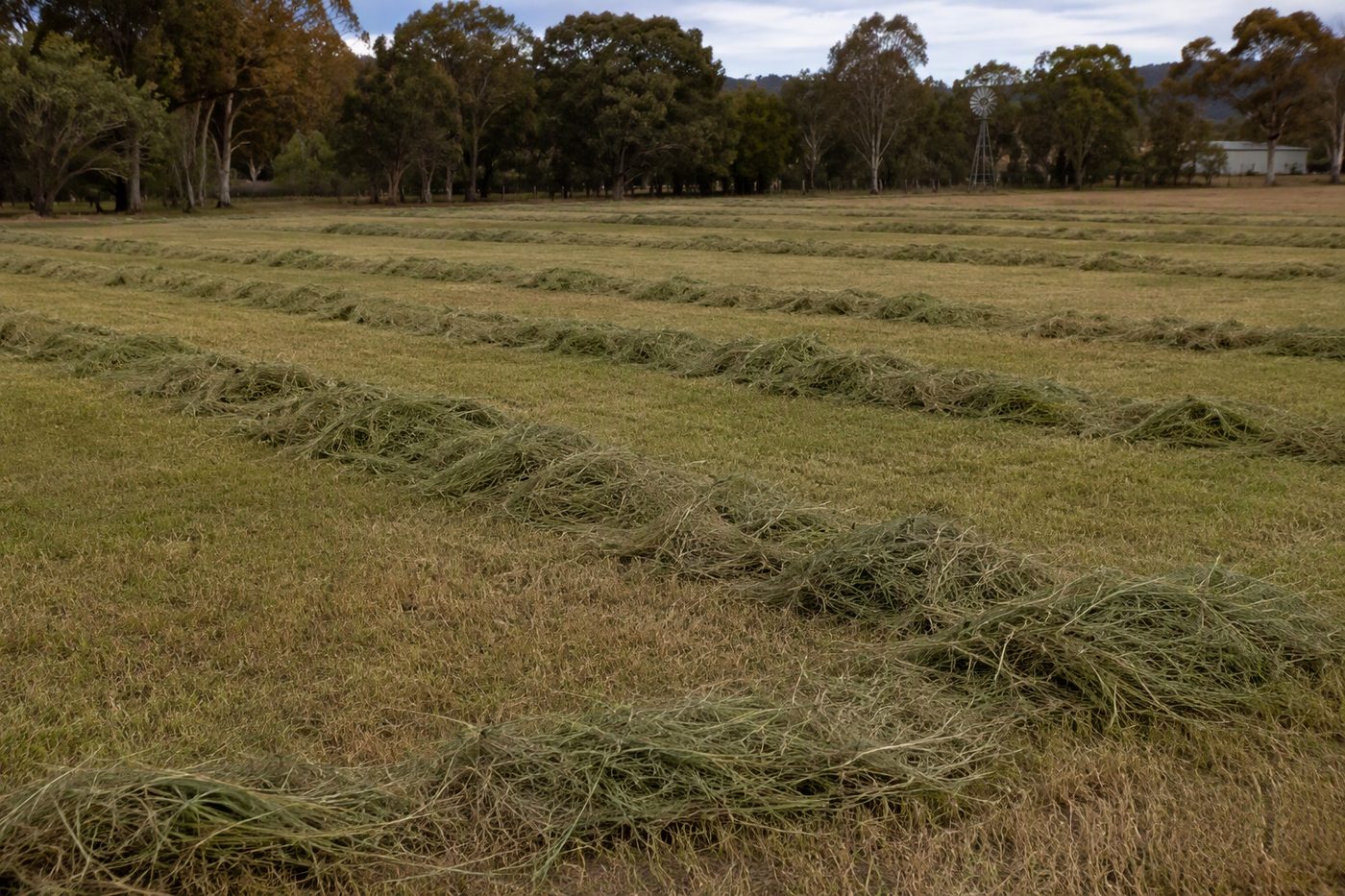
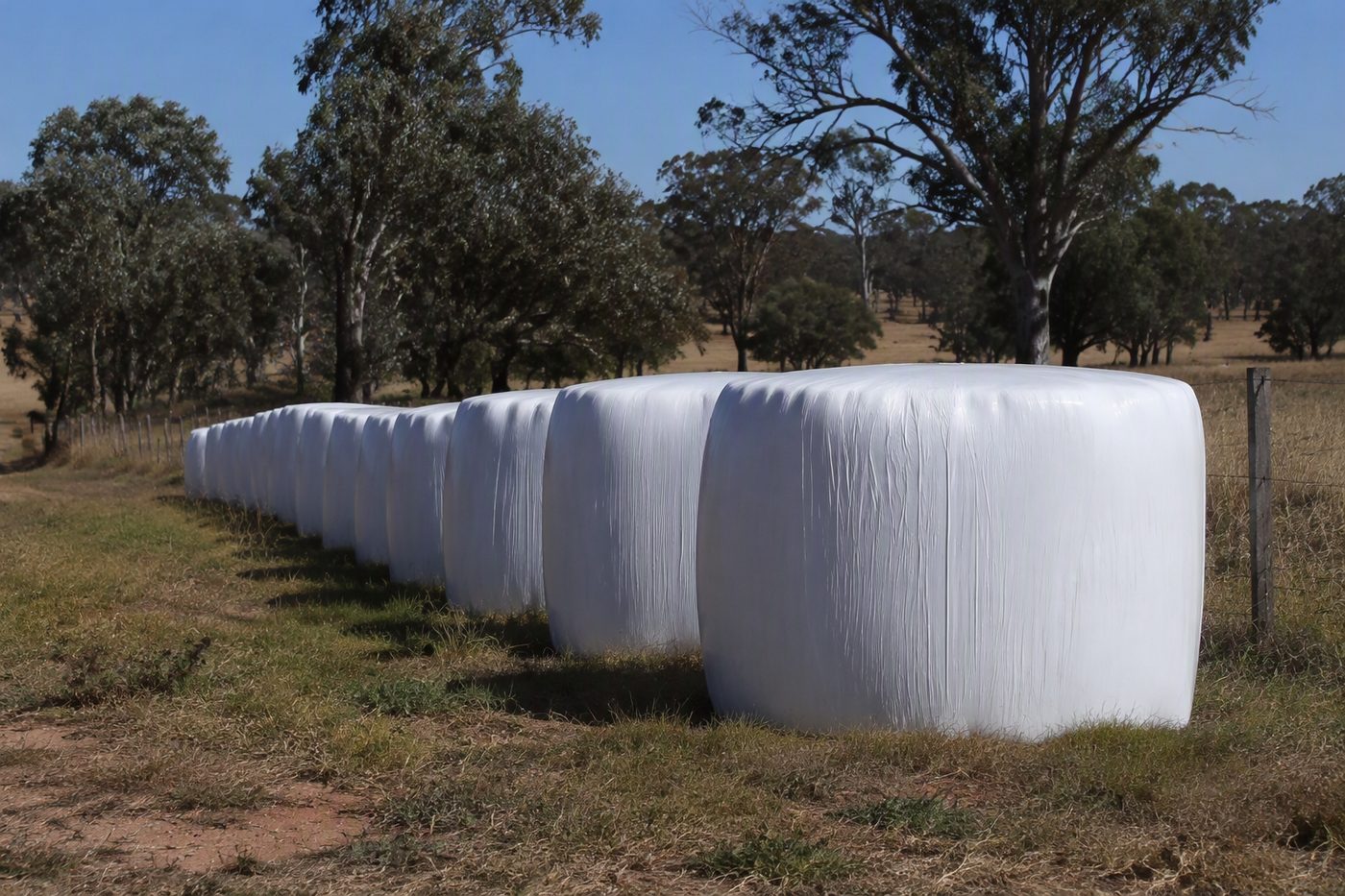
We mow with a drum mower, leave the swath to wilt until the moisture drops to around 65–70 percent – no fancy meter, just the squeeze‑test across the paddock every hour – then we rake, chop, and pack it into a 15‑metre‑long Ag‑bag using a rented bagger from the local mobilisation centre. The plastic we use is standard white‑on‑black silage sheet, the sort you can get from any CRT or Elders store; a 12‑metre length costs around $110.
Prevent Mould Toxins In Your Clamp
The key to stocking rate through a dry spell is getting every cubic metre packed to at least 650 kilograms of fresh matter, because any air pocket grows mould, mould turns to mycotoxins, and mycotoxins empty a rumen faster than a wet cough. I know – I once hand‑spooned activated charcoal into a half‑dead Merino wether that had got into a slimy shoulder of a poorly sealed clamp.
Make Silage For Winter Survival
We feed out from that tube every day from May to October, and a single 15‑metre bag holds enough to keep 40 Merino ewes going for 6 months, provided you strip‑graze behind an electric fence so they don’t trample tomorrow’s breakfast. If you’re off‑grid in Australia and not making silage, you’re just gambling with your livestock’s survival. It’s not fancy, it’s basic. Get it right and you’ve got feed for 6 months.
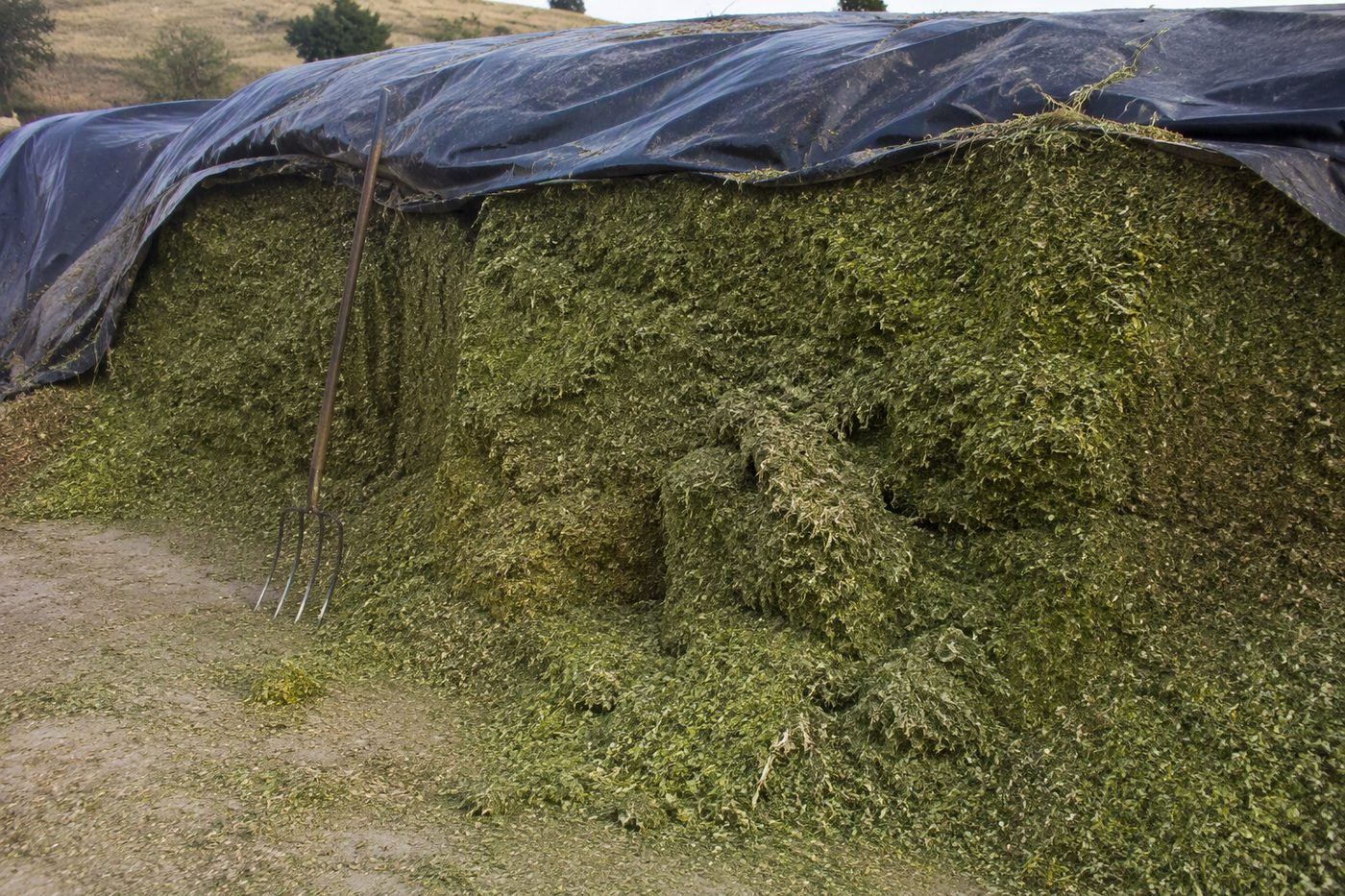
Cross-section of a bunker silage stack showing plastic seal over packed forage on a ground pad, with key targets.
Fermentation: It's Not Rocket Science
When you mow a paddock of ryegrass and clover around Toowoomba or Terang, chop it to a 10–20 mm chop length, and wheel-roll it tight with a tractor, you squeeze the air out. Naturally occurring lactic acid bacteria on the leaves start feeding on
Key rule: NO air = GOOD. Air = mould. Mould = dead stock. Seal it like your life depends on it (because it does).
Moisture: The #1 Mistake (And It's Easy)
Too wet? You get sour silage that smells like vinegar. Too dry? It's just dusty hay. Both are useless. The sweet spot is 60-70% moisture. How to check? Squeeze a handful of chopped feed. If water drips out, it's too wet. If it crumbles, it's too dry. Aim for a damp sponge feel.
Practical tip: Test moisture with a moisture meter ($150-$300 from Agri-Products). Don't guess. Guessing gets you a dead cow.
Bunker Design: Build It Right or Forget It
Bunkers & equipment
Forget fancy silos. Bunkers are cheap and work. But they must be built right:
Size: Minimum 3m wide, 1.5m deep, and as long as you need. Shorter = more air exposure.
Shape: Slope sides at 45 degrees. Flat sides = trapped air = mould.
Seal: Cover with 2 layers of 150-micron plastic (not the flimsy stuff). Weight down with tyres or sandbags. No gaps. If you can see light through the plastic, it's leaking.
Australian suppliers (2023 pricing):
I punch a square hole in the top corner of every 100‑square‑metre roll of 150‑micron silage film from Agri‑Plastics in Sydney, then slip the roll onto a length of polypipe screwed to the shed wall above the bench. That keeps the film clean and stops the dunnart from nesting in the core. At $0.15 per square metre the roll costs $15 — fifteen bucks for a full 100 m². Down at the pit near Mudgee I unroll a sheet straight onto the packed pasture, lay it flat and weight the edges with sandbags sewn from old jeans.
Surviving Paddock Hazards With Thicker Film
Only 150‑micron film survives a paddock here. The thistles that hide in cut kikuyu, the claws of a curious roo at sunset, even a twitchy cattle dog’s paws will puncture 100‑micron in the first twelve hours. Once oxygen sneaks in, the top 30 centimetres of the stack heats and grows grey mould within a week. I lost half a tonne that way the first year. Now I keep a spare roll in a coolibah box beside the loader, along with a roll of silver duct tape.
Quick Patches Keep Silage Cool
A tear from a loose strand of netwrap or a wind‑snapped branch gets patched on the spot, five seconds per hole. The Agri‑Plastics film pulls tight and clings like cling‑wrap when you stretch it — no flapping in a westerly. When I peel a sheet off next autumn I’ll find the silage underneath still cool, deep olive, and smelling like baked bread. That roll costs $15. Fifteen dollars well spent.
Invest In A Reliable Moisture Meter
A reliable moisture meter stops you before you ruin a clamp. The probe-style unit I picked up from Agri-Products in Brisbane set me back $220, and it paid for itself the first season I chopped forage sorghum near Dalby. You jab the steel spear into the windrow, wait for the needle to settle, and get a reading driven by a simple resistance circuit—a 9-volt battery runs it easily for a full season of cutting. If the display sits above 70 percent moisture, you are inviting butyric fermentation, seepage losses, and a stinking black slime that no stock will eat.
Monitor Moisture For Optimal Fermentation
Below 60 percent, the clamp heats, moulds, and can spit dust so fine you’d swear you were threshing wheat. The sweet spot, 65 to 68 percent, lets lactic acid bacteria outcompete the clostridia and yeasts; the pile settles tight, heats only a few degrees, and comes out sweet, golden, and cool. I still check the meter against a microwave oven-dry test once a season, but after leaving the thing baking in a ute glovebox through a 40-degree Charleville afternoon and finding it still matched the kitchen scales dead-on, I trust it more than my own guesswork.
• Compactor: Used Kubota 4WD tractor ($5k-$8k). New? Skip it. Used is fine for small bunks.
Practical Tips That Actually Work
Compaction & monitoring
Chopped to 1-2cm pieces, the feed knits into a dense mat under wheel pressure, squeezing out the oxygen that spoilage moulds need. Any longer, and stems spring
I pull the Massey 135 into low range, first gear, and crawl over the chopped forage until the front tyres bulge against the pile. On our patch of red granite loam out past Glen Innes, a silage pit is just a scooped-out bench with earth walls, so you can’t rely on wall friction to save you—every inch has to be driven. I make at least 3–4 passes per 150 mm layer, wheel track overlapping wheel track, until the surface turns glossy from the juice the rollers squeeze out.
Pack Tight To Prevent Spoilage
The harder you pack, the better; anything less leaves wormholes of oxygen that let yeasts and acetobacter run riot. I learnt that the expensive way my second season, when a poorly rolled section heated to 55°C inside a day and came out black and crumbly, stinking of vinegar. Don't skip this step. It’s the difference between feed and garbage. Once the chopped sorghum hits the pit, the clock starts. A tractor weighing 3–4 tonnes, with tyres dropped to around 80 kPa, shifts from being a farm runabout to a crude compaction roller.
Pack Li For Stable Fermentation
Four passes gives you bulk density somewhere near 650 kg of fresh matter per cubic metre—tight enough that the temperature rise levels off overnight and lactic acid bacteria can drop the pH below 4.5 before clostridia wake up. I’ve watched neighbours throw a single quick run over a big pit and then scratch their heads when the front crashes down in a steaming, mouldy slab six months later. Pack like hell: drive a tractor over it 3–4 times. The harder you pack, the better. Don’t skip this step. It’s the difference between feed and garbage.
• Fill fast: Don't take days. Feed in one go. If it sits in the sun, it heats up and spoils.
Check Weekly For Fermentation
• Check weekly: After 2 weeks, pull back the plastic. On our patch west of Mudgee, I lift a corner on a fine morning—not a damp, overcast one—using a clean crowbar to break the seal without tearing the 200-micron white-on-black film. The first thing you notice is the coolness, then the colour of a properly fermented maize bale: pale gold to olive, glistening. If it’s shiny and smells sour (not rotten), you’re golden. That sharp, vinegary hit means lactic acid bacteria have dropped the pH to around 4.0, locking the sugars and stopping clostridia dead.
Spot Spoilage And Save Your Cattle
I press the cover back, tuck the edge, and weight it again with a length of 90-millimetre polypipe part-filled with water. If it’s mouldy, pitch it. Don’t risk it. Grey-green fuzz or a stale, tobacco-like reek points to yeast or clostridial spoilage, and the mycotoxins that come with it—listeria, botulism—will bring down a cow faster than a busted trough pump. The local cattle vet in Mudgee has seen abortions and deaths from silage that looked merely dusty. A single mouldy bale goes straight onto the paddock burn heap behind the shearing shed, well away from stock and the good feed.
What Not To Do
Plastic & pit management
The thin blue tarp that spent six months flapping over the hay rake behind the machinery shed won’t seal a bunker. Silage plastic needs to be virgin film, minimum 200 microns, UV-stabilised. Standard rolls come 8 or 10 metres wide and 25 to 50 metres long; a 25-metre roll of 200-micron black-and-white silage sheet runs about $90 to $120 at any rural merchant from Dalby down to Mount Gambier. That’s roughly the value of three or four square bales of lucerne you’d otherwise lose to spoilage.
Risks Of Reused Plastic
Old, second-hand film—builder’s plastic, grain-bag offcuts, market-garden mulch—has already lost plasticisers to heat and sunlight. It’s brittle. When you stretch it over a compacted stack and the wind gets a purchase, the film tears at the crease. A split 300 millimetres long is all it takes. Oxygen syphons in, respiration flips from anaerobic fermentation to aerobic yeasts and moulds. The front face heats; you can feel the warmth pushing through a torn patch before you even lift the tyres.
Punctured Bunker Spoilage Risks
Dry matter losses in a punctured bunker run 20 to 30 per cent across the top 600 millimetres because the spoilage cascade travels sideways under the plastic. Rainwater follows the tear, leaches nutrients, and leaves a slimy, black layer that stinks of butyric acid—sheep will walk away from it, and pregnant ewes shouldn’t be anywhere near the listeria risk. Firsthand: I patched a bunker near Tenterfield with a leftover roll of 150-micron builder’s film because the delivery truck was a week late. Looked fine for two days.
Silage Loss And Repair Costs
On day three a southerly buster lifted a corner, the whole cover billowed, and the top 400 millimetres went spongy. We fed that face out to dry cows and still dumped a loader bucket of hot, grey muck every morning. The cost of the wasted silage would have bought five fresh rolls of the right film and a carton of beer for the neighbour who helped repack it.
Secure Silage With Tyres And Gravel
Use purpose-made silage sheet, overlap joins at least a metre, load the seams with a continuous line of sidewall tyres touching rim-to-rim, and lay a skirt of pea gravel or bagged sand over the edges to keep the wind from working underneath. That’s the difference between striking a face of bright, sweet-smelling feed and peeling back a compost heap with a tractor bucket.
Preventing Feral Silage Spoilage
A pit that won’t be emptied within 3 months of opening turns feral fast. On a 38°C summer afternoon in the Lockyer Valley, a silage face can start sweating and heating within hours of exposure. Oxygen kicks off yeasts and moulds that burn through dry matter and push the pH high enough to let clostridia and Listeria monocytogenes get a foothold. The real threat sits in the cool, air-spoiled outer slab of a face that advances too slowly—botulism spores germinate there without any visible sign.
Daily Face Stripping Rules
I’ve watched a contractor near Hamilton, Victoria, peel back a crusted face that had crept along for six weeks; the bottom metre was a black, slimy putty that took the bucket edge like butter. A standard rule for warm months is to strip at least 150–200 mm off the whole face every day to stay ahead of heating. That means your pit width and height have to match what your stock can eat in a single daily feed-out. If your herd size and consumption rate leave you staring at the same face
• Don't wait for "perfect" weather. Do it when you can. Rainy days? Pack it wet and hope for the best. Better than nothing.
⚠️ SAFETY WARNING: Working with electrical systems, structural modifications, or gas installations carries inherent risks. If you are not confident in your abilities, always engage a licensed professional.
They show a straightforward pit silo built from salvaged timber and walk through cutting, wilting, and compacting grass for silage, giving you a clear visual of the timing and stacking steps you can apply on your own place.— Jenny Mills
Frequently asked questions
Do I need council approval to make silage on my property in NSW?
Yeah, in my experience you do. I had to register the silage pad with the EPA before I built it, and I called the council environment officer in Armidale to check my obligations. Most small-scale setups in the New England fall under the thousand-tonne exemption, but you'll still need a proper compacted clay base and diversion drains. Don't skip the paperwork — I got randomly audited and the folder with my receipts and phone log saved me a fine.
How many layers of silage wrap do I actually need on a round bale?
I won't go under six layers of 25-micron white Silotite, full stop. Four layers can fail if a cockatoo gets at the bale or a hail storm punches through. With a 750mm roll running at about 50 percent stretcher tension, I get around 22 bales out of it. The wrap is cheap insurance compared to losing a bale to spoilage.
How do I test moisture in hay without a meter?
I use the hand test. Grab a fistful of cut grass and squeeze hard for about 30 seconds — if the ball holds its shape but no free water drips out, you're in the sweet spot, roughly 45 to 55 percent moisture. Too wet and you'll cop that awful clostridial stink; too dry and mould takes off. It takes a bit of practice but once you get your eye in, it's reliable.
Do I really need to add inoculant to pasture silage?
Out here on kikuyu-ryegrass, yes, every time. The natural sugars are too low for a clean ferment on their own, and the bales go off fast without it. I run Pioneer 11A88 through the baler's applicator — one sachet per hundred litres of water, just under a litre per tonne. It's not cheap but it pays for itself in bunk life and zero mould.
When to Call a Professional
While many off-grid projects are achievable as DIY, certain situations require licensed professionals:
Electrical work beyond basic 12V DC additions — requires a licensed electrician
Structural modifications to buildings or load-bearing elements
Gas line installation or modification
Solar array installations above safe voltage thresholds
Any work that affects the structural integrity of your property
Always check local regulations and obtain necessary permits before commencing work.