By Jenny Mills · rural nurse & homesteader · health, safety, law and the paperwork of going bush
“After losing $2,000 on shared diesel when our group forgot to check storage tank levels, I learned that trust needs a written logbook.”
Let's cut the crap. Going off-grid alone? You're throwing money away. Community off-grid isn't some hippy dream – it's smart, Aussie survival. Shared resources = less cash out the door. Group buying? That's how you get solar for $2k instead of $5k. Here's how.
By Jenny Mills · rural nurse & homesteader · health, safety, law and the paperwork of going bush
“After losing $2,000 on shared diesel when our group forgot to check storage tank levels, I learned that trust needs a written logbook.”
Let's cut the crap. Going off-grid alone? You're throwing money away. Community off-grid isn't some hippy dream – it's smart, Aussie survival. Shared resources = less cash out the door. Group buying? That's how you get solar for $2k instead of $5k. Here's how.
Because you're not a solo hero. You're a human in a community. Sharing means:
Don't overcomplicate it. Start with what you already have:
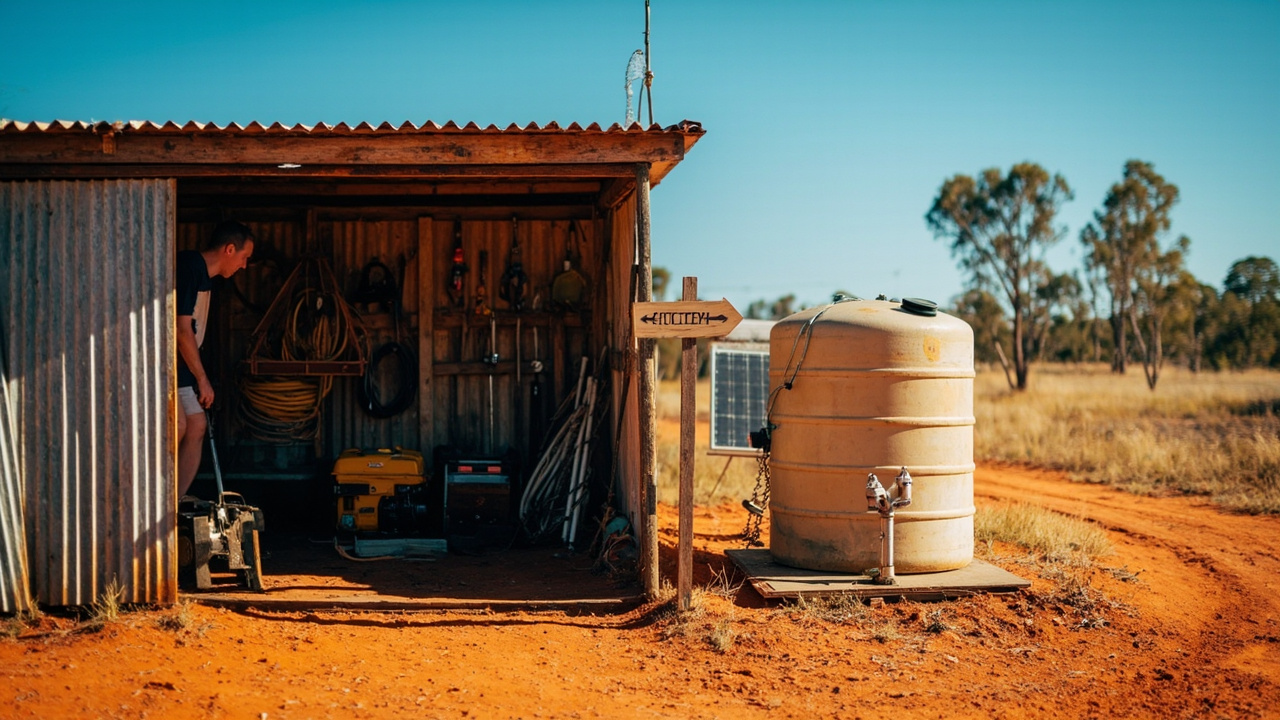
One big tank for the whole street. 10,000L tank = $1,200. Split 10 ways? $120 each. You get rainwater, no more $150 tank for one house. Local suppliers: Rainwater Tanks Australia (Brisbane) or Tanks & Tanks (Melbourne). Price: $1,100-$1,400 for 10kL.
Group buy a 10kW system. Get 20% off bulk pricing. Victron Energy (Aussie-made) does group discounts. Example: 10 households = $45k total vs $55k solo. That's $10k saved. Use Victron's group buying page – they'll hook you up.
One community worm farm for 5 houses. $300 for a 200L bin. $60 each. Worm Farm Australia sells them. Price: $295 for a 200L system. No more $100 worm farms for one house.
Step 1: Find your people. Facebook groups are gold. Search "Off Grid [Your Town]". If none? Start one. "Off Grid [Your Shire]" – 50 people in 2 weeks.
Step 2: Pick ONE item. Don't try to buy solar, water, and compost all at once. Start with water tanks. Get 5 people committed.
Step 3: Get quotes. Contact 3 suppliers. Compare. Don't just take the first price. Example: Rainwater Tanks Australia vs. local tank guy. Local guy might be $200 cheaper but no warranty. Stick to reputable suppliers.
Step 4: Pay 50% upfront. Supplier delivers to community hub (your shed, school hall). Everyone pays when they get their tank. No one gets left holding the bag.
Water Tanks (10,000L): Rainwater Tanks Australia – $1,200 (group rate). Local supplier – $1,400 (no group discount). Save $200 by grouping.
Solar Inverter (5kW): Victron MultiPlus – $1,800 (single) vs $1,500 (group of 5+). Save $300.
Worm Farm (200L): Worm Farm Australia – $295 (single) vs $250 (group of 5). Save $45.
Group buying fails when people don't commit. Solution: Get a $50 deposit per person to secure the order. If they bail, you keep the deposit. No free rides.
Also: Don't trust suppliers who won't do group pricing. If they say "no group discount", find someone else. There are 100 Aussie suppliers who will.
Finally: Document everything. Who paid what, when. Use Google Sheets. No "I paid but you didn't" drama.
Going off-grid alone is expensive. Going community? It's smart. You're not saving $200 on a tank – you're saving $2,000 on your first system. That's a shed full of extra solar panels. Or a new water tank. Or just breathing easier knowing your neighbours have your back when the grid dies.
Stop waiting for "perfect". Start with 3 people. Buy one water tank. See how it goes. Then do it again. That's how you build a real off-grid community. Not with theory. With action.
Worth a watch: 5 Acres Off-Grid: The Truth No One Tells You · Possum Ridge Farms
While many off-grid projects are achievable as DIY, certain situations require licensed professionals:
Always check local regulations and obtain necessary permits before commencing work.