Cold Storage Veg for Off-Grid Aussies: No Power, No Problem
Look, if you're off-grid in Australia, you don't have a fridge. So stop wasting time on fancy electric cold storage. Here's how to keep your veg fresh without power. Straight up.
Look, if you're off-grid in Australia, you don't have a fridge. So stop wasting time on fancy electric cold storage. Here's how to keep your veg fresh without power. Straight up.
Root cellar layout split into a dry warm zone for onions, garlic and pumpkins, and a cold humid zone for roots and apples.
Temperature: Get It Right or Your Veg Dies
Most root veggies and brassicas need 0-5°C. That's cold, but not freezing. In Australia, that means:
Winter: Underfloor or cool shed (5-10°C) works
Summer: You need a root cellar dug 1m deep. No excuses.
Forget "refrigerator temperature" – that's 4°C. Your off-grid cellar needs to be 2-3°C cooler than ambient. If it's 25°C outside, your cellar must be 20°C or less. Simple.
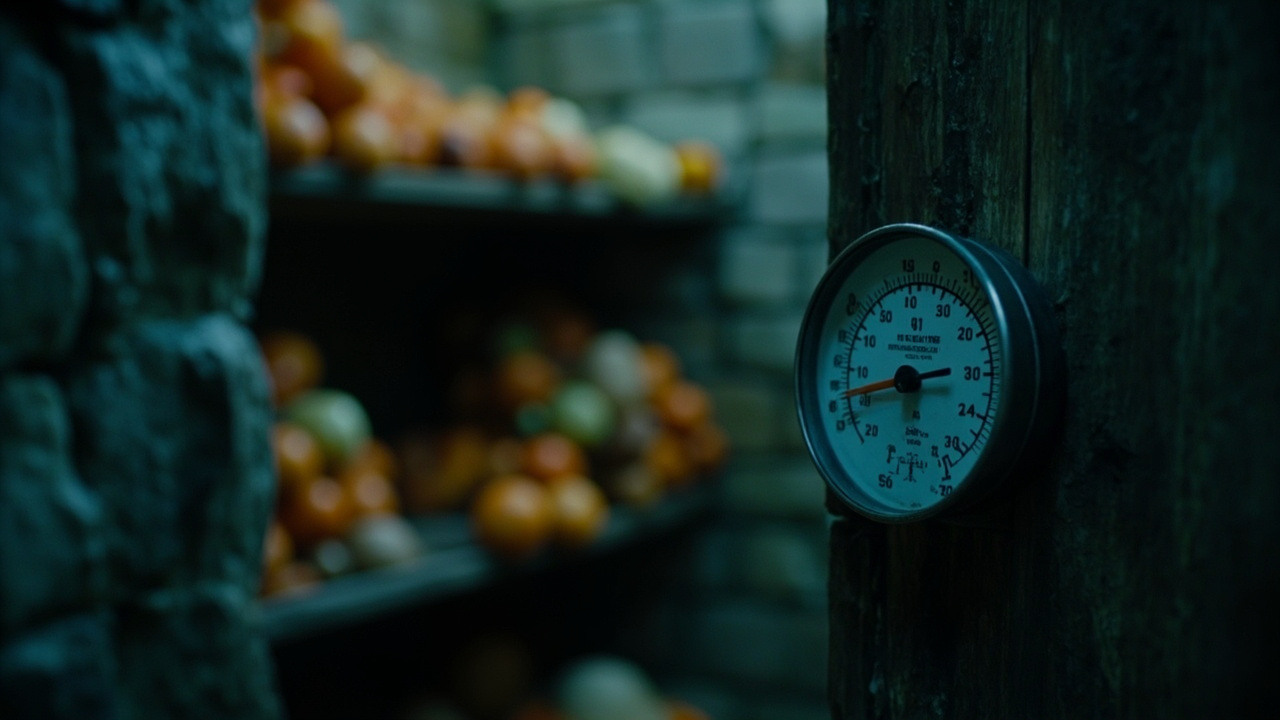
A thermometer monitors a cool root cellar
Humidity: 90-95% or Your Veg Turns to Dust
Too dry? Carrots shrivel. Too wet? Rot sets in. Aim for 90-95% humidity. How?
Line cellar with damp sand or gravel (not waterlogged)
Store veggies in perforated bins or mesh bags – never plastic bags
Check humidity weekly: squeeze a handful of sand. If it holds shape, perfect.
Don't bother with humidity meters. If your veggies are shrivelled or slimy, you're doing it wrong.
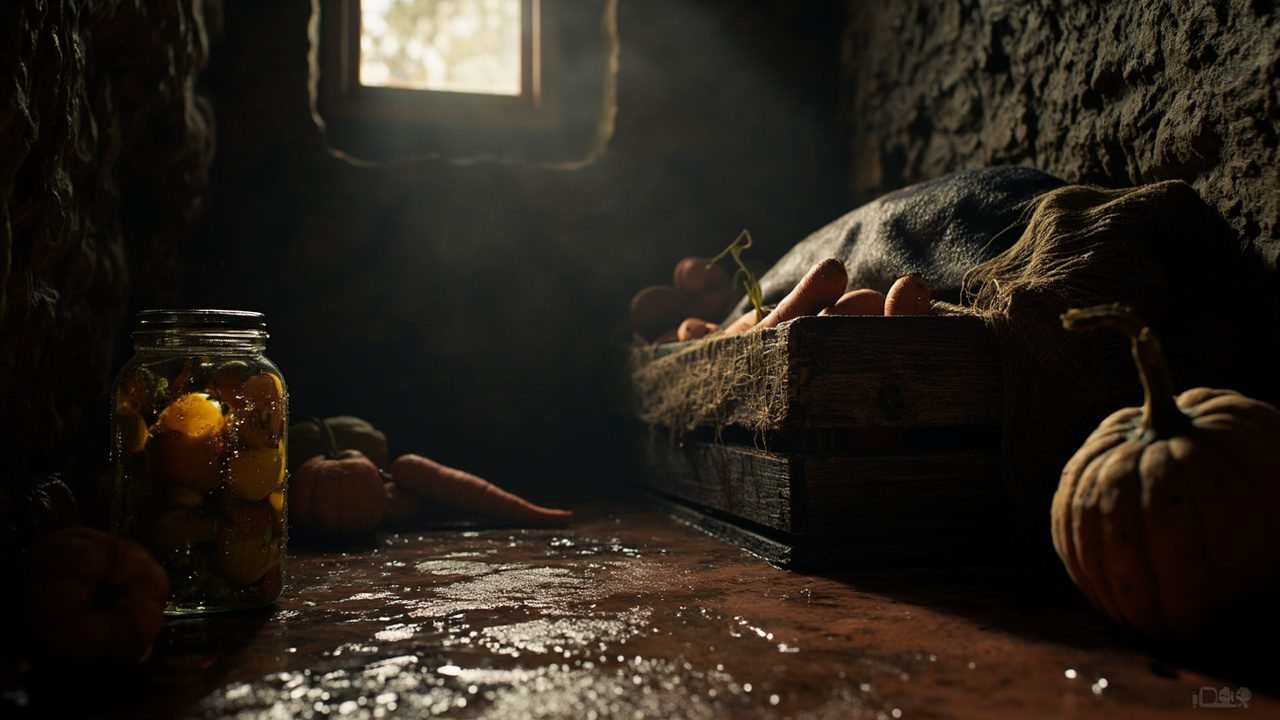
Condensation reveals a cellar's high-humidity storage climate
What to Store (And What to Avoid)
Only grow and store these. Everything else rots fast without power:
Onions/Garlic: Only dry varieties (not spring onions)
Avoid: Tomatoes, potatoes (they sprout), lettuce (dies in 2 weeks)
Pro Tip: Harvest veggies on a dry morning. Let them sit in shade for 1 hour to "cure" before storage. No curing = faster rot.
Build Your Cold Store (No Fancy Gear)
Forget $500 fridge units. Do this:
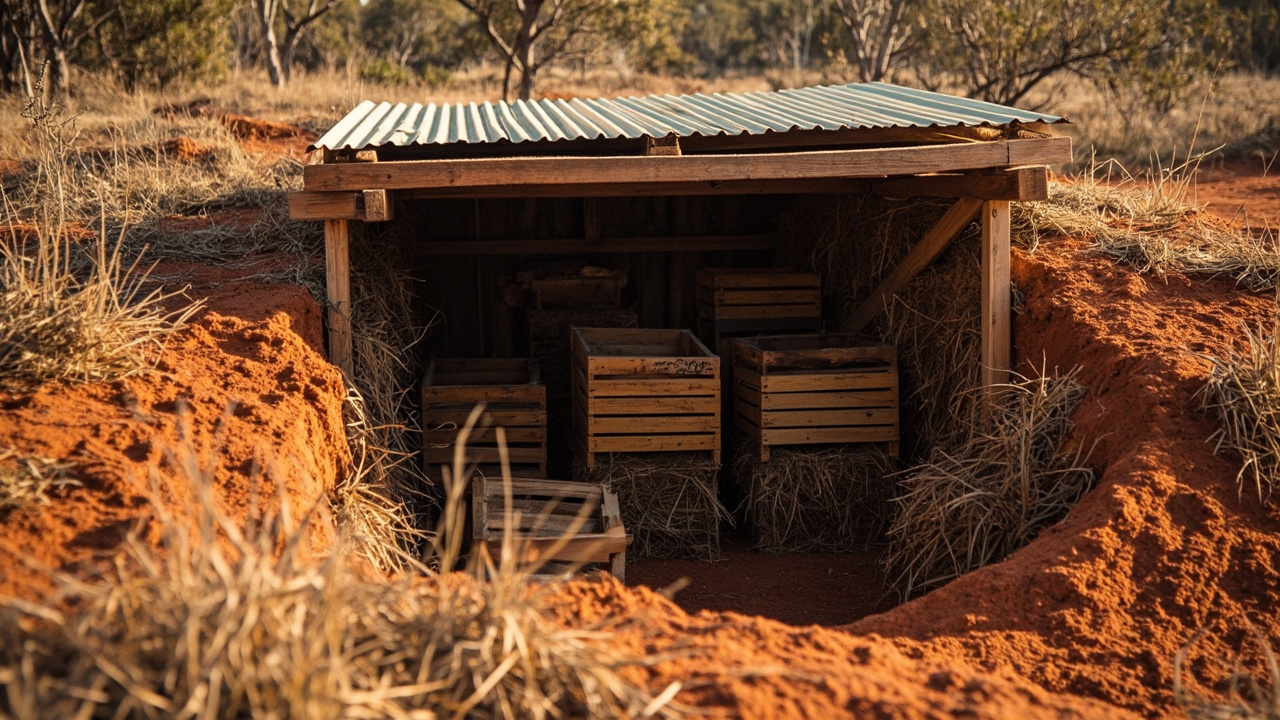
Dig a 1m deep hole in the coolest part of your property (north-facing slope)
Line with 10cm of sand or gravel
Place bins on the sand. Cover with a lid (not airtight)
Use a thermometer – if it's above 10°C, you're not doing it right
Works for 6-8 months in most of Australia. If you're in Darwin? You'll need a deeper cellar. No exceptions.
Hand-built earth-sheltered cellar in the Australian bush
Australian Suppliers (Prices are indicative):
• Sand: $15-$25 per 50kg bag (Bunnings, Mitre 10)
• Perforated bins: $10-$20 (eBay, local hardware stores)
• Thermometer: $5-$10 (Woolworths, Kmart)
Don't waste money on "cold storage" gadgets. You don't need them.
Final Word
If your cellar isn't 2-3°C cooler than outside air, your veg will rot. If humidity isn't 90%+, it'll shrivel. Grow only the right veggies. Build the cellar right. No power? No problem. Done.
⚠️ SAFETY WARNING: Working with electrical systems, structural modifications, or gas installations carries inherent risks. If you are not confident in your abilities, always engage a licensed professional.
It walks through how to build a simple root cellar and an earth‑tube cooler, the same low‑tech methods I describe in the guide but with extra detail on managing soil moisture for longer veg storage.— Fiona Gallagher
When to Call a Professional
While many off-grid projects are achievable as DIY, certain situations require licensed professionals:
Electrical work beyond basic 12V DC additions — requires a licensed electrician
Structural modifications to buildings or load-bearing elements
Gas line installation or modification
Solar array installations above safe voltage thresholds
Any work that affects the structural integrity of your property
Always check local regulations and obtain necessary permits before commencing work.