Off-grid beekeeping isn't a hobby. It's survival. Location makes or breaks your hive. No bullshit.
Apiary site selection checklist: sun, water, flight paths and hive placement.
Forage Shortfalls: Feed or Lose the Colony
Bees need 1-2km of reliable food. No forage = dead bees. Simple as that.
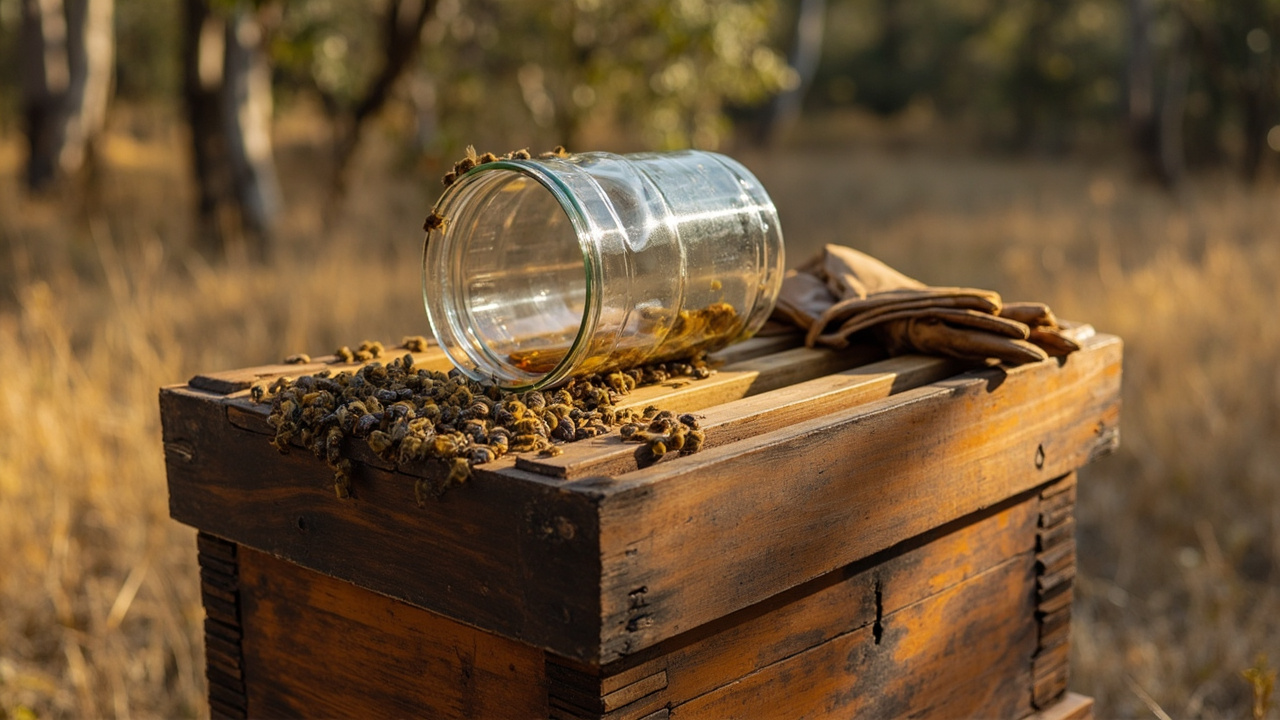
Sugar syrup feeder sustains colony during dearth
Check your local flora. Eucalypts, bottlebrush, and grevillea are gold. Lantana? Waste of space.
Don't rely on your garden. Most suburban yards are bee deserts. Get a Native Plant Finder app (free) to map local blooms.
Plant bee-friendly natives. Greening Australia sells seed mixes ($50-$100/kg). Enough for 100m². Plant near hives.
Practical tip: If your property has only pasture grass or weeds, move. Bees won't survive. Don't waste $200 on hives for a dead location.
They Drown Fast — Give Them Shallow, Safe Water
Bees need water daily. A bucket is a death trap. They drown in seconds.
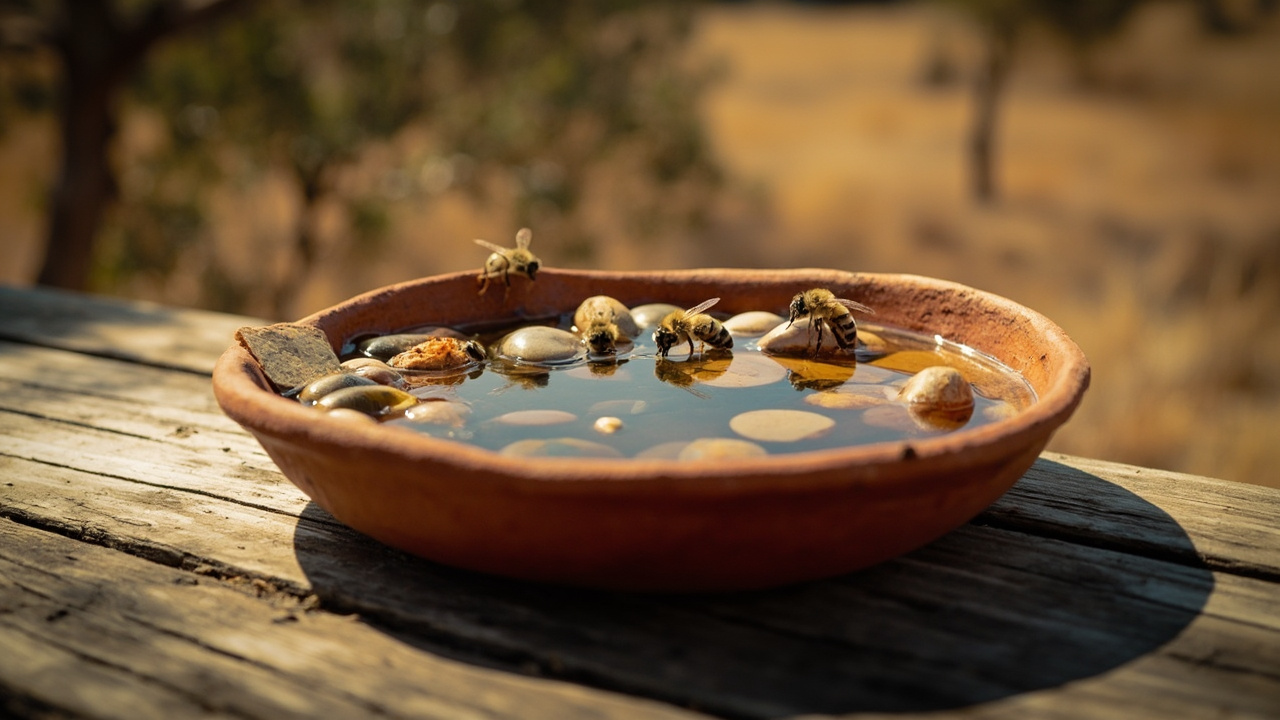
Shallow dish with pebbles keeps bees safe
Use a shallow dish with stones or marbles. Bees land on the rocks, not in the water.
Refill daily. Off-grid? Use your rainwater tank. No tank? Get a $15 solar pump from Beekeeping Australia.
Never use chlorinated tap water. It kills bees. Rainwater or tank water only.
Shelter That Stands Up to a Tassie Gale
South-westerlies slam straight into an exposed hive entrance. Winter freezes the cluster solid; summer blows workers out of the sky mid-flight. A distant tree line isn't shelter. Get the windbreak sorted before the bees arrive, or learn what dead-out boxes look like in spring.
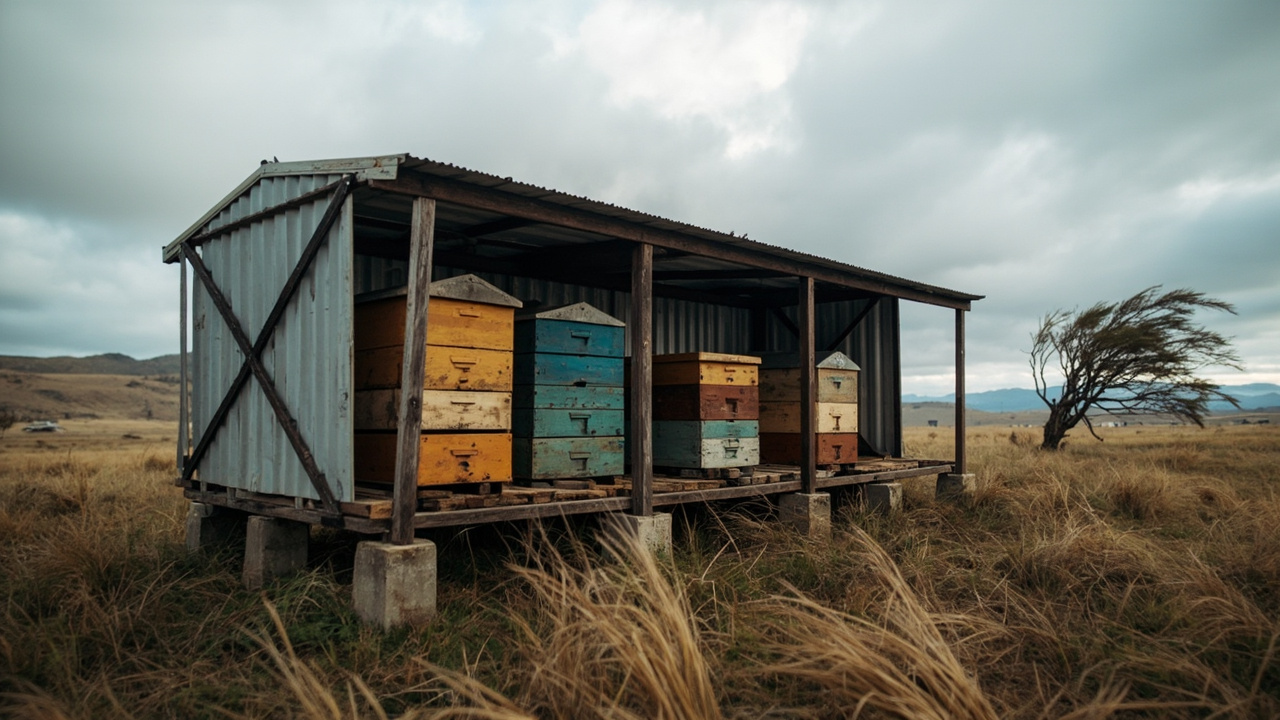
Anchored three-sided apiary windbreak in a Tasmanian gale
Place hives behind a natural windbreak: a hill, dense bush, or fence. Avoid open paddocks.
Build a cheap windbreak. Use recycled timber or Beekeeping Supplies Australia's mesh ($30-$50 per 2m x 10m roll). Install 1m behind hives.
Never put hives on a windy ridge. It's suicide for bees.
Practical tip: Test wind direction with a $5 wind vane from Bunnings. If wind blows straight at hives 80% of the year, find another spot. No exceptions.
Off-grid? Your water source and wind protection are non-negotiable. Skip the fancy hives. Get location right first. Otherwise, you're just feeding your bees to the ants.
When the Site Beats Me
While many off-grid projects are achievable as DIY, certain situations require licensed professionals:
Electrical work beyond basic 12V DC additions — requires a licensed electrician
Structural modifications to buildings or load-bearing elements
Gas line installation or modification
Solar array installations above safe voltage thresholds
Any work that affects the structural integrity of your property
Always check local regulations and obtain necessary permits before commencing work.
He walks through his site‑selection checklist—wind‑break placement, hive orientation for Tasmania’s sun angle, and distance from neighbours—so you can apply the same practical steps I outline in the guide.— Fiona Gallagher