By Jenny Mills· rural nurse & homesteader · health, safety, law and the paperwork of going bush
“My first bush block bill cost me three months' wages because I assumed a rural address exempted me from council rates entirely.”
Off-Grid Property Tax: The Real Deal (No Fluff)
Let's cut the bullshit: off-grid living doesn't magically wipe out your property tax. The government doesn't care if you're running on solar or composting toilets. Land tax is based on your land's value, not your lifestyle. Period.
Property Taxes Remain Unchanged
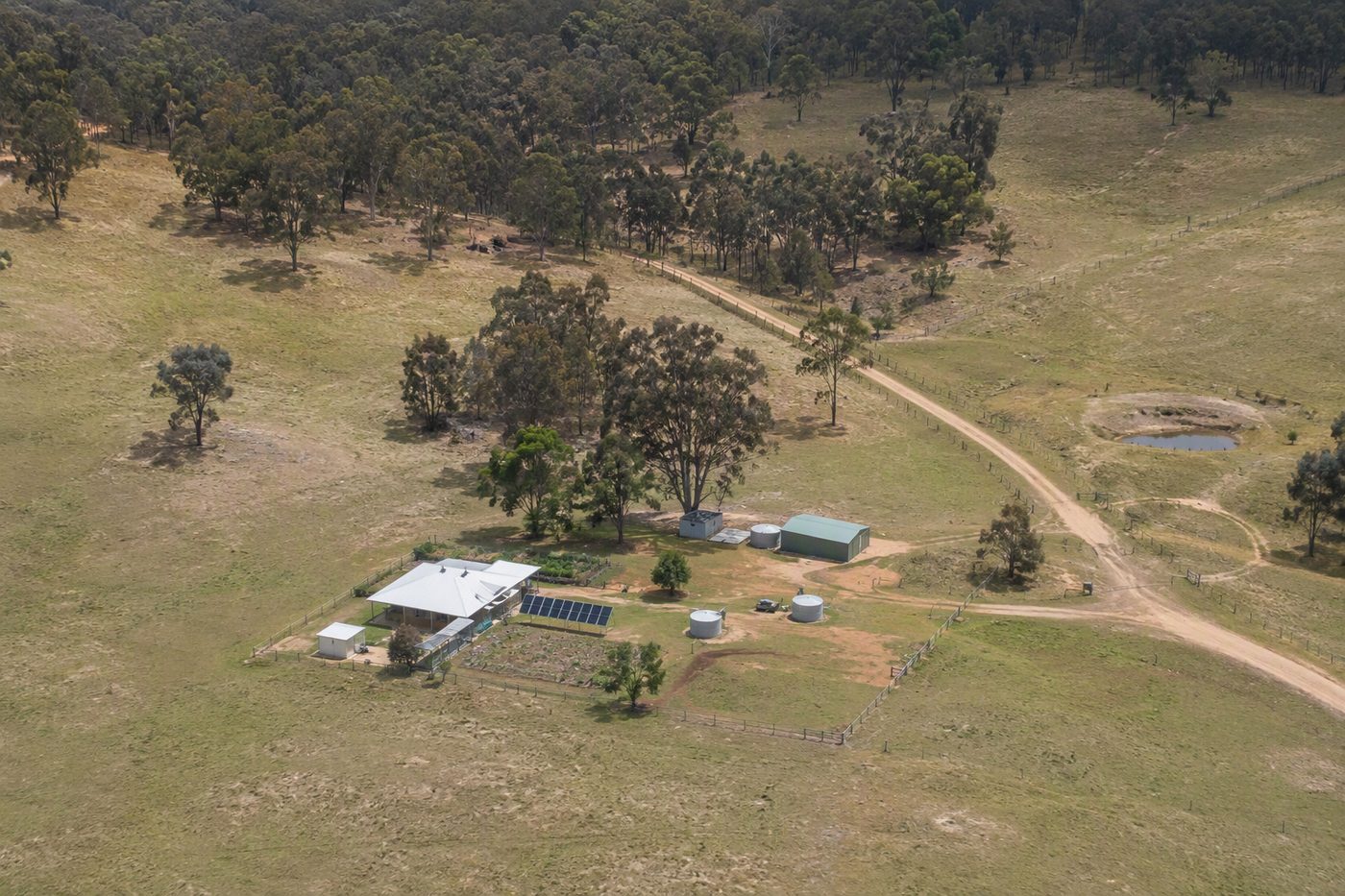
Off-grid living never scrubs your property tax bill. The valuer general doesn’t audit your battery bank or count your compost toilets. Land tax, council rates, and fire service levies are calculated on the unimproved capital value of your dirt—what the block would fetch if it were bare, based on its highest and best legal use, not your lifestyle choices. I learned that the hard way out at Nulla Nulla. Our 40-hectare patch of regrowth, with a shed, a rainwater tank and an outdoor dunny, copped its first council rate notice before the solar array was even wired. The valuation?
Council Rates Ignore Off-Grid Status
Not a cent of discount for being off-grid. The shire’s automated model had already grabbed comparable sales of cleared hobby-farm blocks in the district and spat out an unimproved value of $410,000. That triggered a general rate demand of $1,380 for the year—plus a separate waste management charge we never opted into, because we don’t use the service. I rang the council and the lovely officer explained that the rating category applies to the land, not the bin. She wasn’t wrong, just mercilessly consistent. Land tax is a different beast.
State Land Tax Thresholds
It’s a state tax on the total taxable value of land you own above a threshold, excluding your principal place of residence. For 2024, the threshold is $969,000 in New South Wales, $300,000 in Victoria, and $600,000 in Queensland. If you own a few rural investment blocks or you rent out your off-grid place while you travel, the values stack. A friend with a 100-acre bush block near Bairnsdale, valued at $420,000 for the land alone, gets a Victoria land tax assessment every year because it’s not her main home—her principal residence is in town. That bill runs to $1,
How Land Tax Actually Works (State-by-State)
Land tax is assessed annually by your state revenue office on the unimproved value of your land. That means dirt, rock, scrub and slope—not your cottage, not the solar array, not the 22,000-litre rainwater tank you bolted to a slab. Each state sets its own tax-free threshold and marginal rates, so the same site value can trigger a bill in Victoria but nothing in New South Wales. In 2024–25 the NSW general threshold is $1,075,000; a dollar over that and you pay $100 plus 1.6 per cent on the excess up to the next band.
State Thresholds And Valuation
Tasmania’s threshold sits at $599,999, Victoria’s at $300,000 for an individual owner who is not a trustee or absentee, while Queensland’s kicks in at $599,999 for individuals with a total landholding above that mark. The Valuer-General issues a site value every year based on comparable bare-land sales. Because unimproved value ignores all improvements, a cleared house pad, a 240-metre gravel driveway or a creek frontage won’t push the figure up, but a neighbouring vacant-block sale will. Last June I walked my 10-hectare bush block near Bellingen with the Council’s contract valuer.
Low Site Value Boosts Off-Grid Potential
He noted the mature eucalypt regrowth, the north-facing slope and the 20-metre-wide riparian strip along the creek, then pegged the site value at $340,000—well under the NSW threshold. My tax bill that November was nil. A neighbour 800 metres down the road holds a 5-hectare lot with the same RU2 zoning and no dwelling, just a temporary carport and a bore. His site value jumped to $1,120,000 after two improved hobby farms nearby went to auction. The State Revenue Office sent him an assessment for $100 plus 1.6 per cent on the $45,000 excess, a total of $820.
Victoria Land Value Surcharge Rates
If his block had been across the border in Victoria, the same $1,120,000 site value would have triggered a bill of roughly $4,975 in the first year, because Victoria applies a surcharge above $300,000 and adds a higher rate on land above $600,000. The unimproved value is the only number that counts, set by sales of empty paddocks you never bid on, and it resets every year whether you built
Land Tax Basics
NSW: No tax if land value under $1.2m (2023). Over that? You pay. Off-grid doesn't change this.
In Victoria the land tax threshold sits at $1.2 million of unimproved land value, and that figure is the shoal marker where paperwork becomes expensive. A property’s value is set by the Valuer-General on the unimproved capital value of the dirt alone—no house, no sheds, no lovingly built chook palace made of salvaged redgum. When my neighbour near Kyneton opened her 2023 assessment, her twenty acres of basalt country had jumped from $980,000 to $1.32 million after a regional revaluation. The rates notice landed the same week a fallen limb took out the bottom fence, so we sat on her ute tray
The valuation notice hit the letterbox the same week the inverter started throwing low-bus-voltage faults. Total unimproved value $1,220,000 — that’s $20,000 over the $1.2 million threshold that triggers land tax in Queensland. The block is 40 hectares of granite ridge and ironbark scrub 18 kilometres south of Mareeba. Off-grid because the nearest Ergon pole is a $90,000 quote away, not because it
Biggest myth: "My off-grid setup lowers land value." Nope. Land tax is based on market value – your solar panels or rainwater tank don't reduce it. If anything, they might increase it (but that's rare).
Exemptions? Only If You're Actually Farming
There's one exemption that might apply: primary production. But it's not for "off-grid living" – it's for actual farming.
You must be actively farming (growing crops, livestock, etc.) to qualify.
Off-grid doesn't mean farming. Having a few chickens doesn't make you a farmer.
Apply through your state revenue office. Don't just assume.
Practical tip: Get your land value assessed before building. If you're on a $1.1m block and build a $100k house, your land tax stays based on the $1.1m land value. The house doesn't push you over the threshold.
What You Actually Need To Do
Check your state's threshold: Go straight to your state revenue office site (e.g., nswrevenue.nsw.gov.au or revenue.vic.gov.au). Don't trust random blogs.
Apply for primary production exemption ONLY if you're farming: If you're just living off-grid on a hobby block, you won't qualify. Save your time.
Last spring I found a neighbour out past Mudgee waving a paid invoice for $440, convinced the bloke in the HiLux had unearthed a secret land value that would slash his rates. The number on the invoice matched—to the dollar—the unimproved capital value on the free valuation notice already sitting in his glovebox from the NSW Valuer General. The notice arrives every three years as a matter of course, or you can request a fresh one anytime at no charge. The same system runs across every state: the Valuer-General in Victoria mails an annual council valuation, Queensland’s Department of Resources issues a land valuation each year for all non-urban properties, and South Australia’s Office of the Valuer-General delivers a notice whenever a general valuation is completed. These are full statutory valuations performed by registered valuers, backed by sales evidence, soil mapping, and paddock inspections, not a desktop guess.
Paying someone to repackage that free data is a flat waste of diesel money. I have watched small-acreage owners fork over anywhere from $350 to $1,200 for a “property tax minimisation report” that simply transcribes the state valuation, adds a colour graph, and recommends lodging the exact same objection you can lodge yourself with the free figure in hand. Objecting to a land valuation is a paper form, a two-page statutory declaration, and a handful of comparable sales from the area. The state revenue office will mail you the comparable sales that underpinned your valuation if you ask. No third party needed. The real cause-and-effect is straightforward: the free valuation is the same figure the council uses to levy rates and the state uses for land tax. If that free number looks too high, you take it, collect three recent sales of similar blocks from a rural agent or CoreLogic’s free RP Data quick check, and submit an objection yourself. If you wait for a paid advisor to do it, you are handing over cash for a process the state already funds.
There is no hidden “off-grid” loophole that requires specialist interpretation. The statutory valuation from the state is the basis of every rating calculation. Land tax thresholds vary by state—$755,000 in NSW for 2024-25, $300,000 in Queensland for individuals, $100,000 in Tasmania—but the free valuation slip tells you exactly where your block sits relative to those thresholds. Using it means you apply the actual regulated figure, not a consultant’s mark-up of the same data. Keep the free notice in the glovebox, not the paid duplicate.
Off-Grid Setup Costs (So You Can Budget)
These aren't tax-related, but they help you live off-grid without breaking the bank. Prices are 2023 averages from Australian suppliers:
Off-Grid Costs
A 5kW system landed on my machinery-shed roof for $6,800, paperwork and all, which sits square inside the $5,500–$7,500 range that SolarQuotes, SunWiz and any local installer’s quote will show you for a standard grid-connected job. That price is after the STC point-of-sale discount—the installers take the small-scale technology certificates off my hands and knock about $2,800 off the sticker figure before I even write the cheque. Without that rebate the invoice would have read $9,560. The array is seventeen 370W panels, one 5kW Fronius Primo inverter, tilt rails on a single-storey Colorbond roof facing north. Total panel footprint is just under 30 square metres. Up here on the Granite Belt the frosts will crack cheap junction boxes by August, so the sparky used Canadian Solar panels rated for -40°C to +85°C—nothing boutique, just gear that doesn’t quit when the thermometer swings from minus five at dawn to forty by lunchtime. On a clear winter day that setup pushes 22kWh into the grid and on a socked-in summer afternoon maybe 12kWh. The quarterly bill went from $350 worth of dread to an $18 service charge and, one July, a $126 credit. Cause and effect: once the array was in, the monthly meter read stopped being a horror show and the tax-time home-office percentage became the only electricity argument left.
Rainwater tank (5,000L): $1,200–$2,000 (Tuff Tank, WaterTank)
A composting toilet isn’t a mystery, it’s a plastic throne with a fan and a bucket. Our first unit was a Nature’s Head, $1,400 delivered to the Bega Valley. The Biolet range sits between $1,000 and $2,000 depending on whether you order the 12V fan and spare urine bottle. That fan draws 0.1 amps, runs silent off a 20-watt solar panel, and stops the chamber turning into an ammonia factory. The urine diverter is the real workhorse: keep the liquids separate or you’ll be shovelling sour porridge. I empty the solids chamber twice a year into a dedicated compost bay down near the cypresses. After twelve months it’s crumbly as leaf litter and smells like a forest floor.
Council response depends entirely on which side of a state border you sit. In NSW, a self-contained unit that doesn’t discharge to a watercourse often
Off-grid infrastructure shrinks your running costs to a stub. It leaves land tax exactly where it was. A 6.6-kilowatt solar array with a 10-kilowatt-hour lithium battery bank, installed by a Clean Energy Council-accredited sparky after the federal Small-scale Renewable Energy Scheme discount, typically runs between $11,000 and $15,000 on a standard colourbond shed or ground-mount frame. That setup wipes out an annual power bill of $2,000 or more and, in a paddock with decent northern exposure, runs a chest freezer, bore pump and LED lighting through a solid week of cloud.
Rainwater Tank Investment Returns
A 25,000-litre poly rainwater tank, gravity-fed from a well-flashed house roof and sitting on a 100-millimetre compacted crusher dust pad, costs $3,500 to $5,000 with a Grundfos pressure pump and first-flush diverter. If you were carting water at $150 a load, that tank repays its capital inside three dry summers. A Nature Loo or Clivus Multrum composting toilet removes the septic pump-out and its quarterly bill, keeps the blackwater out of the absorption trench, and needs nothing but a bag of bulking agent and ten minutes of raking every few weeks.
Off-Grid Wealth And Land Tax
I’ve run a 5-kilowatt array and a 22,500-litre tank on 40 hectares west of Guyra for six years now. The power retailer sends me a zero-dollar invoice each quarter. The tank paid for itself before the second wet season was out. The council’s land value notice still rises and falls on sales of similar grazing blocks around Armidale, not on my battery enclosure. Land tax is calculated from the unimproved capital value of the dirt itself—the “site value” in NSW, “unimproved value” in Victoria, “unimproved value” in Queensland.
State Land Tax Thresholds
In New South Wales the general threshold for 2025 is $1,075,000, taxed at $100 plus 1.6 per cent on the excess. In Victoria the general threshold sits at $300,000, with rates scaling from 0.2 per cent to 2.25 per cent depending on the total value band. Queensland charges 0.5 per cent on residential land over $600,000 and up to 2.75 per cent for higher-value holdings. A principal place of residence exemption removes the bill entirely in most states, but once the title is not your main home—or if you own it through a trust or company—
The Bottom Line
Off-grid living doesn't mean off the hook for land tax. You pay based on your land's value. If you're on a block under the threshold, you pay nothing. If you're over, you pay. No exceptions. Stop chasing "tax breaks" for off-grid – it's a myth.
Check your state's rules. Apply for primary production exemption only if you're farming. Get a land valuation. Then get on with your off-grid life. No fluff, no bullshit.
⚠️ SAFETY WARNING: Working with electrical systems, structural modifications, or gas installations carries inherent risks. If you are not confident in your abilities, always engage a licensed professional.
I found the part where they break down how provincial tax works on unorganized parcels and show a real price example especially useful — it clarifies the tax picture you’ll face when there’s no council rates attached.— Jenny Mills
Frequently asked questions
Do I still pay property tax if I live off-grid?
Yeah, you do. The tax man doesn't care if you're running on solar and tank water — if you own the land, you owe the rates and land tax just like everyone else. Going off-grid doesn't magically wipe that out.
How is land tax different in each state?
Every state runs its own land tax system with its own thresholds, rates, and rules. There's no single national figure, so you've got to check what applies in your specific state — that's why the article walks through them one by one.
Can I get a tax exemption just for living off-grid?
No, not for the off-grid bit itself. The only realistic exemption is if you're running a genuine farming operation on the land. A few chooks and a vegie patch won't qualify — it has to be a real commercial agricultural activity to count.
What do I actually need to do about tax when I go off-grid?
Register the property in your name, keep up with council rates, and lodge any land tax returns your state requires. If you're hoping for a farming exemption, get the paperwork sorted before you move onto the block so everything's clean from day one.
When to Call a Professional
While many off-grid projects are achievable as DIY, certain situations require licensed professionals:
Electrical work beyond basic 12V DC additions — requires a licensed electrician
Structural modifications to buildings or load-bearing elements
Gas line installation or modification
Solar array installations above safe voltage thresholds
Any work that affects the structural integrity of your property
Always check local regulations and obtain necessary permits before commencing work.