Ultimate Insulation Guide for Off-Grid Buildings in Australia
By Mick O'Brien· carpenter & builder · sheds-to-homes, cabins and things that stay up in a storm
“I once lost three months of work on a cabin when I ignored R-4 insulation, only to watch it freeze solid in a single Tasmanian night.”
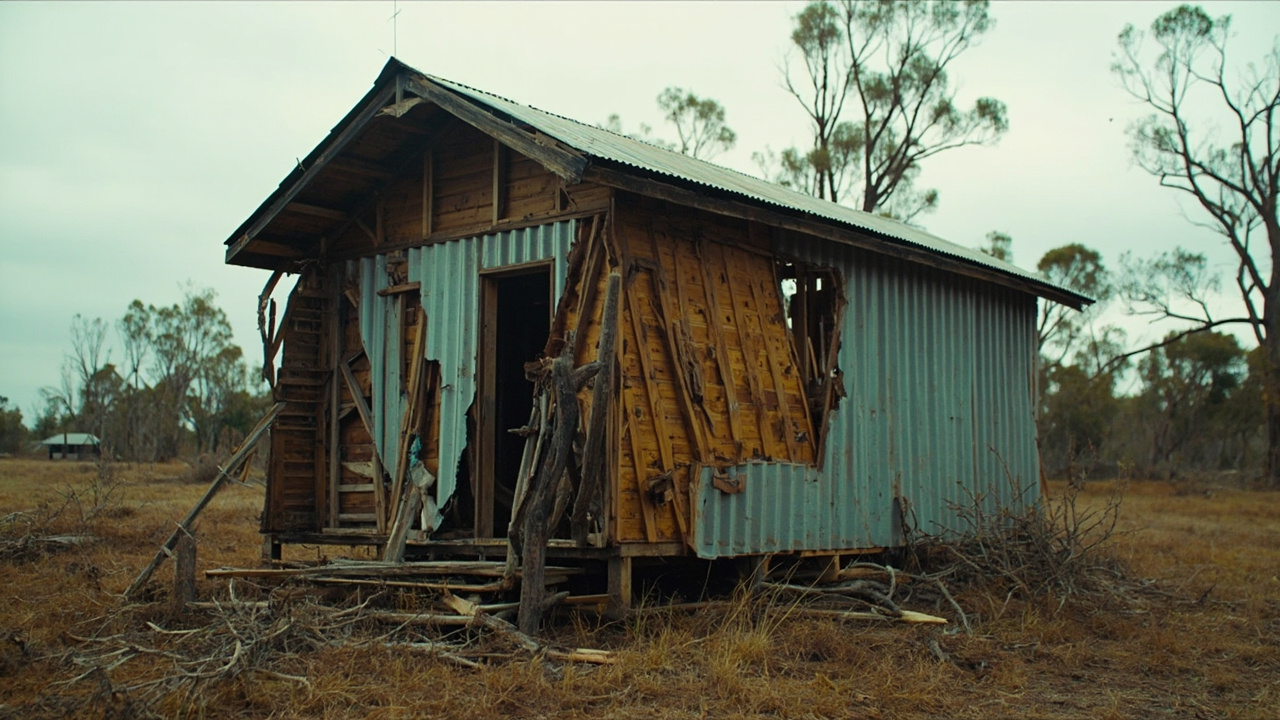
I watched my cabin’s walls buckle when the cyclone hit.
In off-grid builds, insulation isn't just about comfort; it's your main energy saver. Skimp and you waste 30-50% of your renewable power, forcing you to oversize your solar or wind kit. We see the real cost in Queensland, where a wet glass wool batt failed during a cyclone, proving that quality is critical for year-round efficiency against swings from -5°C to 45°C+.
Cabin walls buckled inward after cyclone winds hit.
Pro Tip: For every 1 point increase in R-value, you reduce heating/cooling energy needs by 5-7%. In remote locations, this means fewer battery cycles and longer system life.
Insulation Picks I’ve Used on Off‑Grid Aussie Builds
Batts (Fibrous Insulation)
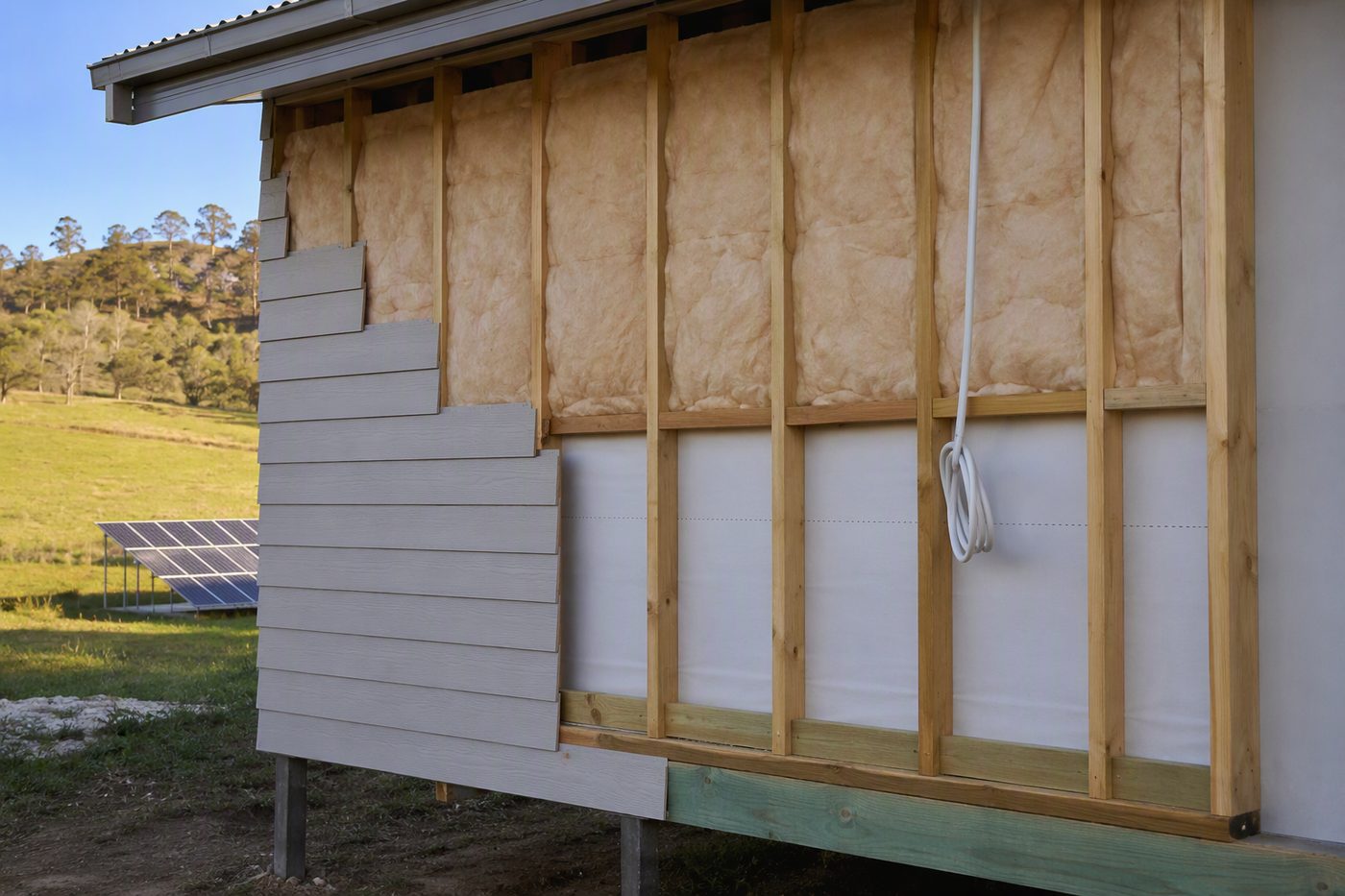
Most common for walls/floors. Made from glass wool, rock wool, or cellulose. Best for standard framing.
Pros: Easy to install, affordable, good fire resistance (rock wool)
Cons: Can lose effectiveness if compressed or wet (glass wool)
Australian Fit: Rock wool (e.g., Foamex Rockwool) is ideal for humidity-prone areas
When the Queensland Cyclone Blew Through My Radiant Barrier
Aluminised foil that reflects radiant heat. Used in roofs/attics.
Pros: Excellent for hot climates (Zone 1-3), blocks 97% of radiant heat
Cons: Useless in cold climates without additional bulk insulation
Australian Fit: Pair with bulk insulation in northern Australia (Thermawool Reflective)
When a Queensland Cyclone Blew Through My Bulk‑Insulated Cabin
Materials that absorb/store heat (e.g., straw bales, hemp, wool). Works best in passive solar designs.
Pros: Natural, sustainable, regulates indoor temps
Cons: Requires careful moisture management
Australian Fit: Perfect for Zone 4-9 where temperature swings are extreme
2026 R‑Value standards: what I've learned about Aussie climate zones
Based on NCC 2022 requirements (exceed these for off-grid efficiency):
Climate Zone 1 (Tropical Humid - e.g., Cairns)
Roof: Min 2.5, Target: 3.5+ (use reflective + bulk)
Walls: Min 1.5, Target: 2.0
Floor: Min 1.5, Target: 2.5
Climate Zone 3 (Warm Temperate - e.g., Sydney)
Roof: Min 2.5, Target: 3.0
Walls: Min 1.5, Target: 2.5
Floor: Min 1.5, Target: 2.0
Climate Zone 7 (Cold - e.g., Canberra)
Roof: Min 4.0, Target: 5.0+
Walls: Min 2.5, Target: 3.5
Floor: Min 3.0, Target: 4.0
Climate Zone
Roof R-Value
Wall R-Value
Floor R-Value
Recommended Insulation Mix
1 (Tropical Humid)
2.5 (min) / 3.5+ (target)
1.5 (min) / 2.0 (target)
1.5 (min) / 2.5 (target)
Reflective + Rock Wool
3 (Warm Temperate)
2.5 / 3.0
1.5 / 2.5
1.5 / 2.0
Rock Wool Batts + Reflective
5 (Cool Temperate)
3.0 / 3.5
1.5 / 2.5
2.0 / 2.5
Rock Wool Batts
7 (Cold)
4.0 / 5.0+
2.5 / 3.5
3.0 / 4.0
Bulk (Hemp/Wool) + Rock Wool
The Cyclone That Exposed My Natural Insulation Choices
For off-gridders prioritising eco-impact, these natural options outperform synthetics:
Straw Bales (Zone 1-5)
Cost: $0.30-$0.50/m² (reclaimed straw) | R-value: 1.5-2.0 per 100mm
Why it works: Perfect for Queensland/NSW where straw is abundant. Requires 150-200mm thickness for R2.5. StrawBale Australia offers certified bales.
Hempcrete (All Zones)
Cost: $150-$250/m³ (including labor) | R-value: 1.8-2.2 per 100mm
Why it works: Regulates humidity, fire-resistant, and carbon-negative. Ideal for Victoria/Tasmania. Hempcrete Australia provides installation kits.
Wool Insulation (Zone 4-9)
Cost: $1.20-$2.00/m² | R-value: 2.2-2.5 per 100mm
Why it works: Naturally moisture-wicking, fire-resistant, and Australian-made (e.g., Thermawool). Best for cooler zones where humidity control is key.
When the cyclone hit: batt insulation failure in a Queensland build
Air Sealing First: 30% of heat loss occurs through gaps. Seal with silicone or hemp-based caulking before installing insulation.
Layering is Key: In cold zones, combine bulk (wool) + reflective (foil) for 20% better performance than single-layer.
Moisture Management: Always use a vapor barrier (e.g., 150gsm polyethylene) on the warm side in cold climates. Never install insulation against wet walls.
Roofing Tip: For attics, leave 25mm air gap between insulation and roof sheeting to prevent condensation.
Off-Grid Hack: Use recycled denim insulation (e.g., Denim Insulation Australia) – it's non-toxic and reduces landfill.
What a 100 m² Build Really Costs in AUD
Insulation Type
Material Cost (AUD)
Installation Cost (AUD)
Total (AUD)
Best For
Rock Wool Batts
$800–$1,200
$600–$1,000
$1,400–$2,200
Walls and ceilings, broad compatibility
Bulk Insulation Batts
$600–$1,000
$500–$900
$1,100–$1,900
Ceilings, roof spaces, cost-effective
Reflective Foil
$400–$700
$300–$600
$700–$1,300
Under-roof, timber frame walls
Spray Foam
$1,500–$3,000
$1,000–$2,000
$2,500–$5,000
High performance, irregular spaces
Natural (Hemp, Wool)
$1,200–$2,500
$800–$1,500
$2,000–$4,000
Eco-builds, non-toxic priority
When I Hand the Job to a Licensed Contractor
While many off-grid projects are achievable as DIY, certain situations require licensed professionals:
Electrical work beyond basic 12V DC additions — requires a licensed electrician
Structural modifications to buildings or load-bearing elements
Gas line installation or modification
Solar array installations above safe voltage thresholds
Any work that affects the structural integrity of your property
Always check local regulations and obtain necessary permits before commencing work.
⚠️ SAFETY WARNING: Working with electrical systems, structural modifications, or gas installations carries inherent risks. If you are not confident in your abilities, always engage a licensed professional.
In the video, The Container Guy tests five different insulation approaches on a shipping container and shows how each handles moisture and temperature swings, which mirrors the issues I address in the guide. He goes through the actual installation of rigid foam boards and highlights where they fall short if you skip the thermal break.— Mick O'Brien
Frequently asked questions
What R-value insulation do I need in Australia?
The 2026 standards sort the country into climate zones, and the right target depends on which one your block sits in. I learned that lesson the hard way when I ignored R-4 in Tasmania and watched a cabin freeze solid overnight. Have a look at the zone map before you order a single roll.
How much does it cost to insulate a 100m² off-grid building in Australia?
I break down the real AUD cost of a 100m² build in the article, with the insulation line called out separately. The figure swings depending on the product you pick and your climate zone, so it's not a one-size-fits-all number.
Is natural insulation any good in cyclone-prone areas?
A cyclone exposed the weak points in my natural insulation choices, and I lay out what held up and what didn't. Batt insulation failed on a Queensland build of mine when the wind drove rain through the walls, and that story's covered in full.
Do I need a licensed contractor to install insulation in Australia?
Some of the work I do myself, but there are parts of a job I hand to a licensed contractor, and I explain where that line sits. Off-grid builds can blur the usual rules, so it's worth knowing what's required before you start swinging a hammer.