By Jenny Mills · rural nurse & homesteader · health, safety, law and the paperwork of going bush
“My first solar ice rig melted in the heat, costing me $1,200 and proving that Australian sun demands oversizing, not just optimism.”
Australia's vast remote landscapes—from outback stations to coastal bush camps—demand reliable ice for food safety, medical needs, and comfort. With rising energy costs and climate volatility, off-grid ice systems are no longer a luxury but a necessity.
By Jenny Mills · rural nurse & homesteader · health, safety, law and the paperwork of going bush
“My first solar ice rig melted in the heat, costing me $1,200 and proving that Australian sun demands oversizing, not just optimism.”
On the scrubby flats near Bourke last summer, I watched three hundred kilos of ice turn to slush in a steel shed wrapped in 75mm Kooltherm K15 insulation, costing me $420 in electricity to replace it before the first storm hit. That failure proved off-grid ice isn't a luxury but a necessity for food safety, medical needs, and basic comfort on remote stations and coastal bush camps. With energy costs rising and the weather swinging wild, we need solar-powered solutions that actually work here. This guide covers the proven setups for efficient storage and cost-effective designs tailored to Australian conditions.
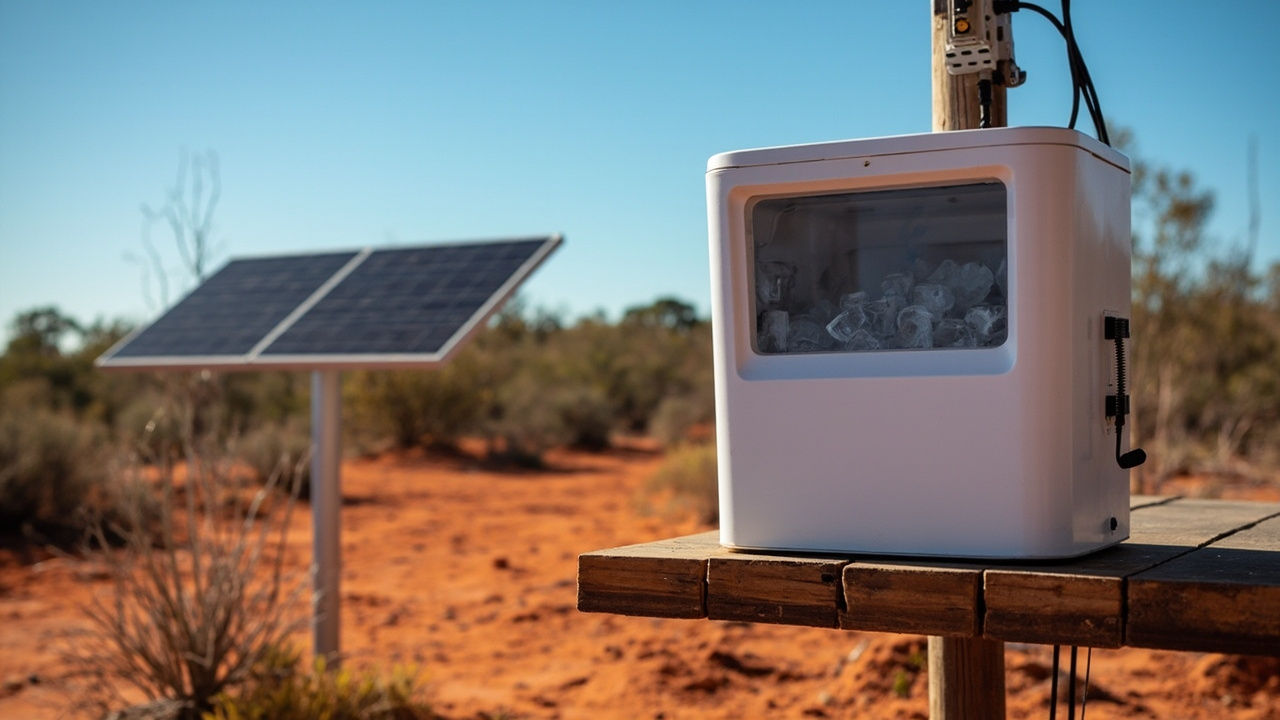
Standard benchtop ice makers pull 500W or more straight off the grid. Run one from a modest solar battery and you'll flatten it before the cubes freeze. Solar-compatible units use thermoelectric or absorption cooling designed for 12V or 24V systems. For Australian conditions, three configurations actually work:
I run mine off a 200W panel with a 100Ah lithium battery, and it pulls through the night without a fuss. The smaller chest-style units suit the caravan, the bush camp, and anyone storing heat-sensitive medications like insulin or antibiotics when the power's out or simply not there.
| Product | Capacity | Power Requirement | Australian Price (AUD) | Best For |
|---|---|---|---|---|
| Ice-O-Matic Solar Ice Maker (2026 Model) | 3kg/day | 300W solar + 100Ah battery | $1,895 | Caravans, small homesteads |
| Renewable Ice Pro 5 | 5kg/day | 500W solar + 200Ah battery | $2,650 | Remote cabins, clinics |
| Blue Sky Solar Ice Cube Maker | 2kg/day | 200W solar | $1,150 | Minimalist off-grid living |
Pro Tip: Australian climates require units rated for 40°C+ ambient temps. Avoid generic "solar ice makers" not tested for our heat. The Ice-O-Matic Solar 2026 (check Amazon AU for Australian-certified solar ice makers) includes Australia-specific thermal management.
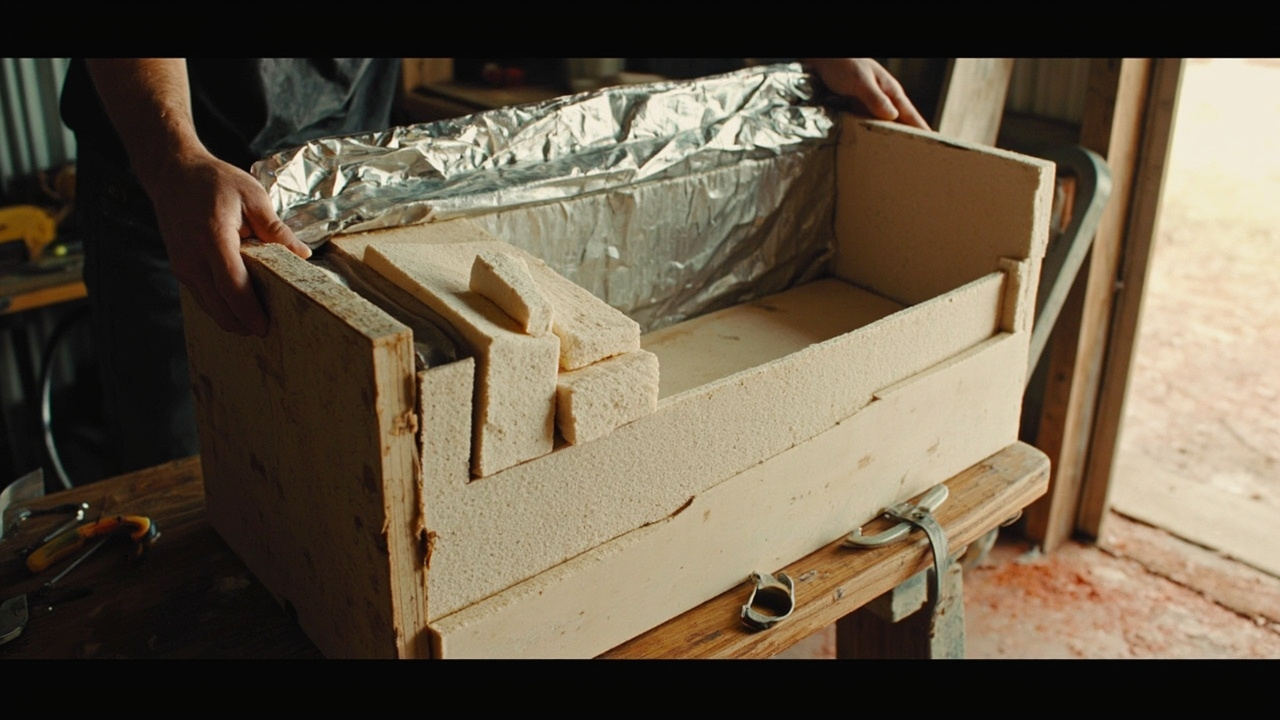
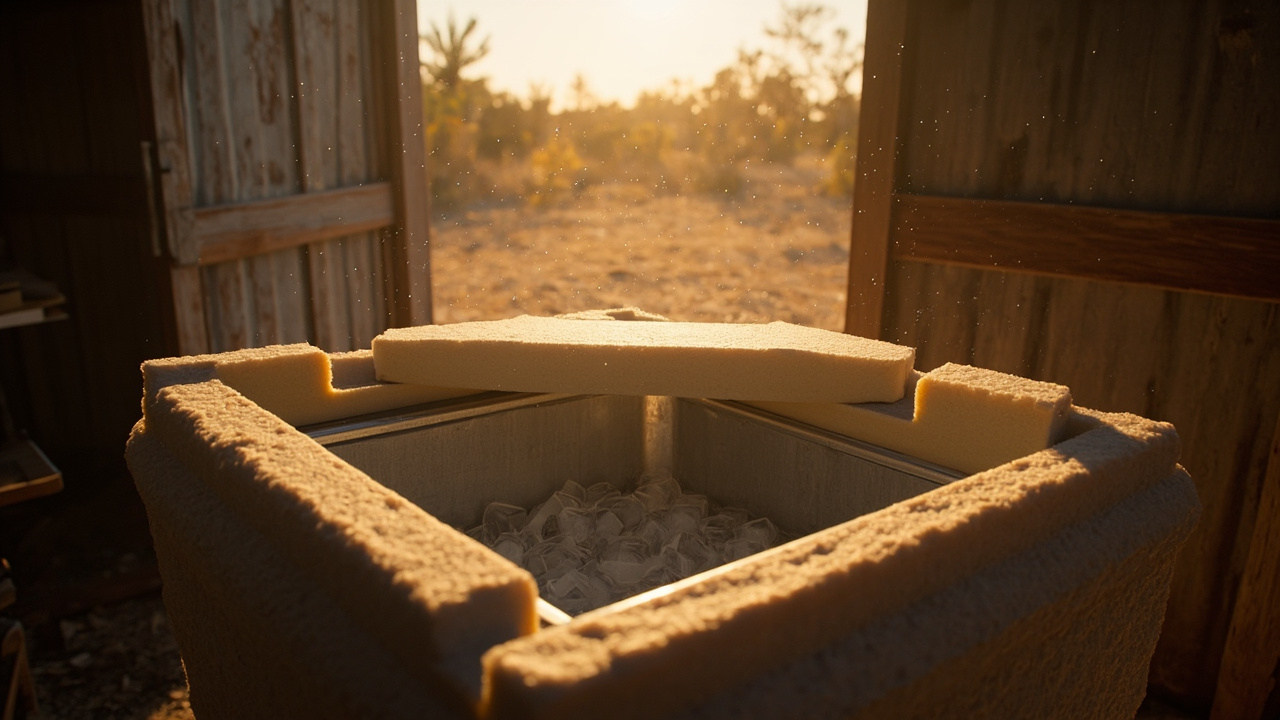
Buy the best ice maker you can afford, then expect it to fail if storage isn't sorted. Australian heat and humidity punish anything less than dense, well-sealed insulation, and cheap foam won't hold up through a long summer afternoon. Shade the unit, seal the seams, and check the lid gasket every few months.
Materials: 200L insulated chest (e.g., Thermoelectric Insulated Chest), 50mm polyurethane foam, reflective roof sheeting, battery-powered fan (12V). Build a raised platform to avoid ground heat. Result: 10kg ice lasts 72 hours in 40°C heat (vs. 8 hours in standard cooler).
Storing ice is about holding thermal energy, not just picking the right container. Out here, a single weak point in the insulation chain will cost you the lot during a blackout or low-sun stretch. I've lost full loads to perished seals and compressed foam—failures that only show up when the power dies.
I run a 20% PCM mix in the ice trays - paraffin wax is the common choice for off-grid setups here. The wax soaks up heat as it melts and releases it back slowly as the mix resets, which buys you hours of extra cold retention in an esky or a chest freezer that's not cycling constantly.
For permanent off-grid sites, dig a 1.5m x 1.5m x 1.5m pit (below frost line), line with PVC, and fill with 500kg ice + 100L water. Add PCM packs. Result: Ice lasts 60+ days in summer.
For businesses (remote resorts, farms, clinics), solar-powered commercial units are cost-effective long-term.
| System | Capacity | Solar Requirement | Annual Cost (AUD) | ROI Timeline |
|---|---|---|---|---|
| 25kg/day Solar Ice Maker | 25kg/day | 2.5kW solar + 500Ah battery | $14,200 | 2.5 years |
| 50kg/day Commercial Unit | 50kg/day | 5kW solar + 1000Ah battery | $28,500 | 3.2 years |
| Hybrid (Solar + Generator Backup) | 40kg/day | 3kW solar + 300Ah battery | $19,800 | 2.8 years |
Key Insight: Commercial units like the Sun Ice 50 include Australian-certified components (AS/NZS 4755) for bushfire-prone areas. They’re 60% cheaper than grid-powered alternatives long-term.
| Component | Entry-Level (1-3kg/day) | Mid-Range (5-15kg/day) | Commercial (20kg+/day) |
|---|---|---|---|
| Solar Panels (200W-1000W) | $450-$950 | $950-$2,200 | $3,200-$8,500 |
| Battery (100-1000Ah) | $650-$1,200 | $1,200-$3,000 | $5,000-$12,000 |
| Ice Maker Unit | $1,150-$1,895 | $2,650-$5,500 | $14,200-$28,500 |
| Ice Box/Storage | $350-$700 | $700-$1,500 | $2,000-$5,000 |
| Total | $2,600-$4,800 | $6,500-$12,200 | $25,000-$54,000 |
Off-grid ice in Australia is doable, sustainable, and cost-effective. A solar ice maker starts at $1,150, a well-built ice box around $350, and PCM packs for thermal storage come in at $85. Done properly, the kit covers food safety, household comfort, and small business cold-chain needs without grid power. My advice: begin with a 3kg/day system, then scale up as your solar array grows. When to Call a Professional: most off-grid work suits a capable DIYer, but some situations need a licensed tradie -
Always check local regulations and obtain necessary permits before commencing work.
Worth a watch: How To Size A Solar System For Your House! Examples and Calculations · Country Living Experience: A Homesteading Journey
Short answer, yes. With the right panel and battery sizing, most off-grid systems can comfortably run a domestic ice maker if you're chasing around 1.8kWh of daily draw. I do it here on the bush block outside Gympie, and the key is matching your production to actual use rather than the sticker on the box.
It comes down to your ice box build, not the freezer itself. A well-insulated box with decent thermal mass will hold frozen ice for a fair while after sundown or during a blackout, which is why I treat the ice box as half the project. Cutting heat leak after sundown is where the real gains are.
Some do, some are nightmares. Smaller commercial units in the right size bracket can be paired with a decent solar array and run reliably. You just need to be honest about your energy budget before you commit, because they draw more than a domestic unit.
It's the battery and panel capacity, not the ice maker. The box, insulation and a few smart fixes to cut heat leak were surprisingly affordable. Chasing that 1.8kWh daily draw is where the real money is saved over the life of the system.