By Jenny Mills· rural nurse & homesteader · health, safety, law and the paperwork of going bush
“After losing a full jar of raw honey to a fly infestation in my shed, I learned that sealing jars within two metres of the extraction point is non-negotiable in the Australian bush.”
Forget fancy labs. If you're off-grid in Australia, honey processing is about getting the job done fast, cheap, and without mains power. No fluff. Just straight talk.
Four-stage honey processing flow from uncapping through settling, plus jar and cleanup steps.
Extraction: Get the Honey Out
Don't waste time. Use a manual extractor. Electric ones need power you don't have. A hand-crank model is $200-$350. Buy used on Gumtree—$100-$200. Works fine.
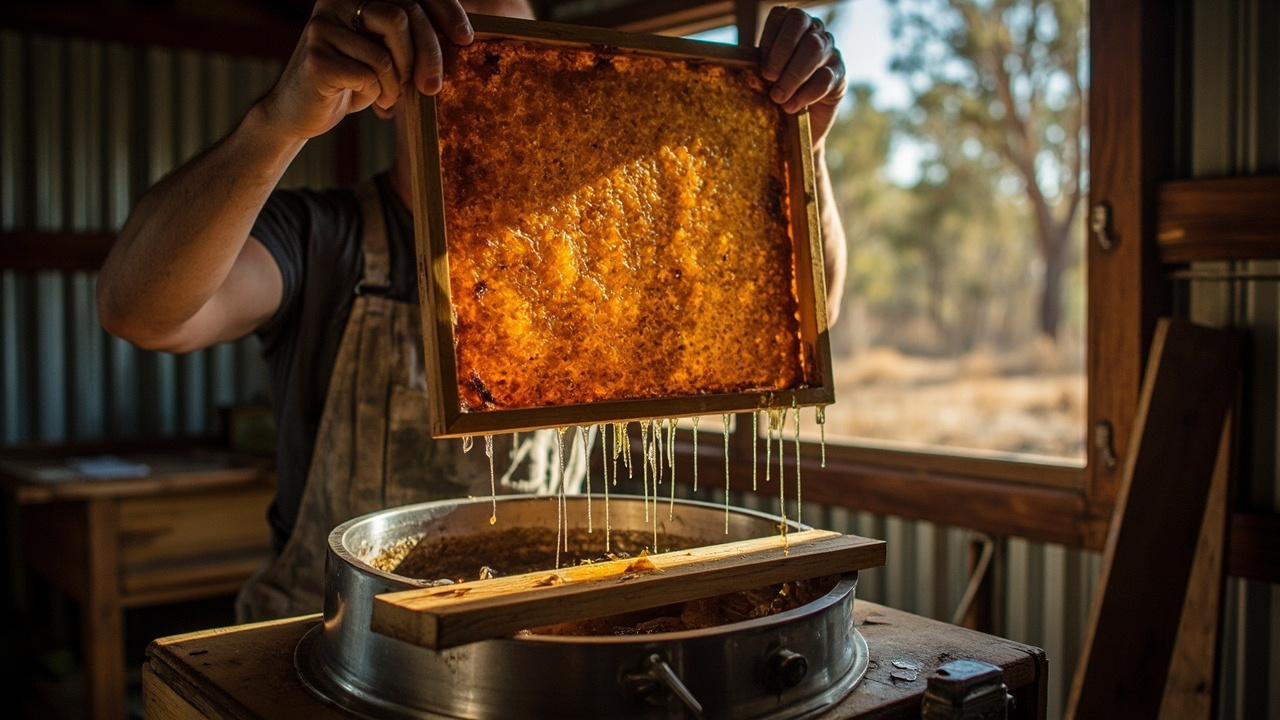
Honey-drenched frame held over manual extractor
Steps:
Remove frames from hive. Smash bees off with a bee brush (not a stick—wastes honey).
Spin frames in extractor. 5-10 minutes per frame. No need for fancy centrifuges.
Collect honey in a bucket. Don't use plastic—stains. Use food-grade stainless
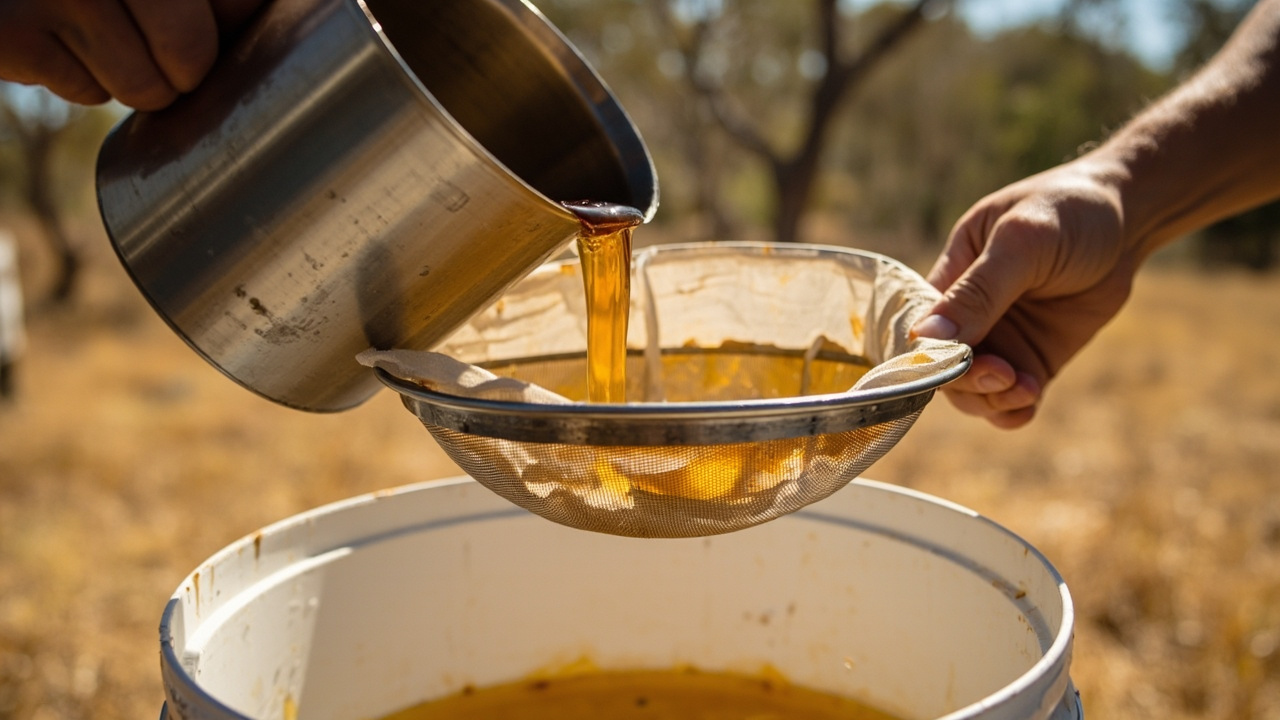
Raw honey poured through mesh strainer
steel or enamel.
Tip: If you're solo, use a 20L bucket. Too big? Honey sticks to sides. Too small? You're constantly pouring. 20L is the sweet spot.
Filtering: Strain the Grit
Don't skip this. Wax bits and bee parts ruin your honey. Use a fine mesh strainer ($15-$25 from Bunnings). Cheesecloth is a waste of time—clogs fast.
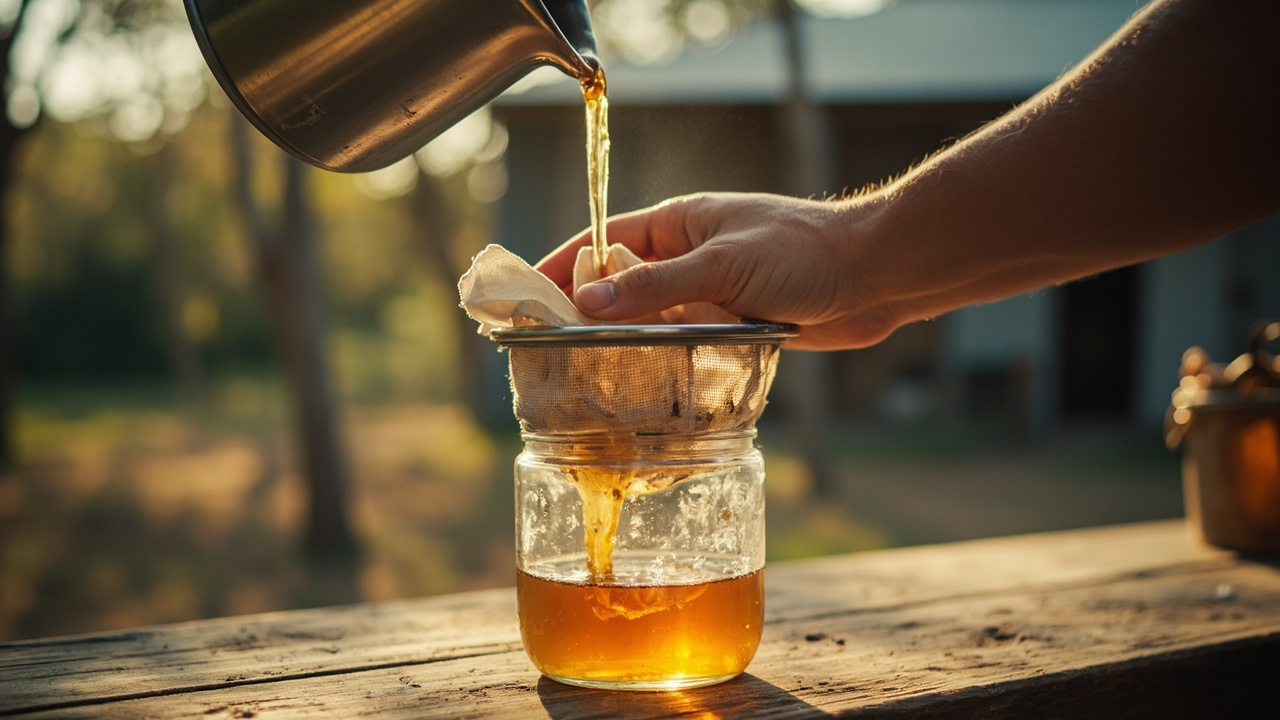
Raw honey straining through fine mesh
Steps:
Place strainer over a clean bucket.
Pour honey through. Let gravity do the work. No pressure needed.
For super-fine honey, double-strain. Once through mesh, once through a coffee filter (cheap, $5 for 100 at Woolworths).
Tip: If you're off-grid, don't use hot water to clean strainers. Cold water only. Hot water warms honey and makes it sticky. Waste of time.
Creaming: Make It Smooth
Most honey is grainy. Cream it for that spreadable Aussie style. Takes 2-3 days. No special equipment needed.
Steps:
Heat honey to 40°C (use a thermometer—$15 at hardware stores). Don't go above 45°C or you kill enzymes.
Let cool to 25°C. Stir gently for 5 minutes.
Pour into jars. Leave uncovered for 2 days. Stir once daily.
After 48 hours, it'll be creamy. If it's still grainy, repeat the cooling/stirring.
Australian Suppliers (Off-Grid Prices): Manual Extractor: Gumtree (used) - $100-$200. Stainless Strainer: Bunnings - $22. Thermometer: Mitre 10 - $15. Jars (500g): eBay - $0.50 each (buy 100+ for $50).
Why This Works Off-Grid
Electric extractors? Waste of money. You need power for 2 hours to spin 10 frames. Manual? 10 minutes. No power. No hassle.
Filtering with mesh? Costs $20. Cheesecloth? Costs $5 but fails. Mesh lasts years. Save your cash.
Creaming without a machine? Takes 2 days. But it's free. And it's the only way to get that smooth honey that doesn't crumble on toast.
Final Tip: Don't over-process. Honey is best raw. If you heat it above 40°C, you lose the good stuff. Keep it simple.
⚠️ SAFETY WARNING: Working with electrical systems, structural modifications, or gas installations carries inherent risks. If you are not confident in your abilities, always engage a licensed professional.
It walks through a simple bucket‑and‑paint‑filter strain followed by direct bottling, which matches the off‑grid workflow in the guide. The 12‑minute run‑through uses basic gear you can source locally, no power required.— Jenny Mills
When to Call a Professional
While many off-grid projects are achievable as DIY, certain situations require licensed professionals:
Electrical work beyond basic 12V DC additions — requires a licensed electrician
Structural modifications to buildings or load-bearing elements
Gas line installation or modification
Solar array installations above safe voltage thresholds
Any work that affects the structural integrity of your property
Always check local regulations and obtain necessary permits before commencing work.