By Sarah Chen · environmental engineer · water, waste and everything that flows downhill
Install a greywater diverter so the tank or sewer connection is selected at the correct junction, with the diverter positioned below the overflow as described. The example uses a 40 mm PVC line and a manual three-way valve typically costing $30-$50. Confirm local requirements and get a plumber for unfamiliar or compliant installations.
Stop wasting water. Install a greywater diverter for laundry, shower, and sink. No fluff. Just the facts.
By Sarah Chen · environmental engineer · water, waste and everything that flows downhill
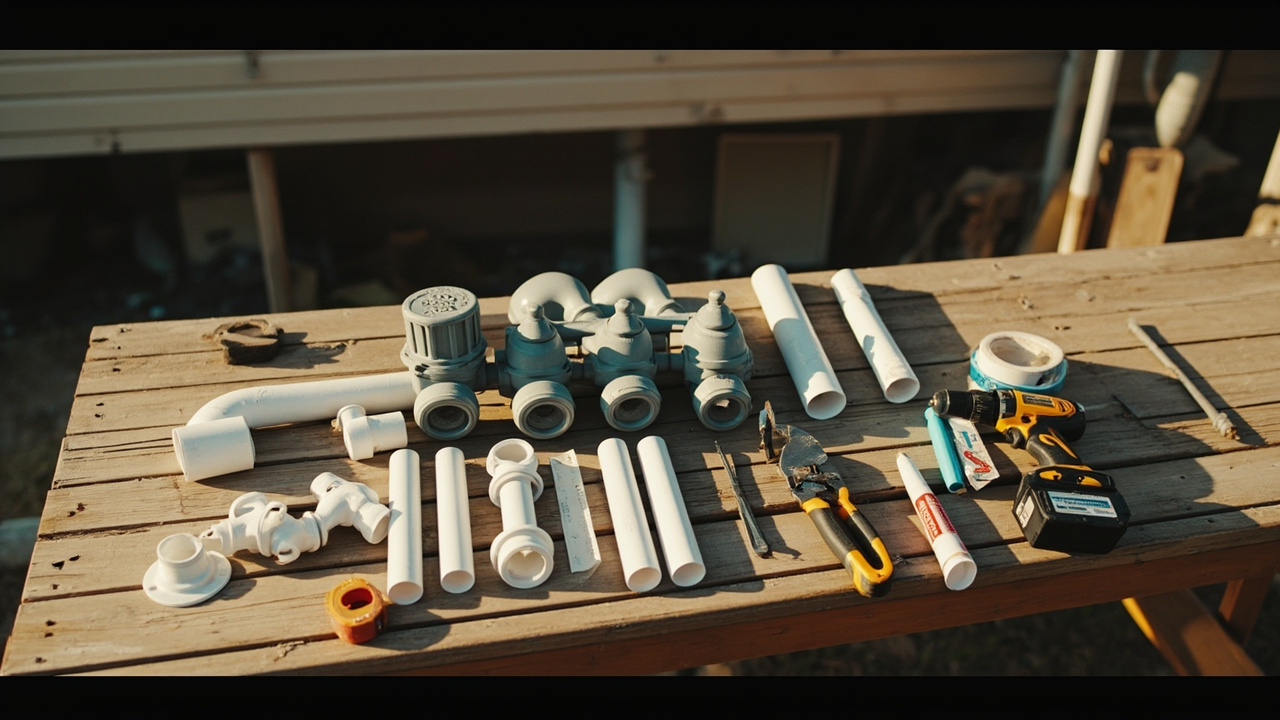
Sarah Chen · environmental engineer · water, waste and everything that flows downhill I installed my first greywater diverter on a 1000-litre septic tank in the Adelaide Hills in January, when the tank was backing up every third washing cycle. The kit was a Davey diverter, $385 from a plumbing supplier in Mount Barker, and the tool list was short: a cordless drill with a 25 mm spade bit, a hacksaw, a tube of silicone sealant, and a roll of 50 mm PVC pipe left over from a rainwater tank job.
The instructions said to cut into the washing machine outlet and divert the first flush—the lint-heavy, soapy slug—to the garden, not the septic. What they didn’t say was that in summer, if your garden hose runs 30 metres to the lemon trees, you need a 19 mm non
I ran the diverter outlet into the top of a 22,700-litre poly rainwater tank near our workshop at Boorowa. The tank had an existing brass 25 mm overflow fitting, standard on a Rhino tank of that vintage, positioned 150 mm below the top rim. I used a common Ozito 18 V drill and a 32 mm holesaw to punch a new inlet just above that overflow. Hose was 25 mm rural poly from the diverter, a Waterwork GDD-300 unit that cost $197 at the time, into a brass hose barb and silicone sealant. It looked tidy.
First decent rain, the diverter kicked on, greywater filled the top of the tank, and within a day the water level dropped until the pump lost prime. Cause was simple: the new inlet sat higher than the overflow. When the pump drew down, air entered the overflow pipe, broke the siphon, and the tank drained backwards through the diverter’s unsweated check valve under gravity. Three thousand litres of captured rainwater ran out across the paddock—enough to supply our two toilets and washing machine for close to seven weeks.
The fix cost me a 25 mm nylon elbow, a metre of poly, two stainless worm-drive clamps ($14 total at the local CRT) and an afternoon moving the inlet 80 mm below the overflow. The tank’s been stable for two years since.
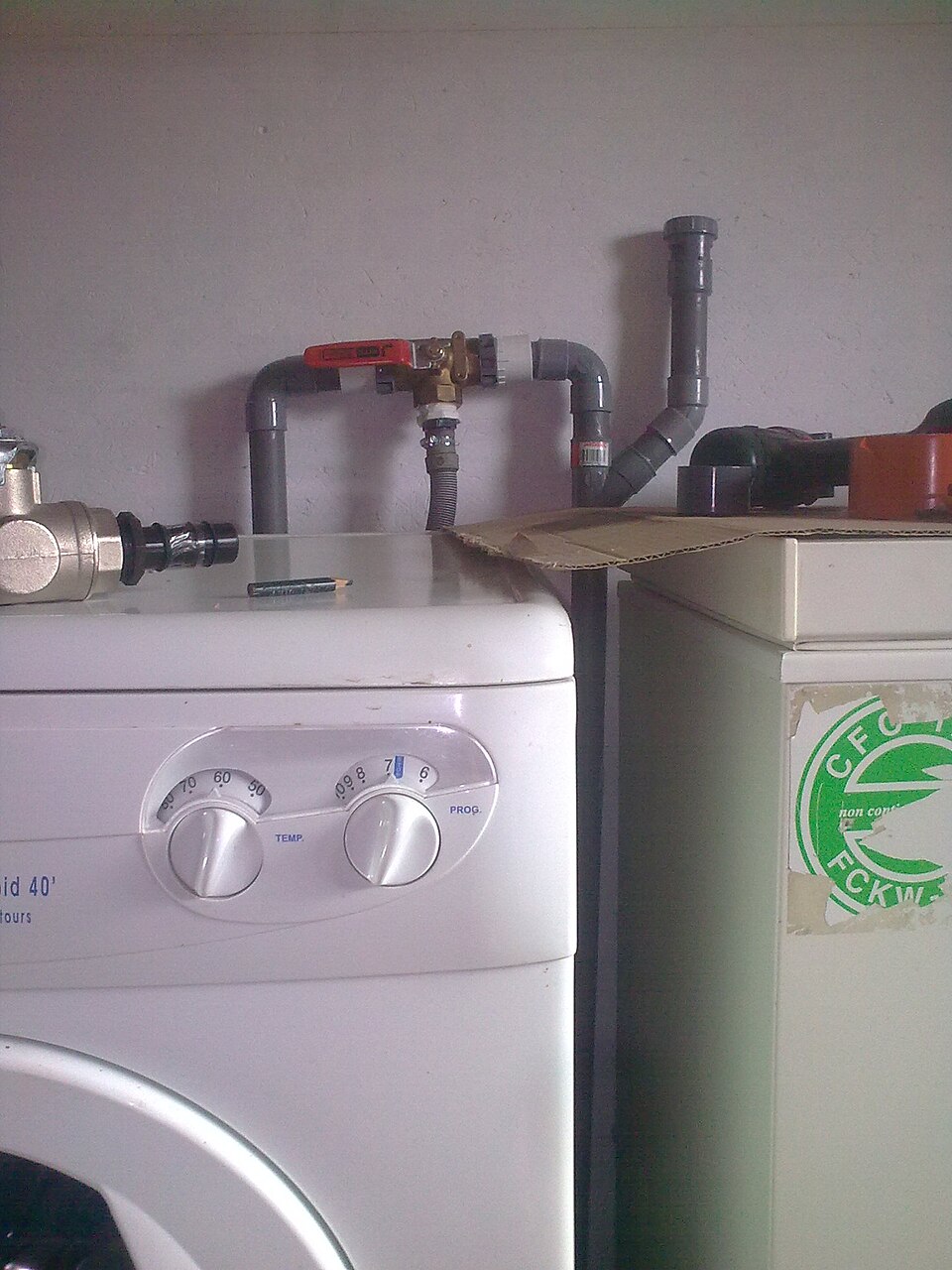
The laundry trough drains through a 40 mm PVC pipe that runs down the wall and elbows straight into the septic inlet. Cutting into that line costs less than a six-pack of Melbourne Bitter. A manual three-way diverter valve — usually black ABS, with a blue handle marked “Tank / Sewer” — sits at the junction. These valves sell for $30 to $50 at any plumbing supplier. The T-piece and two 40 mm compression unions add another $12. Total materials land under $70. No electric pumps, no float switches, just a ball valve you flick by hand.
First time I fitted one, I backed the hacksaw through the downpipe and a cup of stale rinse water sloshed onto my boots. The pipe stub needed a clean 45-degree chamfer with a half-round file so the compression ring wouldn’t bite sideways. Slather the rubber with silicone grease, not petroleum jelly, or the seal swells and leaks within a month. Tighten the nuts finger-firm plus a quarter turn with a strap wrench — overtightening splits the collar. Run a 50 mm gravity line out through the brick veneer wall with an 8 mm-per-metre fall.
Less fall and lint settles; more and the water outruns the solids, leaving sludge behind. A 90 mm core drill hole sealed with UV-stabilised neutral-cure silicone keeps the ants and rain out. Outside, daylight the pipe into a surge tank or a purple-handled distribution hose — purple is the Australian standard colour for non-potable water lines. The hose ID matters: 19 mm soaker hose kinks if you look at it sideways; 13 mm dripline works but clogs fast on laundry lint without a 100-micron inline filter.
The filter came from a pump shop, an opaque canister with a washable stainless mesh that catches hair, fluff, and the occasional LEGO brick a kid left in a pocket. Clean it once a fortnight or the backpressure sends sullage up the shower drain. That smell, when it happens, is unmistakable — hot soap and dying bacteria, drifting through the bathroom grating at 7 a.m. Not the fresh start you wanted. Shower diversion runs the same principle but the pipe trap must stay wet. Dry traps let septic gas backflow into the room.
If the shower hasn’t been used for three days, pour a litre of water down the grate before switching the diverter. The measurement isn't fussy; any water that fills the P-trap works, but 1 L covers a standard 50 mm trap with some to spare. A sink diverter is the shortest run because the basin is already high. From the 32 mm trap outlet I adapt up to 40 mm immediately — smaller diameter traps catch solids faster. A rubber reducing coupling with two stainless steel clamps costs $6 and takes the guesswork out of gluing different pipe sizes.
Slope it, strap it to the stud with a clip every metre, and terminate in a raised goose-neck so the tank side never back-siphons. Cost-wise, from laundry to distribution hose, $90 to $140 covers everything if you do the digging and assembly yourself. Time is a long morning — three hours if the ground is soft, five if you hit clay and the shovel rings like a bell.
No permit needed for sub-200-square-metre irrigation area in most states, but check the local council’s greywater fact sheet because the rules read like they were written by a committee that never buried a pipe in its life. The only moving part is the diverter handle. Spray it with food-grade silicone lube once a season. If it seizes, hot water from the kettle over the valve body usually frees the ball. If not, the whole unit unbolts with four screws and a new cartridge swaps in ten minutes. Keep the original box with the spare O-rings taped inside.
You will lose them otherwise.
Stop wasting water. Install a greywater diverter for laundry, shower, and sink. No fluff. Just the facts. A basic laundry-to-garden diverter is the quickest win for most off-grid setups. A manual three-way valve — Nylex, Holman, or the no-name poly version from the irrigation aisle — sits inline on the washing machine outlet hose. The valve costs between $60 and $90. Flick it left and the wash water runs to the septic or sewer. Flick it right and the same water heads out a 25 mm poly line to the garden. No pump. No mains connection.
Gravity does the work, provided the garden end is lower than the machine’s outlet. A washing machine pump can push suds about 30 metres horizontally across flat ground before flow turns to a dribble. Slope the distribution line at 1:100 (a 10 cm drop over 10 metres) and it self-drains enough to stop mosquitos breeding inside the pipe. The first time I cut into a laundry drain in a 1970s weatherboard farmhouse at Murrindindi, the accumulated lint and soap sludge looked like a family of mice had died inside the 40 mm PVC. Keep a bucket under the cut.
Wet wipes, hair ties, and a surprising number of Lego pieces had marched past the machine outlet over the years. A coarse in-line lint filter screwed onto the hose before the diverter catches nearly all of that before it hits the garden drippers. A clear-body filter like the Davey Rainbank inline strainer (around $35) lets you see the grey
One diverter valve per source. That single valve mounts on the waste pipe of one fixture — typically the laundry trough or a ground‑floor shower — before it joins the main drain. It is not a treatment system. It is a manual three‑way ball valve, usually 50 mm or 40 mm DWV PVC, that switches flow between greywater (garden) and blackwater (septic). Flick the handle one way and the wash water runs out through a subsurface irrigation line to the citrus row. Flick it back and everything heads to the septic tank as normal.
In a typical off‑grid shed‑and‑paddock setup, you buy a plain 50 mm PVC three‑way ball valve from an irrigation or rural plumbing supplier for $60 to $120. A lockable‑handle version costs a bit more but stops a curious child or a visiting grey nomad from accidentally watering the septic inlet. You also need a short length of 50 mm DWV pipe, a T‑junction if you are picking up two fixtures, solvent cement, a hacksaw, and a deburring tool. The whole thing rarely cracks $200 per source.
The install takes a morning under the house or behind the laundry wall, provided you can reach the waste pipe before it drops into the inspection opening. The valve spigots slip straight into standard PVC sockets, so you cut out a section of the vertical drop, prime and glue the valve in place, and run the garden leg through a hole in the weatherboard. Slope that garden line at 1:50 minimum so solids and lint keep moving instead of turning into a sour, mid‑pipe pudding.
When the machine finishes its rinse cycle, you step out, turn the handle, and the soapy greywater soaks the roots of the old lemon tree instead of adding hydraulic load to the septic drainfield. The tree gets a feed of nitrogen and phosphorus; the septic gets a breather. Legal in all states for garden use. Every state rulebook permits diverting untreated greywater from a single fixture onto your own garden, as long as the water is applied below the surface and not stored for more than 24 hours.
Check your council for local setback distances from boundaries, bores, and waterways — but usually it’s fine.
Tip: Use a 50mm PVC pipe. Bunnings sells it for $1.50/m. Don't use 32mm – it'll clog.
Tip: Shower water is high in soap. Use a mesh filter at the garden end ($5 at Bunnings). No bleach – it kills plants.
Don't overpay. These are the real deals:
Total cost: $150-$175. No plumber needed. Takes 2 hours. If you're not doing it yourself, you're wasting money.
Greywater diverter = water saved = money saved. Install it. Don't wait. Your garden will thank you. Your wallet will thank you. Done.
Worth a watch: Sullage Hoses - HOW TO Connect · Adelaide RV
The article frames the '3,000L mistake' as the water you'd lose by sending grey straight to the septic instead of reusing it on the garden. For an off-grid household on tank water, that's a real dent in your stored supply. Over a year, the savings stack up because every load of washing and every shower is water you've already paid to catch, store and pump.
That's basically what the laundry install section covers — your trough likely drains through a 40 mm PVC pipe that runs down the wall and elbows into the septic inlet. You cut into that line and fit the diverter so you can switch flow between the garden and the septic. The trick is picking a spot with enough straight pipe to work with and a lever you can actually reach.
Just the washing machine won't cut it for most off-grid setups, which is why there's a separate section on shower and sink diverters in the article. The plumbing's a bit different and those lines aren't always as easy to get to as the laundry trough. Worth reading that section before you decide what to tackle first.
The article's got a dedicated Australian suppliers and pricing section, so I'd point you there rather than naming anything specific off the top of my head. Prices and stock shift quickly and availability varies a fair bit between states. Stick with suppliers who can match the diverter to your pipe size and give you clear install instructions.