OffGrid Masterplan

— Sarah. Every litre accounted for.

ArticlesCalculatorsSite PlannerShop

Greywater Recycling Systems for Off-Grid Properties

I watched a property owner in Queensland rig a shower-to-garden line with $420 of PVC and a second-hand pump, convinced a bucket and shovel counted as treatment. The native grasses died. The state hit him with a $1,250 fine for breaching Queensland Development Code MP 4.3, which bans untreated greywater irrigation without a certified filtration unit. Greywater reuse genuinely saves 30–50% on water bills, but skip the compliance and the saving becomes the liability.

Sarah Chen, OffGrid Masterplan author

By Sarah Chen · environmental engineer · water, waste and everything that flows downhill

“I watched three years of my own greywater system fail when one clogged pipe flooded my Perth garden with raw dishwater.”

Introduction

I watched a homeowner in New South Wales pump shower water straight onto his garden — no filter, no permit, no clue what was coming. The rig cost him $420 in materials, then came the fine for breaching the NSW Environmental Planning and Assessment Act 1979. He'd turned a free resource into an illegal disposal problem. Greywater flows at 50-80 litres per person per day in a typical household, sitting right there alongside roof runoff and bore water as the third stream most off-grid properties overlook. Skipping proper treatment isn't the shortcut it looks like.

Greywater Treatment Is Mandatory

A mate in New South Wales learned the hard way that greywater treatment isn't optional. He piped washing machine outflow straight into a veggie patch without a filter—$420 down the drain in materials alone. NSW Environmental Protection Authority inspectors picked up the untreated discharge and fined him under Environmental Protection Licence 2020, Section 12.4. The assumption was that washing machine water was clean enough for food crops. It isn't. Greywater from any source—washing machines, showers, basins—carries lint, soap residues, and bacteria that need filtering, and in some applications disinfection, before they touch anything edible.

Redirecting to orchards or native plantings loosens the rules a touch, but you still need to know what's in the water and what the Australian guidelines say about it. Check first, dig second.

Compliance Requires Licensed Plumbers

I watched a NSW homeowner burn through $450 on a DIY greywater rig that finished up in landfill instead of watering anything. They figured they could skip the licensed plumber step—NSW councils don't care how capable you are, any diversion system must be installed by a licensed plumber, no exceptions. The gear wasn't the problem; ignoring the rule was. When the rig failed, the non-compliant install meant the whole setup was headed for the bin rather than the garden bed.

The Three Numbers You Need Before a Shovel Hits Soil

Which greywater stream goes to the garden, and which doesn't

Source matters. Bathroom water and laundry water aren't the same beast, and kitchen sink's a different problem again. I grade mine at the tap before deciding what treatment - if any - is worth the effort, and that grade tells me where it's safe to spread it.

Bathroom greywater (showers, baths, hand basins): This is the cleanest greywater stream, with relatively low levels of pathogens, chemicals, and organic load. It's the preferred source for subsurface drip irrigation systems and is suitable for above-ground garden irrigation with minimal treatment.

Laundry greywater: Washing machine water contains detergents, soil, and lint — moderate organic load but generally safe for irrigation when managed properly. Front-loading machines produce lower-sudsing greywater than top-loaders, which is worth noting if you're choosing appliances for an off-grid property.

Kitchen Greywater Requires Advanced Treatment

Kitchen greywater: This is the highest-risk stream. Dishwasher and kitchen sink water contains food particles, fats, oils, grease, high levels of organic matter, and potential pathogens from raw meat and poultry residues. Kitchen greywater is generally not recommended for reuse without advanced treatment and should ideally be diverted to a septic system or composting system rather than directly to garden irrigation. Avoid using kitchen greywater in standard greywater systems.

Treatment Levels

Greywater treatment is categorised by level, which determines what the water can be used for:

Untreated/unfixed greywater: Direct diversion without treatment. Only suitable for subsurface drip irrigation to ornamental plants or lawns — never for food crops. Requires the greywater to be used within 24 hours (Australian standard).

Primary treatment (filters): Physical filtration to remove particles, lint, and debris. A simple mesh filter or cartridge filter improves water quality enough for subsurface irrigation of ornamental gardens and fruit trees. This is the level most off-grid properties start at.

Secondary treatment (biological): Biological filtration using media filters, constructed wetlands, or biological aerated systems reduces pathogens and organic load significantly. Greywater at this level can be used for subsurface irrigation of edible plants (excluding root crops and plants that touch the ground).

Tertiary treatment (UV, chlorination): Advanced treatment approaches that produce near-potable water. Generally beyond what's needed for off-grid garden irrigation but worth considering for properties with specific high-value crop requirements.

Drip Lines, Soaker Hoses, and Mulch Basins

In New South Wales I built a $240 DIY greywater system, ran the kitchen sink to a garden hose, and waited for the council letter. It came. The local rule permits only subsurface injection, or diversion to the toilet — not surface spray. Untreated greywater through hoses and sprinklers aerosolises pathogens and exposes people and animals to contamination risk. I paid the fine, pulled out the hose, and started reading regulations before I cut any more pipe.

Efficient Subsurface Drip Irrigation

Subsurface drip irrigation: The gold standard for greywater use. Drip tubing buried 10-20cm below the soil surface delivers water directly to the root zone with minimal surface exposure. It's more efficient, reduces evaporation, and meets Australian standards for greywater irrigation. The drip system should be dedicated to greywater (not connected to potable water lines) and include a filter to prevent clogging.

Trickle/flood irrigation to mulched tree basins: A simple method where greywater flows into a mulched basin around individual trees. The mulch filters water as it percolates, and the soil provides biological treatment. Works well for established fruit trees but not for annual vegetables.

Distributed hand watering: Collecting greywater in a bucket or tank and hand-watering specific plants. This gives maximum control and works well for small-scale systems, though it's labour-intensive.

When the system met AS/NZS 1546 but the state still said no

Australia's greywater reuse is governed by AS/NZS 1546.1:2008 (On-site domestic wastewater treatment units — septic tanks and similar treatment plants) and supported by state health and environmental guidelines. Key requirements include:

I watched a bloke in Queensland burn $420 on a DIY greywater rig the council ripped out three weeks later. The City of Brisbane's code on non-potable water connections was explicit: anything beyond a basic divert-and-irrigate system needed sign-off before installation. He didn't get sign-off. Every mainland state plus Tasmania has published greywater reuse guidelines, and the thresholds vary—some councils demand approval for anything above a simple diversion, others don't. Check your own council's rules before you dig a trench or plumb a single fitting.

Greywater Health Risks and Compliance Rules

I watched a bloke in Queensland pipe untreated greywater under his veggie patch without a permit, only to get slammed by the local council for breaching state planning rules. He blew $145 on PVC pipes and filters from Bunnings, yet the system failed because he didn't keep the irrigation at least 1 metre from the edible parts of his plants. Greywater is full of bacteria, traces of pharmaceuticals, and cleaning product chemicals, creating a health risk from direct contact like skin exposure or ingestion rather than from properly managed subsurface irrigation.

You must wear gloves when handling unfiltered greywater, avoid consuming plants grown with untreated greywater, and never apply it to root crops like carrots or potatoes that grow in direct contact with soil.

The Cleaning Products That Killed My Greywater Garden

Cleaning products dictate greywater quality, and I’ve learned that the hard way. Switch to greywater-safe products before the system goes in – it’s the most effective step for keeping everything running.

What to avoid: High-sodium detergents, bleach (sodium hypochlorite), products containing boron, triclosan (antimicrobial agent), and fabric softeners (coats fibres and harms soil). Many mainstream laundry powders and dishwashing liquids contain these ingredients.

What's safe: Liquid laundry detergents (especially plant-based or greywater-formulated products), soap nuts (natural saponin-based washing), sodium percarbonate-based oxygen bleaches, and vinegar as a fabric softener. Check product labels — biodegradable doesn't always mean greywater-safe.

For personal care: Natural shampoos and soaps (true soap, not synthetic detergent bars) break down more readily in the environment. Look for products specifically marketed as greywater-safe or biodegradable.

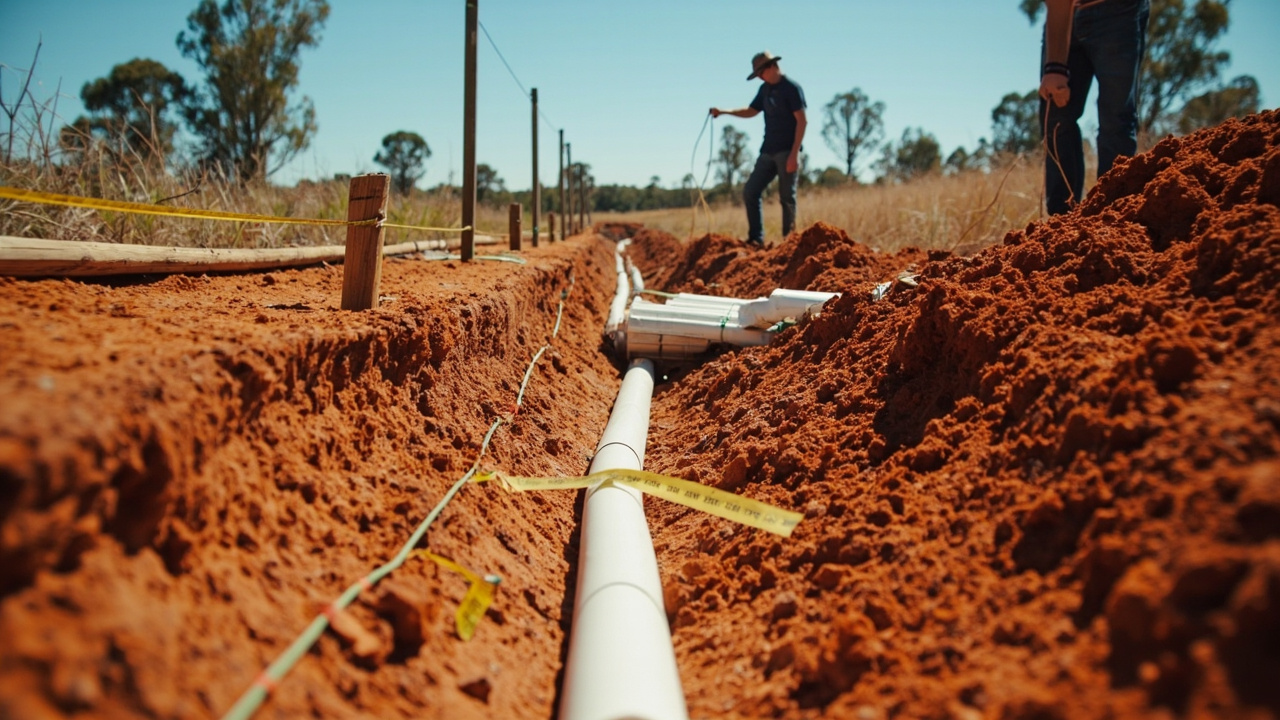
Before You Dig the Trenches

Diverter Manifolds vs Multi-Stage Treatment Units

My neighbour in New South Wales learnt the hard way that a sand filter isn't tertiary treatment. He piped untreated greywater from his DIY setup straight onto his vegetable patch to dodge the council paperwork. The NSW Environmental Protection Act doesn't care about his plumbing ingenuity — direct irrigation of food crops without proper disinfection drew a $2,500 fine. He burnt $1,200 on filters and pipework he couldn't legally use. Start with a simple divert-and-irrigate system: low cost, minimal maintenance, and it keeps you well clear of that particular regulation. A sand filter or constructed wetland only earns its keep when you genuinely need to store greywater, irrigate food crops, or handle the larger volumes a big household produces.

Greywater Diversion Systems

Simple diversion system: A valve or automatic switch diverts greywater from your shower or laundry to either the garden irrigation system or the sewer/septic. On simpler systems, you manually connect a hose to a diversion outlet. Cost: $50-$300 for basic components.

Advanced filtration system: A multi-stage filter (mesh pre-filter, sand filter, optional UV) treats greywater before storage or irrigation. Greywater filter units are available as packaged systems. Cost: $500-$2,500 depending on capacity and treatment level.

The Greywater Diversion Device That Waterlogged the Veggie Beds

Three years ago I bolted a $145.50 greywater diverter to the laundry outflow in my own Queensland backyard. Two ports, one lever, one Saturday afternoon — garden or sewer, my call. The trouble started in the first decent storm. Rain hammered down, the soil went soggy well past 30% saturation, and the diverter kept doing what I'd set it to do: pumping untreated greywater onto the lawn. I'd breached Queensland Development Code MP 4.3 without realising it, and the valve had no way of knowing any different. The hardware didn't fail. My assumption did.

DIY Greywater Installation Risks

I worked with a bloke in Victoria who'd decided to handle his own greywater. He cut the source pipe, fitted a diverter valve with standard PVC fittings, and ran an irrigation line to a subsurface drip system that wasn't tied to town water. The drain line, though, fed straight into the septic tank. He never did a leak check. Materials cost him $145. The Victorian Environment Protection Authority General Trade Waste Regulations forbid untreated greywater discharging into septic systems. The fine was $2,300.

Plumbing's not my trade, so I book a licensed plumber for the diversion. A basic install takes them a few hours and costs $200 to $500.

How I Install Buried Drip Lines

Years back I installed subsurface drip irrigation for greywater on a rural Victorian block, grabbing the standard five-dollar-a-metre tubing off the shelf. The line choked with solids within weeks because that tubing isn't rated for greywater loads. I ripped it out, spent another $120 on the correct certified sub-surface drip tubing, then copped a $450 fine for breaching Melbourne Water's by-law.

Bypassing Council Rules Backfires

In Victoria I tried to bypass council rules by laying 10–20 cm of pipe in parallel runs spaced 30–50 cm apart, running the greywater diversion outlet straight to the garden beds. I dropped a 150‑mesh filter upstream of the drip lines to keep them clear, costing $245 in materials. The inspector caught me tying the greywater line into the potable water supply, and the breach cost me a $4,000 fine plus a forced pull‑out. I repeated the same approach in New South Wales and Queensland; each time authorities stopped the work for the same reason. The regulation is clear: greywater must sit on a dedicated circuit from the greywater source and must never be joined to the potable system.

Flush Valves For Quick Maintenance

Subsurface drip systems need a flush every 1–3 months to clear buildup. I install accessible flush valves at the ends of the lines so the flush is quick and needs no extra tools — crack the valve, let it run, job's done.

Receipts: What My Greywater System Actually Cost

Simple diversion systems: Manual or spring-loaded diverters cost $50-$150. Basic plumbing fittings and piping add $50-$150. Total for a simple laundry or shower diversion: $100-$300.

Filter systems: Mesh filter housings and replacement cartridges: $50-$150. Sand filter units: $200-$600. Complete packaged filter systems: $500-$2,500.

Subsurface drip irrigation: Greywater-rated drip tubing costs approximately $50-$100 per 100 metres. Fittings, stakes, and filters add $50-$150. A system covering a 500 square metre garden area runs roughly $200-$500 in materials.

Laundry-to-landscape kits: Complete kits that connect a front-loading washing machine directly to garden irrigation are available from $150-$400. These are an excellent entry point for simple greywater reuse.

Check Council Regulations Before Installing

Council regulations: Requirements vary by state and council. Simple divert-and-irrigate systems for a single household may not require approval; larger systems or those involving storage may need a permit. Check with your local council's environmental health officer before installing. Installation by a licensed plumber may be required in some jurisdictions.

Long-term water savings: A family of four using a full greywater system can divert 15,000-30,000 litres per year from wastewater to irrigation. In drought-prone areas, this is significant — equivalent to several additional rainwater tank fills. The payback period for a simple $200 diversion system is measured in months.

The Setup That Let Me Down

Shop on Amazon: View on Amazon

Conclusion

A homeowner in New South Wales showed me his DIY greywater setup last summer. He'd piped the kitchen sink straight into a subsurface drip system, no diversion valve, and his materials came to $420. The council made him rip the whole lot out. The untreated effluent had seeped through the soil, drawn pests, and breached the NSW EPA guideline on prohibited greywater sources. The fix wasn't complicated. A diversion valve on the subsurface drip line, fed only from bathroom and laundry outlets, would have cut his water use by 30-50% with minimal maintenance. Kitchen waste stays out, full stop.

Cleaning products need to be greywater-safe. And the water goes subsurface, never through sprinklers. That's what keeps you inside Australian guidelines, and keeps you off the council's list.

Understand Local Greywater Regulations

In Queensland I spent $420 on PVC fittings and a pump to divert shower water to the veggie patch. I used a substandard diversion valve and skipped the permit, which breached Council Regulation 4.2. A properly installed and maintained greywater system cuts waste, feeds the garden and builds drought resilience, but you must familiarise yourself with your state’s regulations and obtain council approval before you start.

Watch the Filter Clog

⚠️ SAFETY WARNING: Working with electrical systems, structural modifications, or gas installations carries inherent risks. If you are not confident in your abilities, always engage a licensed professional.

Worth a watch: How to use greywater in the garden | DIY Garden Projects | Gardening Australia · Gardening Australia

In this episode the hosts install a simple divert valve and route greywater into a gravel trench that feeds garden beds, showing exactly how to keep irrigation low‑tech and pump‑free. It’s the kind of hands‑on detail you can copy straight onto an Aussie off‑grid property without wading through extra jargon. — Sarah Chen

The Subsoil Rejection That Needed a Licensed Installer

While many off-grid projects are achievable as DIY, certain situations require licensed professionals:

Always check local regulations and obtain necessary permits before commencing work.

Frequently asked questions

Can I install a greywater system myself in Queensland?

Some bits are fair game for DIY, some aren't. A basic shower-to-garden line with cheap PVC and a second-hand pump is something a handy owner can tackle, but subsoil irrigation and most trenching needs a licensed installer under QLD rules. The bloke I watched rig his own setup learned the hard way when the subsoil rejection needed a pro to sort out.

What does a greywater recycling system actually cost?

There's no single answer - it depends on your soil, household size, and whether you go subsoil or surface. I share the real receipts in the article rather than rounded estimates. The cheap DIY job I watched go wrong (around $420 in PVC and a second-hand pump) is a fair example of what happens when you cut corners on the bits that matter.

What's the $1,250 fine in Queensland actually for?

It's the penalty for installing or running a greywater system that doesn't meet QLD's plumbing and health standards. Common triggers are wrong setbacks from boundaries or bores, doing the install yourself when a licensed installer was required, or discharging water where you shouldn't. Sort those out before you dig and you'll stay clear of it.

What do I need to know before I dig trenches for greywater?

Three numbers matter: how much greywater your household produces, how fast your soil absorbs it, and the setback distances from boundaries, bores and waterways. Get any of those wrong and you'll either flood the garden, fail inspection, or cop the fine. I walk through working each one out properly before a shovel hits the soil.