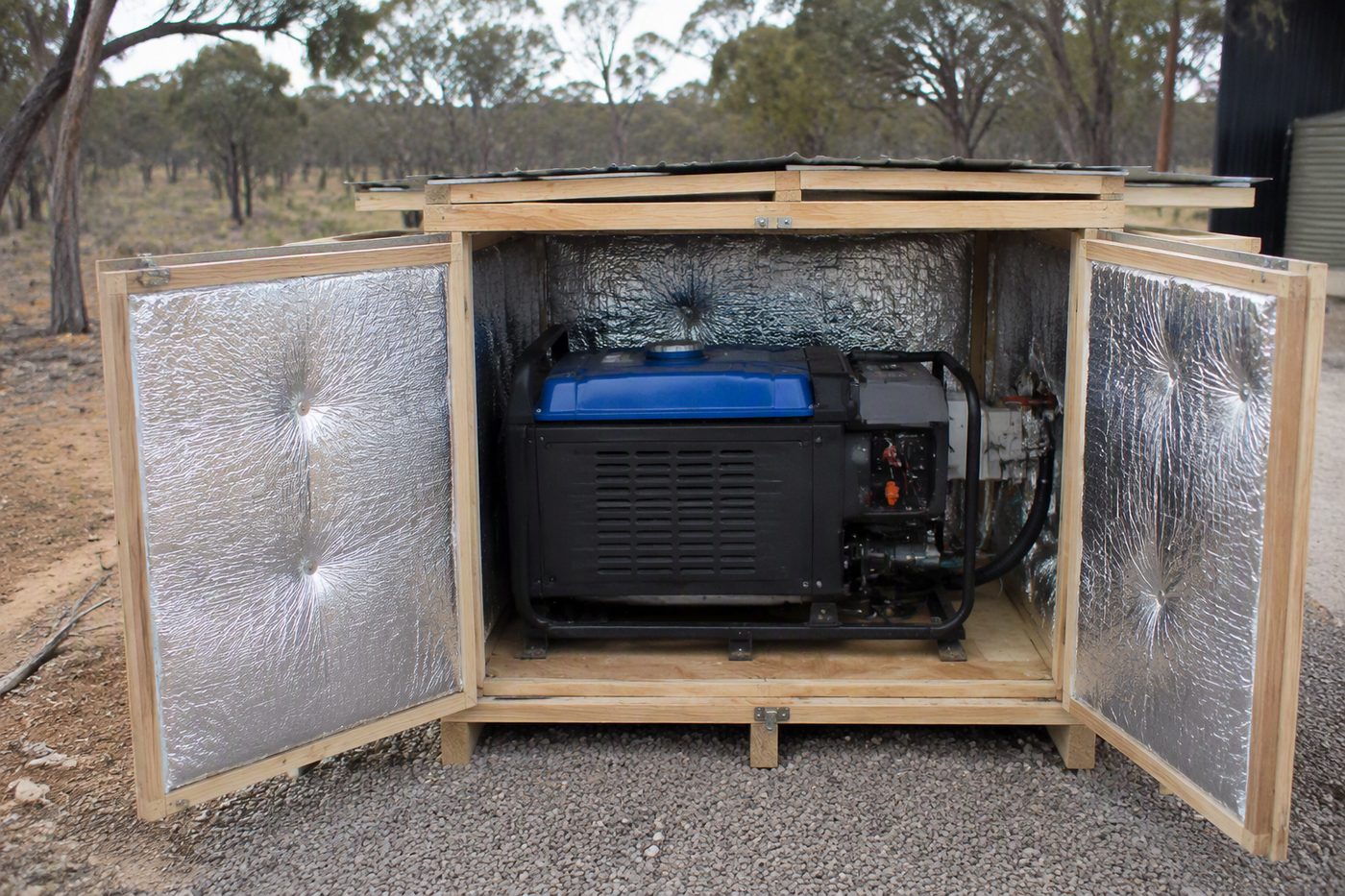
Stop the generator noise. It’s a nuisance. Neighbours will complain. You’ll lose sleep. Fix it. Here’s how, no fluff.
Cross-section of a sound-attenuated generator enclosure with baffled intake and exhaust.
Three Ways to Silence Your Generator
1. Enclosures: The Only Real Fix
Enclosures wrap your generator in sound-absorbing material. They work. But they cost. And they need space.
Best for: Permanent off-grid setups. If you’re not moving, get one.
Price: $1,200–$3,000 (depends on generator size). A 5kW unit from Aussie suppliers.
Australian suppliers:
Aussie Generator Solutions: Sound Shield enclosures. $1,200–$2,500 for 5kW. Link
Quiet Power: QuietGen enclosures. $1,500–$3,000. Link
Don’t buy cheap plastic enclosures. They crack in the sun. Get steel or heavy-duty composite. Budget for $1,500 minimum.
2. Distance: Free, But Not Always Possible
Move the generator away from your house. Every metre counts. But if your shed is 5m from the house, that’s not enough. And you can’t move it 20m on a small block.
Best for: Small generators on big properties. Or as a temporary fix.
Price: $0. But it might cost extra fuel and cable runs.
If you run the generator 10 hours/day, moving it 10m away saves 5–10dB. Noticeable, but not a full fix.
3. Muffler Upgrades: Cheap, But Limited
Replace the stock muffler. It helps a bit. But it won’t turn a loud generator into a whisper.
Best for: Quick fix or tight budget. Not a standalone solution.
Price: $150–$300 (for a good one).
Australian suppliers:
GenSet Australia: Muffler upgrade kits. $150–$300. Link
Don’t buy the $50 muffler from eBay. It fails in 3 months. Get a proper one from a supplier.
Practical Tips: What to Actually Do
Don’t run it unnecessarily. Use solar/batteries first. Only run when you need to.
Run it at night. If you must, put it in an enclosure. Otherwise, you’re the neighbour keeping everyone awake.
Check enclosure fit. If it’s too tight, the generator overheats. Allow 10–15cm clearance on all sides.
Don’t ignore exhaust. The muffler is only part of the noise. Upgrade it if you’re not using an enclosure.
Test it. Use a free decibel meter app. If it’s over 55dB at your house, you need more work.
Final Word
Enclosures are the only real solution. They cost money, but they’re worth it. You’ll sleep better. Your neighbours will be happy. And you won’t have to listen to that damn noise all day. Get one. Stop being a noise nuisance.
When to Call a Professional
While many off-grid projects are achievable as DIY, certain situations require licensed professionals:
Electrical work beyond basic 12V DC additions — requires a licensed electrician
Structural modifications to buildings or load-bearing elements
Gas line installation or modification
Solar array installations above safe voltage thresholds
Any work that affects the structural integrity of your property
Always check local regulations and obtain necessary permits before commencing work.
⚠️ SAFETY WARNING: Working with electrical systems, structural modifications, or gas installations carries inherent risks. If you are not confident in your abilities, always engage a licensed professional.
The video walks through building a quiet box with timber and acoustic mat, which is exactly what I’ve used on many off‑grid setups in QLD. It also covers airflow management, something a lot of people miss and end up with overheating generators.— Dave Miller