Flow Batteries: Off-Grid Power That Actually Lasts
Let's cut the crap. Lead-acid batteries die in 5 years. Lithium lasts 10. Flow batteries? They'll outlive your kids. For serious off-grid Aussies, this is the only game in town.
By Dave Miller· off-grid sparky · 22 years wiring solar, batteries and sheds in central QLD
“After three years of lithium fading in central Queensland heat, I switched to flow batteries because I needed my shed to actually power through a week of grey skies.”
Let's cut the crap. Lead-acid batteries die in 5 years. Lithium lasts 10. Flow batteries? They'll outlive your kids. For serious off-grid Aussies, this is the only game in town.
Side-by-side comparison of flow batteries and lithium for off-grid storage, with sizing rule of thumb.
Vanadium Redox Flow Batteries (VRFB)
How it works: Two tanks of vanadium electrolyte, pumped through a cell stack. No chemical degradation. Just swap tanks when they get old.
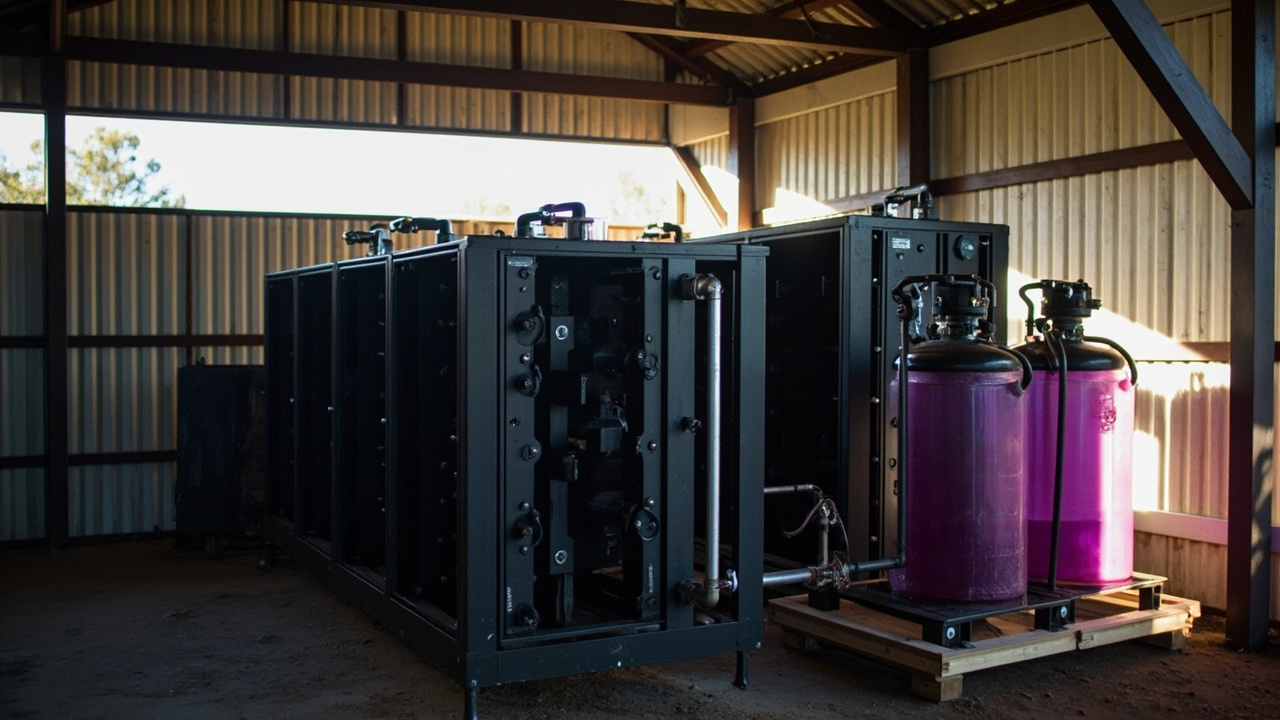
VRFB stack in a rural Australian shed
Pros:
20+ year lifespan (vs 5-10 for lithium)
100% depth of discharge (no "don't drain below 50%")
Safe as hell (no fire risk, even in 45°C heat)
Scalable: Add more tanks for more storage
Cons:
Upfront cost: $10k-$20k for 5kWh system
Bulky (needs a shed-sized space)
Pumps need power (but it's minimal)
Zinc-Bromine Flow Batteries
How it works: Zinc metal plates and bromine electrolyte. Electrolyte is stored in tanks. Less common but getting traction.
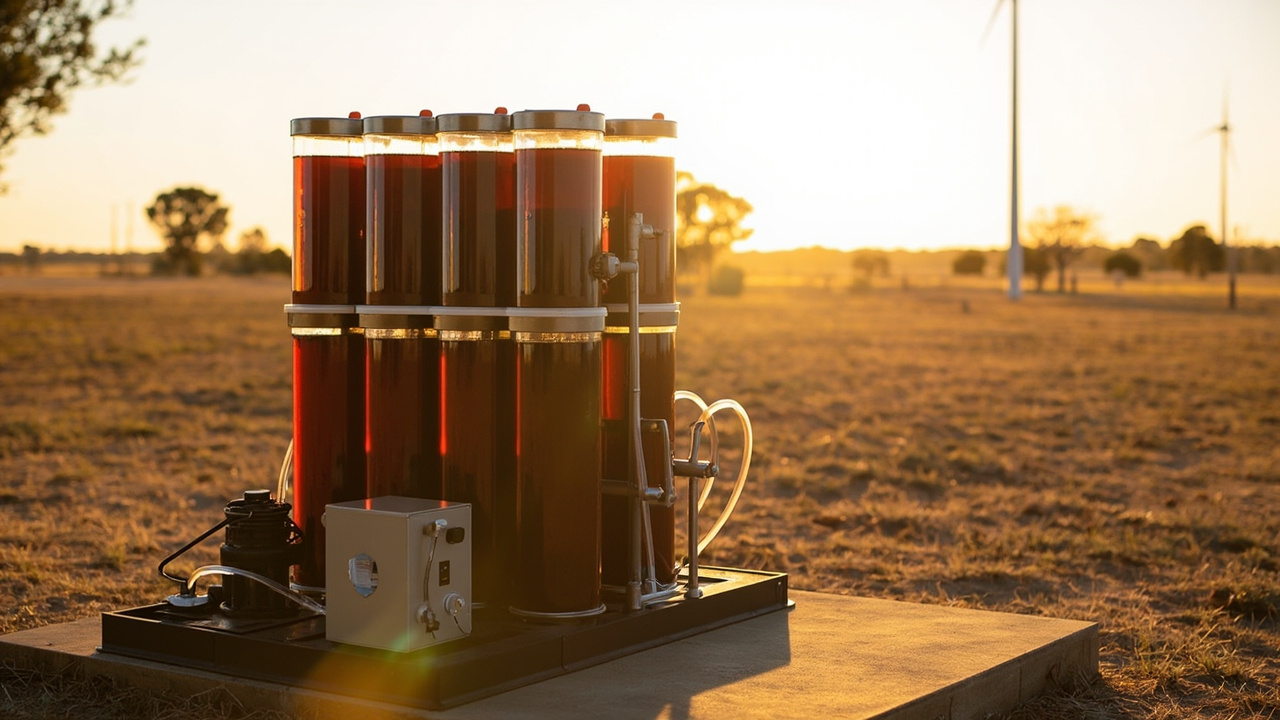
Zinc‑bromine flow battery in rural setting
Pros:
Lower cost than VRFB ($8k-$15k for 5kWh)
Good cycle life (5,000+ cycles)
Works well in Australian heat
Cons:
Bromine is toxic (needs proper handling)
Requires regular maintenance (cleaning)
Less proven for home use than VRFB
Where It Actually Works For Aussies
Not for your 2kW solar setup on a tiny block. But for:
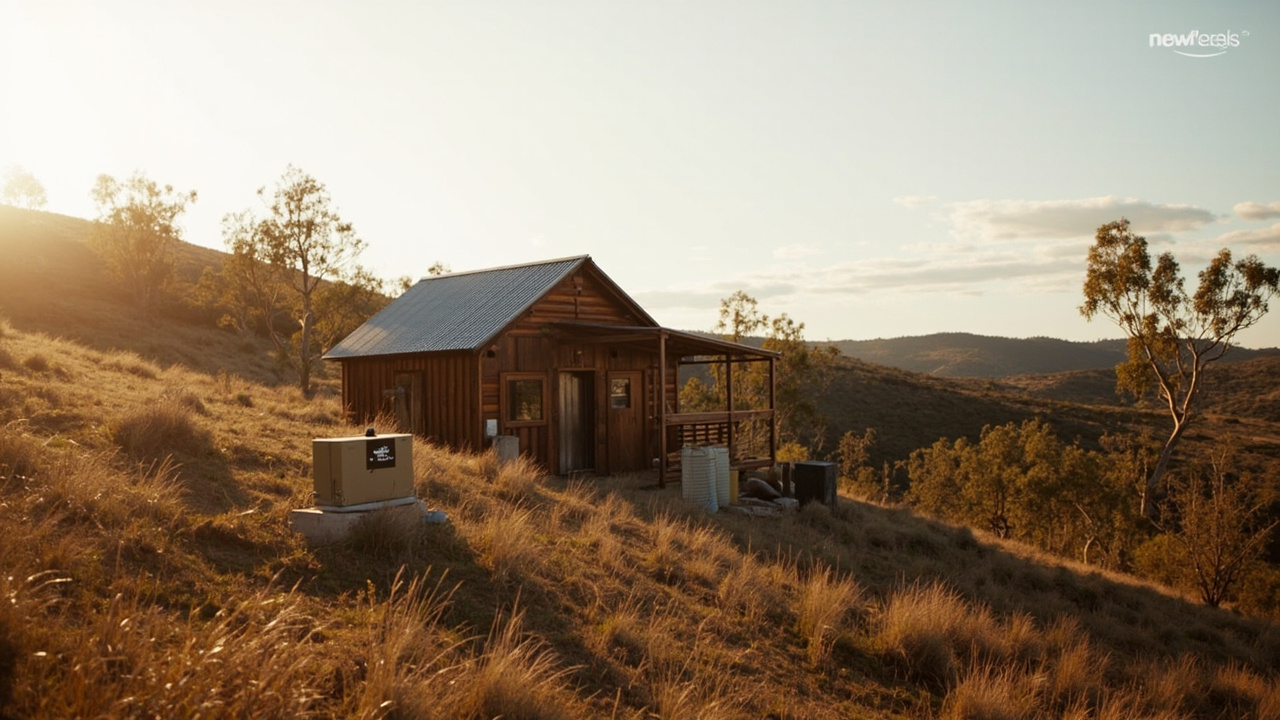
Off‑grid Aussie home with VRFB system
Remote homesteads (no grid, no power bills)
Off-grid cabins with 5kW+ solar
Backup power for critical loads (medical, water pumps)
Commercial sites (farms, mines, telecom towers)
Practical tip: Size it right. A 10kWh VRFB system costs $20k. If you only need 5kWh, don't oversize. Get a pro to calculate your actual usage. Don't waste money.
Australian Suppliers & Pricing (indicative prices)
Flow Battery Australia (Melbourne) - Custom VRFB.
$15,000 for 5kWh.
afb.energy (Australian Flow Batteries, WA)
Local Solar Installers (Brisbane/Perth) - Zinc-bromine via EnerSys.
$9,500 for 5kWh.
Ask your installer—they stock it now.
Price note: These are system prices (batteries + inverter + installation). Don't expect $5k deals. This isn't a $200 lead-acid battery.
The Bottom Line
If you're off-grid for 10+ years, flow batteries are the only smart choice. Lithium? It'll be dead before your roof needs replacing. VRFBs cost more upfront but save you $10k+ over 15 years. Zinc-bromine is a cheaper entry point but needs more care.
Stop wasting money on batteries that fail. Get a quote from Invertek or Flow Battery Australia. Do it now. Your future self will thank you when the grid's down and your power's still running.
⚠️ SAFETY WARNING: Working with electrical systems, structural modifications, or gas installations carries inherent risks. If you are not confident in your abilities, always engage a licensed professional.
It shows the electrolyte flowing through the stack and how the membrane separates the liquids, giving you a no‑nonsense view of the core flow‑battery mechanics before you invest.— Dave Miller
When to Call a Professional
While many off-grid projects are achievable as DIY, certain situations require licensed professionals:
Electrical work beyond basic 12V DC additions — requires a licensed electrician
Structural modifications to buildings or load-bearing elements
Gas line installation or modification
Solar array installations above safe voltage thresholds
Any work that affects the structural integrity of your property
Always check local regulations and obtain necessary permits before commencing work.