Fish Farming and Aquaculture for Off-Grid Properties
Aquaculture is an often-overlooked opportunity for Australian off-grid properties, offering a sustainable source of protein that requires minimal land and can integrate with existing water features. From native Silver Perch in dams to yabbies in purpose-built ponds, there are options for every climate and property size.

By Fiona Gallagher · permaculture designer · food, animals and preservation on 12 acres in Tassie
“After losing 90% of our first trout crop to a sudden algal bloom, I learned that aquaculture demands constant vigilance, not just optimism.”
Introduction
Tassie's inland waterways have held fish for millennia, yet my twelve acres here still cost me a fortune to get running. The local council mandates specific setback distances from property lines and strictly limits discharge rates, which killed my first attempt at a recirculating system. I bought a pump from a supplier in Devonport for $1,200, and it failed after three weeks in the Tasmanian winter, costing another $400 for a replacement unit that barely kept the water moving. Despite the grit and the high failure rate, aquaculture on this property delivers a complete protein source that grows itself with minimal daily input, harvesting on demand and thrives on the low-tech, low-energy management style that suits remote living.
Native Fish Suit Low-Input Systems
Native Aussie species like Silver Perch, Golden Perch, and Cherax crayfish (Yabbies) actually work in our low-input system because they handle Tasmania's variable climate and tolerate poor water quality better than exotics, meaning we don't need heating or fancy infrastructure. Adding a well-managed pond to the 12 acres can yield 20-50kg of fish protein a year with minimal ongoing effort, though the local council regulations are strict and failure rates are higher than most people expect when the water turns murky.
Beyond direct food production, aquaculture integrates beautifully with other off-grid systems. Pond water provides irrigation for gardens (rich in fish waste nutrients), duckweed and algae can be grown as fish feed, and properly designed dams create micro-climates and wildlife habitat.
Key Considerations
Species Selection
Silver Perch (Bidyanus bidyanus) is arguably the best all-round native fish for Australian aquaculture. Hardy, tolerant of a wide temperature range (4-35°C), accepts pelleted feed, grows to harvest size (500g-1kg) in 18-24 months, and has excellent table quality. Silver Perch is the most commonly farmed native fish in Australia.
Golden Perch (Macquaria ambigua) — also called Callop — is a popular angling species that adapts to pond culture reasonably well. Slightly more temperature-sensitive than Silver Perch and can be territorial, but excellent eating and tolerates lower water quality. Grows more slowly than Silver Perch.
Hardy Freshwater Crayfish Farming
Yabbies/Cherax (Cherax destructor, C. quadricarinatus) — freshwater crayfish are arguably easier to farm than fish and have excellent market value. Yabbies are incredibly hardy, tolerate poor water quality and temperatures from 2-35°C, and can be raised in purpose-built ponds or even repurposed tanks. The Red Claw Cherax (C. quadricarinatus) grows larger (up to 600g) and breeds faster but requires warmer conditions (18-30°C).
Trout (Rainbow and Brown) — requires cold, well-oxygenated water and is best suited to properties with reliable spring-fed dams or creek infrastructure. Trout farming in Australia requires specific permits and is more regulated than native species. Worth considering in cooler highland regions (Victoria, Tasmania, ACT, NSW high country).
Carp Suit Closed Pond Systems
Carp (Common, Japanese, and Goldfish) — while prolific and tolerant of poor conditions, carp are widely regarded as an environmental pest in Australian waterways. Do not release into open waterways. However, for closed pond systems, carp grow quickly and convert feed efficiently. Most off-grid aquaculturists avoid them in favour of native species.
Pond vs Cage Systems
Pond systems are the most common and lowest-tech approach for off-grid properties. An excavated or dam-based pond of 500-2000 square metres can support a productive fish population. Ponds require more upfront earthworks but offer natural biological filtration and broader species options.
Cage culture involves suspending mesh cages within an existing dam or lake. This approach is more common in commercial operations and allows better control over individual fish, easier feeding observation, and simpler harvesting. However, cages require robust infrastructure within the water body and are vulnerable to predator damage (birds, snakes). Water quality management is more intensive in cage systems.
Cage Culture For Existing Dams
For most off-grid properties with an existing dam, cage culture is a practical starting option since it requires less earthworks and lets you start with a single cage before committing to a full pond build.
Water Quality
Water quality is the single most important factor in aquaculture success. The key parameters are:
Dissolved oxygen — fish need at least 4-5mg/L. Warm, stagnant water loses oxygen rapidly. Aeration (particularly in summer) is essential. Simple paddlewheel aerators powered by solar panels or small wind turbines are practical for off-grid setups.
Ammonia and nitrites — fish waste produces ammonia, which is toxic even at low levels. A well-planted pond with biological filtration converts ammonia to nitrites then nitrates (fish fertiliser). New ponds need 4-6 weeks to establish their nitrogen cycle before stocking.
pH — aim for 6.5-8.5. Most Australian dams fall within this range naturally. Acidic water (below 6) stresses fish and inhibits growth; agricultural lime can correct this.
Manage Pond Depths For Thermal Refuge
Temperature — different species have different optimum ranges. Monitor summer temperatures in shallow ponds — they can reach lethal levels during heatwaves. Deep ponds (2-3m minimum) provide thermal stratification and cooler refuge.
Feeding
Fish can be fed exclusively on commercial pellets, which is the simplest method but costs a fortune at the local agricultural supply store in Launceston, or you can supplement with on-farm feeds. Silver Perch and Goldfish will eat duckweed, algae, aquatic plants, insects, and kitchen scraps, though the council here is strict about what goes into the water to avoid eutrophication. I grow duckweed in a dedicated small pond next to the main tank because it doubles its mass every 1-3 days and packs high protein, but I've seen failure rates spike when the water gets too warm or the pH swings during a Tasmanian winter.
Feeding frequency: once or twice daily is sufficient for most species. Overfeeding is wasteful and pollutes water. A good rule is to feed what fish consume within 5-10 minutes.
Getting Started
Pond Construction
If you're building a new pond, aim for at least 500 square metres of surface area and a maximum depth of 2-3 metres to avoid thermal extremes. The edges should slope gradually at a 1:3 ratio to prevent bank collapse and allow plants to establish. A clay-lined or butynol-lined pond is necessary to prevent seepage in sandy or rocky soils.
Pick a spot that isn't choked by heavy shade or you'll starve the system, but don't stick to a fully exposed north-facing slope or the Tasmanian summer will boil the water into nothing. You need a reliable water source, a bore, a creek, or rainwater runoff, because topping up evaporation losses is the only way to keep the tanks from going dry.
Assess Dam Depth And Quality
Check your dam's depth, water quality, and structure before you drop a single fish, because half the dams down here have soft, silty bottoms that make harvesting a bloody nightmare. You can manage the muck with a mesh basket trap, but it just adds another layer of hassle to an already tricky setup.
Stocking
Buy fingerlings from a licensed commercial hatchery because the local council won't let you just dump wild stock in the dam. You can get Silver Perch, Golden Perch, or Murray Cod fingerlings seasonally from Australian suppliers, though availability varies. For Silver Perch in an average dam, plan on stocking rates of approximately 500-1,000 fingerlings per hectare, but that figure depends entirely on your aeration setup and how hard you feed them.
Yabby stocking is simpler: buy adult breeding stock or juveniles from a farm, or trap wild yabbies from local waterways, though you must check state regulations first. A breeding population of 50-100 mature yabbies in a well-managed pond can produce hundreds of harvestable animals per year.
Daily Management
Aquaculture requires daily attention but not heavy labour. Daily tasks include feeding (5-10 minutes), checking equipment (aerators, pumps), and observing fish behaviour for signs of distress or disease. A weekly routine covers water testing, checking for dead fish (which may indicate disease or oxygen depletion), and cleaning intake screens.
Monthly jobs are testing water quality for pH, ammonia and nitrite, checking bank integrity and managing vegetation around the pond. Seasonal work involves harvesting, restocking and predator control.
Costs and Considerations
A basic pond-based aquaculture setup for a small family costs between AUD $500-$2,000 to establish, including pond preparation (or dam modification), fingerlings, basic feeding equipment, and a water test kit. Cage systems add $300-$800 for the cage itself. Solar aeration systems cost $200-$600 depending on panel and battery setup.
Larger commercial-scale setups with multiple ponds, recirculating systems, and automated feeders can reach $5,000-$20,000. For most off-grid homesteaders, starting small and expanding gradually is the sensible approach.
Ongoing costs run you between AUD $200 and $500 a year for fish food in a modest system, plus fingerling replacement and water testing reagents from $50 to $100 annually. Electricity for aeration can be minimal if you hook it up to solar or wind power.
Check State Licensing Requirements
Regulations: Aquaculture in Australia is regulated at the state level. Most states require an aquaculture licence or permit, even for small-scale hobby operations. Murray Cod and some other species have specific restrictions. Check with your state Department of Primary Industries or equivalent before purchasing stock. In most cases, licences for small-scale domestic production are inexpensive and straightforward to obtain.
Recommended Products
AquaStart Silver Perch Fingerlings (contact licensed hatchery, AUD $2-$5 per fingerling) — purchase from a state-licensed hatchery. Ask about delivery and acclimatisation procedures.
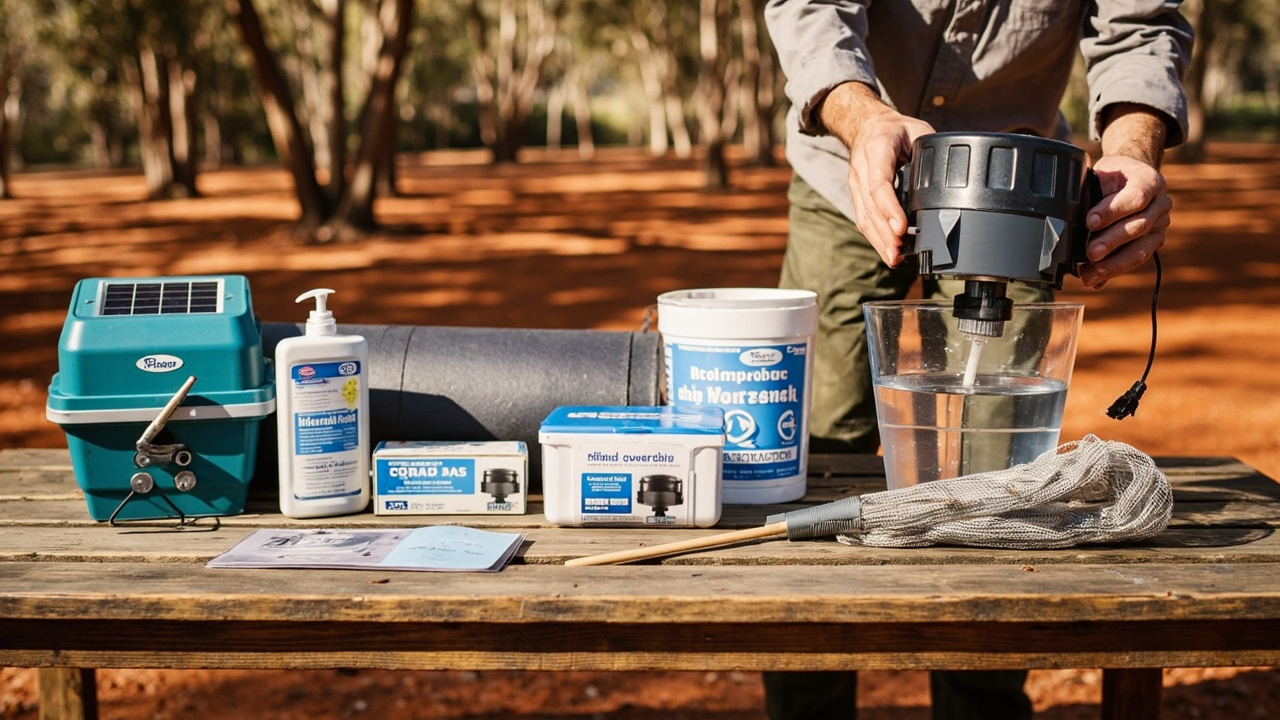
API Freshwater Master Test Kit (AUD $25-$35) — essential for monitoring ammonia, nitrite, nitrate, and pH. Do not guess — test.
Solar Aerator Pond Fountain (AUD $150-$350) — combines aeration with water movement. Solar-powered with battery backup option. Prevents summer oxygen crashes.
Japanese Koi/Fish Feeding Scoop with Timer (AUD $20-$40) — automated feeders reduce daily workload and ensure consistent feeding schedules. Useful for weekends away.
Cast Iron Crab/Lobster Pot for Yabby Trapping (AUD $25-$50) — yabbies can be harvested with baited pots set overnight. Simple, effective, no power required.
Pond Net and Landing Net Set (AUD $30-$60) — essential for harvesting, health checks, and moving fish.
Conclusion
Aquaculture is a productive protein source for off-grid properties. I stock a neglected farm dam with Silver Perch or build a dedicated yabby pond, and the returns in food security and economic savings compound year after year. Starting with a modest setup, learning your system, and expanding as confidence grows is the path most successful off-grid aquaculturists recommend. The combination of Australian native species, freely available solar energy, and integrated pond-garden systems creates a food production framework that genuinely fits the off-grid lifestyle.
Worth a watch: Owen's EPIC Aquaponics System | Sand beds Swamp Beds Barramundi + MORE · Rob Bob's Aquaponics & Backyard Farm