Look, if you're off-grid in Australia, you don't have time for fancy food. Fermented veggies are your lifeline. They last months, boost your gut, and cost next to nothing. But do it wrong and you get mouldy sludge. Let's cut the crap.
Salt Concentration: Get This Right Or It's Waste
Forget "a pinch". Salt is non-negotiable. Too little = mould. Too much = inedible salt bricks.
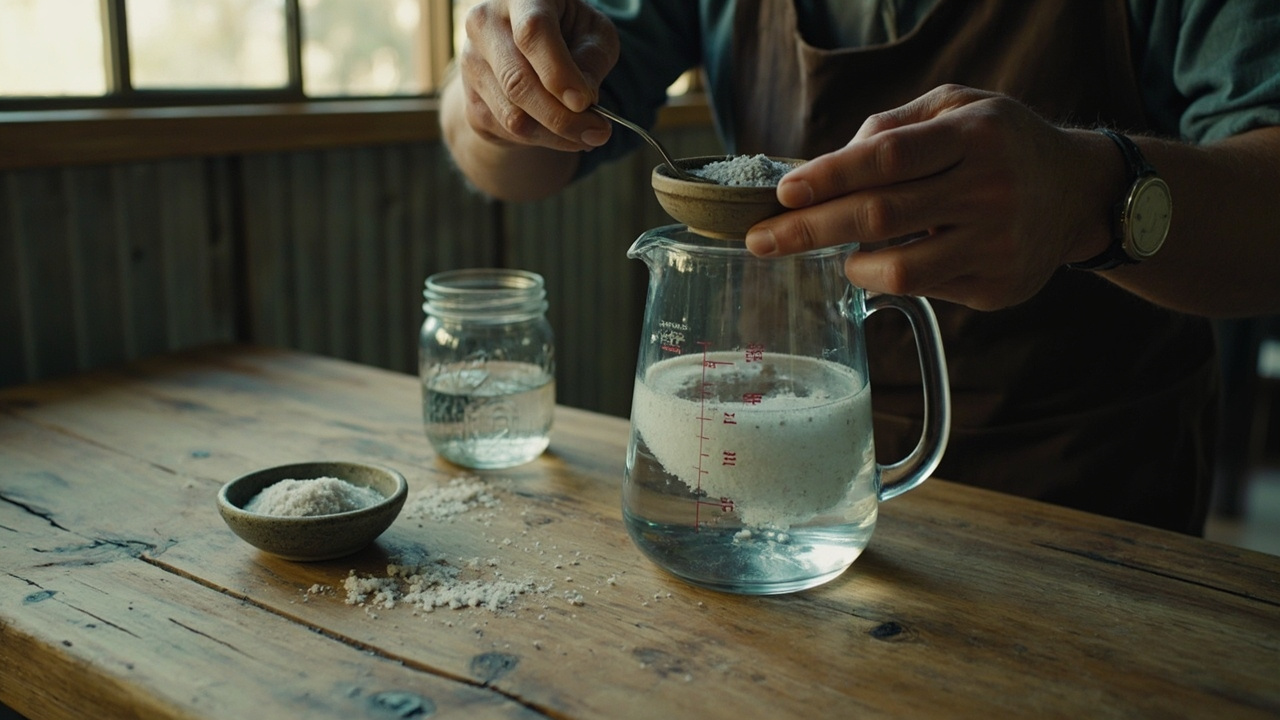
Measuring salt into water for correct brine
2-3% salt by weight is the sweet spot for most veggies (cabbage, carrots, capsicums). For cucumbers (pickles), go 3-5%.
How to measure: 10g salt per 500g veggies. That's 2%.
Use non-iodised salt only. Iodine kills good bacteri
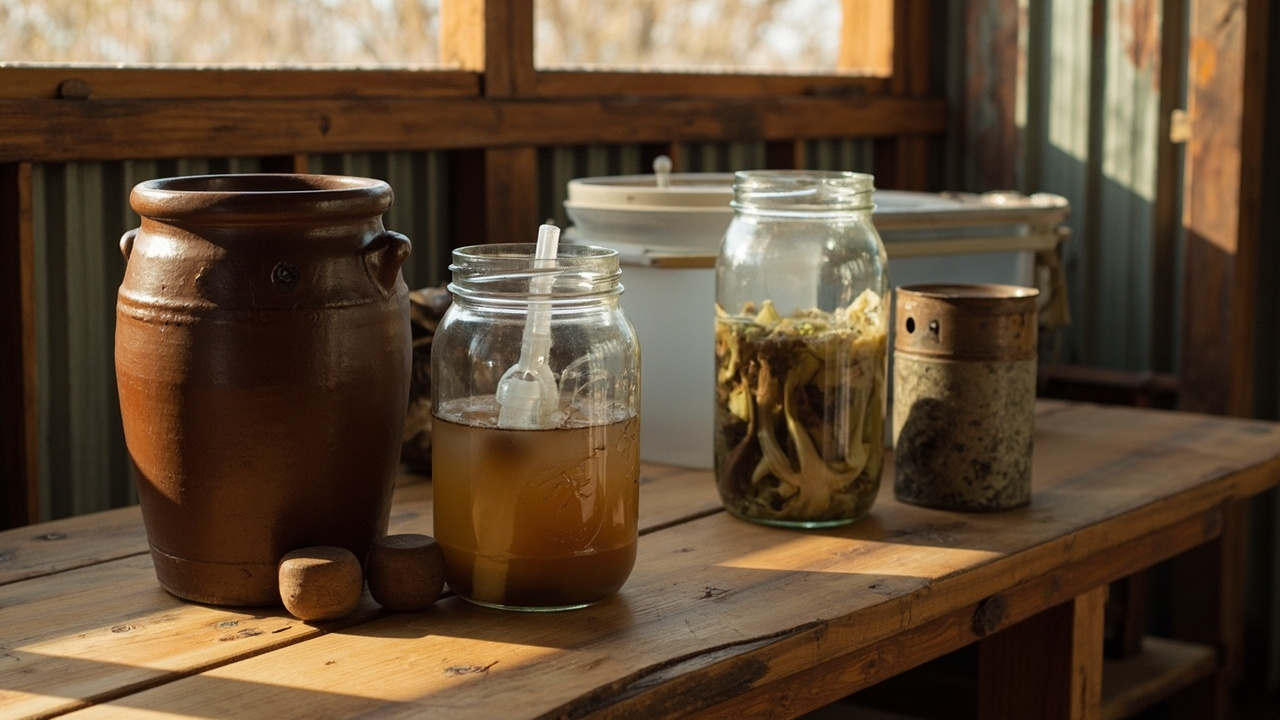
Proper fermentation vessels on rural bench
a. No fancy "sea salt" with additives. Just plain salt.
Pro tip: Weigh your salt. Don't eyeball it. A $5 kitchen scale from Bunnings is cheaper than throwing out a batch.
Fermenting Vessels: What To Use (And What To Avoid)
Plastic? Glass? Ceramic? Don't waste money on crap. Here's what actually works off-grid:
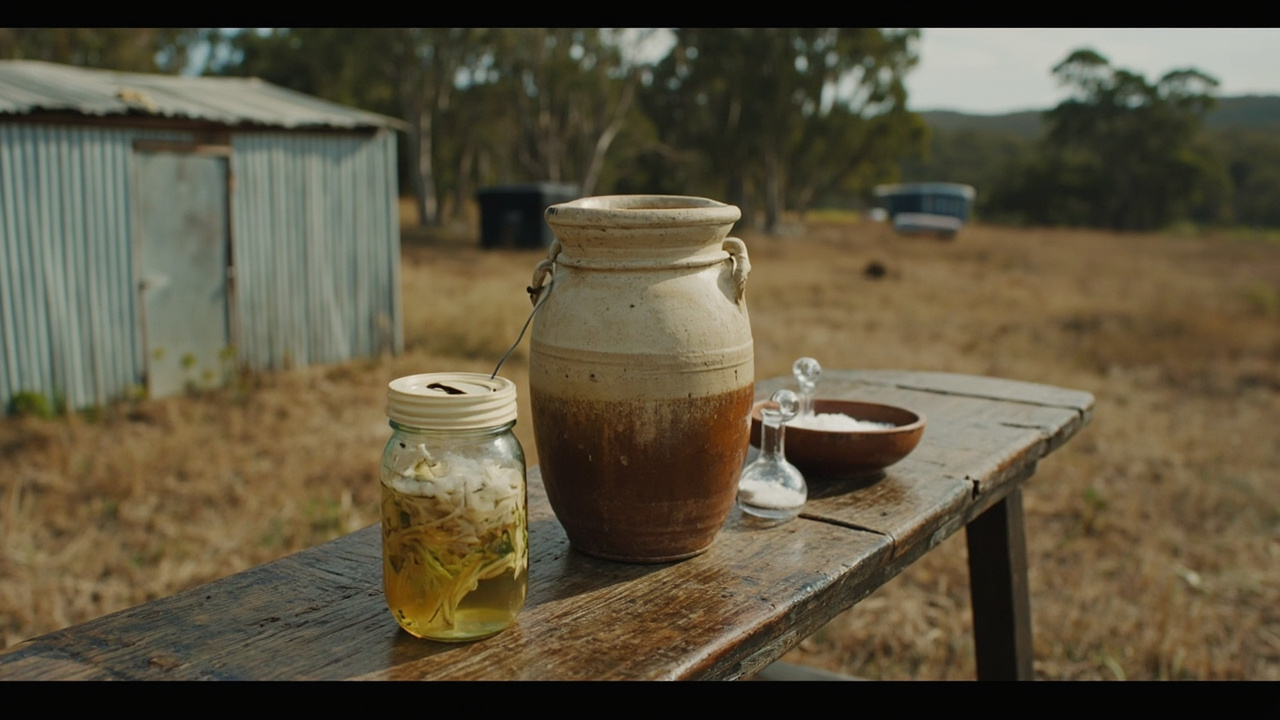
Suitable fermenting vessels displayed on a bush bench.
Best: Glass jars (Mason jars, Ball jars). Cheap, inert, and easy to find. Bunnings sells 1L Ball jars for $12.95. Get the wide-mouth ones.
Good: Food-grade plastic buckets (like those from Fermenting Australia). $45 for 5L. Avoid regular plastic – it leaches chemicals.
Avoid: Metal, aluminium, or cheap plastic. They corrode, leach, or turn your ferments into toxic sludge. Don't be a fool.
Ceramic crocks (like those from Fermenting Australia) are great but $85 for 5L. Only get if you're doing big batches.
Australian Suppliers (2024 Pricing):
Bunnings – Ball 1L Mason Jars: $12.95 (wide-mouth, no lid)
Fermenting Australia (online) – Food-grade 5L bucket: $45.00
Coles/Woolworths – Maldon Sea Salt (non-iodised): $5.95 for 100g (use this, not iodised salt)
Practical Tips: Off-Grid Edition
These aren't optional. Skip them and your ferments die:
Keep everything below the brine. Use a clean weight (a small glass jar filled with water) to keep veggies submerged. If they peek above, mould happens.
Store in a dark, cool spot (18-22°C). No fridge needed. A cupboard or under the bench works. If it's over 25°C, ferment faster – check daily.
First 3 days: Open and burp once a day. Pressure builds. If you don't, your jar might blow up. Seriously.
Smell it. If it smells like rotten eggs or ammonia – chuck it. If it smells tangy and clean? You're golden.
Don't add sugar. It's not kombucha. Salt and veggies only.
Common off-grid mistake: Using tap water. Chlorine kills bacteria. Use filtered water or boil and cool tap water. Cheap $10 filter from Bunnings fixes this.
That's it. Salt, vessel, and keep it submerged. Done. You'll have fresh, probiotic-rich veggies for months. No fancy gear. No bullshit. Now go ferment.
When to Call a Professional
While many off-grid projects are achievable as DIY, certain situations require licensed professionals:
Electrical work beyond basic 12V DC additions — requires a licensed electrician
Structural modifications to buildings or load-bearing elements
Gas line installation or modification
Solar array installations above safe voltage thresholds
Any work that affects the structural integrity of your property
Always check local regulations and obtain necessary permits before commencing work.
It walks through the exact brine calculations and explains how to spot and fix off smells, giving you the hands‑on detail you need when you’re working with minimal equipment on a remote block.— Fiona Gallagher