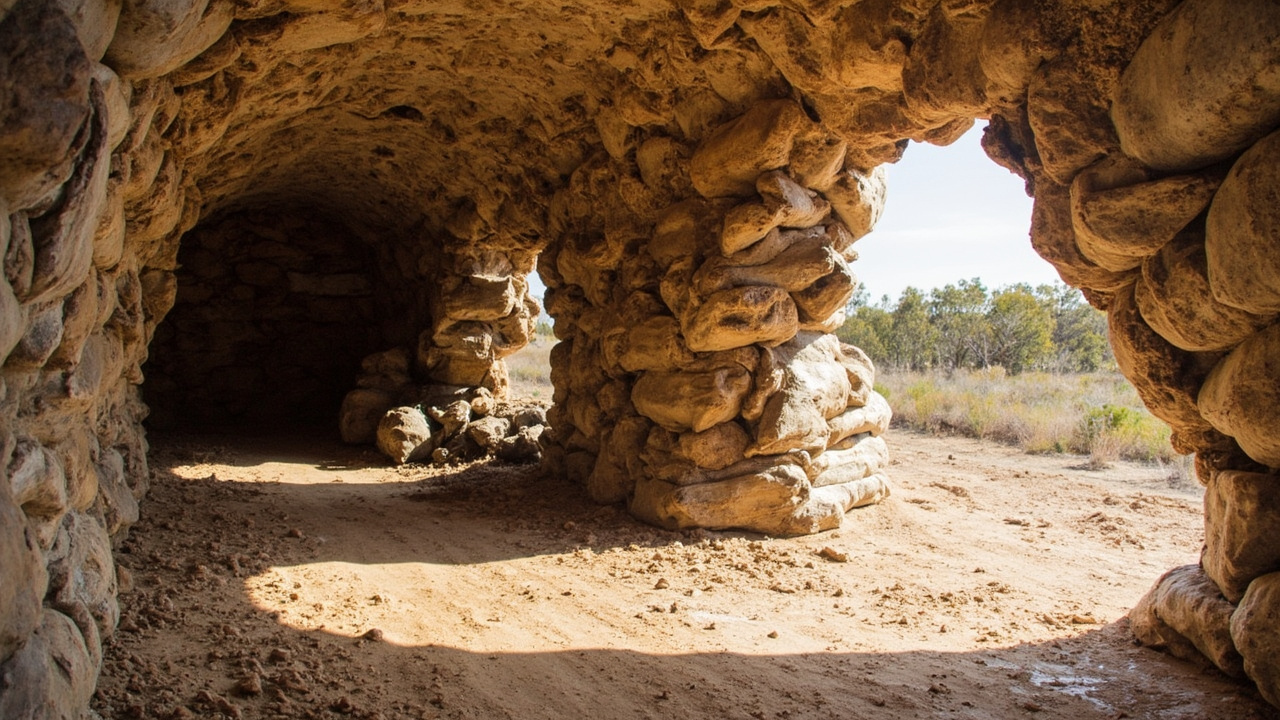
Earthbag Building: No Bullshit Guide for Aussie Off-Grid
Forget the Instagram fantasy. Earthbag building works here. But only if you do it right. No shortcuts. No "maybe" soil. Let's cut the fluff.
By Mick O'Brien· carpenter & builder · sheds-to-homes, cabins and things that stay up in a storm
“After losing a $12,000 earthbag wall to a Queensland flood, I learned sandbags alone won't stop the rising water.”
Four-step earthbag build sequence plus a reality-check panel on labour, approvals, UV and soil mix.
Fill Material: Don't Be a Dumb Aussie
Most people grab whatever's at the back of the shed. Bad idea. Your soil needs to be 70% sand/gravel, 30% clay. No exceptions.
Test it now: Take a handful of soil, wet it, squeeze. If it holds shape without cracking? You're golden. If it crumbles? You need to mix in sand or gravel. Don't skip this. Your house will fall apart.
Best fill in Australia:
Clay-rich topsoil (from your garden, not the top 5cm)
Gravel/sand mix (from local quarry - ask for "clean fill")
Never use pure clay. It's a nightmare to work with.
Pro Tip: Bag your fill in 50kg sacks. Wet it slightly before filling bags. Dry soil won't compact. Costs .50-$3 per sack. Buy from your local hardware store.
Bag Selection: Plastic Bags = Instant Disaster
Don't use those cheap plastic bags from the supermarket. They'll rot in 18 months. You'll be rebuilding your house before you've even moved in.
Torn plastic bag contrasted with strong woven polypropylene earthbag
Use:
Polypropylene bags (specifically made for earthbag) - non-degradable, UV-resistant.
Burlap bags (for non-structural walls) - but they need a moisture barrier. Not ideal for Aussie humidity.
Australian Supplier: Earthbag Australia (Sydney) - 1000 polypropylene bags @ .80 ea
Damp foundation with exposed moisture barrier
ch. Free shipping over $200. Total: ,800.
Alternative: Burlap Bags Australia - $2.50/bag (but you'll need a moisture barrier). Not recommended for primary walls.
Moisture Barrier: The One Thing You'll Skip (And Regret)
Australia's humidity and rain will destroy your earthbag walls without a moisture barrier. Period. No "maybe" or "if it's dry".
Moisture barrier installation on earthbag wall.
Do this:
Place a layer of polyethylene sheeting (200micron) under the first row of bags.
Run it up the wall 30cm above ground level. Tape it to the wall with waterproof tape.
Use a tarp over the roof to keep rain off the walls for the first 6 months.
Non-Negotiable: Skip the moisture barrier and your walls will turn to mud in 2 years. You'll be paying for repairs while your neighbours are living in their off-grid homes. Don't be that guy.
Final Reality Check
Earthbag building is cheap, sustainable, and works in Australia. But only if you use the right fill, the right bags, and the moisture barrier. No exceptions.
Cost for a 10m x 5m house (basic):
Fill material: $500-,000 (depends on soil)
Bags: ,800 (Earthbag Australia)
Moisture barrier: $200 (poly sheeting)
Total: ~$2,500-$3,000 (before labour)
That's less than a single week of city rent. Do it right. Or don't bother.
Forget the Instagram fantasy. Earthbag building works here. But only if you do it right. No shortcuts. No "maybe" soil. Let's cut the fluff.
Fill Material: Don't Be a Dumb Aussie
Most people grab whatever's at the back of the shed. Bad idea. Your soil needs to be 70% sand/gravel, 30% clay. No exceptions.
Test it now: Take a handful of soil, wet it, squeeze. If it holds shape without cracking? You're golden. If it crumbles? You need to mix in sand or gravel. Don't skip this. Your house will fall apart.
Best fill in Australia:
Clay-rich topsoil (from your garden, not the top 5cm)
Gravel/sand mix (from local quarry - ask for "clean fill")
Never use pure clay. It's a nightmare to work with.
Pro Tip: Bag your fill in 50kg sacks. Wet it slightly before filling bags. Dry soil won't compact. Costs $1.50-$3 per sack. Buy from your local hardware store.
Bag Selection: Plastic Bags = Instant Disaster
Don't use those cheap plastic bags from the supermarket. They'll rot in 18 months. You'll be rebuilding your house before you've even moved in.
Use:
Polypropylene bags (specifically made for earthbag) - non-degradable, UV-resistant.
Burlap bags (for non-structural walls) - but they need a moisture barrier. Not ideal for Aussie humidity.
Australian Supplier: Earthbag Australia (Sydney) - 1000 polypropylene bags @ $1.80 each. Free shipping over $200. Total: $1,800.
Alternative: Burlap Bags Australia - $2.50/bag (but you'll need a moisture barrier). Not recommended for primary walls.
Moisture Barrier: The One Thing You'll Skip (And Regret)
Australia's humidity and rain will destroy your earthbag walls without a moisture barrier. Period. No "maybe" or "if it's dry".
Do this:
Place a layer of polyethylene sheeting (200micron) under the first row of bags.
Run it up the wall 30cm above ground level. Tape it to the wall with waterproof tape.
Use a tarp over the roof to keep rain off the walls for the first 6 months.
Non-Negotiable: Skip the moisture barrier and your walls will turn to mud in 2 years. You'll be paying for repairs while your neighbours are living in their off-grid homes. Don't be that guy.
Final Reality Check
Earthbag building is cheap, sustainable, and works in Australia. But only if you use the right fill, the right bags, and the moisture barrier. No exceptions.
Cost for a 10m x 5m house (basic):
Fill material: $500-$1,000 (depends on soil)
Bags: $1,800 (Earthbag Australia)
Moisture barrier: $200 (poly sheeting)
Total: ~$2,500-$3,000 (before labour)
That's less than a single week of city rent. Do it right. Or don't bother.
⚠️ SAFETY WARNING: Working with electrical systems, structural modifications, or gas installations carries inherent risks. If you are not confident in your abilities, always engage a licensed professional.
It lays out the exact soil mix ratios and bag spacing you need for a solid wall. It also breaks down the real cost difference between hyperadobe and standard earthbags so you know where your money actually goes.— Mick O'Brien
Frequently asked questions
Is earthbag building actually any good in Australia?
Yeah, it works here — but only if you do it right. The whole article is about cutting through the Instagram fantasy and getting stuck into the stuff that actually matters. Get the soil, the bags, and the moisture barrier sorted properly and your build will still be standing in fifty years. Skip any of those and you're not building a home, you're building a problem.
What soil should I use to fill earthbags?
Not whatever's lying around the block — that's the 'dumb Aussie' move the article warns about. You need proper fill material, not 'maybe' soil you're guessing about. This is where most earthbag failures start, so don't muck around with it.
Can I use normal plastic bags for earthbag construction?
No — the article calls plastic bags an 'instant disaster' for a reason. Proper earthbag building needs UV-stable polypropylene bagging designed for the job, not whatever's kicking around the shed. This is one corner you don't cut, full stop.
Do I actually need a moisture barrier under an earthbag wall?
Yes, and the article says it's the one thing people skip and then regret. Even in Australia's drier regions, moisture will wick up through earth-filled walls and cause real damage over time. Sort it during the build or pay for it later.
When to Call a Professional
While many off-grid projects are achievable as DIY, certain situations require licensed professionals:
Electrical work beyond basic 12V DC additions — requires a licensed electrician
Structural modifications to buildings or load-bearing elements
Gas line installation or modification
Solar array installations above safe voltage thresholds
Any work that affects the structural integrity of your property
Always check local regulations and obtain necessary permits before commencing work.