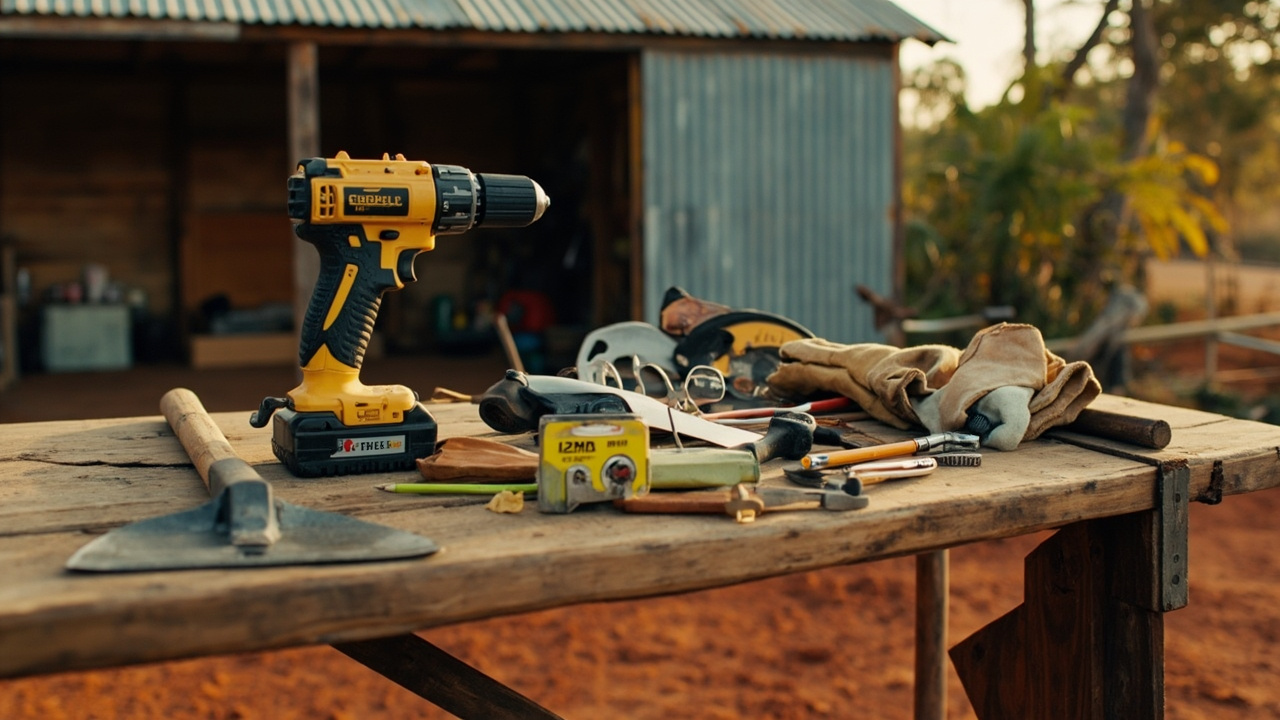
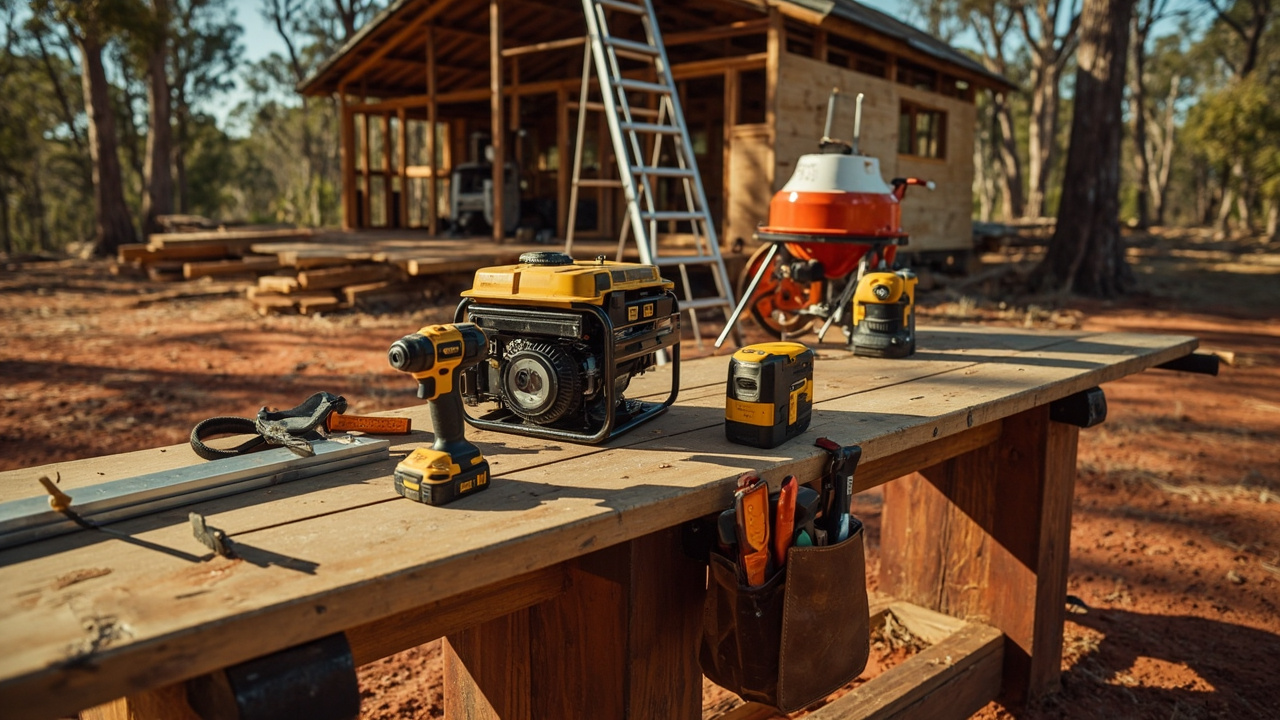
Look, off-grid living ain't about fancy gadgets. It's about getting the job done with what you've got. Waste your cash on tools you don't need, and you're just buying a paperweight. Here's the straight stuff:
Tool buying tiers for off-grid builds: what to buy first, second, hire later, and skip entirely.
Essential Tools (Get These First)
No exceptions. You'll need these before you even think about a shed.
Core tools every off-grid builder needs
Good quality hammer (16oz claw) - $25-$40. Hit things hard without bending nails. Bunnings has the basic ones. Don't buy the $10 "bargain" hammer. It'll break in week one.
Adjustable spanner set (10-24mm) - $35-$50. For pipes, nuts, bolts. You'll use it daily. Snap-on or Stanley are reliable. Bunnings or Toolstation.
Good saw (crosscut or mitre) - $40-$80. A cheap hacksaw won't cut through timber properly. Get a proper one. Bunnings has decent ones under $50.
Level (2ft spirit level) - $15-$25. If it's not level, your shed will lean like a drunk. Don't skip this. Bunnings has them for $20.
Measuring tape (5m) - $10-$20. 3m is useless for building. Get 5m. Bunnings sells them for $12.
Tip: Buy second-hand tools from Gumtree for these essentials. A used Stanley hammer for $20 is better than a new $40 one that's junk.
Nice to Have (Makes Life Easier, But You Can Build Without)
These are the "wouldn't mind" tools. Get them after you've got the essentials sorted.
Helpful but non-essential tools for off-grid building
Power drill (cordless, 12V) - $150-$250. Worth it if you're doing more than basic building. Makita or Bosch. Bunnings has decent ones. Skip the $80 "bargain" ones – they die in 3 months.
Utility knife (with spare blades) - $5. For cutting rope, plastic, tape. Always have one in your pocket. Bunnings sells packs of 10 blades for $3.
Work gloves (leather) - $15-$25. Your hands will thank you. Avoid those flimsy cotton ones. Bunnings has good ones.
Bucket (20L) - $10. For mixing cement, carrying water, holding nails. Get a proper one. Not the $2 plastic bucket from the hardware store.
Tip: Don't buy a full power tool set. You'll only use 20% of it. Start with a drill and a saw.
Specialised Tools (Only If You're Doing This Specific Thing)
These are for niche projects. Don't waste cash on them unless you're actually building this.
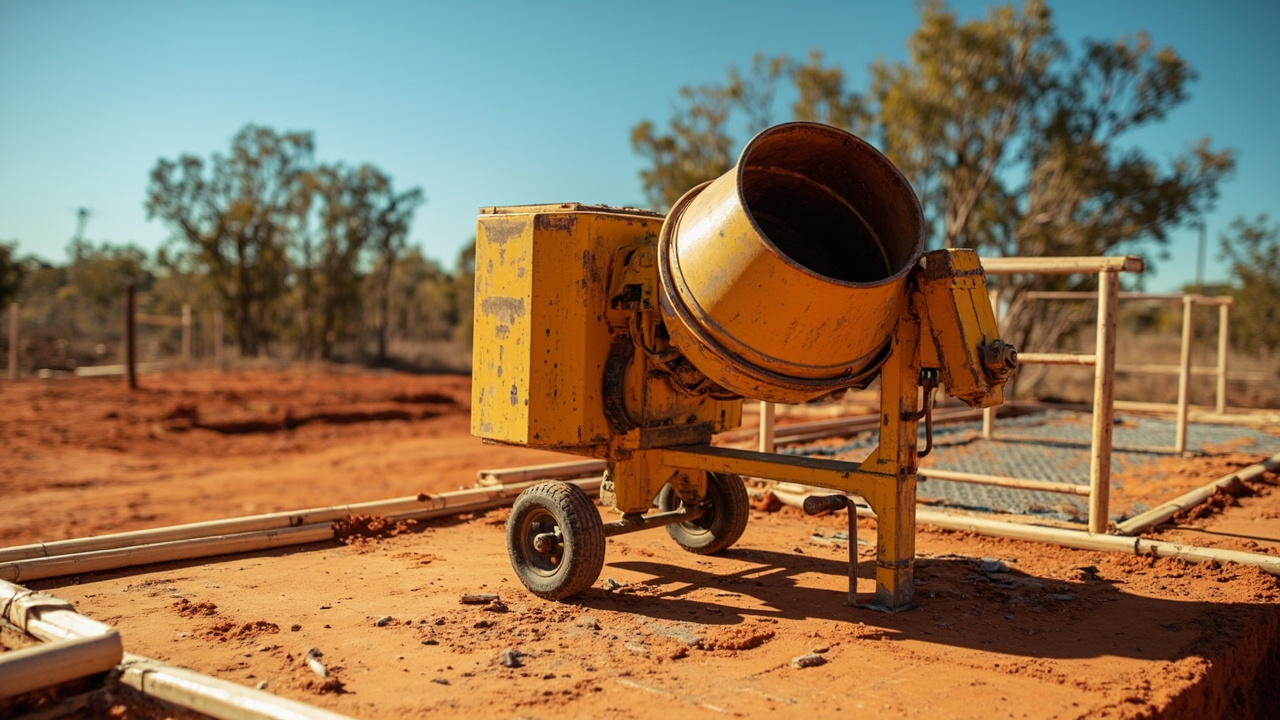
A concrete mixer earns its keep on slab day.
Concrete mixer - $300-$600. Only needed if you're pouring a slab. Rent it from Aussie Hire ($80/day) instead of buying. You'll never use it again.
Wireless level - $150-$300. For big projects. If you're building a small shed, skip it. Bunnings sells basic ones.
Staple gun (for roofing) - $80-$150. Only if you're doing roofing. Otherwise, use nails. Bunnings has them.
Soil compactor - $400+. Only for big earthworks. Rent it. HireAble does it for $120/day.
Tip: If you're building a tiny house, you don't need a concrete mixer. Use a wheelbarrow and a shovel. Saves $500.
What Not to Buy (Waste of Your Hard-Earned Cash)
Expensive "off-grid" tool kits from Amazon. They're overpriced junk.
Tools with "solar" in the name. Solar doesn't make tools better.
More than one hammer. One good one is enough.
Specialised tools for projects you'll never do (e.g., a welder if you're not welding).
Tip: Check Gumtree for second-hand tools. A used Makita drill for $100 is better than a new $200 one that's unreliable.
⚠️ SAFETY WARNING: Working with electrical systems, structural modifications, or gas installations carries inherent risks. If you are not confident in your abilities, always engage a licensed professional.
She cuts straight to the hand tools and cordless gear you actually need on site, and the segment on matching a good circular saw with a solid guide rail saves you a lot of frustration when framing walls.— Mick O'Brien
When to Call a Professional
While many off-grid projects are achievable as DIY, certain situations require licensed professionals:
Electrical work beyond basic 12V DC additions — requires a licensed electrician
Structural modifications to buildings or load-bearing elements
Gas line installation or modification
Solar array installations above safe voltage thresholds
Any work that affects the structural integrity of your property
Always check local regulations and obtain necessary permits before commencing work.