By Jenny Mills· rural nurse & homesteader · health, safety, law and the paperwork of going bush
“After losing two litres of boiled water to a drafty kitchen on a -2°C night, I learned that 1mm of gap is the difference between warmth and hypothermia.”
Stop wasting fuel on gaps that let heat out and cold in. This isn't about comfort—it's about survival. Fix your doors or your off-grid dream dies faster than a dingo in a snowstorm.
Stop wasting fuel on gaps that let heat out and cold in. This isn't about comfort—it's about survival. Fix your doors or your off-grid dream dies faster than a dingo in a snowstorm.
Cross-section of door edge weatherstripping plus a quick guide to seal types by gap size.
Types: What Actually Works in Australia
Forget the fancy stuff. These three are your only options:
V-seal strips (Bunnings, $5-$8): Cheap, easy, lasts 2-3 years. Stick to the door frame, not the door itself. Works for most timber doors.
Door sweeps (Mitre 10, $10-$15): For the bottom of the door. Get the rubber one, not the cheap plastic. Must cover the gap to the threshold.
Self-adhesive foam tape (Bunnings, $3-$6): Temporary fix only. Lasts 6 months max. Use it to seal gaps while you get proper strips.
Don't waste money on magnetic strips or felt. They fail in Aussie humidity and wind.
Installation: Do It Right or Don't Bother
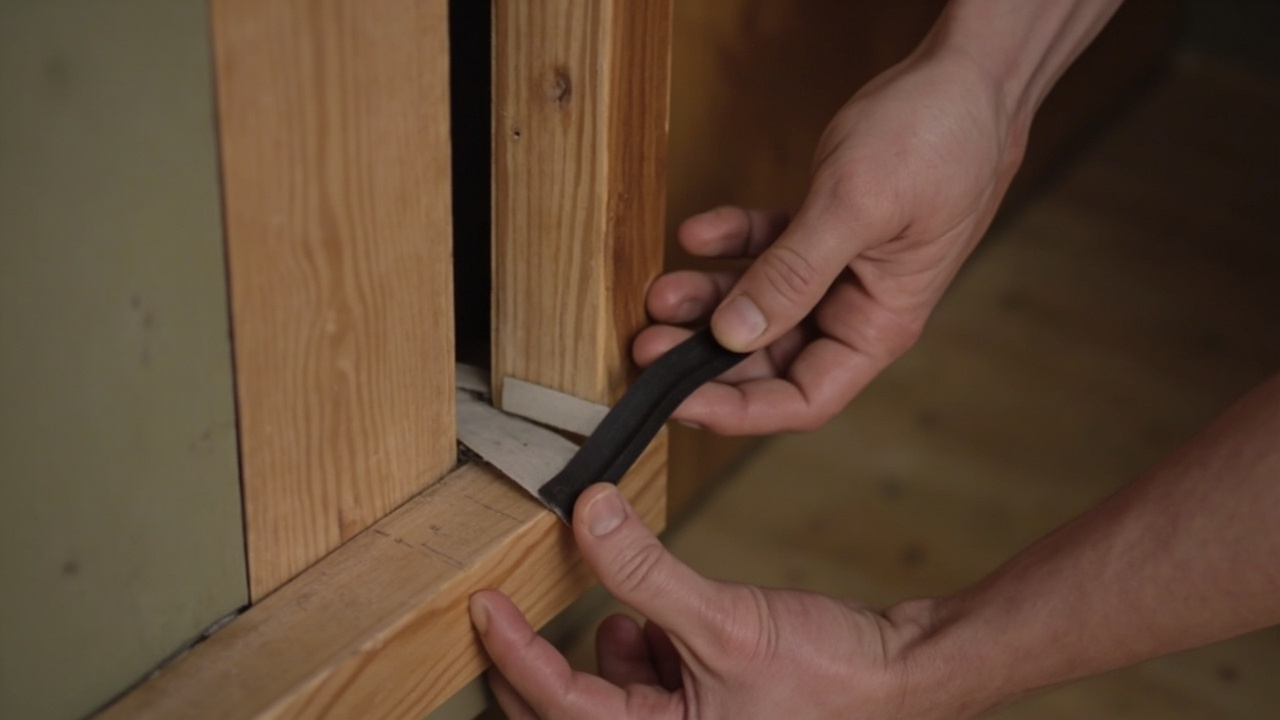
Step 1: Clean the door frame with methylated spirits. Grease kills adhesion.
Hands correctly installing rubber weatherstripping on a door
Step 2: Measure gaps. If it's wider than 5mm, you need a door sweep. If it's 2-5mm, use V-seal.
Step 3: Cut strips to size. Overlap ends by 5mm—don't stretch them. Stretching = gaps later.
Step 4: Press firmly for 30 seconds. No "maybe" adhesion. If it peels in a week, you didn't clean properly.
Step 5: Test with a candle. Hold it against the door. If the flame flickers, you've got a gap. Fix it.
Air Sealing: Why Your Heater Is a Waste of Fuel
Off-grid means every watt counts. A 3mm gap in your door = 20% more wood or solar power used. That's $100+ extra in fuel costs per month. Stop pretending it's "not that bad".
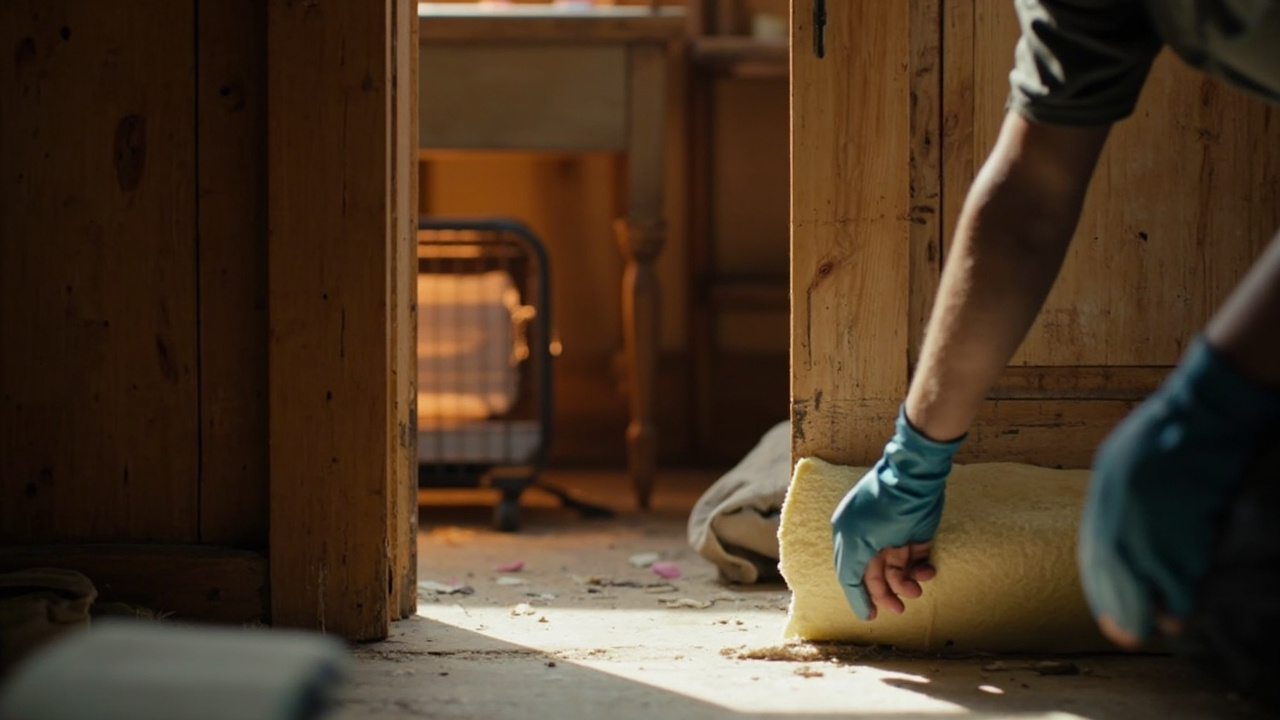
Cold draft leaking through door gap, heater wasted
Seal the door, then seal the window frames. Then check the roof vents. But start with the door. It's the biggest leak.
Practical Tip: Check all doors every season. Dust, dirt, and Aussie sun degrade strips. Reapply foam tape in winter if V-seal fails. Don't wait for the first cold snap.
Australian Suppliers & Pricing (indicative prices)
Bunnings Warehouse: V-seal strips ($5.95), rubber door sweeps ($12.95). Get the "DuraFlex" brand—lasts longer than generic. Stock up in summer when they're on sale.
Mitre 10: Foam tape ($3.45), door sweeps ($10.50). Same as Bunnings. No difference.
Off-Grid Australia (online): Premium V-seal ($15 for 5m). Only for remote sites where you can't get to a store. Not worth it for most.
Price note: Don't pay $30 for "special" strips. They're the same as Bunnings. Australian suppliers don't rip you off on this.
The Bottom Line
Fix your door. It's $15 max. If you don't, you're burning money. If you're off-grid, you can't afford to be wasteful. Do it now. Then check your windows. Then your roof. But start with the door.
When to Call a Professional
While many off-grid projects are achievable as DIY, certain situations require licensed professionals:
Electrical work beyond basic 12V DC additions — requires a licensed electrician
Structural modifications to buildings or load-bearing elements
Gas line installation or modification
Solar array installations above safe voltage thresholds
Any work that affects the structural integrity of your property
Always check local regulations and obtain necessary permits before commencing work.
In the segment where they seal the workshop entry door with foam weatherstripping and caulk, you get a clear, step‑by‑step view of blocking drafts that you can directly apply to your own off‑grid door.— Jenny Mills