By Jenny Mills · rural nurse & homesteader · health, safety, law and the paperwork of going bush
“After my third failed batch cost me $45 and a week's wait, I learned that wet kitchen scraps and a damp bucket are a recipe for mould, not fertiliser.”
Look, if you're off-grid in Australia and wasting food scraps in a compost bin that just sits there doing nothing, you're missing out. Bokashi is the only way to turn your kitchen waste into garden gold without the stink or the flies. No fancy science. Just simple, proven stuff. Here's how it actually works.
By Jenny Mills · rural nurse & homesteader · health, safety, law and the paperwork of going bush
“After my third failed batch cost me $45 and a week's wait, I learned that wet kitchen scraps and a damp bucket are a recipe for mould, not fertiliser.”
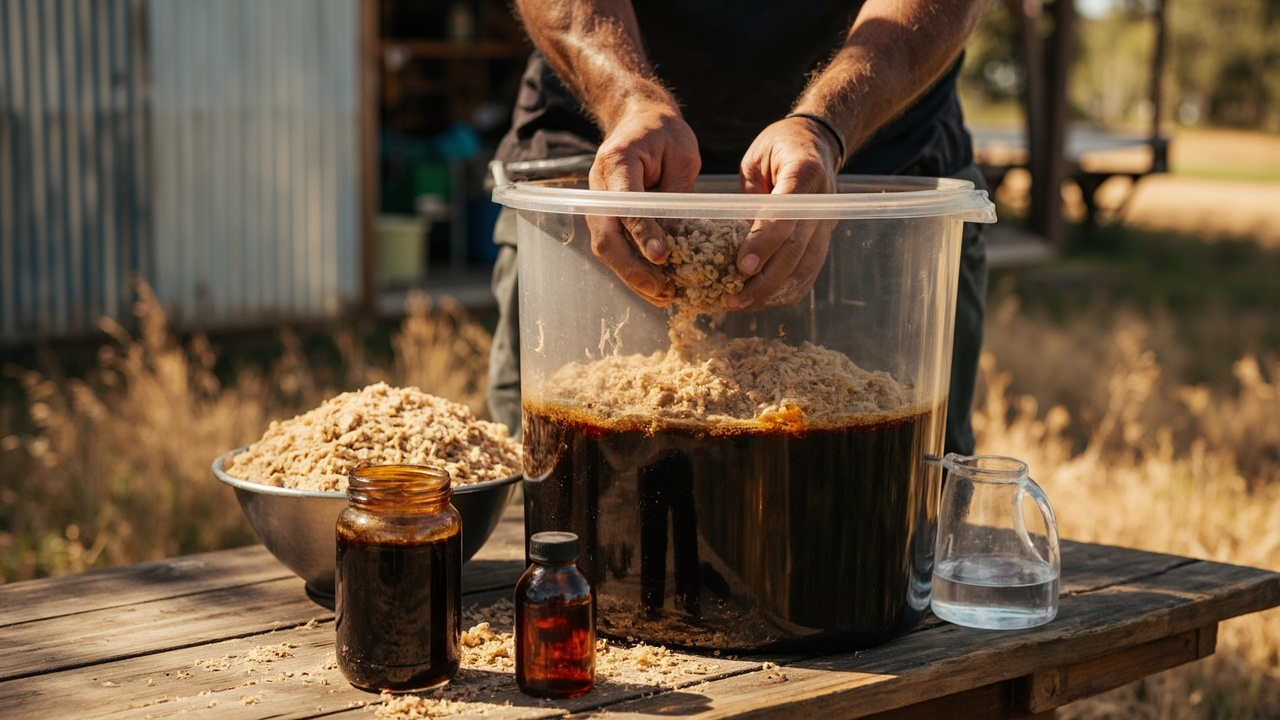
First up: the bran. It's not just any bran. You need inoculated bran. That means it's been soaked in effective microbes (EM). Cheap supermarket bran won't cut it. You'll just get mould and smells.
Get it right: Buy from a proper supplier. Bokashi Australia sells 5kg bags of inoculated bran for $45. EcoBokashi does it for $42. That's enough for 2-3 months of household scraps. Don't buy the $15 "bokashi" stuff from the hardware store. It's just bran. You'll waste money and time.
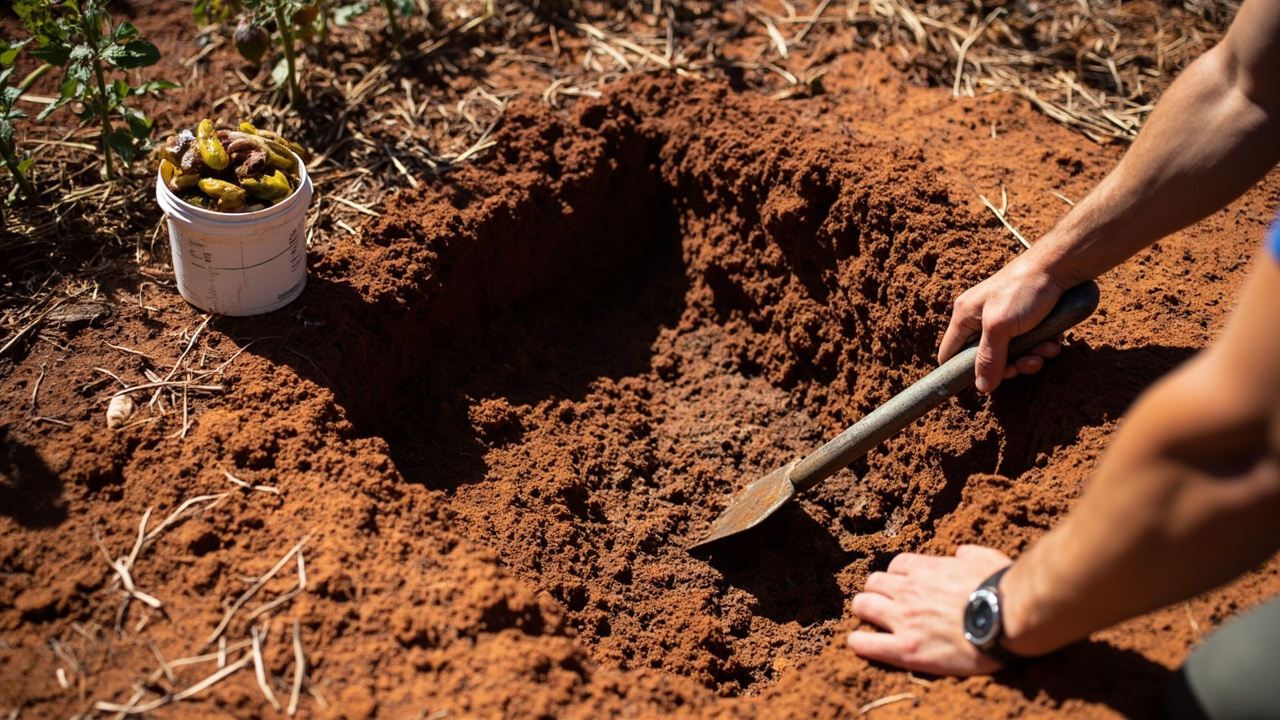
Here's where most people fail. You don't put it in a compost bin. You bury it.
Step 1: Dig a hole 30cm deep. Mix the fermented scraps with soil (1:1 ratio). Cover with 10cm of soil.
Step 2: Wait 2 weeks. Then plant your seeds or seedlings straight into it. The microbes will finish breaking it down in the soil. No waiting months for compost.
Don't bury it in a pile. Don't put it in a bin. Bury it. That's the whole point. It's not composting—it's soil inoculation.
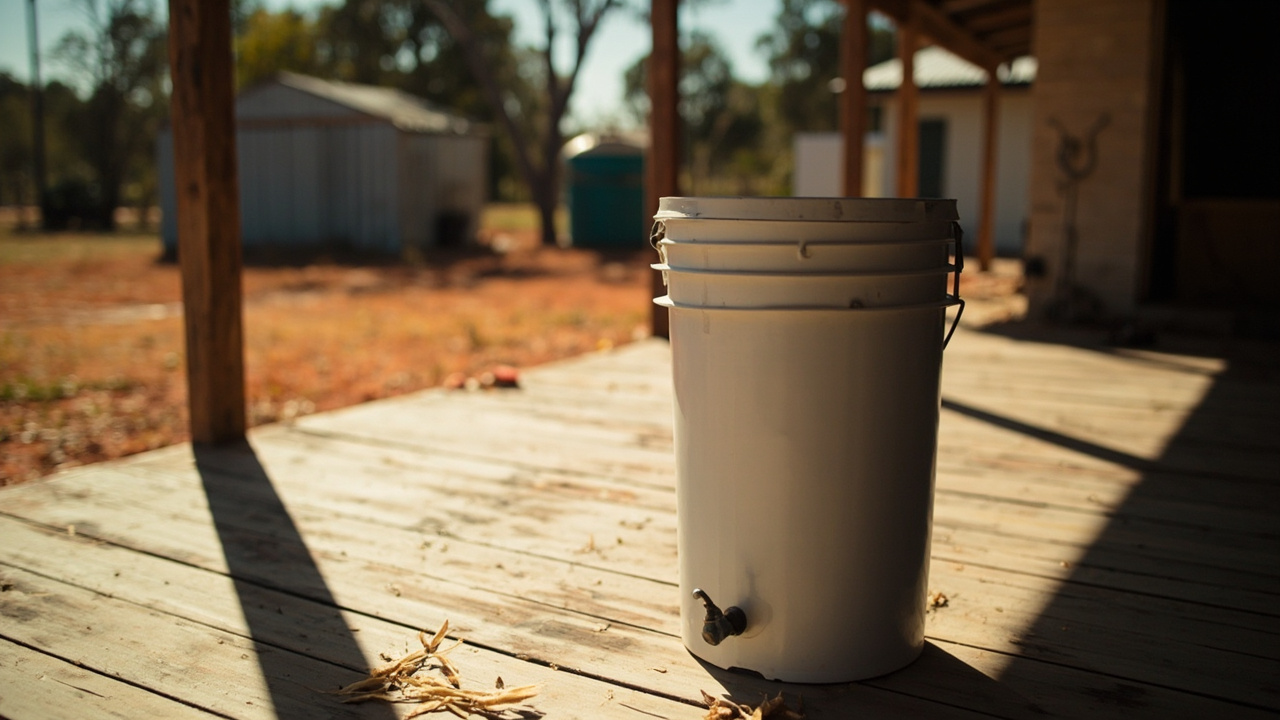
Practical Tip #1: Use a $10 plastic bucket from Bunnings as a bokashi bucket. Line it with a $2 bin liner. Seal it tight. No fancy $150 buckets needed.
Practical Tip #2: If you're in a dry area, add a splash of water to the bucket when you add scraps. Dry bran = no fermentation.
Practical Tip #3: Never put dairy or oil in it. It'll ruin the batch. Stick to scraps you'd eat. If it's in your fridge, it's fine.
Australian Suppliers (2024 Pricing):
Don't pay $80 for a bucket. Use a $10 bucket. The bran is the expensive bit.
Because it's fast. It's reliable. It works in droughts. It turns your $50 worth of food scraps into free soil. No wind, no rain, no flies. Just buried waste turning into plant food in 2 weeks.
Compost bins? Useless in dry inland areas. Bokashi? Works in the Outback, the city, and the coast. It's the only system that doesn't rely on weather.
While many off-grid projects are achievable as DIY, certain situations require licensed professionals:
Always check local regulations and obtain necessary permits before commencing work.
Worth a watch: It’s NOT Actually EXPENSIVE Off-Grid SOLAR+BATTERY in the Australian bush [installation] · The Brooke Brothers