By Mick O'Brien · carpenter & builder · sheds-to-homes, cabins and things that stay up in a storm
“I lost a shed to a gale when I cut bamboo joints too tight, proving flexibility beats brute strength every time.”
Using bamboo for sustainable, low-cost off-grid housing in Australia. Species, treatment, and building techniques.
By Mick O'Brien · carpenter & builder · sheds-to-homes, cabins and things that stay up in a storm
“I lost a shed to a gale when I cut bamboo joints too tight, proving flexibility beats brute strength every time.”
When I plan a structure at Beecher that needs to go up fast, handle the wet season, and stay repairable with hand tools, bamboo earns a serious look. Used correctly, it's one of the few materials where the supply chain, the carbon ledger, and the toolkit all stay on the same side of the ledger. This piece is the working notes I'd hand to someone considering a bamboo build for off-grid housing in Central Queensland — the spec sheet, the limits, and the parts you only learn by getting it wrong.
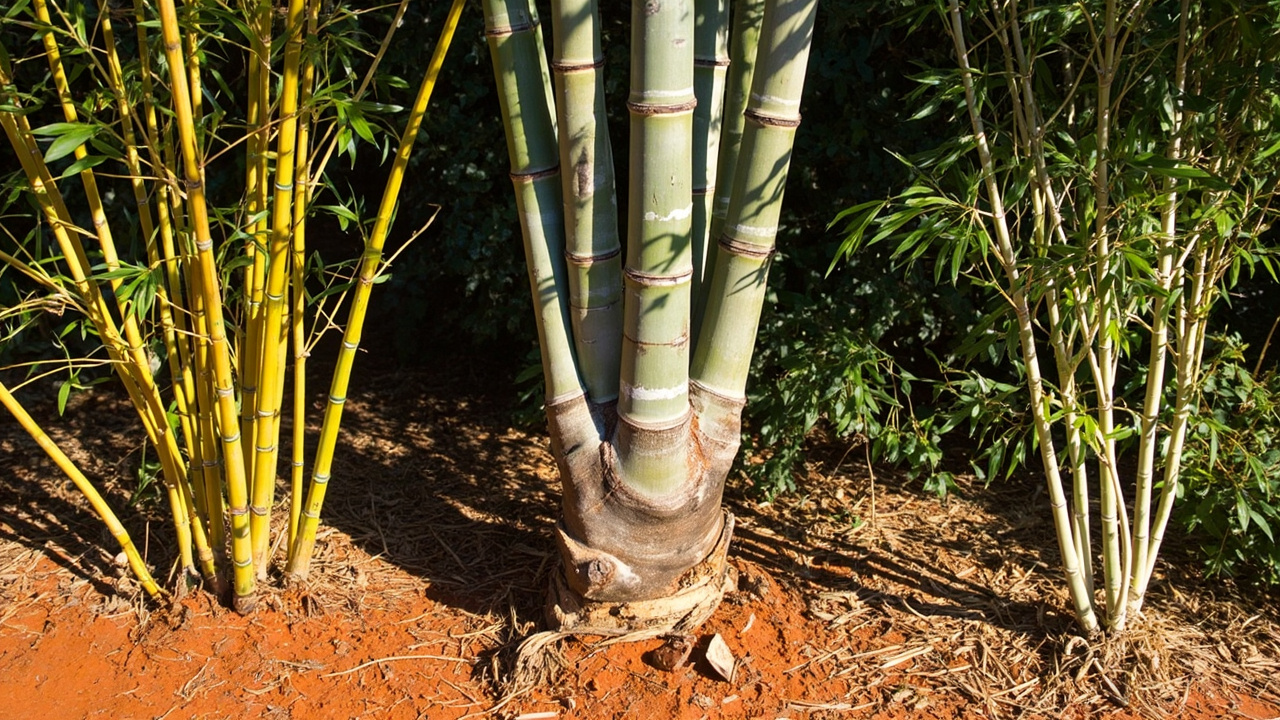
Bamboo is a fast-growing grass with a woody culm (the hollow stem most people call a "pole"). It's not a timber substitute in the engineering sense, but it's a legitimate structural material when specified and detailed correctly.
From a sustainability standpoint the numbers are hard to argue with:
The growing side is also low-impact: bamboo requires virtually no pesticides or synthetic fertilisers, draws surprisingly little water from soil systems, and its rhizome network prevents soil erosion while improving soil structure and nutrient cycling. For a Central Queensland block, that last point matters; the black-soil flats here don't take kindly to repeated disturbance.
| Property | Bamboo (culm) | Hardwood (typical) |
|---|---|---|
| Time to harvest | 3–5 years | 20–30 years |
| Replant after harvest | No (rhizome reshoots) | Yes |
| Tensile-to-weight | Fibre specific strength is comparable to mild steel on a weight basis; engineered culm capacity is lower and must be calculated for wall thickness and node configuration | High |
| Fastener behaviour | Does not take nails like timber; needs engineered joints | Standard nails/screws |
| Pest risk (untreated) | High — borer, termites | High for sapwood; lower for heart |
| Tool requirement | Hand tools viable for harvest and many cuts | Chainsaw/machinery typical |
| Best use on a build | Posts, beams, rafters, cladding, screens | All structural and finish |
The tensile-to-weight point is the one most often misquoted. Bamboo fibre has high specific strength relative to its weight, comparable to mild steel on a weight basis; this is a fibre-level property, not a statement that a culm member behaves like a steel section in service. Engineered culm capacity depends on wall thickness, node spacing, and moisture content, and must be calculated for the actual member, not the fibre. The "stronger than steel in absolute terms" claim is on the drop list and shouldn't be repeated.
Bamboo used as a structural building material must be properly treated, seasoned, and specified to prevent decay, insect attack, and moisture-related failure. The facts sheet doesn't list Australian standards numbers, so treat anything below as a working spec, not a certified one — verify structural bamboo against the relevant local building codes and standards before you commit to a design.
In Australian conditions, untreated bamboo will fail. The two methods I see work in this climate, with the caveats below:
Whichever you pick, the source notes that bamboo requires virtually no pesticides or synthetic fertilisers to grow. That says nothing about the building — treat the building material.
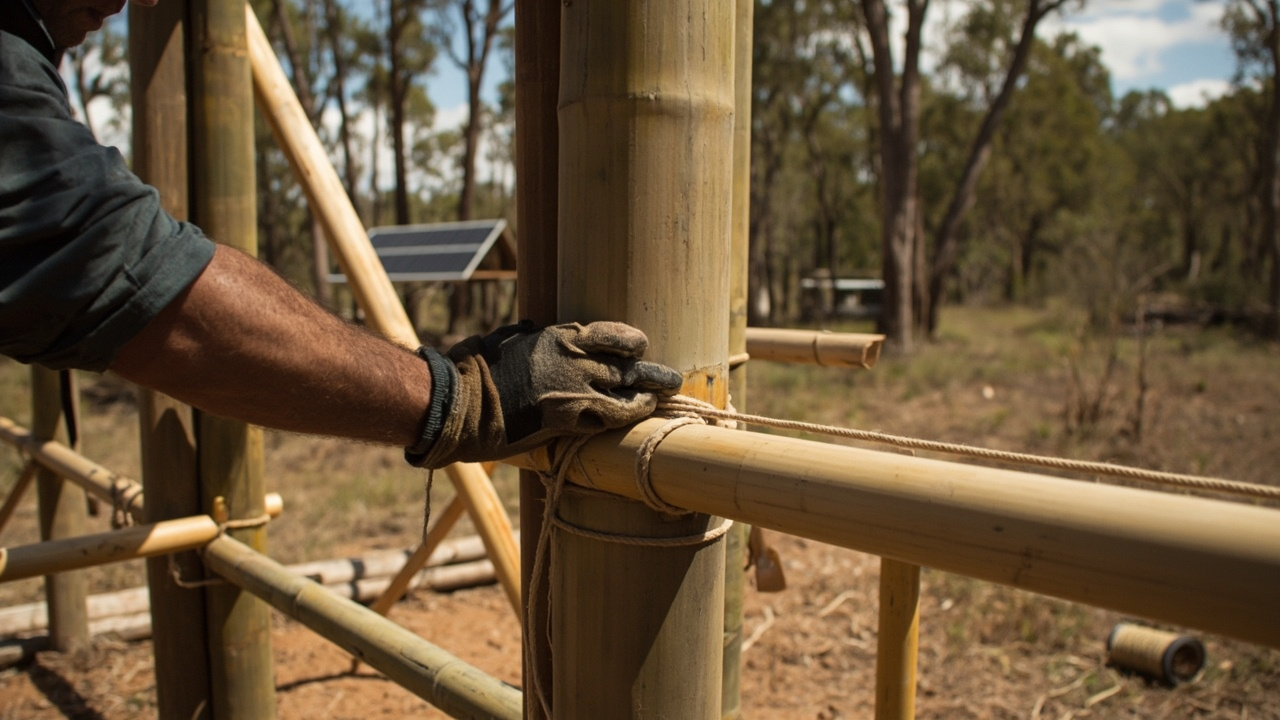
This is the part most DIY builds get wrong. Bamboo does not take nails like timber; it splits. Real joints are engineered:
In my experience these systems demand a lot more time on the drawing board than a comparable timber frame, and they pay you back in service life.
Before you plant a single shoot: local council regulations regarding invasive bamboo species must be checked before planting. Running bamboo in particular is restricted or banned in many Queensland local government areas because of its rhizome spread. Clumping species are generally the safer default, but "generally" isn't good enough when there's a fine attached, and some clumping species are listed as invasive in parts of QLD/NSW — confirm against the Queensland Biosecurity Act invasive species list. Confirm with council and confirm with your neighbours whose fencelines you'll be near.
Beecher sits in a termite-active zone, so:
A workable order for a small off-grid structure:
1. Footings and slab. Set anchor bolts or rebar dowels exactly where your bamboo columns land. Measure twice, set once.
2. Columns. Stand treated, seasoned culms on the dowels. Brace each column in two directions before moving on.
3. Beams. Socket beams over column tops using engineered saddles or lashed dowel joints. Check level at every connection.
4. Rafters and roof. Treat roof structure as a separate, removable assembly — a steel or timber hip with bamboo rafters is easier to maintain than an all-bamboo roof frame.
5. Cladding and screens. Use bamboo split or whole for screens, with a capillary break between bamboo and any horizontal surface that traps water.
6. Finishes. Seal end grain. Cap all cut ends. Re-treat any field cuts with a borate-plus-wax or borate-plus-resin system — not bare borate, which leaches.
Use appropriate personal protective equipment (PPE) when cutting or machining bamboo, as it splinters easily. Gloves, eye protection, and a long-sleeve shirt are the minimum; fine silica-style dust from dry culms warrants a respirator.
Hand back the job to a licensed professional when:
Is bamboo stronger than steel?
No. Bamboo fibre has high specific strength relative to its weight, comparable to mild steel on a weight basis; this is a fibre-level property. An engineered culm member is not equivalent to a steel section and must be calculated for wall thickness, node configuration, and moisture. Engineer the connections and members, not the slogan.
Do I need to replant bamboo after harvest?
No. The rhizome network immediately begins producing new shoots after selective harvest, with no need for replanting. Harvest mature culms only.
Does bamboo need a lot of water to grow?
No. Bamboo draws surprisingly little water from soil systems, which is one reason it suits sites where you don't want to draw down a bore.
How long does bamboo take to be harvest-ready?
As little as three to five years for many species, compared to 20 to 30 years for hardwood trees.
Can I grow my own structural bamboo at Beecher?
Sometimes, subject to local council regulations regarding invasive bamboo species and the Queensland Biosecurity Act invasive species list. Check with council before planting; running bamboo is restricted in many LGAs, and some clumping species are also restricted in parts of QLD/NSW.
Is bamboo fireproof?
No. Bamboo building materials are not completely fireproof; they char. Fire performance depends on treatment, wall thickness, and detailing. Treat any fire separation or BAL assessment as a licensed-professional job.
Worth a watch: FULL VIDEO Building Fish Pond, Build Bamboo Bridge & Cabin, OFF GRID FARM - My Bushcraft · My Bushcraft / Nhất
Absolutely. I reckon it's Aussie timber that holds its own, not just a decorative grass. I've put up sheds, cabins and houses in bamboo that handle proper storms — the key is letting the joints flex instead of cutting them bone-tight.
You do, and honestly that's the secret weapon of the whole build. Untreated bamboo won't last against rot and borer attack out here. The treatment section of the article walks through what I actually use on site.
If you've got carpentry skills you can knock up a fair bit of it yourself — I cover my on-site framing process step by step. But the moment you're looking at load-bearing walls, big roof spans or anything that needs a sign-off, that's when a licensed structural engineer comes in.
Treated and built properly, it'll still be standing in fifty years. I've got bush structures out there that have copped decades of weather and they're still solid. Skip the treatment, though, and you won't get anywhere near that run out of it.