By Sarah Chen · environmental engineer · water, waste and everything that flows downhill
“After my first pond dried up in the 45-degree heat, I learned that without a dedicated overflow, aquaculture is just expensive mud.”
By Sarah Chen · environmental engineer · water, waste and everything that flows downhill
“After my first pond dried up in the 45-degree heat, I learned that without a dedicated overflow, aquaculture is just expensive mud.”
Designing an aquaculture pond for an off-grid property comes down to matching the pond type to the land, sizing the system to your watershed, and avoiding the classic mistakes that turn a productive water body into a maintenance headache. This guide walks through the core decisions: site selection, pond type, shape and depth, dam and bank construction rules, and the safety boundaries you don't cross without a qualified engineer.
Two construction types cover most rural aquaculture builds.
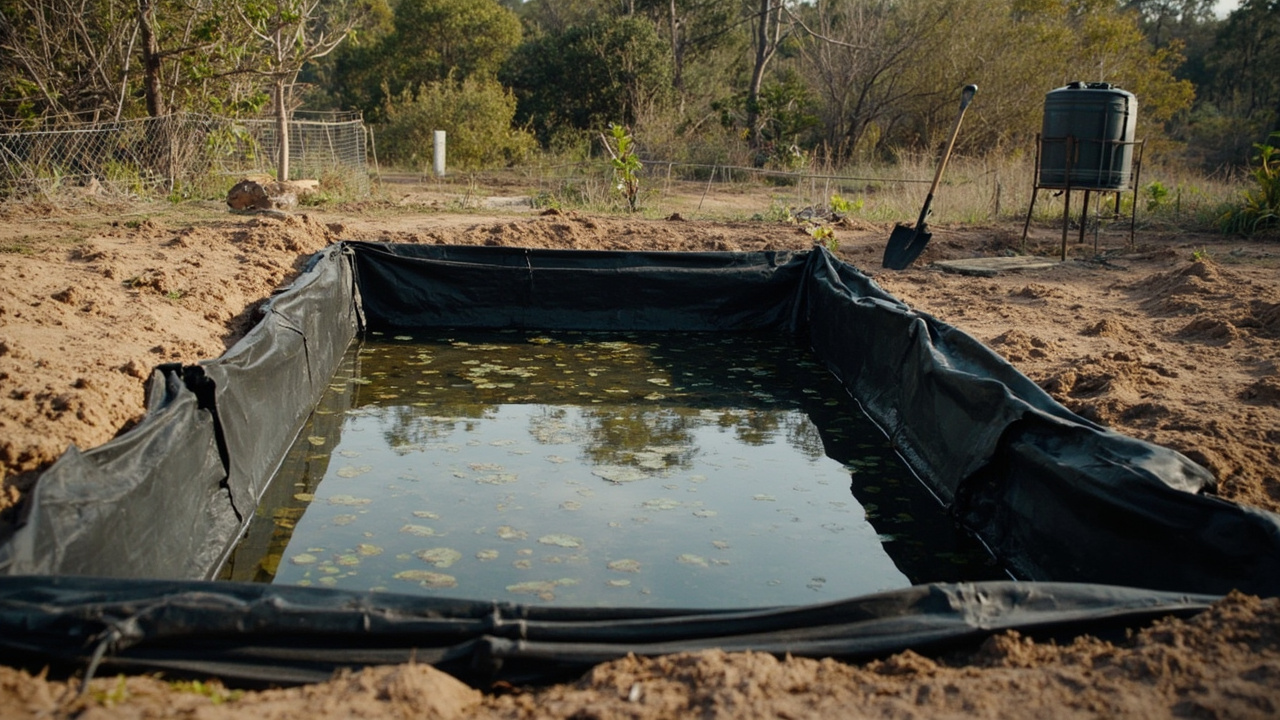
An embankment pond (also called a watershed or hill pond) is built by constructing a dam across a depression between two hills to impound runoff on the upstream side. It's best suited to slightly to moderately rolling topography and relies on rainfall runoff to fill and maintain water levels. Because the dam does most of the water-holding work, embankment ponds generally require the least earthmoving per megalitre stored, making them the cheapest option per surface hectare where the site allows. Size, shape, and depth are limited by site topography and watershed area — steeper catchments deliver more runoff, which can let you build a smaller impoundment.
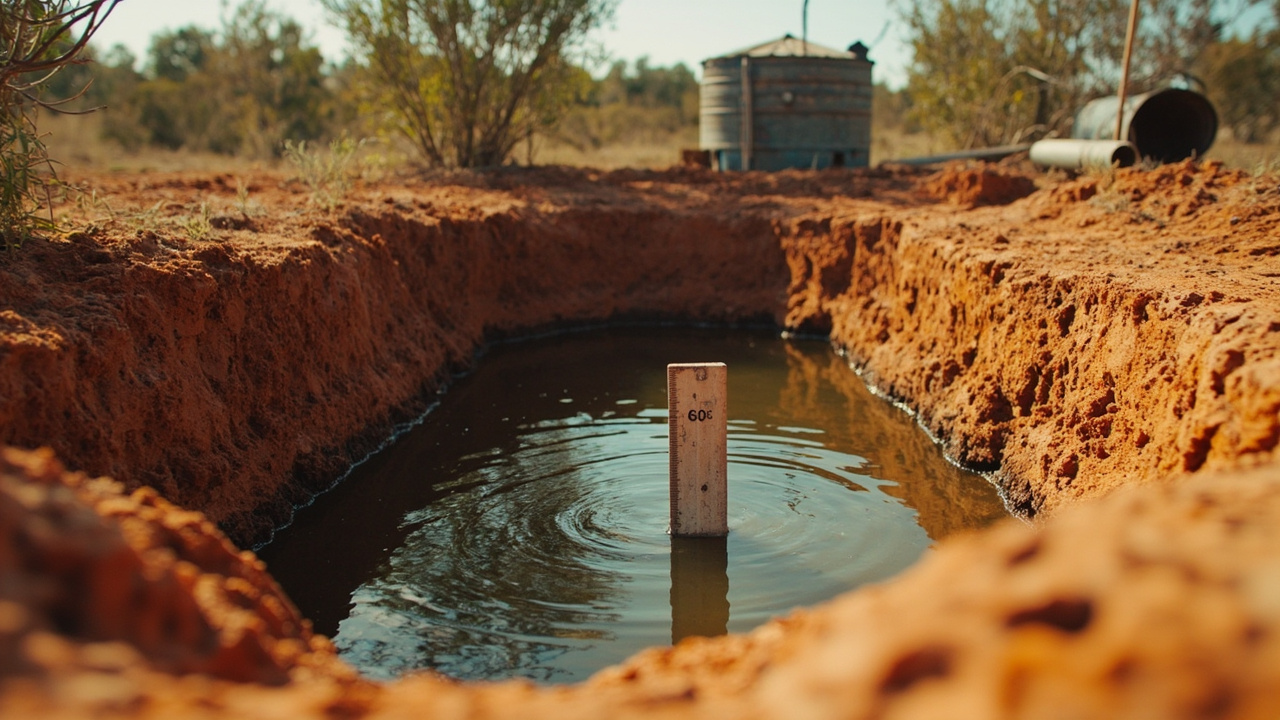
An excavated (dug) pond is constructed almost entirely below the original ground level. These suit flat ground where you can't form a dam economically, but you pay for it in machine time and spoil removal.
For off-grid setups in Central Queensland's mixed terrain, the embankment pond is usually the right starting point — it works with the landscape rather than against it, and smaller earthworks means smaller diesel bills.
A specific warning worth repeating: building a dam across a large, permanent stream is not recommended. Heavy rainfall carries sediments that shorten the pond's useful life, and continuously fed streams are difficult to manage for fish production. Runoff-fed embankment ponds give you far more control.
Pond location drives everything that follows. Get this wrong and you spend years compensating.
Key considerations for landscape design include size, site visibility, relationship to surrounding landscape, use patterns, and shoreline configuration. Where possible, orient the pond so the major sight line crosses the longest dimension of water surface — this way the water reads first, before structural elements like the dam wall, pipe inlet, or spillway become visual focal points.
A long, narrow pond viewed along its long axis will look larger and more natural than the same volume of water in a round or square shape. Irregular pond shapes with smooth, flowing shorelines are generally more compatible with countryside landscapes than geometric forms.
Retaining some existing trees and shrubs along part of the shoreline adds visual interest, provides shade, and helps blend the pond into the landscape. But there are limits:
Trees should never be planted on a dam, levees, or along emergency spillways. Roots can cause seepage paths through the embankment, and falling trees during storms can cause catastrophic dam failure. Keep the dam and spillway corridor clear of woody vegetation — grass cover is the standard treatment.
For aquaculture, shape is driven by function as much as aesthetics. Long, irregular shorelines maximise edge habitat (where invertebrates and aquatic plants colonise), which feeds your fish.
Aim for a minimum depth of around 1.5–2 m at the deepest point to:
A varied bottom contour — shallow shelves along one margin dropping to a deeper channel — gives you planting zones for filtration species and a productive open-water zone for grow-out.
The 3:1 slope (3 horizontal to 1 vertical) is structurally sound for embankment stability on most clay-dominant soils. Steeper banks risk slumping; shallower banks eat land. On sandy or dispersive soils common in parts of inland Queensland, you'll need gentler slopes (4:1 or flatter) or clay core lining — get a geotechnical assessment before committing.
| Item | Specification / Guidance | Source / Basis |
|---|---|---|
| Embankment pond best terrain | Slightly to moderately rolling topography | Embankment design fact sheet |
| Embankment pond water source | Rainfall runoff (watershed-fed) | Embankment design fact sheet |
| Excavated pond depth | Almost entirely below original ground level | Pond-type classification fact sheet |
| Bank slope (stable soil) | 3:1 (H:V) baseline | Off-grid best practice, WORTH KEEPING |
| Minimum deep zone | ~1.5–2 m | Common aquaculture practice (depth required) |
| Stream-fed dams | Not recommended | Embankment design fact sheet |
| Trees on dam/spillway | Prohibited | Embankment design fact sheet |
| Orientation | Long axis perpendicular to main sight line | Pond landscape design fact sheet |
| Shoreline shape | Irregular, smooth-flowing curves | Pond landscape design fact sheet |
| Pond types in use | Embankment, excavated, plus decorative backyard variants | Aquascape Supplies, outdoor-pond-build |
Off-grid aquaculture in Australia's dry zones means you cannot rely on mains top-up. Design for:
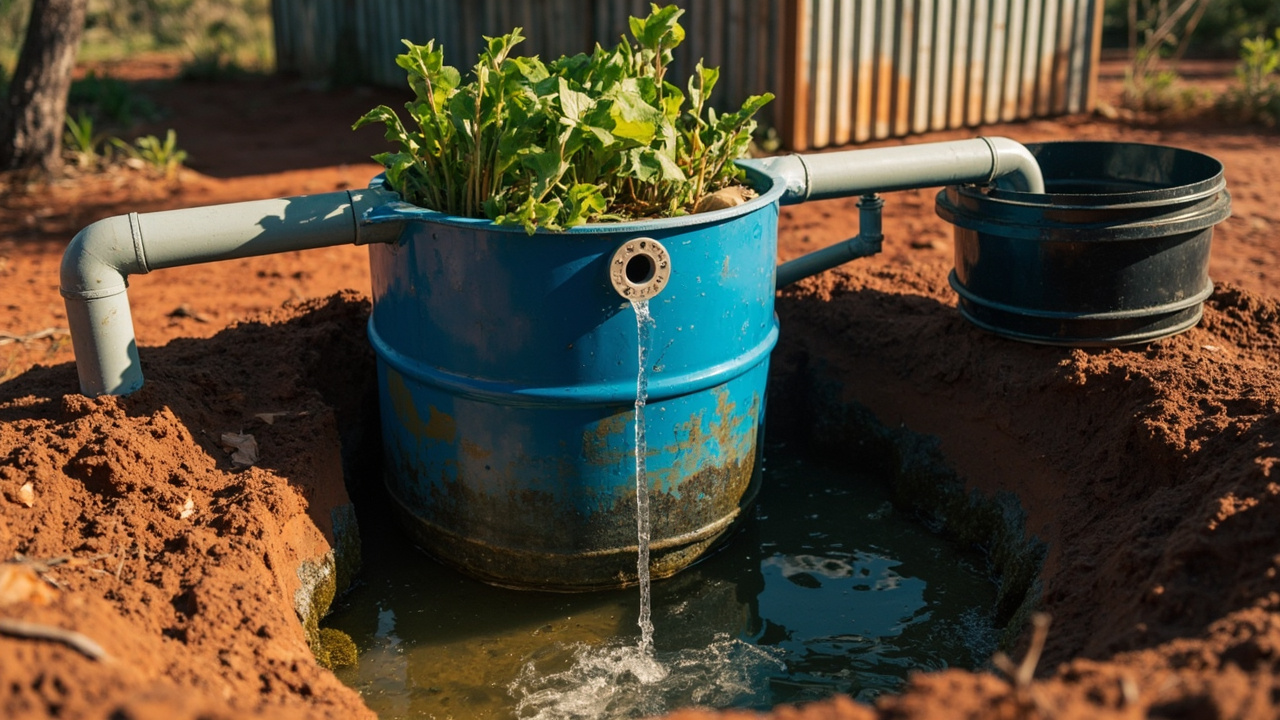
Keeping pond maintenance off-grid means sizing aeration, water transfer, and harvesting around what solar can deliver — and avoiding any system that requires three-phase 230V or large sustained draw.
Dam construction is regulated in most Australian states. A dam above certain height or storage thresholds is notifiable work; the thresholds vary by state and by hazard category. In Queensland, refer to the Water Act 2000 and the relevant safety conditions for referable dams. Don't rely on this article for compliance — verify with your state regulator.
Call a licensed professional when:
DIY is appropriate for: small excavated ponds under a few hundred square metres on stable clay, ornamental aquaculture ponds, and minor earthworks outside regulated dam thresholds. Anything beyond that is engineering territory.
What's the best pond type for off-grid aquaculture in Central Queensland?
An embankment pond is the standard choice where you have even modest slope — it requires the least earthworks per hectare of water and works with rainfall runoff rather than against it.
How big should an aquaculture pond be?
Match the size to your reliable watershed runoff, your target production, and your evaporation losses. A common starter scale for household-plus-surplus production is around 500–2,000 m² surface area, with a deep zone of at least 1.5–2 m.
Can I build a dam across a creek or stream?
Not recommended for aquaculture. Stream-fed dams silt up quickly and are harder to manage for fish production than runoff-fed embankment ponds.
What slope should I build the banks at?
3:1 (horizontal to vertical) is the stable baseline on most clay soils. On sandy or dispersive soils, go flatter (4:1 or more) or install a clay core — get a geotechnical assessment first.
Should I plant trees around my pond?
Some, yes — partial shade and wind protection are valuable. But don't ring the pond completely (leaf litter causes tannin staining and muck), and never plant on the dam wall or spillway.
Do I need approval to build a pond?
In most Australian states, dams above certain size or height thresholds require notification or approval. Check your state regulator — in Queensland, that's the Department of Regional Development, Manufacturing and Water.
Backyard and ornamental ponds are growing in popularity across Australia, with survey data suggesting the majority of Australians plan new outdoor projects and rate the backyard as a key factor in home choice. The same design principles that make a decorative pond sit well in a landscape apply to productive aquaculture — only the sizing, depth, and species load change.
Worth a watch: How to build a 100% Self Sufficient Fish Pond · thep0ndman