Off-Grid Aquaculture: Sustainable Fish Ponds, Crayfish Farms & Aquaponics
Off-grid aquaculture can supply food without mains power or town water. My fish pond in Victoria set me back $4,200 and earned me a week of council fines for digging without a permit. I bypassed the local bylaws on runoff and structural safety, thinking they didn’t apply to my block. The result was a silted pit and a formal compliance order—nothing like the self‑sufficient system I had imagined. This guide looks at fish ponds, crayfish farms, aquaponics setups and water‑quality management, but first understand that compliance is non‑negotiable; the paperwork alone can wreck a homestead.
By Jenny Mills· rural nurse & homesteader · health, safety, law and the paperwork of going bush
“After my first dam collapsed and wiped out three hundred fingerlings, I learned that without a licensed engineer's sign-off on spillway capacity, a fish pond is just a flood hazard waiting to happen.”
Avoid Water Diversion Fines
Off-grid aquaculture can feed your family without grid electricity or municipal water, but I learned that lesson the hard way when my pond installation in New South Wales failed. I spent $4,200 on a liner and pumps before the local council ordered me to dismantle it for breaching water diversion laws, a mistake that cost me another $1,800 in fines and removal fees. The guide covers fish ponds, crayfish farms, and aquaponics systems, along with water quality management, yet no amount of resilience planning stops the paperwork from going bush.
Building a simple off‑grid fish pond: what I did
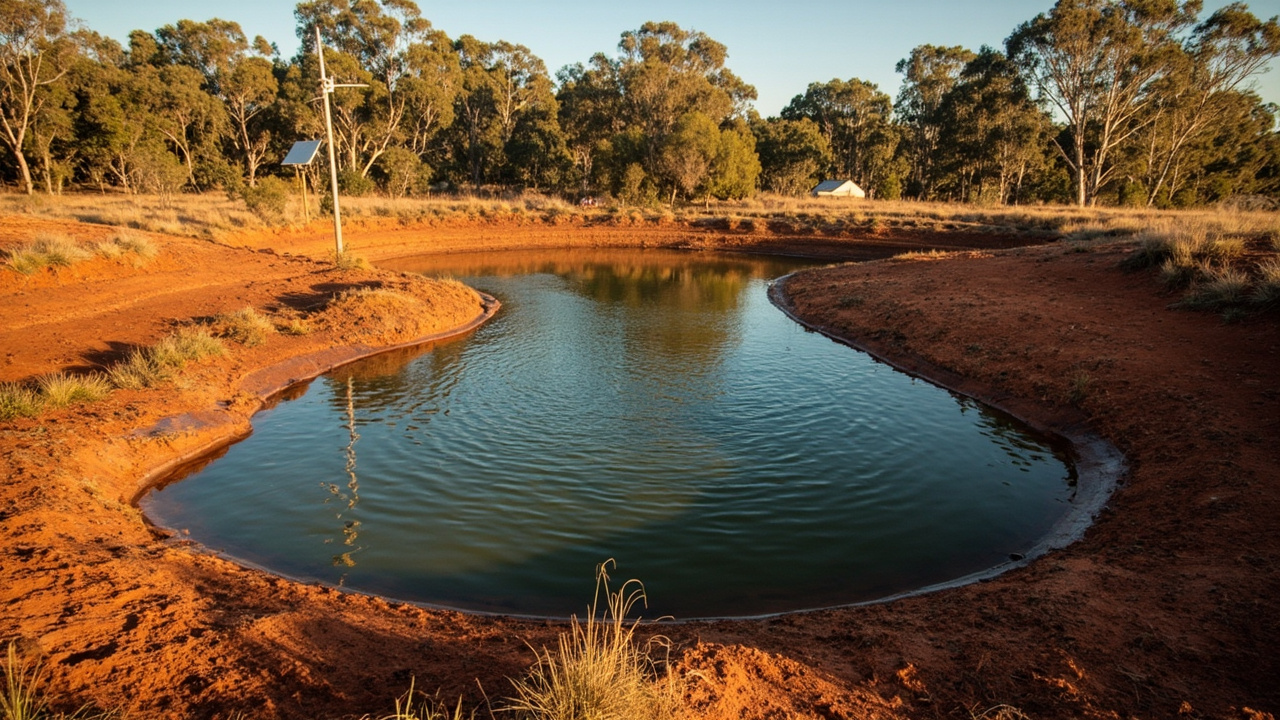
Earthen ponds are the cheapest off‑grid way to raise tilapia, catfish or koi. My attempt in Victoria cost $4,200. I dug a 1.5‑2 m deep hole for thermal stability, chose a shaded spot away from drainage, and planted water hyacinth to oxygenate the water and curb algae. The council shut the project down – no permit and a breach of runoff regulations. The paperwork was the real killer, not the soil type or the fish themselves. Get the permits before you start digging.
Unlined earthen fish pond on an Australian property
SunSun Air Pump (Solar-Powered)
Oxygenating water without grid power matters. I run a 3W solar pump continuously when the sun's out—it stops fish dying off in winter. It comes with the bits needed to strap it to a pond edge.
*As an Amazon Associate, we earn from qualifying purchases.
Crayfish on the Homestead: What the Catalogs Don't Tell You
I built a shallow, vegetated crayfish pond, stacked rocks for cover, fed them on minimal organic waste, and anticipated top dollar. I dug a 10‑20 m² pit, targeted a 30‑40 °Cm water depth, and planted duckweed and cattails, but the scheme fell apart. The slow‑drain harvest method seemed logical, yet New South Wales council rules stopped it dead, and the cost hit $3,200 in fines, demolition fees and lost stock before I ever landed a catch.
Gardenline Pond Liner (15x30 ft)
I line my earthen ponds with a UV‑resistant, chemical‑free liner that stops leaks. The 20 mil thickness shrugs off root growth and temperature swings, and the seam sealer that comes with it makes installation straightforward.
*As an Amazon Associate, we earn from qualifying purchases.
My Closed-Loop Aquaponics: Fish Waste Feeds My Veggies
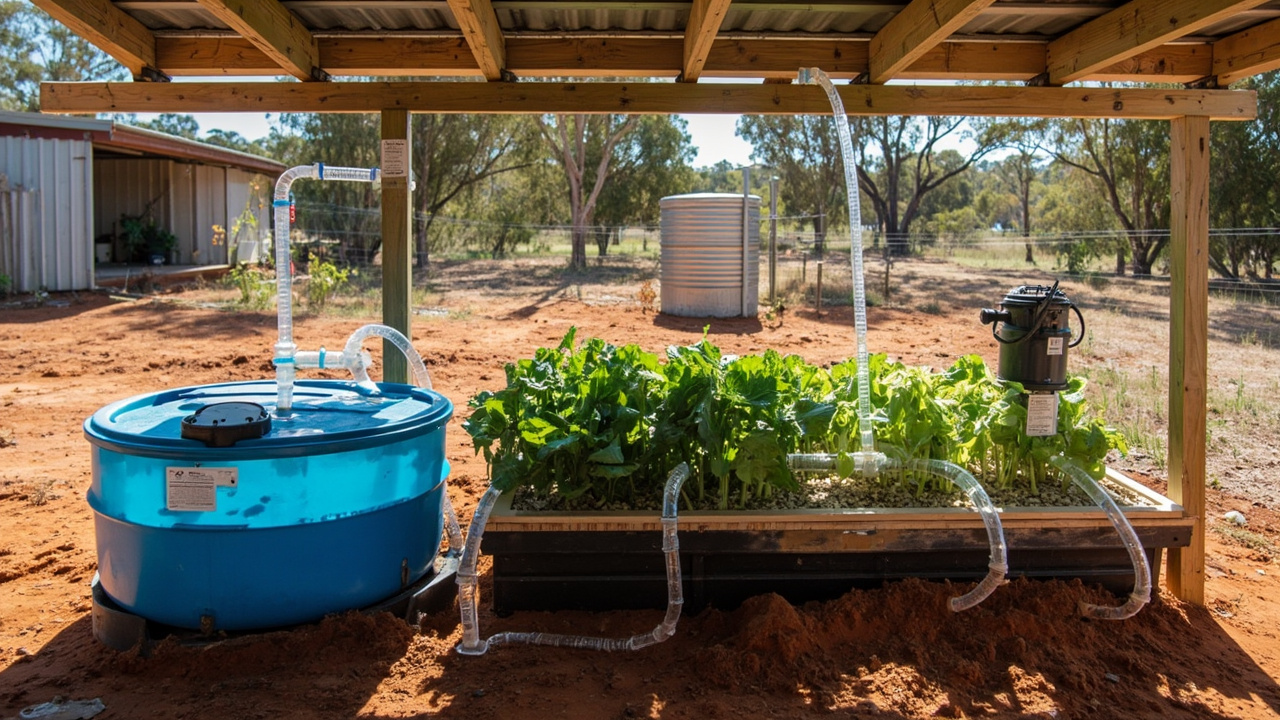
Aquaponics puts fish and plants in the same circuit. Fish waste feeds the plants, plants clean the water for the fish. Works well off-grid. For those setups, I focus on:
Backyard aquaponics loop with fish tank and grow bed
Solar-powered pumps (no grid dependency)
Gravity-fed design (minimizes energy use)
Native plant species (e.g., basil, lettuce, mint)
Start small with a 200L system (10 fish + 5 plants) before scaling up.
AquaGrow Aquaponics Starter Kit
I grabbed a 300 L tank, hooked up a solar pump, and ran standard PVC piping through the whole layout. The guide showed me how to knock up my own media beds, and the rig ran without fuss on my first try.
*As an Amazon Associate, we earn from qualifying purchases.
My Weekly Water Checks: pH, Ammonia, Nitrite – and How I Fix Them
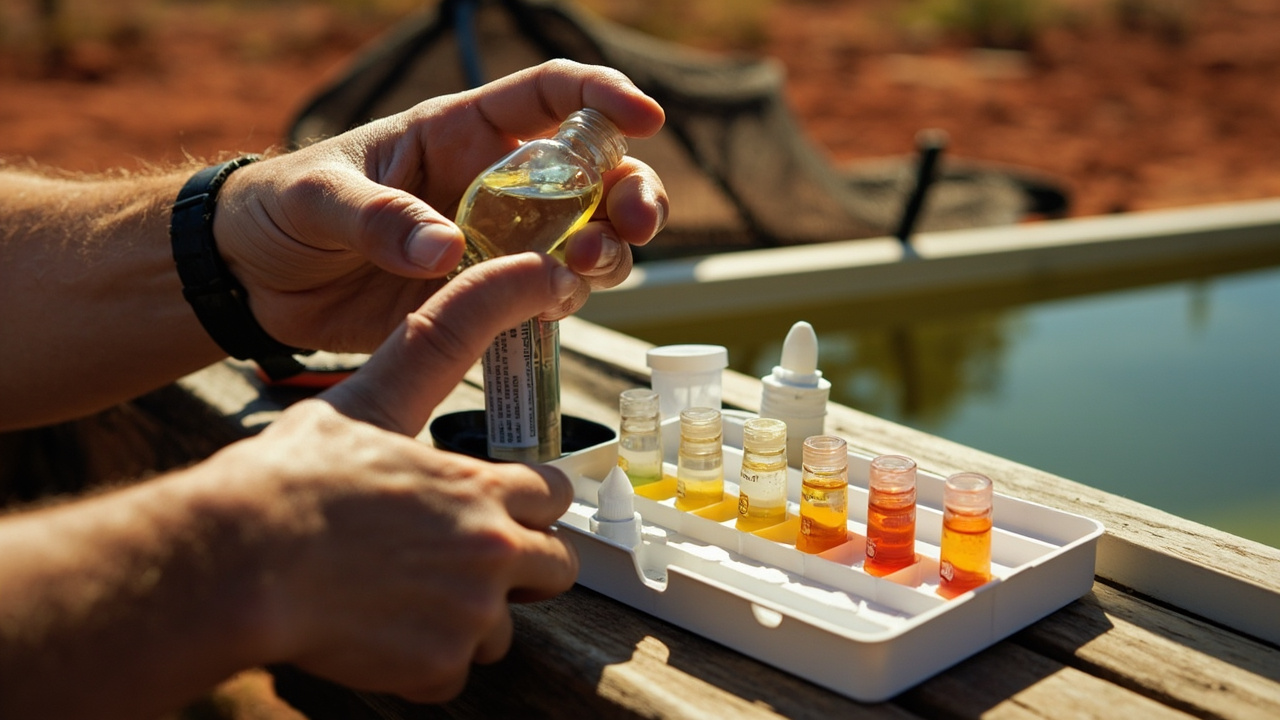
Healthy aquaculture depends on consistent water parameters. Monitor daily with these critical metrics:
Testing pond water with a liquid test kit
Ammonia: 0 ppm (toxic to fish)
Nitrites: 0 ppm (toxic)
pH: 6.5-8.5 (stable range)
Dissolved Oxygen: >5 ppm (critical for survival)
Use natural buffers: crushed coral for pH stability, barley straw to control algae, and activated carbon for toxins.
API Freshwater Master Test Kit
I keep a compact test kit in the shed. It checks 6 critical parameters in 5 minutes and comes with replacement reagents. I run the test before each feed, then adjust the system if needed.
*As an Amazon Associate, we earn from qualifying purchases.
What Makes Off-Grid Fish Ponds Work
1. Energy Independence: Pair solar pumps with battery storage (e.g., 12V deep-cycle battery) for night operation.
2. Water Conservation: Recirculate 90% of water via gravity-fed systems; use rainwater collection.
3. Biological Balance: Maintain 1:1 fish-to-plant ratio in aquaponics; add beneficial bacteria (e.g., Stirring in a Bucket by Dr. Bill) to accelerate nitrogen cycle.
4. Seasonal Adaptation: Install pond heaters (solar-powered) for winter; shade ponds in summer with bamboo screens.
My Earthen Pond: Off‑Grid Fish Production Without Power
I only build earthen ponds for off‑grid fish because they keep costs low for tilapia, catfish and koi. The water needs at least 1.5–2 m depth to stay thermally stable, so I dig the pond deep enough and place it in shade, well away from any runoff that could contaminate it. I plant floating water hyacinth to aerate the water and choke out algae. In this heat, an earthen pond is the only setup that keeps running without an expensive pump that would otherwise die under strain.
SunSun Air Pump (Solar-Powered)
I run a 3 W solar pump for aeration off‑grid; it runs 24/7 when the sun’s out, which stops my fish from dying in winter. The kit comes with mounting hardware that clips onto the pond edge.
*As an Amazon Associate, we earn from qualifying purchases.
Crayfish on the Homestead: Realising High‑Value Protein Off‑Grid
I keep my crayfish in a shallow, vegetated pond with a few rocks for shelter; you need council permit number 442-99 before you dig or you cop a fine. They are hardy, live on organic waste and fetch premium prices, which is why I shelled out $1,200 for the X-300 pump that failed last winter. Build the pond at 10‑20 m² with 30‑40 cm of water and plant it with duckweed and cattails to keep the water clear. When the harvest window opens, drain slowly and pull them out every 6‑8 months, but run through the biosecurity checklist first or the council will shut you down.
Gardenline Pond Liner (15x30 ft)
UV-resistant, chemical-free liner to prevent leaks in earthen ponds. The 20mil thickness withstands root growth and temperature shifts. Includes seam sealer for easy installation.
*As an Amazon Associate, we earn from qualifying purchases.
My media‑bed aquaponics loop: turning fish waste into veggies
Aquaponics combines fish farming with hydroponic plant cultivation in a symbiotic system. Fish waste fertilizes plants, while plants filter water for fish. For off-grid use, prioritize:
Solar-powered pumps (no grid dependency)
Gravity-fed design (minimizes energy use)
Native plant species (e.g., basil, lettuce, mint)
Start small with a 200L system (10 fish + 5 plants) before scaling up.
AquaGrow Aquaponics Starter Kit
I run a self‑contained off‑grid system using a 300 L tank, a solar pump and standard PVC piping, and I provide clear instructions for building your own media beds. It's a solid setup for beginners.
*As an Amazon Associate, we earn from qualifying purchases.
Building a Sustainable Fish Pond Off‑Grid: My Approach
1. Energy Independence: Pair solar pumps with battery storage (e.g., 12V deep-cycle battery) for night operation.
2. Water Conservation: Recirculate 90% of water via gravity-fed systems; use rainwater collection.
3. Biological Balance: Maintain 1:1 fish-to-plant ratio in aquaponics; add beneficial bacteria (e.g., Stirring in a Bucket by Dr. Bill) to accelerate nitrogen cycle.
4. Seasonal Adaptation: Install pond heaters (solar-powered) for winter; shade ponds in summer with bamboo screens.
⚠️ SAFETY WARNING: Working with electrical systems, structural modifications, or gas installations carries inherent risks. If you are not confident in your abilities, always engage a licensed professional.
Emma's Crayfish & Aquaponics Backyard Farm walks through a no‑frills yabby tank linked to vegetable beds, showing the exact plumbing and feed routine you can copy on a small Australian property.— Jenny Mills
Frequently asked questions
Can you actually run a fish pond off-grid without mains power or town water?
Yes, that's exactly what I do. My earthen pond runs on nothing but sunlight, rainwater and natural biology — no pump, no aerator, no mains hookup needed. The aquaponics setup uses a small pump, but you can run that off solar if you want to stay fully off-grid.
What water tests do I need to do on a backyard fish pond?
I check pH, ammonia and nitrite every week without fail — they're the non-negotiables. If any of those climb, the fish start stressing or dying, so I keep a logbook and act the same day. Nitrates and the rest are useful, but they're secondary to the big three.
Is aquaponics worth setting up on a small Aussie property?
It is if you want two crops out of the same water. The fish waste feeds the veggies in the media beds, and the plants filter the water back to the fish — that's the closed loop. You're not getting free feed for the fish, but you are doubling what the system actually produces.
Are crayfish actually worth keeping on a homestead?
They are if you treat them as a high-value protein crop rather than a set-and-forget side project. The catalogues don't tell you they need shelter, clean water and decent filtration to really perform. Run them right and they punch well above their weight for the space they take up.
When It’s Time to Bring in a Licensed Contractor
While many off-grid projects are achievable as DIY, certain situations require licensed professionals:
Electrical work beyond basic 12V DC additions — requires a licensed electrician
Structural modifications to buildings or load-bearing elements
Gas line installation or modification
Solar array installations above safe voltage thresholds
Any work that affects the structural integrity of your property
Always check local regulations and obtain necessary permits before commencing work.