
A 5,000W off-grid solar system is a serious piece of kit — enough to run a workshop, a small homestead, or the house end of a property when there's no mains in sight. The "1 hour" in the title is aspirational: physically, you won't terminate a 5kW array, battery bank and inverter in sixty minutes. What you can do in an hour is plan the system end-to-end on paper, lock in the bill of materials, and walk onto the site knowing exactly what goes where. The hands-on build is a separate, longer day.
This guide walks through that hour of planning and the design decisions that make the rest of the install go smoothly. It draws on off-grid design methodology from Clean Energy Reviews and a documented 3kW/5kWh container system from Tiny Shiny Home.
What "5,000W Off-Grid" Actually Means
An off-grid solar system generates and stores all electricity independently, with no connection to the utility grid, and uses battery storage to provide electricity when the sun isn't shining. The work happens in four stages: solar panels capture sunlight and convert it to DC electricity, a charge controller regulates power to the batteries, batteries store the energy, and an inverter converts DC electricity to AC power for household appliances.
In off-grid systems, batteries are absolutely essential because they are the only power source when panels aren't producing — unlike grid-tied systems where batteries are optional. That single fact is what makes off-grid sizing different from a rooftop grid-tied install.
People choose off-grid for three main reasons: energy independence from utilities and rising rates, remote locations where grid connection is impossible or prohibitively expensive, and emergency preparedness for reliable backup power. Central Queensland sits firmly in the first two categories — long runs of single-phase spur to a shed or a house site can blow past the cost of a self-contained 5kW system.
Reference Build: A Real 3kW Container System
A documented reference is useful, even if smaller than the 5kW target. Jonathan and Ashley at Tiny Shiny Home built a 3,000W / 5kWh / 120V off-grid solar system to power a rehabbed 40-foot shipping container used as a goat barn in Cochische County, Arizona. The same architecture scales cleanly to 5kW in Australia.
That system consists of:
| Component | Specification |
|---|---|
| Solar array | 3,000W (6S2P configuration, twelve 250W panels) |
| Battery bank | 5kWh LiFePO4, SOK rack batteries at 48V |
| Inverter | 3,000W continuous, single-phase 120V, 6,000W surge |
| Monitoring | Victron GX device for remote telemetry |
That container powers lights, fans, a fridge, a water pump and a mini-split air conditioner. The same authors previously built a larger DIY system with 10kW of solar, 28kWh of lithium storage and 5,000W of 120V AC power. Translating that architecture to Australian 230V/50Hz operation is not a simple voltage swap: the inverter must be re-specified for 230V output and AS/NZS 4777.1 compliance, RCD selection must be re-evaluated (Type A vs Type B depending on the inverter topology), MEN link and earth-electrode arrangements must be reworked to AS/NZS 3000, the PV array must satisfy AS/NZS 5033 including DC arc-fault protection requirements, and the battery installation must meet AS/NZS 5139 for the larger parallel-string bank. Treat the reference as architecture only — the BOM is a full Australian re-design.
Specifications & Sizing for a 5,000W Australian Build
Step 1 — Build a Load Table
The most important part of designing any off-grid solar or battery system is calculating the daily energy requirement in kWh using a load table or load calculator. List every appliance, its wattage, hours of use per day, and watt-hours. Sum the watt-hours, divide by 1,000, and you have daily kWh.
If you are unable to develop a load table yourself, consult a professional solar installer or system designer. This is the single step where most DIY systems go wrong — owners underestimate loads, then the batteries go flat on the second cloudy day.
Step 2 — Size the Battery Bank
Lithium battery systems should typically be sized for a minimum of two days of autonomy; less efficient lead-acid batteries are generally sized for three or more days of autonomy. For a 5kW continuous Australian system, LiFePO4 is the appropriate chemistry — lead-acid cannot deliver the surge currents a 5kW inverter demands without excessive voltage sag.
Battery capacity is measured in Ah for lead-acid deep-cycle batteries and in kWh for lithium batteries. Working in kWh is much easier for 48V lithium banks. For the rest of this article, the single sizing rule is: usable LiFePO4 storage = 2× daily kWh, minimum. For the 10 kWh/day reference household used below, that gives 20 kWh usable.
Step 3 — Size the Solar Array
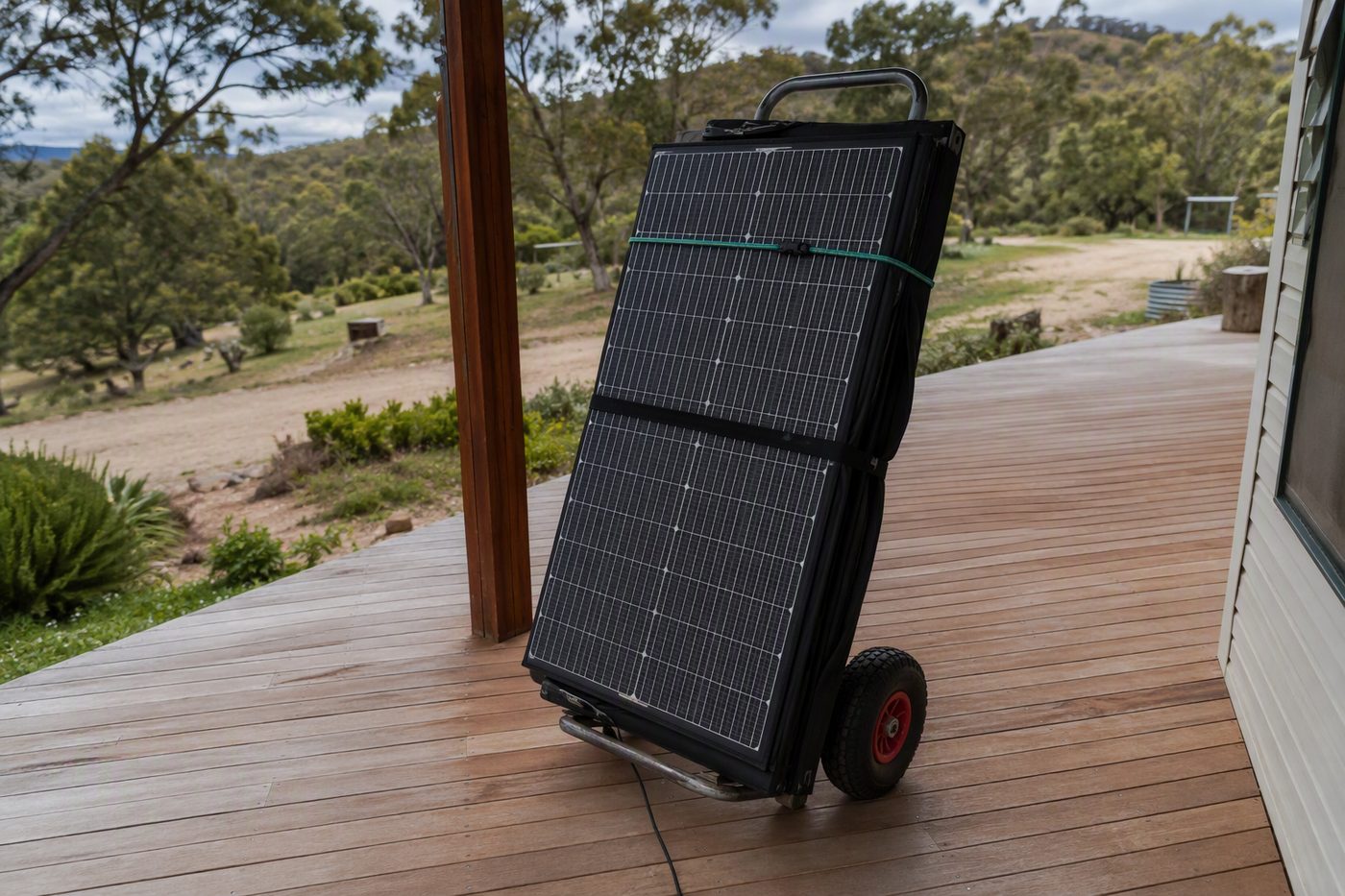
When sizing the solar array, designers must consider average solar irradiance throughout the year (peak sun hours), shading issues, panel orientation and tilt angle, cable losses, and temperature derating. Central Queensland gets roughly 5.0–5.5 peak sun hours per day averaged across the year — strong solar resource, which lets a 5kW array produce around 25 kWh on a clear summer day.
Always use a string voltage calculator to ensure the solar array string voltage does not exceed the inverter's maximum input rating. Open-circuit voltage rises in cold weather; a string that's safe at 30 °C can exceed the MPPT ceiling on a frosty Central Queensland morning.
Step 4 — Select the Inverter
When selecting an off-grid or hybrid inverter, it must be able to meet both continuous and surge loads, taking into account temperature derating and other loss factors. A 5kW continuous rating means 5kW at 25 °C — derate for an enclosed shed roof space in a CQ summer and the realistic continuous figure drops. Look for inverters that publish continuous ratings at 40 °C or higher.
Surge matters too. Motors (fridge compressors, water pumps, bench grinders) draw 3–7× their running wattage for a few hundred milliseconds; larger single-phase motor loads (1–2 HP bench grinders, air-conditioning compressors) commonly draw 8–12× locked-rotor current. Don't size the inverter against the running wattage of the largest motor — pull the locked-rotor amps off the motor's nameplate and verify the inverter can supply at least 3× that running figure (≥8–12× for large motors). The reference build's 6,000W surge on a 3,000W continuous unit is a 2:1 ratio, which is acceptable for small fridge and pump motors but is below prudent practice if you intend to start a 1–2 HP compressor on the 5kW build.
The 1-Hour Planning Sprint
This is the actual "1 hour" — the paper-and-laptop work that turns a vague "I want off-grid power" into a bill of materials ready for the supplier.
Minutes 0–10: Loads. Write down every load. Be brutal. Include phantom loads (microwave clock, inverter idle draw). Convert to kWh/day.
Minutes 10–20: Battery sizing. Multiply daily kWh by 2 (lithium autonomy target) to get kWh of usable storage. Add 10–20% for inverter losses and depth-of-discharge headroom. For the 10 kWh/day reference household, that lands at 20 kWh usable LiFePO4 at 48V.
Minutes 20–35: Solar sizing. Take the battery kWh, divide by 5.0 (CQ peak sun hours), and you've got the minimum kW of panels to refill the bank in one good day. Round up to handle cloudy weather — a 5,000W array is a sensible match for a ~10 kWh/day Australian household load.
Minutes 35–45: Inverter selection. Confirm continuous rating covers your largest simultaneous load. Confirm surge covers motor starting — at least 3× running wattage, more for large single-phase motors.
Minutes 45–55: String design. Using panel Voc and Isc data, lay out series strings to stay under MPPT input voltage. Plan fusing and DC isolators.
Minutes 55–60: Documentation. Write the system single-line diagram. Lock the BOM. Schedule the install.
Components in a Typical 5kW Australian Off-Grid System
| Subsystem | Typical Components | Notes |
|---|---|---|
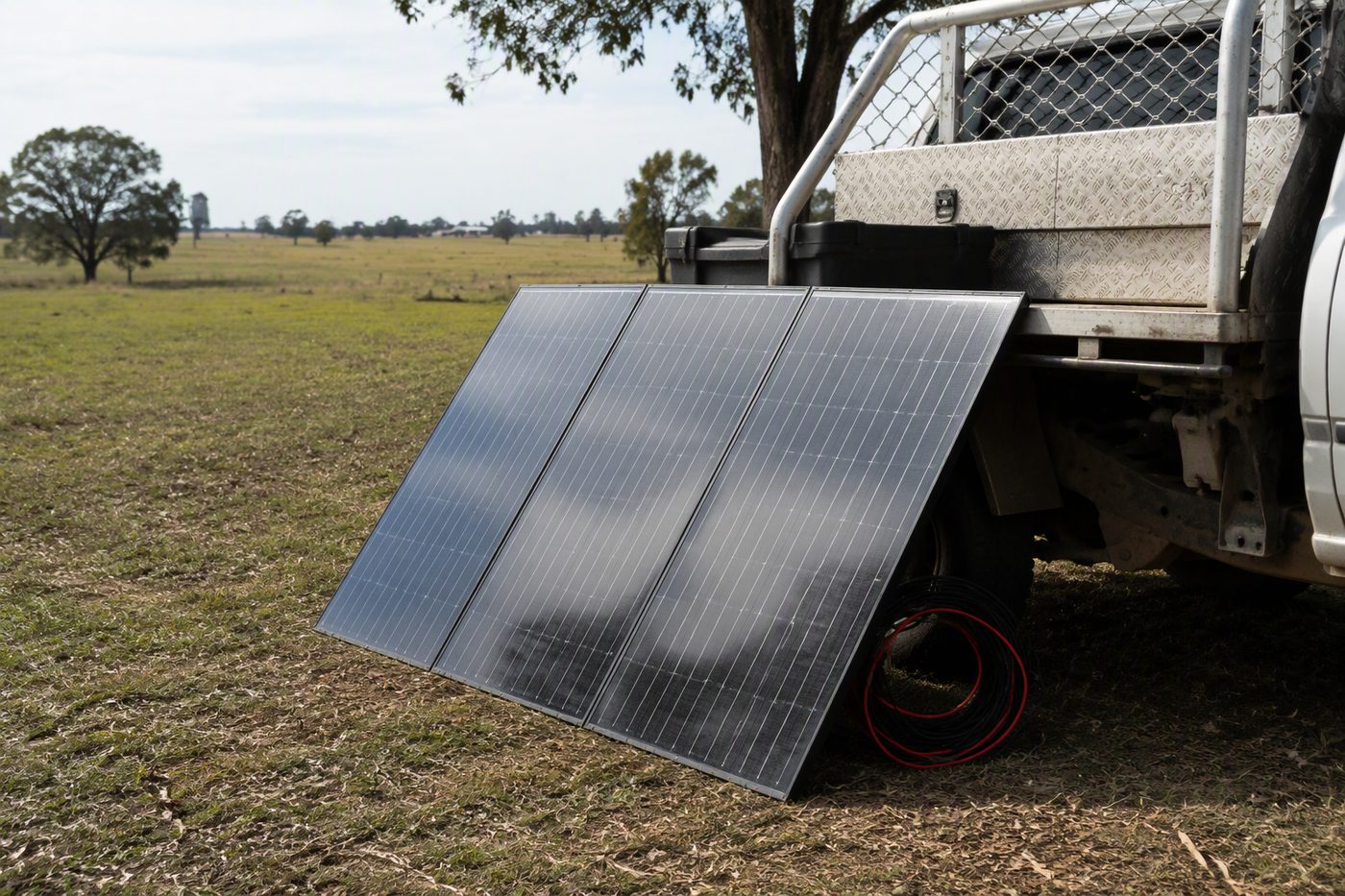
| Solar array | 10–14 panels at 400W+ each, 6S2P or similar | MPPT-compatible string voltage; check Voc against inverter max |
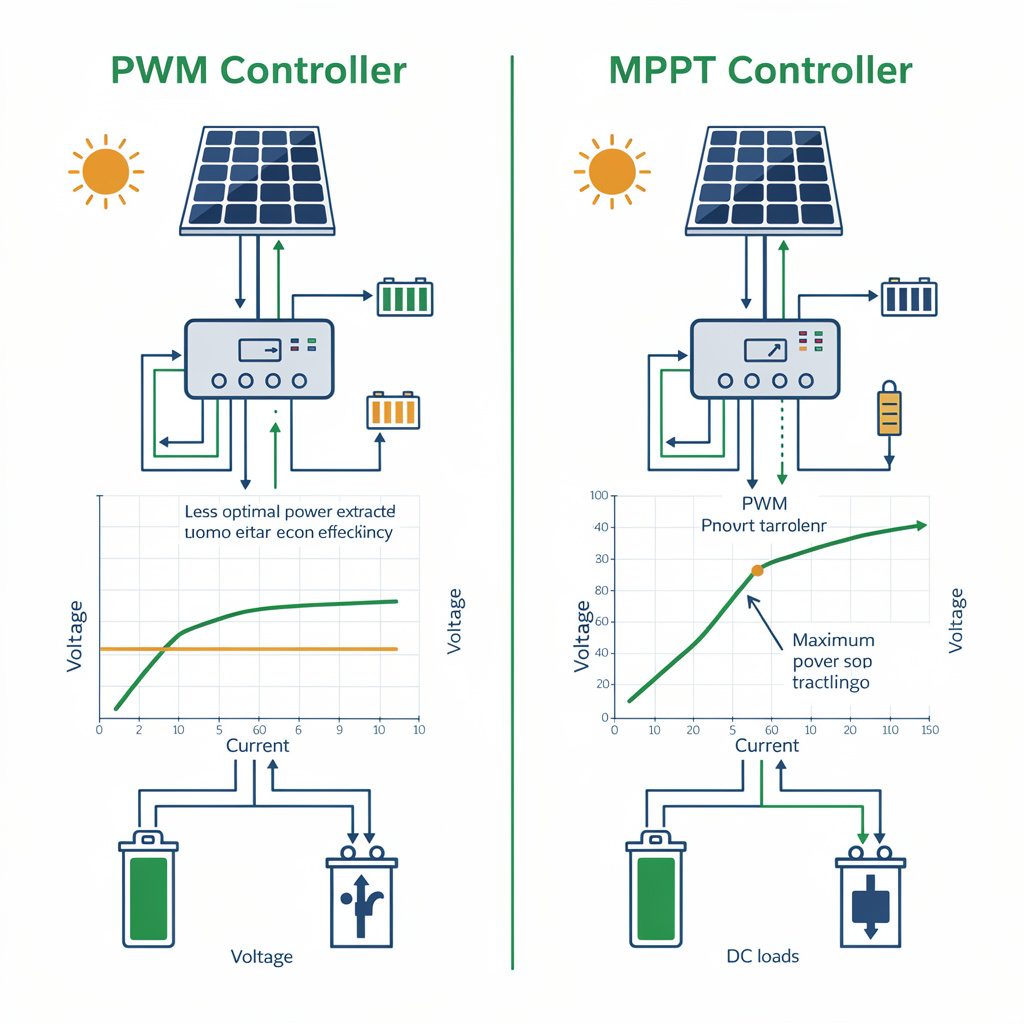
| Charge controller | MPPT (not PWM) | MPPT is the correct topology for series PV strings with variable Voc |
| Battery bank | LiFePO4 at 48V, 20 kWh usable (2× daily kWh) | Sized for 2 days autonomy minimum |
| DC protection | DC-rated fuse near the battery with interrupting capacity ≥ battery string Isc × number of parallel strings and voltage rating ≥ string max Voc; per-string fuse or breaker in each parallel string positive, sized below the cable/m rating; PV isolator and string fuses per AS/NZS 5033 | Use DC-rated gear only; AC isolators on the DC side are a fire risk. BMS must be rated for the parallel-string topology used. |
| Inverter | 5,000W continuous, 230V/50Hz single-phase | Confirm 40 °C continuous rating |
| AC protection | RCD, surge diverter | MEN link and earth-electrode arrangements per AS/NZS 3000 and AS/NZS 4777.1, verified by a licensed sparkie — do not treat the MEN link as a generic BOM item |
| Monitoring | Victron GX or equivalent | Remote telemetry saves a trip to the shed |
Safety & When to Call a Licensed Professional
Solar and battery storage systems should always be installed by a licensed electrical professional. All electrical work for off-grid solar systems should be performed by qualified individuals according to local electrical codes. In Australia that means AS/NZS 3000 (Wiring Rules), AS/NZS 5033 (PV array installation), AS/NZS 4777 (inverter requirements) and the battery standard AS/NZS 5139.
Call a licensed professional when:
- Connecting the inverter AC output to a switchboard or back-up distribution board
- Installing the MEN link and earth electrode
- Working on the battery bus at any voltage above 50V DC (essentially all lithium banks)
- Commissioning the system and signing off the electrical certificate (note: off-grid residential systems in Queensland do not generate STCs — STCs apply to grid-connected or RPP-eligible systems only; do not assume the off-grid install is on the STC paperwork path)
- The array sits higher than the reach of a standard ladder
Lithium battery faults are not like lead-acid faults. The fault path the DIYer is most likely to see is an external short across the battery bus, contactor, or a parallel-string cabling fault — not an internal cell-level failure. In that case, DC fusing is what saves the day: the fuse must be DC-rated, with an interrupting capacity (kA DC) greater than or equal to the battery string Isc multiplied by the number of parallel strings, a voltage rating at or above the maximum string open-circuit voltage, and installed per AS/NZS 5139. Parallel battery strings add their own hazards — each string positive needs a fuse or breaker sized below the cable's current rating, and the BMS must be rated for the parallel topology used; this is the most common Australian DIY lithium fire root cause. A DC PV fuse of the same form must be fitted in the PV combiner per AS/NZS 5033. Note that LiFePO4 is much less prone to thermal runaway than NMC chemistries — the runaway risk is real but rare for LiFePO4, and DC fusing and BMS protection are what actually prevent the cascading fault the chemistry alone won't.
FAQ
Can a 5,000W system really be planned in an hour?
The planning, yes — load table, sizing, BOM and single-line diagram fit comfortably inside sixty minutes once you've done it once. The physical install is a separate day for two people.
How many batteries do I need for a 5kW inverter?
Size from daily kWh, not from inverter size. For a typical 10 kWh/day load, apply the 2× lithium autonomy rule: 20 kWh of usable LiFePO4 storage at 48V.
Is MPPT really necessary at this scale?
For series PV strings with variable Voc — which is every practical 5kW array — yes. PWM wastes available energy whenever battery voltage and panel voltage diverge.
What size inverter do I need for a 5,000W solar array?
The array and the inverter are sized independently. The array is sized to refill the battery bank; the inverter is sized to your peak AC load, with surge headroom of at least 3× for motors and 8–12× for large single-phase compressors. They often have the same number on the front, but they're solving different problems.
Do I need a permit for off-grid solar in Queensland?
Any grid-disconnected system still needs electrical sign-off by a licensed electrician. Battery installations above the threshold in AS/NZS 5139 also require compliant installation locations and venting. Off-grid residential systems do not generate STCs — that paperwork applies to grid-connected or RPP-eligible systems.
Can I add panels later?
Yes, if the MPPT input window and the inverter's PV-rated current allow it. Plan the array with at least 20% headroom on the MPPT input current.
Sources
- https://entropysurvival.com/blogs/news-views/off-grid-solar-power-beginners-complete-guide
- https://tinyshinyhome.com/simple-diy-solar-system
- https://www.cleanenergyreviews.info/blog/designing-off-grid-hybrid-solar-systems