
By Fiona Gallagher · permaculture designer · food, animals and preservation on 12 acres in Tassie
“After wasting three packs of tomato seeds on a faulty solar regulator, I learned that 22°C is the only safe heat for my off-grid seedlings.”
No time for fluff. You're off-grid. Your seeds aren't germinating. Here's how to fix it without blowing your solar budget.
By Fiona Gallagher · permaculture designer · food, animals and preservation on 12 acres in Tassie
“After wasting three packs of tomato seeds on a faulty solar regulator, I learned that 22°C is the only safe heat for my off-grid seedlings.”
Heat mats solve one specific problem: cold soil. If your propagation area sits below the temperature range most seeds need, a mat will lift the soil into the germination window and shorten emergence time. If your propagation area is already warm, a heat mat is optional. Knowing which situation you're in is the entire decision.
The facts below are pulled from horticultural extension and manufacturer guidance, filtered through a Central Queensland off-grid context where power budget, ambient heat, and water discipline all matter.
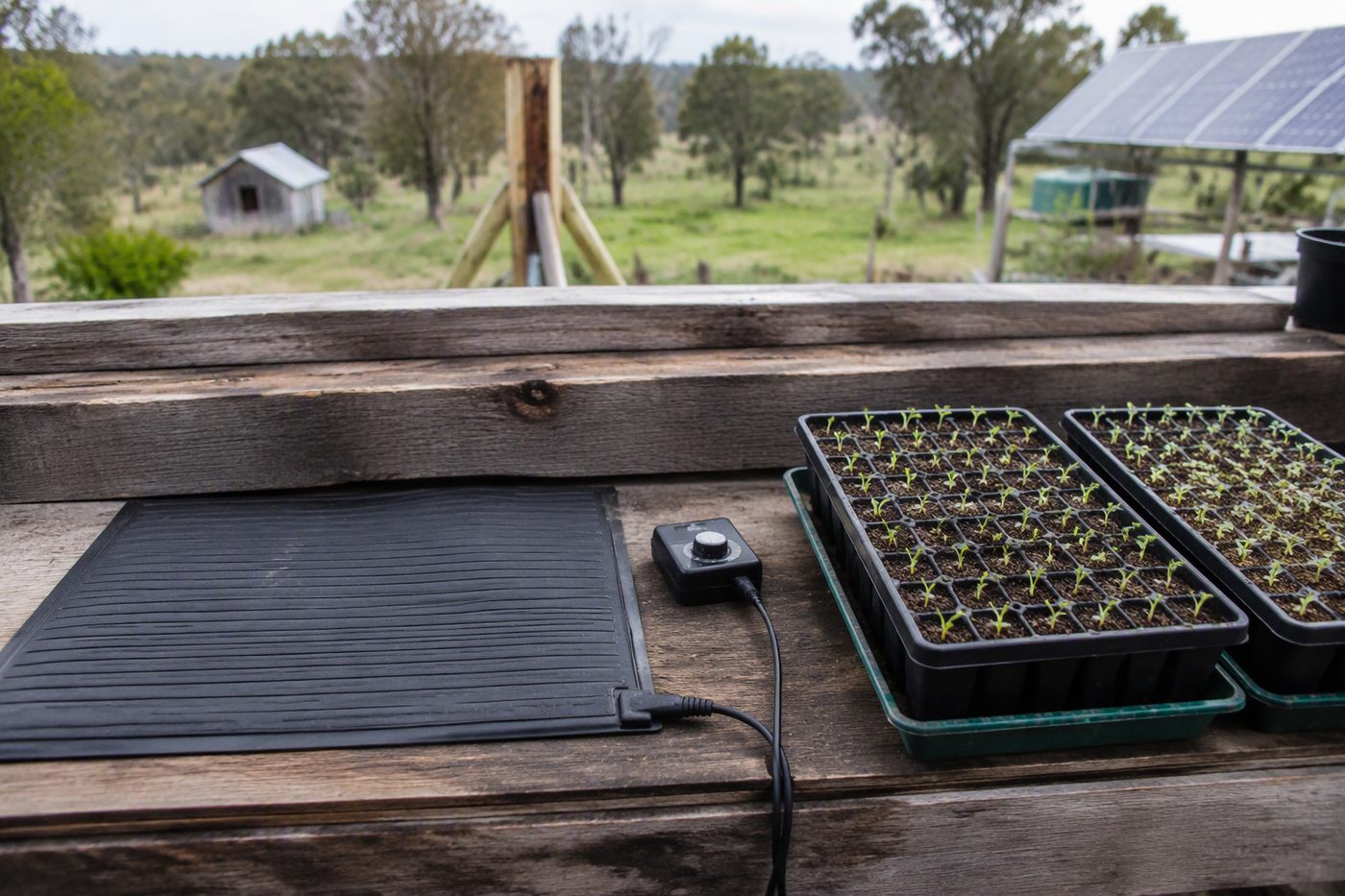
A seedling heat mat is a flat, water-resistant plastic pad containing an electrical heating element. It sits under a seed tray and radiates warmth upward into the root zone, creating a small microclimate around the soil. The mat itself doesn't change ambient room temperature; it only warms the medium directly above it.
Three categories exist in the market:
For off-grid use, the relevant variables are wattage, controllability, and whether the unit runs from 230V/50Hz mains or a DC equivalent. Most consumer-grade mats are designed for mains power; off-gridding them means running them through an inverter.
A heat mat is most useful when:
Most seeds sprout when soil temperature is between 20 °C and 30 °C. Average household conditions around 21 °C will suit most seeds without any mat at all. The mat's job is to raise soil into that window when ambient conditions can't.
Reported benefits include enhanced germination rates, faster emergence, protection against cold-draft exposure, and improved root development. Manufacturer claims suggest heat mats can speed up germination by up to 50% for suitable crops. That figure is vendor-reported rather than independently verified, but the directional claim — warm soil germinates faster than cold soil — is consistent with extension guidance.
Heat mats are not a universal improvement. Skip them if:
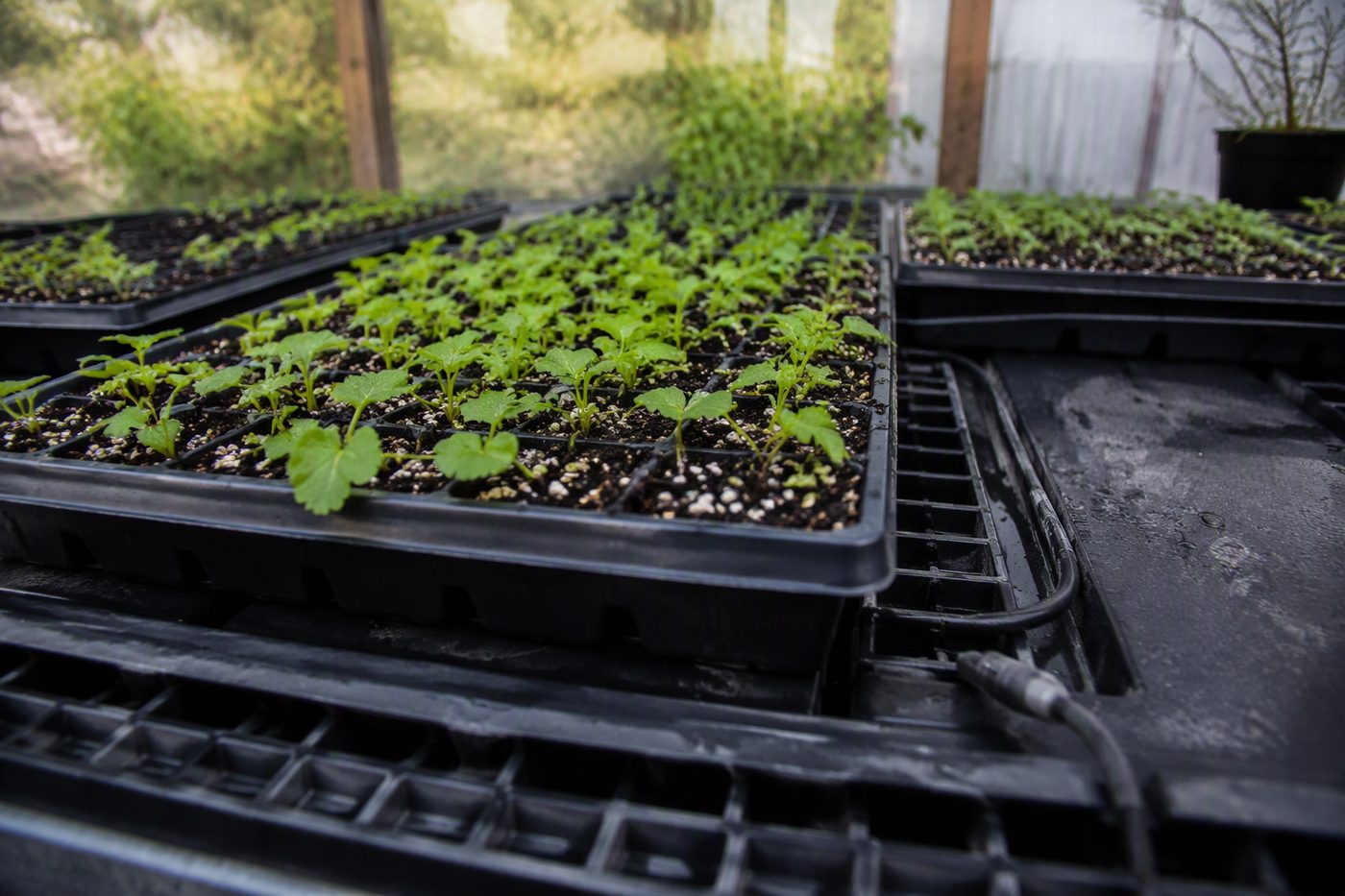
The mistake most beginners make is leaving seedlings on the mat after germination. Heat mats should only run until seeds emerge. Once a sprout is up, move the tray off the mat. Continued bottom heat stresses developing roots and drives leggy growth.
Heat mats typically consume 50–100W for a standard 1020-tray-sized mat, which is a reasonable working figure for budgeting. A single mat running 24/7 during a germination cycle (usually 3–10 days depending on crop) draws roughly 1.2–2.4 kWh per day. On a mid-sized off-grid solar system with lithium storage, that's a small load. On a minimal system, it matters — and it's the reason the first question should always be whether the mat is necessary.
One operating note from manufacturer guidance: seedling heat mats should not be plugged into a timer and should be left on continuously until seeds germinate. Interrupting power defeats the purpose of maintaining steady soil temperature.
If you need tighter control — especially in a setup where ambient temperature swings overnight — pair the mat with an external thermostat and a soil probe. Built-in regulators on some mats cycle around a fixed setpoint (around 29 °C on MIgardener units), which works for many crops but isn't adjustable.
1. Place the mat on a flat, dry, insulated surface — not directly on cold concrete if you can avoid it
2. Set a 1020 tray or individual pots directly on the mat
3. Plant seeds into pre-moistened medium
4. Cover with a humidity dome to retain moisture
5. Run the mat continuously until first sprouts emerge
6. Remove the tray from the mat the moment you see green
7. Move seedlings under lights (14–16 hours per day is standard) at normal ambient temperature
The humidity dome is doing important work here — it keeps the soil surface from crusting over and drying out, which the heat mat will otherwise accelerate. Monitor moisture daily; lift the dome briefly to check weight and colour of the medium.
Call a licensed electrician if:
A heat mat is a plug-in appliance, but the wiring behind it still has to be right. Off-grid systems don't tolerate sloppy connections any better than grid-connected ones; they tolerate them worse, because fault currents behave differently with inverter-based supply.
| Situation | Use a heat mat? | Notes |
|---|---|---|
| Ambient 21 °C+, warm-season crops | Optional | Speeds germination; modest power cost |
| Ambient below 18 °C, any crop | Yes | Required to reach germination window |
| Cool-season crops (lettuce, kale, broccoli) | No | Will stress plants; cooler soil preferred |
| Tight planting calendar, warm-season crops | Yes | Time savings outweigh power cost |
| Minimal solar/battery budget, marginal viability | No | Use ambient heat and patience; choose varieties suited to direct sowing |
| Propagation cuttings (e.g. rosemary, sweet potato) | Yes | Same equipment, same logic |
Do all seeds need a heat mat?
No. Most seeds germinate fine in average household conditions around 21 °C. Matsu needed mainly for warm-season crops or cold propagation areas.
Can I leave the heat mat on 24/7?
Yes, manufacturer guidance is to leave it on continuously until germination, not on a timer.
When should I take seedlings off the heat mat?
As soon as they sprout. Continued bottom heat causes root stress and leggy growth.
Are heat mats safe to use with a humidity dome?
Yes. The dome goes over the tray on top of the mat and helps retain moisture, which the heat mat would otherwise evaporate quickly.
Will a heat mat work on 12V or 24V DC?
Most consumer mats are 230V AC. Running them through an inverter is the standard off-grid approach. Dedicated DC seedling mats exist but are less common — verify voltage and current draw before buying.
Do I need a thermostat?
Not strictly. Mats without thermostats run at a fixed temperature. A thermostat adds control, reduces power use, and prevents overheating in warm weather. It's a worthwhile upgrade if your propagation area sees large day/night swings.
Worth a watch: How to Use a Heat Mat for Seed Starting in Heated & Unheated Spaces: Cool & Warm Crops & Peppers · Gary Pilarchik (The Rusted Garden)