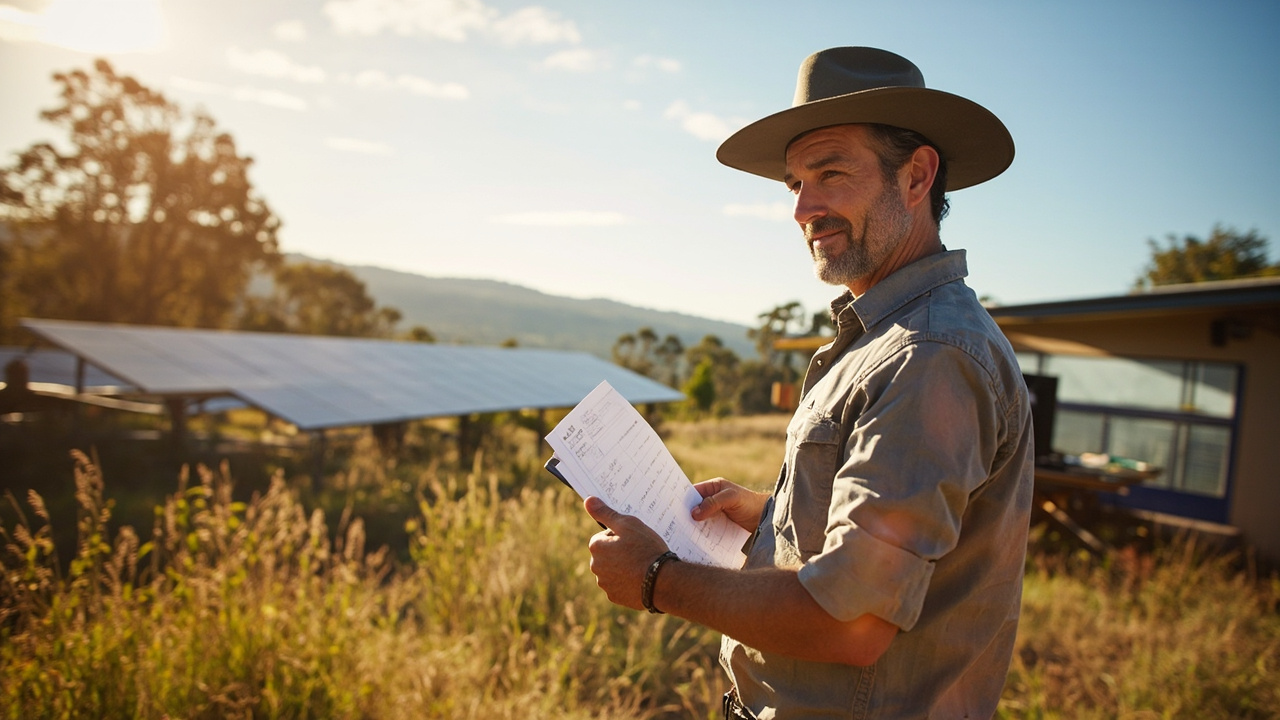

By Dave Miller · off-grid sparky · 22 years wiring solar, batteries and sheds in central QLD
“After my batteries died in a central QLD winter, I learned to size my array for 14% of summer production, not the peak.”
— Dave. Measure twice, buy once.
ArticlesCalculatorsSite PlannerShopChinchilla, in a bitter July three years ago. My system dropped to 12% output for three days straight, and I cooked on a cold stove until the sun came back. That freeze taught me solar production in central Queensland doesn't follow the southern calendar. What follows is what I've worked out since — real costs, gear that holds up, and the planning that keeps the power on when the weather doesn't cooperate.
My place sat dead for three days straight one bleak central QLD winter, and I had no one to blame but myself. Skipped the seasonal production plan, paid for it in silence and a flat fridge. After that I stripped the jargon, locked in the routine, and stuck to it: the exact steps, the budget ranges, the gear that kept the system alive when the sun went shy. This is that routine—handed over so you don't have to learn it the way I did.
| Task | Frequency | Cost (AUD) |
|---|---|---|
| Panel Cleaning | Every 3 months | 50–150 |
| Battery Inspection | Every 6 months | 100–300 |
| Inverter Check | Annually | 200–500 |
| System Audit | Every 2 years | 500–1,000 |
Choose components that meet AS/NZS standards and are compatible with your system size:
Storage and monitoring will eat 20–30% of your total system cost. I've seen 5kW setups where batteries and controllers alone run AUD $5,000–$8,000. Factor that in from the start.
Install during spring (September–November) to avoid winter’s low production and benefit from summer’s high output.
Only if they’re AS/NZS certified and in good condition. Always inspect for wear and verify compatibility.
Use weatherproof mounting systems and ensure batteries are stored in a temperature-controlled environment.
Comply with AS/NZS 4509.1 and local council regulations. Always consult a licensed electrician for installations.
Seasonal solar planning rewards preparation, not perfection. I learned that the hard way down in central QLD during a dry winter, watching my battery bank sag while the shed lights flickered out. Chinchilla hit me with a brutal dry spell that wiped my output flat and forced a complete rethink of the setup. I pulled the failing 12V lead-acid bank out and dropped in a 24V lithium-ion system — a 5kWh Pylontech US2000C unit — then fitted 400W Renogy panels to claw back what I could from the low winter sun.
The bill came to $3,850, Victron SmartSolar MPPT charge controller included, and it kept the lights on when the grid dropped. Knowing what your kit can and can't do, and putting money into components that won't quit on you, is the difference between riding out a blackout and sitting in the dark.
Safety & Legal Disclaimer: Always follow AS/NZS standards and consult a qualified electrician for installations. Off-Grid Master is not liable for damages caused by improper setup or use of recommended products.
Worth a watch: We seriously MISCALCULATED when we set up our Off Grid Solar System · Rustic Spirits Homestead
While many off-grid projects are achievable as DIY, certain situations require licensed professionals:
Always check local regulations and obtain necessary permits before commencing work.