RV Solar Setup for Full-Time Living: Complete Guide
RV solar setup in Australia sized for full-time off-grid living needs enough panel area, lithium storage and inverter capacity to run air-con for days. 22 years of outback installs prove undersized systems force generators and powered sites. Match watt-hours to your biggest daily load before buying.
Twenty-two years of solar installs under my belt, and I know what people chasing full-time RV life actually want: no campground fees, no generator drone at sundown, no circling the park for a powered site. Size the system right and you'll sit weeks on end off-grid with the air-con humming and the kettle on. That's the payoff.

By Dave Miller · off-grid sparky · 22 years wiring solar, batteries and sheds in central QLD
“After burning through three cheap inverters in my first year full-time, I learned that your battery bank must be sized for a week of rain, not just a sunny day.”
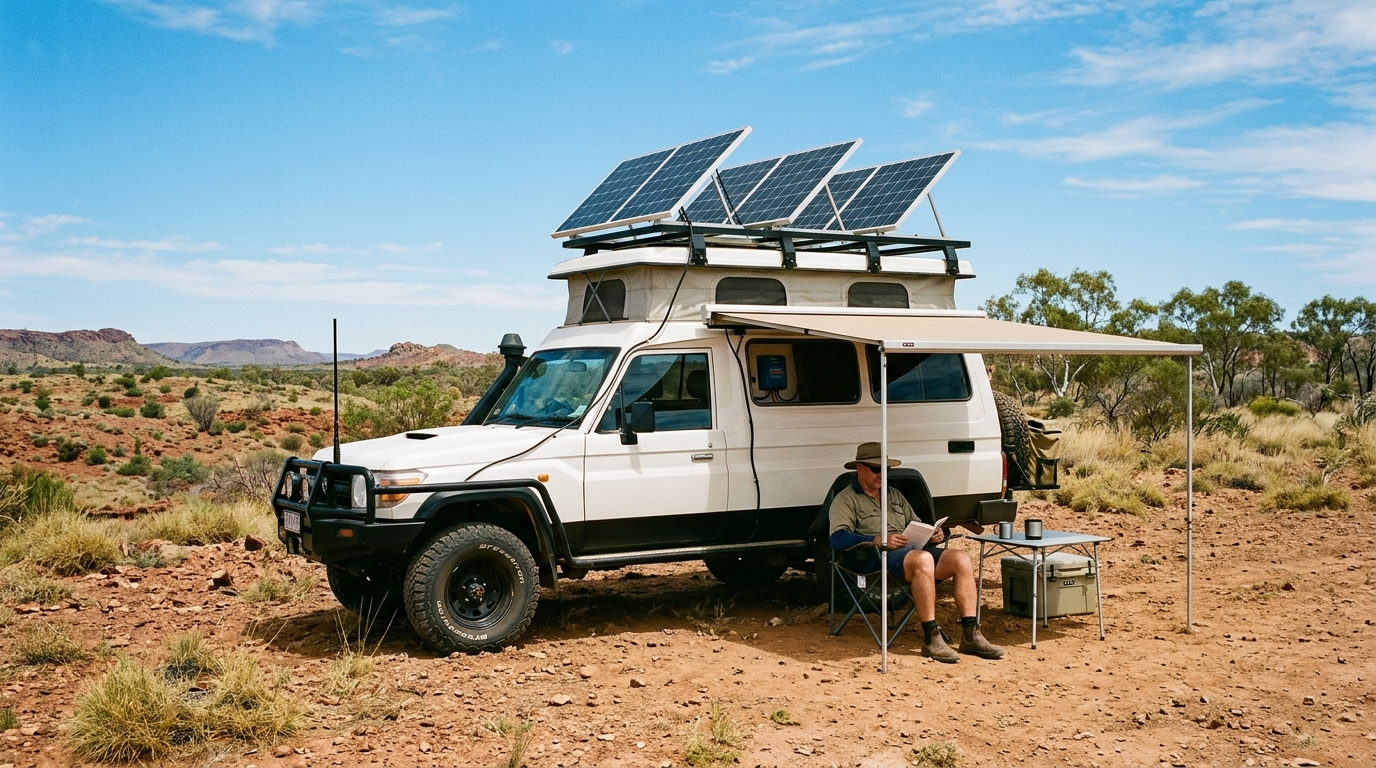
My Full-Time RV Solar Setup: 22 Years of Shed Wiring, Now Mobile
Spent a fortune getting a couple of blokes off‑grid in a caravan near Rockhampton. They stopped hunting for shore power. They stopped listening to a noisy generator. Boondocked for weeks on end with all the comforts of home — that's a properly rigged system at work. The only way to live full‑time.
Twenty-two years wiring solar across central Queensland, and here's what I tell every full-time RVer before they hit the road in 2026. Design it once, install it right, and don't end up flat at sunset because someone undersized the battery bank.
What My Appliances Actually Pulled Over Two Days of Logging
Full-timers use significantly more power than weekend warriors. Here's what to expect:
| Load | Daily Usage | Annual Average |
|---|---|---|
| Conservative (lights, phone, laptop) | 1-2 kWh | 550 kWh |
| Moderate (+fridge, fans, TV) | 2-4 kWh | 1,100 kWh |
| Comfort (+A/C, microwave, desktop) | 4-8 kWh | 2,200 kWh |
I always spec larger batteries and more panels for full-timers than I'd fit on a weekend rig. Simple reason: you've got to ride out 3-5 days of cloud cover on battery alone, and if you skimp on capacity you'll be hunting for a powered site every time a storm parks over central Queensland. I've watched it bite plenty of owners over the years.
The solar gear bolted to my van for every central QLD season
Solar Panels
Roof space is limited on RVs. Maximize every square foot:
- Standard Panels: 60-cell panels (~350W each) fit most RV roofs
- High-Efficiency: LG, Panasonic, or SunPower panels for maximum watts per square foot
- Flexible Panels: Walkable options for limited roof space (less durable)
- Portable Panels: Ground deployable for when you're parked in shade
Target 600-1200W for moderate use, 1500-3000W for full comfort living.
Battery Banks
Full-timers should invest in quality lithium batteries:
- Battle Born 100Ah LiFePO4: Premium, 10-year warranty View on Amazon
- Renogy 100Ah Smart Lithium: Good value with Bluetooth monitoring View on Amazon
- Lion Energy UT 1300: Compact form factor View on Amazon
Minimum 200Ah lithium for full-time use; 400-600Ah recommended for comfortable off-grid living.
Inverter/Charger
An inverter/charger handles both DC→AC conversion and shore power charging:
- Victron MultiPlus 12/3000: Industry standard, pure sine, 120A charger View on Amazon
- GoPower IC-3000: RV-specific with transfer switch View on Amazon
- Renogy 3000W: Budget option with good reviews View on Amazon
Three Budget Tiers and What Survives the First Summer
My first off-grid rig: what $2,000-$3,500 actually got me
- 400-600W solar panels
- 200Ah LiFePO4 battery bank
- 30A MPPT charge controller
- 2000W inverter
- Basic monitoring
Good for: Minimalist full-timers who can conserve energy
Running Air Con Off Solar: $4,000-$7,000
- 800-1200W solar panels
- 400Ah LiFePO4 battery bank
- 50-60A MPPT charge controller
- 3000W inverter/charger
- Full monitoring with smartphone app
- DC-DC charger for alternator charging
Good for: Most full-timers with typical electrical needs
The $8,000-$15,000 Full-Timer Build: A Job Walkthrough
- 1500-2500W solar panels
- 600-800Ah LiFePO4 battery bank
- Dual 60A MPPT controllers
- 3000-5000W inverter/charger
- Full Victron ecosystem with Color Control GX
- Soft start for A/C units
- Automatic generator start
Good for: Full-timers wanting all conveniences including limited A/C use
Ribbed Roofs, Cable Entries and the Mistakes I Keep Finding
- Weight Distribution: Solar adds 50-150 lbs. Consider placement for balanced loading.
- Roof Penetrations: Minimize holes; use existing vents where possible.
- Vibration Resistance: RVs shake constantly. Use locking fasteners and flexible conduit.
- Temperature Extremes: Batteries need climate control. Avoid engine compartment heat.
- Space Constraints: Every cubic foot matters. Compact components save storage.
- Shade Management: RVs often park in partial shade. Consider bypass diodes and portable panels.
How I Keep the Batteries Topped Up Off-Grid
Full-timers need multiple charging methods:
- Solar: Primary source when boondocking
- Alternator (DC-DC): Charges while driving
- Shore Power: When campgrounds have hookups
- Generator: Backup for extended cloudy weather
A DC-DC charger like the Victron Orion-Tr Smart is essential for efficient alternator charging.
Safety Warnings
- Battery Ventilation: Lithium batteries need thermal management. Never install in unventilated compartments.
- Roof Safety: Installing panels requires working at height. Use proper fall protection.
- Weight Limits: Exceeding RV roof weight ratings is dangerous and voids warranties.
- Propane Clearance: Maintain proper clearance from propane vents and regulators.
- Electrical Codes: RV systems should follow NEC Article 551 (Recreational Vehicles).
What Full-Time RV Solar Actually Involves
- Monitor Weather: Plan energy-intensive activities for sunny days.
- Learn Your System: Track daily usage patterns to optimize consumption.
- Have Backup Plans: Keep a generator for emergencies and extended storms.
- Join Communities: iOverlander, Campendium, and Harvest Hosts help find boondocking spots.
- Stay Flexible: Sometimes you need to move for sun or run the generator.
FAQ
Running the ducted A/C off solar in central QLD
I've spec'd enough full-time solar-only RVs to know the floor: 2000W+ panels, 600Ah+ batteries, and a soft-start device. Fall short on any of those and you're either running a generator to keep the A/C going, or you're steering clear of the hot zones.
My battery lifespan after a full-time year on the road
Last summer I pulled a four-year-old lead-acid bank out of a rig - plates sulfated past saving, no bringing it back. Swapped in a quality LiFePO4 and that lithium pack keeps cycling, 3000‑5000 cycles and counting, which works out to 8‑15 years of full‑time service. The lead‑acid that came out was finished - 2‑4 years is all you get under the same daily use.
Generator backup for when solar can't keep up
Most full-timers keep a small generator as backup for extended cloudy periods or high-draw situations like A/C use.
4. Roof, cables, and battery bay: what I check before a panel goes up
Plenty of RVers do their own installations, and most handle the straightforward work alright. Basic electrical knowledge isn't optional—skip it and you'll be chasing faults for years. But once you're into inverter and charger work, bring in a licensed pro. That's where things go wrong fast.
What twelve months of full-time RV solar actually delivered
Mate, campground fees run $30-60/night. I've watched a $5000 solar system clear that bill inside 3-6 months of full-time boondocking — saw it play out on rigs I've wired myself. By the time a free-camp weekend's done, the panels have already banked enough to cover a few paid-site nights. No smoke and mirrors, just a properly sized array doing what it says on the tin.
Conclusion
After fitting solar to dozens of RVs, I can tell you the ones who do it right save a packet on campground fees. None of it hinges on flashy gear. Size the system to what you actually draw, buy decent components once, and learn to live within what the panels deliver. Miss any of those three and you're firing up the generator by sunset.
I learnt it the hard way on a ute build with not enough headroom in the battery box. Ran a small fridge and a couple of LED strips for a short stint, and the battery went flat. Ended up hauling a petrol generator back to camp to get sorted. Now I start modest, log the actual draw, and only add capacity when the numbers say it’s safe.
For more RV solar resources, visit OffGridMasterPlan.
The Line I Don't Cross Without a Licence
While many off-grid projects are achievable as DIY, certain situations require licensed professionals:
- Electrical work beyond basic replacements — always use a licensed electrician
- Structural modifications to buildings or load-bearing elements
- Gas line installations or modifications
- Roof penetrations for solar panel mounting
- Anything involving high voltage or battery bank connections
- Water rights or council approvals that require professional assessment
Safety should always come first. When in doubt, consult a licensed tradesperson.
Worth a watch: RV Electrical System Solar and Lithium Battery Upgrade - Start-to-Finish Guide · EXPLORIST life Mobile Marine & Off-Grid Electrical
Disclosure: some links in this article are affiliate links. If you buy through them we may earn a small commission at no extra cost to you.