
By Fiona Gallagher · permaculture designer · food, animals and preservation on 12 acres in Tassie
“After losing my first dozen quail to a fox breach in year one, I now bury the wire mesh 400mm deep for true off-grid security.”
Self-Sufficiency on Your Homestead Starts with These Tiny Powerhouses
By Fiona Gallagher · permaculture designer · food, animals and preservation on 12 acres in Tassie
“After losing my first dozen quail to a fox breach in year one, I now bury the wire mesh 400mm deep for true off-grid security.”
Quail are a practical fit for off-grid blocks across Australia: small footprint, fast turnaround, and quiet enough not to draw complaints from the neighbours two paddocks over. Below is a working guide drawn from verified material only — no invented specs, no made-up products.
Coturnix quail (sometimes called Japanese quail) are the most common species kept in domestic captivity, and for good reason. They mature quickly, lay prolifically, and tolerate heat better than most other quail species. In my experience keeping them here in Central Queensland, the heat tolerance matters more than any glossy breed profile suggests.
Three reasons they suit off-grid setups:
That last point is the one most people underestimate. If you're on a small holding close to a boundary, a chicken rooster is a non-starter. Quail are not.
| Parameter | Value |
|---|---|
| Species | Coturnix (Japanese) quail |
| Adult space requirement | ~0.06 m² per bird |
| Incubation | 18 days |
| Butcher age | 8 weeks |
| Egg laying onset | 5–10 weeks depending on source and strain |
| Average lifespan | ~2 years |
| Egg output | ~230–300 per hen per year |
| Common varieties | Pharaoh, Texas A&M, Jumbo, Celadon |
| Australian note | More heat-tolerant than Bobwhite — better suited to AU climates |
Note on laying onset: the Sadie Girl Farm source states hens can begin laying by 6–8 weeks, while the Meat Eater source gives 10 weeks. In practice, treat 6–10 weeks as the realistic window — most hens start in the latter half of that range.
Coturnix quail chicks need a brooder for the first three to four weeks. In an off-grid context, the brooder heat source is the main decision — a heat lamp on an inverter draws continuously, so budget that into your power plan.
Critical safety detail: place a few stones in the waterer reservoir. Newly hatched chicks can drown in even shallow water; the stones give them something to climb out on.
Keep the brooder indoors or in a fully enclosed shed to keep rats out. Rats are a major predator concern for quail and will tunnel into pens from a distance — a freshly warmed brood of chicks is an irresistible target.
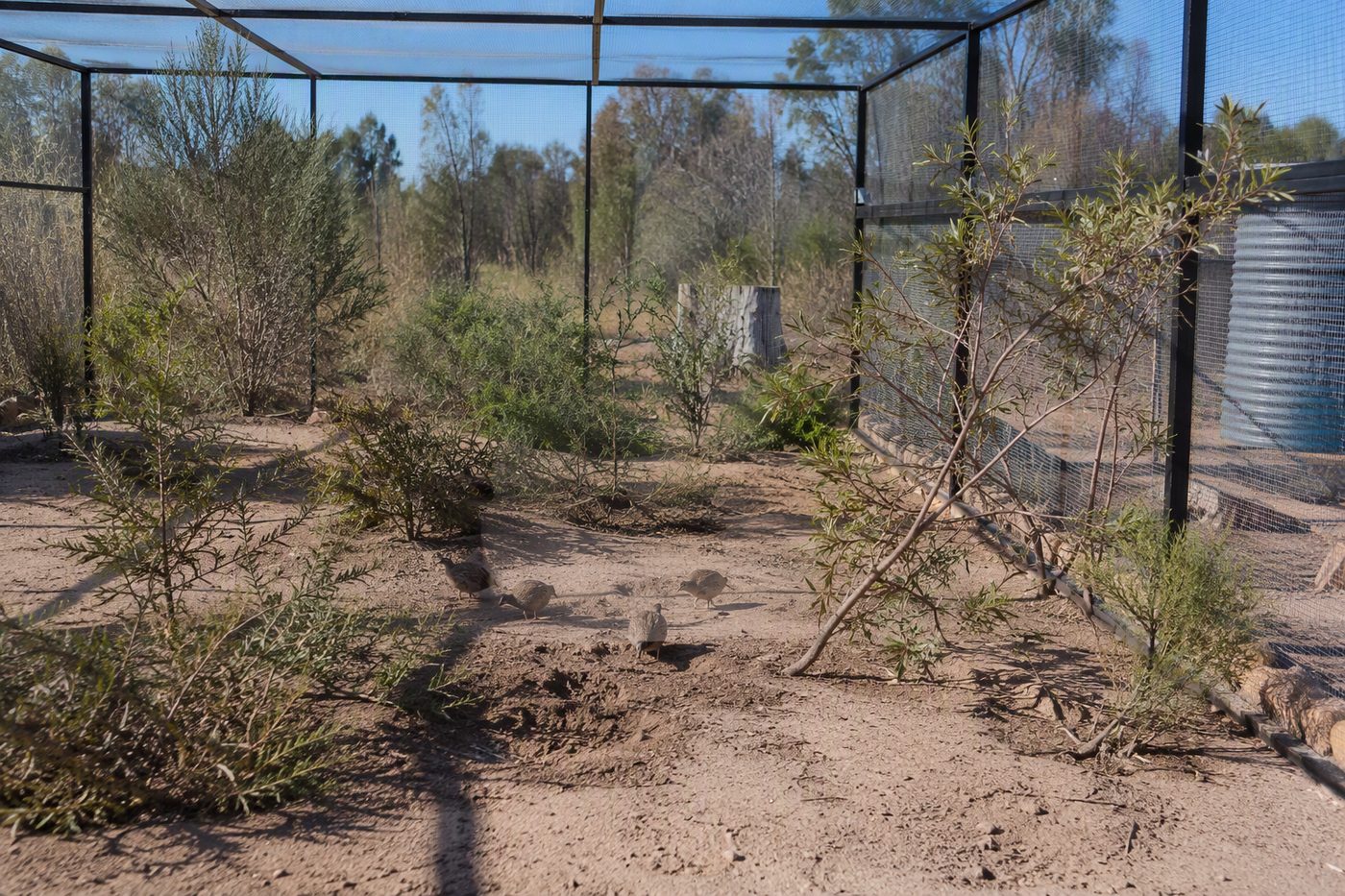
Quail cannot be free-ranged. They are nomadic in the wild and will fly away if given the chance. When startled, quail are capable of flying vertically, so any run must be covered to contain them. Open-top pens will lose birds.
Working layout principles:
Dig deep trenches around ground-level pens and line them with chicken wire and heavy stones to deter digging predators — dogs, foxes, and feral cats will all try.
Pet quail do not overeat and can be fed ad-lib (free choice). In practice, a standard game-bird or quail layer crumble works. Clean water daily — in summer heat here, water turns foul fast and quail will go off the lay if it's stale.
Move slowly when approaching quail during cleaning or chores to avoid startling them. A vertical flush into the roof of a pen kills birds outright or breaks necks. The calmer you move, the fewer casualties.
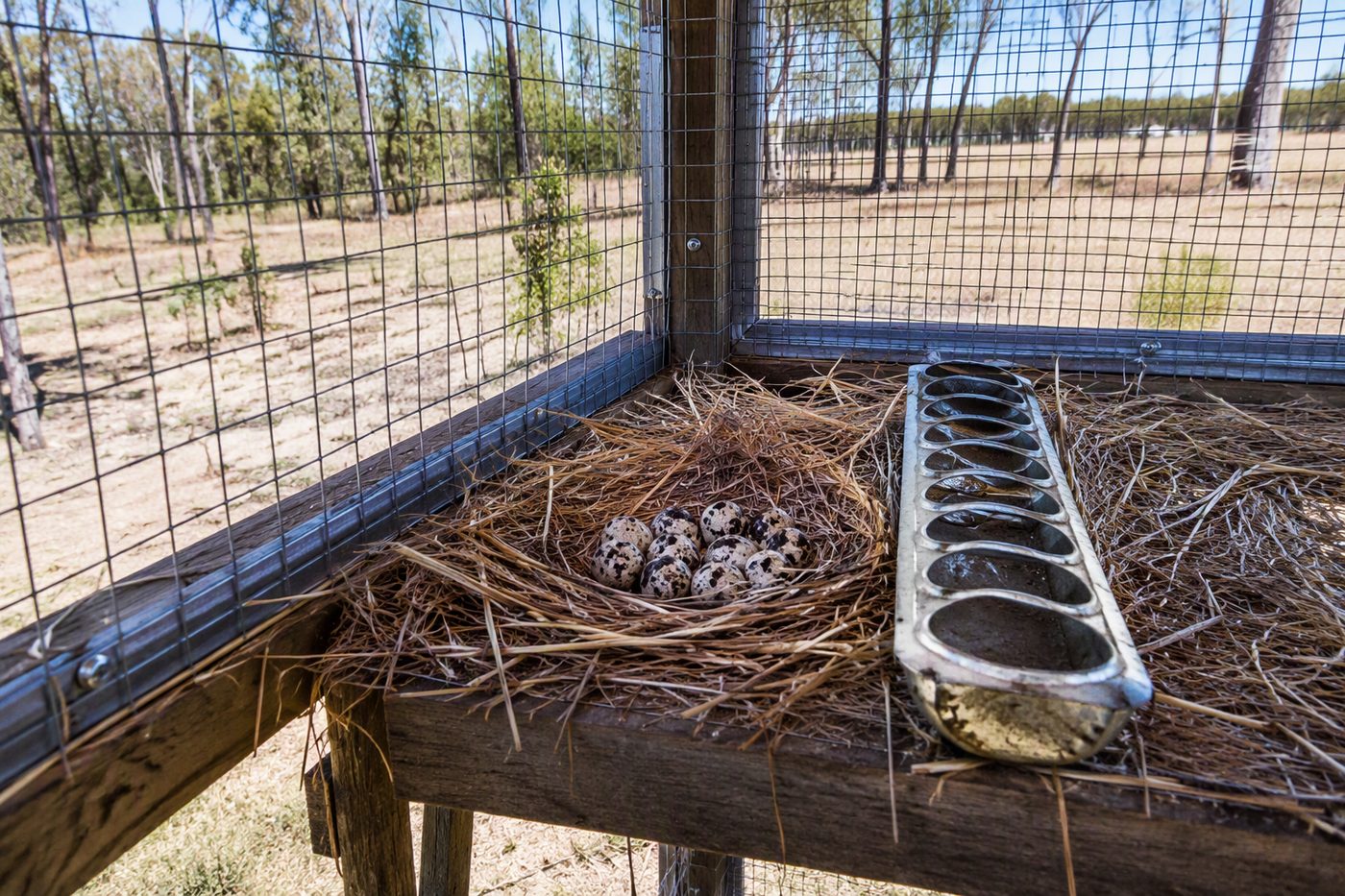
Quail typically lay eggs in discreet places in their bedding rather than in nest boxes. Don't waste time building nest boxes — they won't use them. If you've built the angled-floor hutch above, eggs roll forward into a collection trough and you pick them up in one pass.
Production figures from the verified sources vary: one cites ~300 eggs per hen per year, another ~230. Plan around 230 as a conservative floor and treat higher numbers as a bonus.
Celadon quail are Coturnix quail that carry the recessive celadon gene, and females with two copies lay blue eggs. Functionally identical to standard Coturnix, but the eggs sell at a premium to chefs and at the gate. Worth running a small breeding pen if you have a market.
Two practical differences catch new keepers:
1. Egg size. Quail eggs are small (8–10 g) and high in protein — you need around 4–5 to equal one chicken egg in recipes.
2. Laying speed. Quail start laying at 5–6 weeks in some strains, which is faster than chickens. This is the main productivity argument for keeping them on small acreage.
Beyond rats, expect:
Keep feed in sealed metal bins. Spilled feed attracts rats faster than anything else.
Before stocking up, check your state's Department of Primary Industries (DPI) regulations. In some Australian urban areas that do not allow chickens, quail are permitted — but rules vary by state and by local council. Rural-zoned land generally allows poultry without restriction, but DPI guidelines on stocking density and waste management may still apply. A quick call to your local council saves a fine.
Quail keeping is largely owner-doable, but pull in a pro when:
How many quail should a family of four start with?
Six to eight hens plus a rooster covers a household's egg needs comfortably. Start smaller if it's your first run — eight birds is a manageable number to learn on.
Can I free-range quail on my property?
No. Quail are nomadic in the wild and will fly away. Confined housing is mandatory.
Are quail roosters noisy?
Quail roosters make a quieter, song-bird-like sound rather than a loud crow. They're acceptable in most rural and many semi-rural settings.
What's the realistic egg yield?
Plan on 230 eggs per hen per year as a conservative figure. Well-managed flocks can hit 300.
Do quail need a heat lamp in winter?
In most of Australia, no. Coturnix are heat-tolerant and handle cool nights fine with dry, draught-free shelter. In alpine areas, a low-wattage radiant panel in the hutch keeps them laying through winter.
Can I keep quail in a suburban backyard?
In many Australian urban areas that do not allow chickens, quail are still permitted. Check with your local council before ordering chicks.