
By Dave Miller · off-grid sparky · 22 years wiring solar, batteries and sheds in central QLD
“After burning out my first 24V system in a 45°C Central QLD summer, I learned that passive shading beats battery capacity every time.”
By Dave Miller · off-grid sparky · 22 years wiring solar, batteries and sheds in central QLD
“After burning out my first 24V system in a 45°C Central QLD summer, I learned that passive shading beats battery capacity every time.”
Maximise Energy Independence with Nature's Power
Passive solar design isn't a sustainability flex for off-grid folks in central QLD. It's the only way to stop power bills from destroying your life and keep your shed from freezing in winter or becoming a blast furnace in summer. Twenty-two years wiring solar, batteries and sheds teaches you this lesson fast. Smart building techniques that harness the sun's free energy slash your reliance on generators and batteries. This guide covers orientation, climate-specific strategies, and practical advice tailored to your location. What works for a Brisbane terrace fails miserably in the Outback. I saw it happen in Toowoomba. A bloke spent $18,500 on a $4,000 glass wall facing north with no shading. His house overheated so badly he had to install a second set of batteries just to run the fans. That's what happens when you build pretty without planning.
I watch the sun's path before I lift a screwdriver. Every shed, every container, every house—north-facing glass is non-negotiable down here. That's how you pull in the winter sun when the mornings bite and shed the summer heat when the mercury climbs past forty.
For off-grid homes, this simple adjustment can reduce heating needs by up to 40% in cooler regions. Use a compass app to verify true north during site planning.
Not all windows are equal—your glazing choice directly impacts heat gain and loss.
Pro Tip: Install windows with a high Solar Heat Gain Coefficient (SHGC) (0.5-0.7) for north-facing glazing. This allows 50-70% of solar energy to enter the home. Avoid high SHGC in east/west windows.
Thermal mass soaks up heat through the day and bleeds it back out overnight, flattening the temperature swings. I reckon it's a free battery for solar energy—polished concrete slabs, rammed earth walls, even a water tank against the north wall will do the job. Get the ratio right between mass and glazing: too little and the room overheats by 2pm, too much and it never warms up in winter.
Placement is Key: Thermal mass must be directly exposed to sunlight (e.g., north-facing concrete slab). Avoid insulating it—heat needs to flow through the mass. In off-grid homes, combine with a small solar water heater for backup.
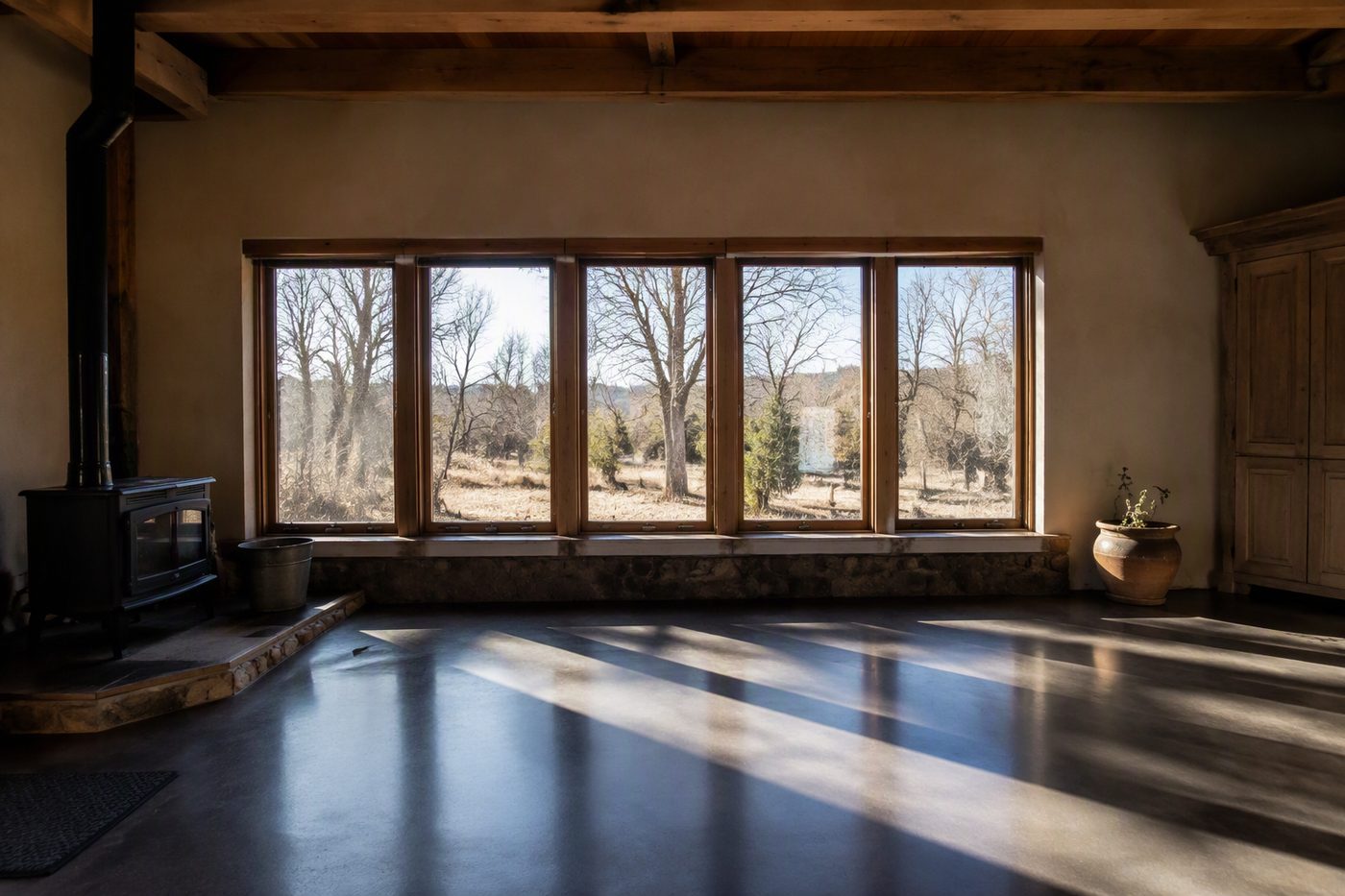
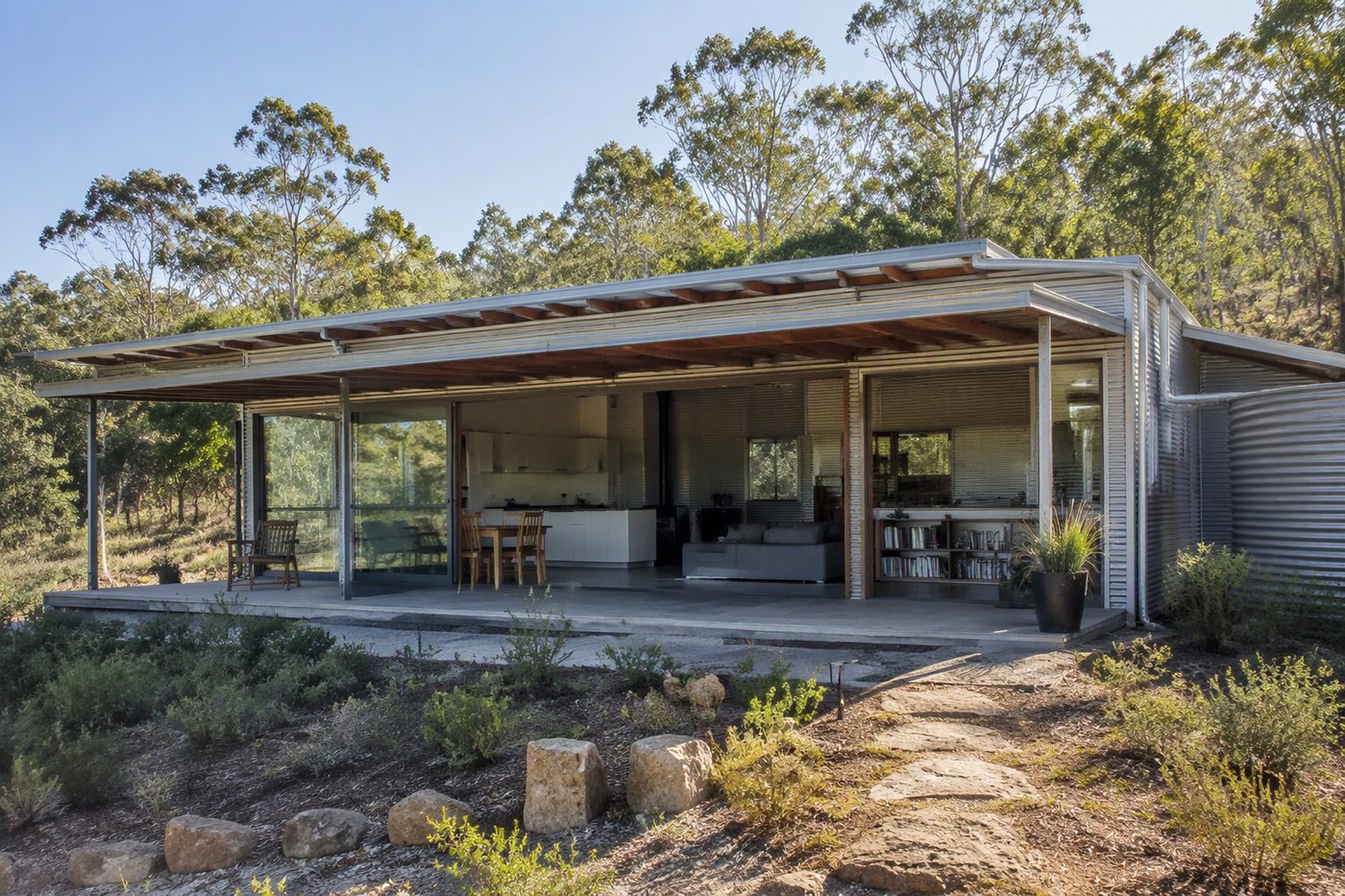
Effective shading prevents overheating in summer while allowing winter sun. Prioritise external shading over internal.
I run 600 mm fixed overhangs on jobs in the hot zones — Darwin's the obvious one, anywhere the summer sun sits high and mean. Drop to somewhere cooler like Melbourne and I bring that back to 400 mm. The shallow winter sun needs to clear the overhang and hit the glazing full on. Get it right and you slash the heating load through the cooler months.
Passive cooling through airflow reduces reliance on solar-powered fans and batteries.
Test airflow with incense sticks during summer. Optimal design requires 15-20% of wall area for operable windows.
Australia's diverse climates demand tailored passive solar strategies. Below are zone-specific guidelines:
Focus: Maximize shading, natural ventilation
Key Actions: Deep overhangs, high ceilings, shaded courtyards
Focus: Thermal mass for night cooling, minimal glazing
Key Actions: Thick walls, courtyards, south-facing windows
Focus: Balanced solar gain, thermal mass
Key Actions: North glazing, 20-25% window ratio, concrete floors
Focus: Maximize winter sun, reduce heat loss
Key Actions: High SHGC glazing, thermal mass, south insulation
Use the Bureau of Meteorology Climate Zone Map to identify your zone before design.
Passive solar design hits your wallet up front, but the power bills drop and the system pays for itself in 5‑7 years.
| Feature | Typical Cost (AUD) | Annual Savings (AUD) | Payback Period |
|---|---|---|---|
| North-Facing Glazing (with Low-E) | $2,500-$4,000 | $500-$800 | 5-8 years |
| Concrete Floor (Thermal Mass) | $1,200-$2,000 | $300-$500 | 4-6 years |
| External Shading (Overhangs/Awnings) | $800-$1,500 | $200-$400 | 3-5 years |
| Strategic Ventilation Design | $300-$600 | $100-$200 | 3-6 years |
| Total | $4,800-$8,100 | $1,100-$1,900 | 4-7 years |
Off-Grid Advantage: In off-grid homes, these savings compound because you avoid generator fuel costs and battery drain from heating/cooling. A well-designed passive home can reduce energy needs by 50-70%.
While many off-grid projects are achievable as DIY, certain situations require licensed professionals:
Always check local regulations and obtain necessary permits before commencing work.
Worth a watch: Marty's Off-Grid House - Sustainable House Day 2025 · Renew
North-facing is where you want your main glazing to catch the low winter sun. I learnt the hard way that a north pane without proper treatment can actually bleed heat back out overnight and undo all that daytime gain, so orientation is only half the job.
Cross-flow ventilation is my go-to: open vents on opposite walls so the breeze moves straight through, add adjustable louvres to fine-tune it, and fit a ridge vent up high to let the hot air escape. I've kept a tin shed liveable through January with nothing but that setup.
For off-grid living it usually pays back over time through reduced cooling load — every watt you don't burn on the aircon is a watt you don't have to generate. Just remember that bigger panes can mean a structural sign-off, and that can blow the budget if you forget to factor it in.
Absolutely — I cooked a battery bank once because I underestimated the afternoon sun hitting the enclosure. Treat shading your battery setup as part of your passive solar plan from day one, not an afterthought, or you'll pay for it in lost capacity and shortened lifespan.