By Jenny Mills · rural nurse & homesteader · health, safety, law and the paperwork of going bush
“After storing 200 litres of diesel in a rusty drum for three years, I watched a slow fire burn my shed to the ground.”
By Jenny Mills · rural nurse & homesteader · health, safety, law and the paperwork of going bush
“After storing 200 litres of diesel in a rusty drum for three years, I watched a slow fire burn my shed to the ground.”
Fuel storage keeps my off-grid property running. The generator, the water pump, the backup during blackouts and bushfire season — all of it depends on what's in the tank. The 2026 regulations shape every decision I make: tank selection, placement, and the compliance paperwork. All costs are quoted in AUD at 2026 pricing.
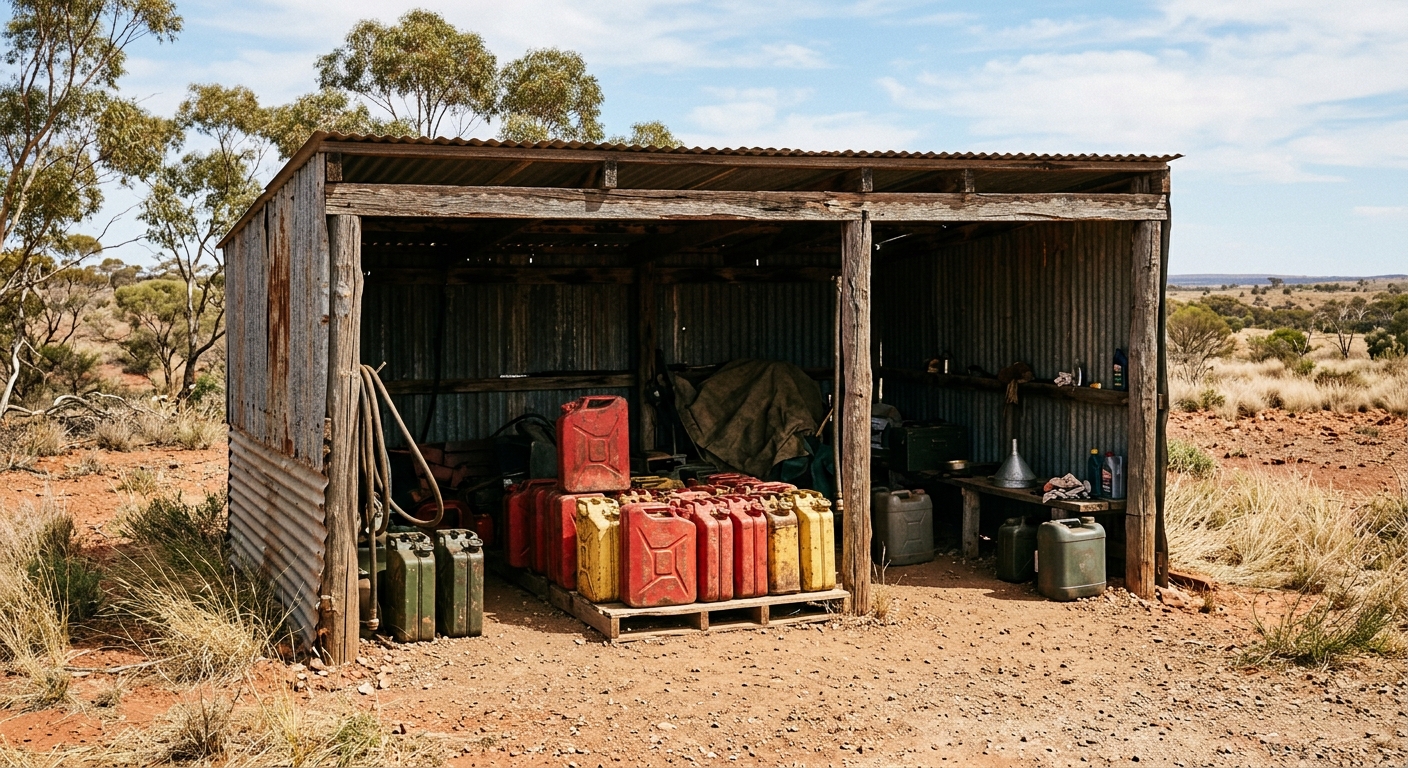
When the grid stops at the end of the track and the nearest servo is two hours away, fuel becomes a stored commodity rather than a quick shop. Diesel for the backup generator, petrol for the mower and ute, LPG for cooking and hot water — all of it needs to arrive in bulk, sit safely for months, and still work when the clouds roll in.
This guide covers the practical side of fuel storage on a remote Australian property: container selection, tank placement, fuel care, legal compliance, and the safety points where I bring in a licensed professional. It sits alongside the wider off-grid planning conversation covered elsewhere on this site, where the broader message is the same — off-grid means you own every shortfall, including fuel quality.
An off-grid property generates and stores its own electricity, manages its own water supply, and uses an independent wastewater system. Fuel is the silent fourth leg: it runs the backup generator that covers winter solar shortfalls, the pumps that move water, the tools that maintain the property, and the vehicles that connect you to town.
The planning stage is the most crucial part of going off-grid, where energy needs, food, water, wastewater, and home layout are calculated. Fuel capacity and storage location belong in that same planning pass. Under-spec the tank and you face supply runs during a wet season when the road is closed; over-spec it and you create an environmental and compliance headache.
The table below summarises the design points I work through on every installation. Specific capacities depend on load calculations and local conditions, so treat these as decision criteria rather than default sizes.
| Requirement | What to get right | Notes for Australian conditions |
|---|---|---|
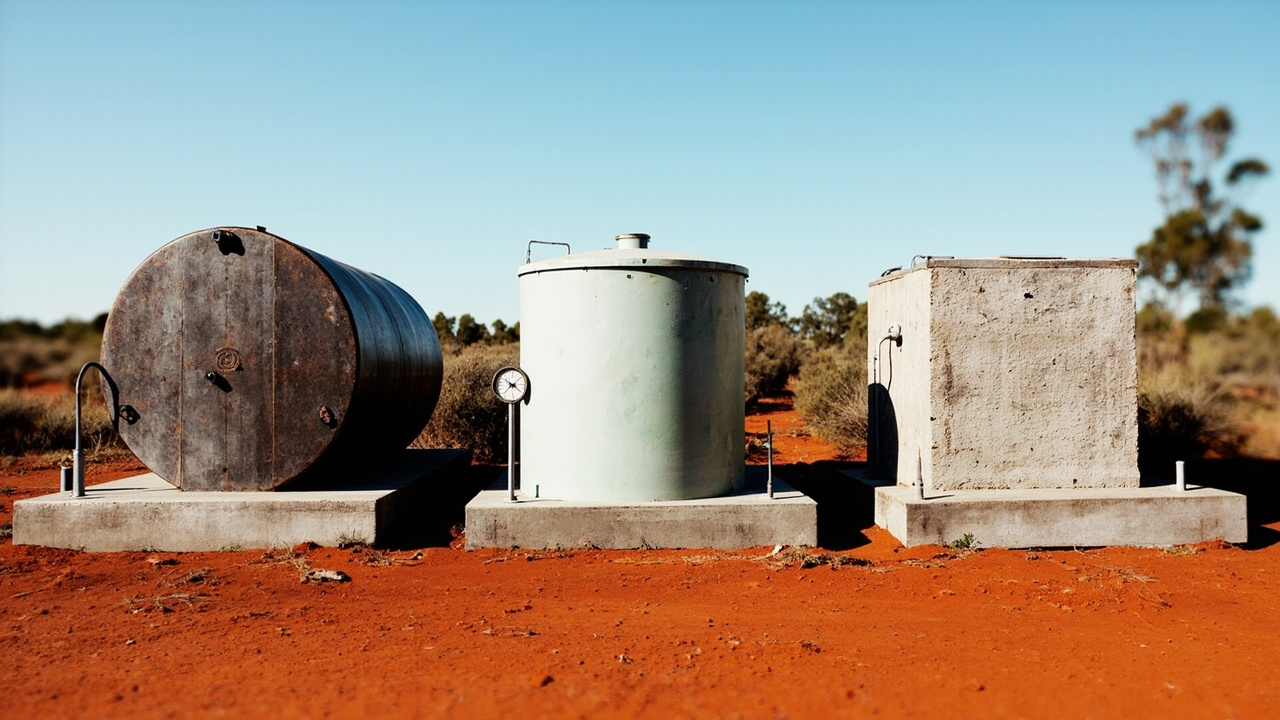
| Container material | Steel for diesel/petrol bulk; FRP (fibre-reinforced plastic) for corrosive/coastal sites; certified LPG cylinders | FRP resists salt-air corrosion common in coastal Central Queensland |
| Capacity vs demand | Size for 30–90 days of backup generator runtime plus vehicle/tool use | A typical backup genset burns 1–3 L/h at load |
| Bunding (secondary containment) | Bund capacity ≥110% of the largest tank, or 25% of total stored volume if multiple tanks | Required under most state dangerous-goods rules |
| Location | Stable ground, away from ignition sources, downwind of the dwelling, accessible for delivery | Check BAL (Bushfire Attack Level) overlays before siting |
| Ventilation | Vapour recovery or vent pipes terminating safely | Critical for petrol and LPG |
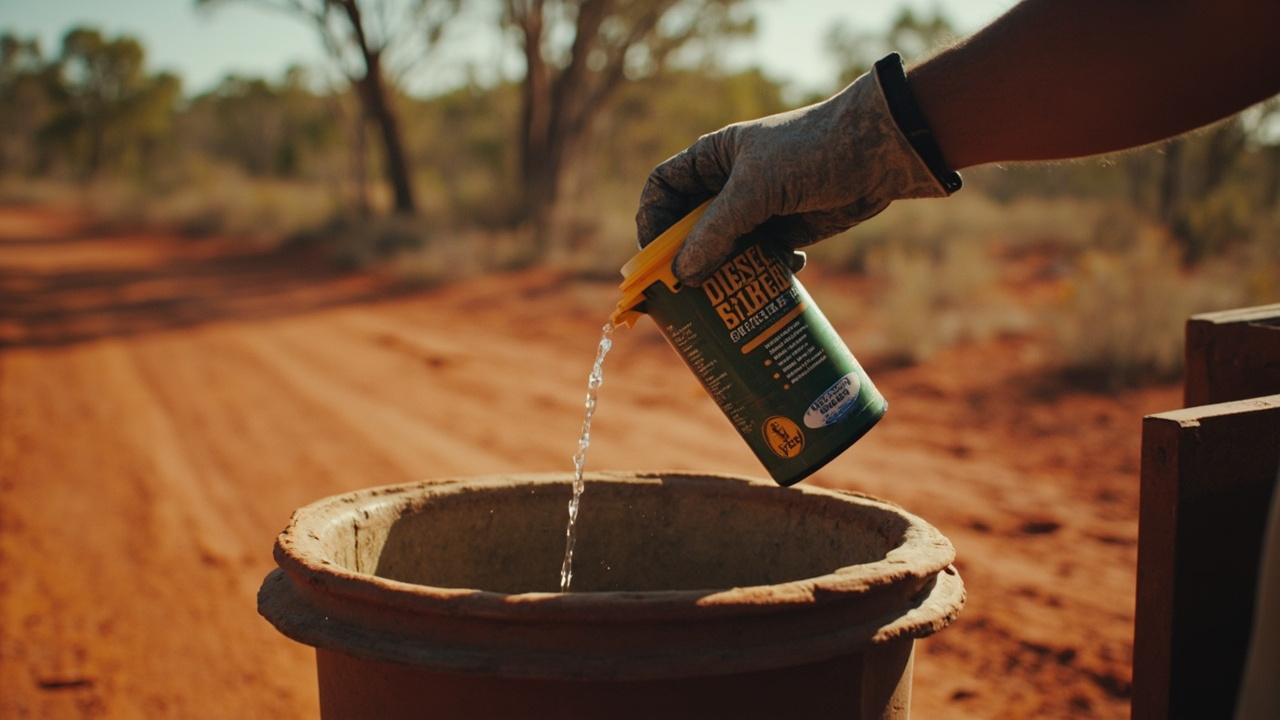
| Fuel care | Water separating filtration, biocides for diesel, stabiliser for petrol | Diesel bug growth is a known failure mode in stored fuel |
| Signage & placarding | Hazchem signs at storage area, especially above threshold quantities | Trigger thresholds vary by jurisdiction |
| Access | All-weather road or hardstand for fuel truck delivery | Mud in the wet season will block a tanker |
For diesel and petrol, I default to a double-skinned steel tank with integrated bunding for anything above a couple of hundred litres. The skin holds the fuel; the outer shell catches a leak. For properties within a few kilometres of salt water — a real consideration along much of the Queensland coast — FRP construction is technically sound because the composite resists the corrosion that chews through unprotected steel.
Above-ground tanks are simpler to inspect, easier to plumb, and faster to remove if regulations change. Underground tanks are out of sight and protected from fire, but they need corrosion protection, leak detection, and council approval. For a remote property where a buried tank leak may go unnoticed for months, I avoid them unless the site forces the issue.
LPG is almost always stored in purpose-built cylinders supplied by a gas retailer — never decant LPG into DIY containers. The cylinders come with over-pressure relief, certified valves, and periodic recertification, which removes most of the compliance burden from the homeowner.
There is no universal correct size; it depends on generator size, expected runtime, vehicle use, and how long you can tolerate being cut off from resupply. A rough sequence:
1. List every fuel-burning device on the property (genset, pumps, mowers, chain saws, ute, tractor).
2. Estimate litres per week for each under realistic use.
3. Add a winter/cloudy-season multiplier if the generator is the primary backup for solar shortfalls.
4. Multiply by the number of weeks you want covered between deliveries.
If the answer is more than the truck can deliver in one visit, split the storage into multiple tanks so each can be filled safely.
Diesel and petrol both degrade in storage. Diesel is susceptible to microbial growth (the so-called "diesel bug") and absorbs moisture over time, which leads to sludge, filter blockages, and injector damage. Petrol oxidises, loses octane, and can leave varnish in carburettors and fuel lines.
Practical steps:
This is the section where I stop pretending to be a one-person operation and hand work to licensed professionals. Compliance with state and council rules is not optional, and the penalties for getting it wrong are serious.
When to call a licensed professional:
A practical rule: if the work involves a permit, a sign-off, or a connection that could affect insurance cover, it needs a licensed person on the tools.
Off-grid properties must comply with bushfire and flood risk overlays, including BAL requirements, building location, and access rules. Fuel storage is part of that compliance. In a high BAL zone, tanks need non-combustible supports, mesh screens over vents, and separation from vegetation. In a flood-prone gully, the tank should be above the defined flood level and ideally anchored against flotation — an empty tank full of water becomes a barge.
Insurers for rural properties often ask what fuel is stored, in what quantity, and what safety measures are in place. Keep:
When a claim arises, that folder is worth more than the fuel inside it.
How long can I store diesel before it goes off?
Without treatment, diesel begins to degrade within 6–12 months. With biocide, water-separator filtration, and a polishing cycle, two to three years is realistic.
Do I need a bunded tank for a single 200 L drum?
Check your state threshold. Many jurisdictions require bunding above 1000 L combined, but local rules can be stricter, especially near waterways.
Can I bury a fuel tank to save space?
Yes, but you take on corrosion protection, leak detection, venting, and council approval. Above-ground is usually cheaper and safer on a rural block.
Is FRP really better than steel near the coast?
In my experience, yes. Salt air attacks unprotected steel quickly, and the maintenance cost of paint systems adds up. FRP tanks are technically sound for corrosive environments.
What is the minimum safe distance between a diesel tank and the house?
Separation distances depend on tank size, bunding, and jurisdiction. Treat any specific number in a guide as a starting point and confirm with your local council or a dangerous-goods consultant.
Can I store petrol and diesel in the same bund?
Generally no — the bund must be designed for the most hazardous substance stored. Mixed bunds are usually prohibited or require extra design work.
Fuel storage is unglamorous work, which is why it is often done badly. Get the container, the bund, the placement, and the fuel-care routine right during the planning stage, and the system will quietly do its job for a decade. Skip any of those steps and you will meet your generator for the first time on the worst possible afternoon.
Worth a watch: STOP Storing Gas Like This: The EMERGENCY Fuel Storage Checklist · The Ready Life
It depends on your state and the volume you're keeping, but once you go past the small household exempt amount you generally need a compliant tank, bunding and signage. I've laid out the 2026 rules in the compliance section so you can see where your setup actually lands.
For anything bigger than a couple of jerry cans, yes — I'd rather hand it to a pro than muck up the plumbing, venting or bunding myself. The article walks through what you can DIY and what needs a licensed installer on your block.
Untreated diesel pulls in moisture and grows the diesel bug faster than most people expect, especially up here in Queensland. That's exactly why I run a stabiliser routine, and the shelf-life section covers what's realistic on a bush block.
No, they're treated quite differently — petrol's more volatile, goes off quicker, and the storage rules are tighter. I keep the two fuels completely separate on my block, and the fuel types section runs through how I handle each one.