
By Sarah Chen · environmental engineer · water, waste and everything that flows downhill
“After my first solar pump failed in a -2°C frost, I learned that a 200-litre buffer tank is the only thing saving stock from a broken line.”
By Sarah Chen · environmental engineer · water, waste and everything that flows downhill
“After my first solar pump failed in a -2°C frost, I learned that a 200-litre buffer tank is the only thing saving stock from a broken line.”
Forget the fancy stuff. If you're running livestock off-grid in Australia, water is non-negotiable. Get it wrong and you lose stock. Get it right and you sleep easy. Here's how.
Don't buy a diesel pump. It's a waste of money and effort. Solar pumps are dead simple, silent, and run 24/7. Size it right or it'll crap out in the heat.
Practical tip: Calculate your water needs. 1000L/hr pump = 100 sheep. 500L/hr = 50 sheep. Get a pump that's 20% bigger than you think you need. If it's not pumping enough, you'll be hauling water at 3am in a storm.
Solar Water Pumps Australia (SWPA) does the real deal. Their 12V 1000L/hr system: $1,850 (includes pump, solar panel, controller). No fluff. Just works.
Solara has cheaper options: 500L/hr system for $1,100. Good for small mobs. Don't buy the $500 "solar" pump from a farm shop. It's a joke.
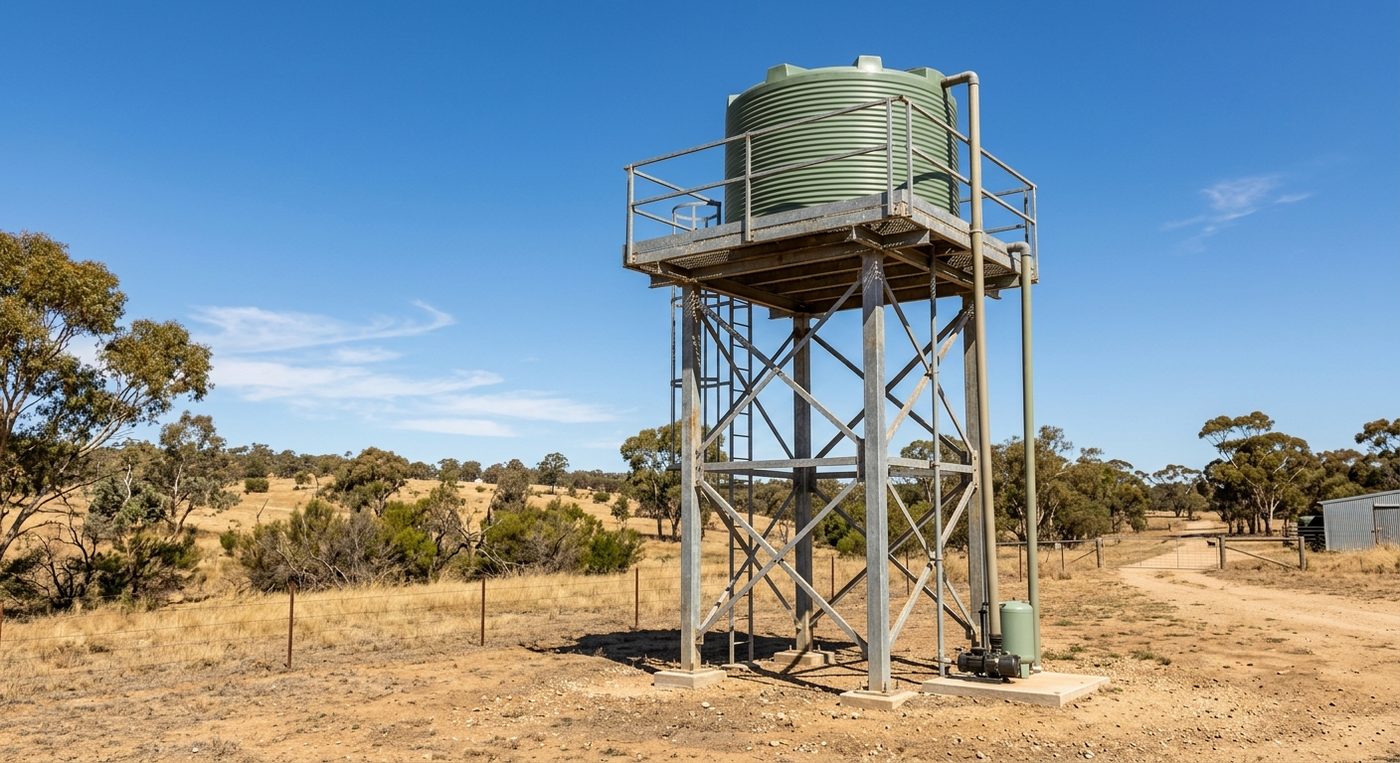
Plastic troughs crack in winter. Steel rusts. Get the right one. Galvanised steel or UV-stable poly. No exceptions.
Practical tip: Position troughs in shade (not full sun) to stop algae. Use a 100L trough for 10 sheep. If it's smaller, you're wasting water and time. Clean them weekly. Mud = disease.
Troughs Direct sells 100L galvanised steel troughs for $220. Cheaper than replacing a trough that's cracked from freezing.
Agri-Plastics has 100L poly troughs (UV protected) at $165. Don't buy the $90 "stock trough" from Bunnings. It'll split in winter.
Water freezes. Pipes burst. Your stock won't drink frozen water. Fix it before the first frost.
Practical tip: Insulate pipes with foam sleeve (buy from plumbing shops for $15/metre). For troughs, use a 12V solar pump to keep water moving. No electricity needed. If you have a small mob, a $250 heated trough (see below) is worth it.
Heat Troughs Australia does 12V heated troughs for $320 (fits 100L). Only buy if you have a solar setup. Otherwise, it's pointless.
No supplier needed: Use a solar pump to keep water flowing. It's cheaper, more reliable, and doesn't need power. Don't waste money on electric heaters. They'll cost you more than the trough.
Bottom line: Solar pump + steel trough + pipe insulation = zero headaches. Skip the cheap stuff. It'll cost you more in the long run. Get it right once, and you're done.
Worth a watch: OFF-GRID LIVESTOCK WINTER WATER · PINE MEADOWS HOBBY FARM A Frugal Homestead
While many off-grid projects are achievable as DIY, certain situations require licensed professionals:
Always check local regulations and obtain necessary permits before commencing work.