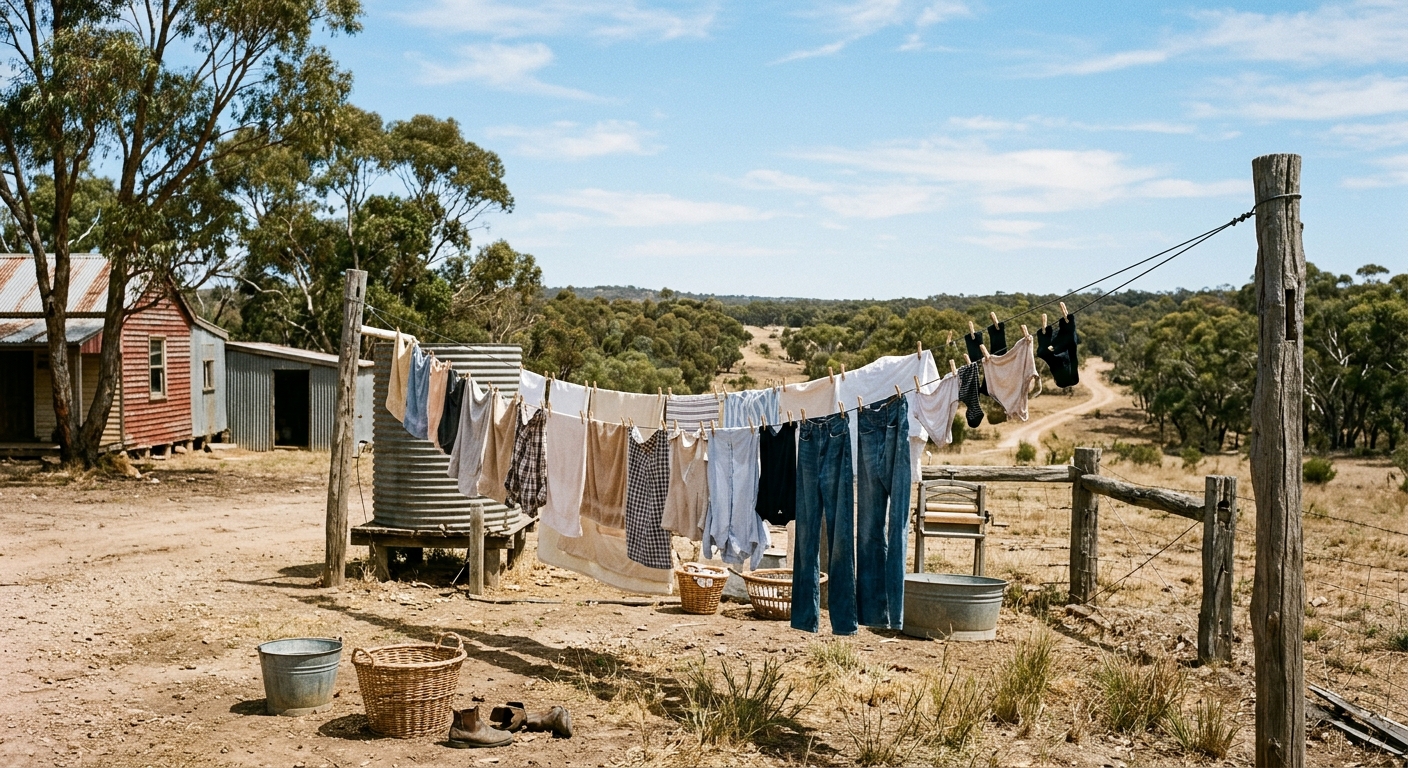
Within a month, every one of them had split seams or a permanent sour odour that no amount of eucalyptus oil from the local chemist could mask. In that same month, I walked the same paddocks in a single pair of Rossi 303 Endura boots bought from Narrabri Rural Supplies for $245. The tread has worn smooth on the ball after two years, but a resole by the bootmaker in Coonabarabran ran $90.
The creek crossings, sharp quartz, and daily 1.2-kilometre round trip to the mailbox left the boots scuffed but functional; my feet stayed dry and free of blisters because the full-grain leather, once dubbined with the standard $15 tin of Joseph Lyddy dressing, shed water within minutes. After three failed wash cycles in the creek, I learned that a single pair of durable boots saves more feet than a hundred fancy shirts.
When the grid is unavailable, oversized, or simply undesirable, clean clothes still have to happen. The good news: off-grid laundry is one of the easier systems to scale. The hard part is matching method to load size, water supply, and available energy. Below is a straight breakdown of the core approaches — hand washing, wringer washers, and the practical limits of a standard 230V washing machine on a small inverter/generator system.
Why Clean Clothes Matter Off-Grid
This isn't vanity. Sweat salts clog the pores of breathable fabrics, dirt and grit wear down fibres like sandpaper, and prolonged wear of soiled clothing can cause skin infections and rashes. In a humid Central Queensland climate, damp or dirty kit also turns into mould fast.
One practical aside: the only thing that smells worse than a generator running on a still morning is a wet pile of synthetics left in a corner for three days. Don't find out.
Hand Washing: The Baseline
The simplest off-grid laundry setup needs three things: a container, an agitator, and biodegradable soap.
Specs / Requirements — Basic Hand-Wash Kit
| Component | Options | Notes |
|---|
| Container | 5-gallon bucket, wash tub, or heavy-duty dry bag | Bucket is durable, portable, and sized for one load |
| Agitator | Washing plunger, washboard, washing stick, or hands | Plunger is the key tool; dry-bag shaking also works |
| Soap | All-natural or lye-based soap | Avoid borax + washing soda mixes; they damage skin |
| Drying | Clothesline in direct sun | Sun-bleached, naturally fresh-scented |
Container Choice
A standard 5-gallon bucket is the default: durable, easy to carry, and the right size for a single load of clothes. For travel or vehicle-based setups, a heavy-duty dry bag filled with water and clothes, sealed, then shaken, creates a portable, mess-free wash. Shake for several minutes, drain, refill with clean water, shake again to rinse.
Agitators That Actually Work
- Washing plunger (manual agitator): The single most effective tool. Look for antique versions, check specialist retailers, or modify a clean toilet plunger by drilling holes in the rubber cup to make a DIY "mobile washer" that uses suction and pressure to force soapy water through fabric.
- Washboard / washing stick: Best for heavily soiled items — work pants, muddy socks. Modern silicone or plastic boards fold for storage. A wooden one can be made by cutting and sanding grooves into a piece of hardwood (sand the edges smooth — see safety below).
- Hands only: Works for small loads of light clothing. Pre-soak for 15–20 minutes to loosen soil first.
Soap Selection
Use simple soap — lye soap from rendered tallow, or a mild all-natural bar grated into the wash water. Avoid homemade detergent recipes containing borax and washing soda; they can cause painful skin damage on the hands with repeated use. Optional: a few drops of lavender, tea tree, or eucalyptus oil for scent. Most sun-dried clothes smell fresh anyway.
The Wash Process
1. Soak garments in warm soapy water for 15–20 minutes.
2. Agitate with the plunger or on the washboard for 3–5 minutes, focusing on cuffs, collars, and soiled zones.
3. Rinse thoroughly in clean water — two rinses is better than one.
4. Press out water by rolling tightly and twisting, or feeding through a wringer (see below).
5. Air-dry on a line in direct sunlight. UV does real disinfection work.
This sequence — soak, agitate, rinse, dry — is the general off-grid manual wash process, and it scales surprisingly well for one or two people.
Wringer Washers: The Middle Path
A wringer washer sits between hand washing and a modern machine. The tub fills with water, an internal agitator sloshes clothes through the suds, the tub drains, and the load then feeds through a pair of powered rollers that squeeze out the bulk of the water. The process repeats with rinse water before the load goes to the line.
Why bother? A wringer removes far more water than hand-wringing, so:
- Clothes dry faster.
- Less water drips onto the floor, which matters in a closed-in space.
- Lower indoor humidity means less risk of that sour, musty smell — especially in cooler months when nothing dries properly indoors.
For a small household with limited power budget, a wringer washer is often the sweet spot: low water use, mechanical (not digital) controls, and modest electrical draw compared with a front-loader.
Standard Washing Machines on Small Off-Grid Systems
A modern 230V front-loader or top-loader looks tempting — same machine as a grid home — but off-grid it comes with real constraints.
Standard washing machines require a strong initial power surge to start the agitation cycle. On a generator-based or small inverter-based system, this surge draw can exceed the available capacity. The result: the machine fills with water and then stops. The motor simply can't start under load.
Practical considerations:
- Surge vs. running wattage: Check both numbers on the appliance rating plate. The inverter or generator must handle the surge, not just the running load.
- Battery voltage: Before running any high-draw appliance, check battery state of charge. Brownouts under load damage motors and inverters.
- Low-suds detergents: If using a portable washer or any machine with a small pump, low-suds detergent is correct — excess foam strains pumps and can cause overflow.
- Hot water: If the machine draws hot water from a tank heated by solar/gas/wood, confirm the tank can reheat between loads. Running out of hot water mid-cycle is common off-grid.
For sites with serious solar and battery capacity (5 kVA+ inverter, 10 kWh+ battery), a modern efficient front-loader is workable. For smaller systems, plan to fall back to hand washing or a wringer for at least some loads.
Drying
Drying is where off-grid laundry either succeeds or fails.
- Clothesline in full sun: Best option. UV sterilises, breeze handles the rest.
- Indoor drying rack: Acceptable in wet weather, but slow. Expect a full day per load in humid conditions and ventilate the room hard — open windows, run a small fan — or the moisture load will settle into walls and furniture.
- Camp-style / vehicle-based: Hang from a tarp ridge line, awning, or between trees.
Hang on a line rather than over grass or bushes if free-range animals, poultry, or toddlers are about. Footprints on clean sheets are a rite of passage you can avoid.
Long-Term Clothing Storage
When kit isn't being worn — seasonal work clothes, spare woollens, emergency clothing — store it clean and dry in airtight containers with desiccant packs. This prevents mildew and insect damage. Inspect stored items every few months; in the tropics, a single humid spell can undo months of careful packing.
Extending Garment Life
Mechanical wear destroys more off-grid clothing than dirt does. Practical rules:
- Use mild soap, not harsh detergents.
- Don't over-agitate; gentle plunging extends fabric life.
- Rinse thoroughly — soap residue weakens fibres over time.
- Repair small tears early; a patched knee beats a discarded pair of trousers.
Safety
- Skin protection: Use all-natural or mild soap for hand-washing laundry. Repeated contact with harsh chemical detergents (borax, washing soda, strong commercial powders) causes dryness, cracking, and chemical irritation on the hands.
- Tools: Inspect homemade washboards for splintered edges. Splinters injure hands and snag fabric, causing tears.
- Electrical: In Australian conditions, ants nest inside electrical enclosures and junction boxes. This is a documented fire and equipment-failure risk. Inspect and seal all electrical gear; schedule periodic checks.
- Water safety: Source water should be potable or filtered. Greywater from laundry is not safe for re-use on food gardens without treatment.
When to Call a Licensed Professional
- Installing or upgrading inverter/charger systems, battery banks, or AC wiring (230V).
- Plumbing work for greywater systems or rainwater-to-wash-supply connections.
- Solar array design, mounting, and grid-interactive (AC-coupled) equipment.
- Any work involving mains connection, generator changeover switches, or switchboard modifications.
A licensed electrician or plumber in Queensland is required by law for most fixed electrical and plumbing work. Don't DIY the switchboard to save a weekend.
FAQ
1. How much water does a hand-wash load use?
A 5-gallon bucket is roughly 19 litres. Allow one bucket for wash, one for rinse, plus rinse adjustment for heavily soiled loads. A wringer washer uses more but processes larger loads.
2. Can I use normal laundry detergent for hand washing?
Technically yes, but high-suds commercial powders are wasteful and harsh on skin. A grated natural bar soap or purpose-made low-suds soap is the standard off-grid choice.
3. Will a standard washing machine work on a 2 kVA inverter?
Often no. The starting surge of an agitator motor typically exceeds what small inverters can deliver. The machine will fill, then fail to start the cycle. Check the motor's locked-rotor or surge spec on the rating plate against the inverter's peak capacity.
4. How do I stop clothes smelling musty when line-drying indoors?
Maximise airflow: open windows on opposite walls (cross-ventilation), run a small fan across the rack, and space items so air circulates between them. Cold, still air is the enemy.
5. Is a wringer washer worth it for one person?
If you're doing more than two loads a week by hand, yes. Time and water savings pay back the unit within months for most users.
6. Can I use rainwater for laundry?
Yes, after basic filtration. Sediment in wash water dirties clothes and can damage pump-type machines. A simple inline mesh filter is usually enough.
Sources
- https://www.homestead.org/lifestyle/housekeeping/off-grid-laundry-hand-washing-on-the-homestead/
- https://www.battlbox.com/blogs/preparedness/how-to-wash-clothes-off-grid-a-comprehensive-guide
- https://alovelyplacecalledhome.com/2026/04/20/how-to-do-laundry-off-grid-systems-and-options/