Look, if you're running an off-grid system in Australia, battery cables aren't a "nice-to-have" — they're the lifeline. Get them wrong and your inverter fries, your batteries die, or you get a fire. No exceptions. Here's the raw deal.
Cable sizing guide between battery bank and inverter based on run length.
Short Runs: Don't Waste Money on Beefy Cables
For runs under 1.5 metres (like battery to inverter in a shed), you don't need 50mm² cable. It's overkill and costs more. Here's the sweet spot:
12V systems (up to 1000W): 25mm² cable (e.g., 100A inverter)
24V systems (up to 2000W): 25mm² or 35mm²
48V systems (2000W+): 25mm² is fine for most setups
Using 50mm² for a 2m run? You're just paying for weight. BatteryCables.com.au sells 25mm² at $8.50/m — that's $17 for a 2m run. 50mm² is $18/m. Save the cash.
Voltage Drop: The Silent Killer
Forget "it's only 10cm" — voltage drop kills efficiency. For every 1% drop, you lose 1% of power. At 3%? Your system runs like it's on a diet.
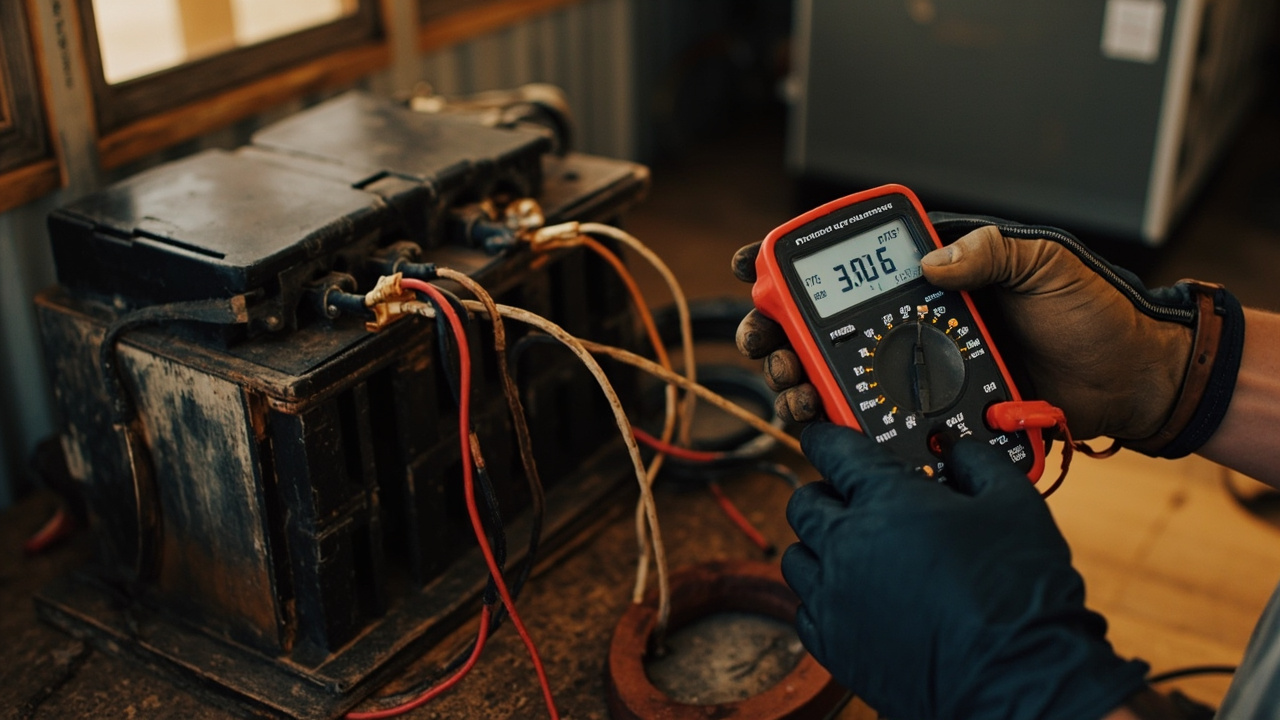
Multimeter testing voltage drop on battery cable
Rule of thumb: Keep voltage drop under 2% for battery-to-inverter runs. Use this formula:
Voltage Drop = (2 × Current × Cable Length × 0.017) / Cable Area
Real example: 100A at 12V, 2m run, 25mm² cable:
Voltage Drop = (2 × 100 × 2 × 0.017) / 25 = 0.27% (safe).
Same setup with 16mm²? 0.43% (still okay, but push it).
10mm²? 0.65% (too high — skip it).
Don't calculate. Just use 25mm² for 12V/1000W, 35mm² for 24V/2000W. Done.
Terminals: Don't Be a Dumb Aussie
Using bare wire? Or cheap crimp lugs? You're asking for a fire. Terminals must match the cable and battery terminals. No exceptions.
Use proper lugs: 25mm² cable needs 25mm² lugs (not 35mm²). BatteryCables.com.au sells 25mm² lugs for $3.50 each.
Crimp properly: Use a hydraulic crimper (not pliers). Cheap $20 crimpers from Supercheap Auto won't cut it. Get a proper one ($100-$150) — it's the only way to avoid loose connections.
Never solder: Solder melts. Crimp only.
Bad terminals = high resistance = heat = fire. We've seen it. It's not a "maybe" — it happens.
Where to Buy in Australia (No Fluff)
BatteryCables.com.au (Sydney): Best for cable and lugs. 25mm² cable: $8.50/m. 25mm² lugs: $3.50/pair. Fast shipping. $17 for 2m cable + lugs.
Powerhouse (Nationwide): Cable starts at $12/m (thinner than needed). Only buy if you're desperate. Avoid for off-grid.
Supercheap Auto: Cable is $15/m, but it's 16mm² (too thin for 100A). Don't waste your money.
⚠️ SAFETY WARNING: Working with electrical systems, structural modifications, or gas installations carries inherent risks. If you are not confident in your abilities, always engage a licensed professional.
It shows how to size fuses and breakers that match the cable ampacity you just calculated, so you don’t end up with a fire starter instead of a working system.— Dave Miller
When to Call a Professional
While many off-grid projects are achievable as DIY, certain situations require licensed professionals:
Electrical work beyond basic 12V DC additions — requires a licensed electrician
Structural modifications to buildings or load-bearing elements
Gas line installation or modification
Solar array installations above safe voltage thresholds
Any work that affects the structural integrity of your property
Always check local regulations and obtain necessary permits before commencing work.