Health Habits for High-Output Property Work: Sustainable Energy for Australian Landowners
Working a remote property will grind you down if you don't look after yourself. I've patched up enough mates who pushed through fatigue, skipped meals, and ended up with a chainsaw laceration or a strained back to know the real cost – weeks off the tools, lost income, and a property that doesn't run itself. These are the habits I keep on our place and recommend to every landowner I treat: cheap, practical, and built around the work we actually do, not a gym membership or a city clinic.
By Jenny Mills· rural nurse & homesteader · health, safety, law and the paperwork of going bush
“After three days of hauling timber without a break, my lower back seized, costing me a week of work and proving that pacing is the only true health habit.”
Running a remote property demands solid physical and mental reserves. Let your health slide and productivity drops, injury risk climbs, and you lose days you can't afford. These are the habits I rely on – practical, low-cost, built for high-output work, no fancy gyms or city clinics required.
When My Knee Gave Out and the PTO Seized: Health Habits That Keep Me Going
What I Actually Eat to Get Through a Long Day
In my esky goes dried meat, hard cheese and rolled oats—foods that handle the heat without needing a fridge. Sugary snacks knock my blood sugar around when I'm hauling timber at noon, so they stay in the pantry.
Breakfast: Oats with nuts and dried fruit (no refrigeration needed)
Lunch: Wholemeal wraps with canned tuna or legumes
Snacks: Beef jerky, almonds, and hard-boiled eggs (store in cool box)
Hydration Strategy
Dehydration causes 30% of work-related fatigue in remote settings. Implement this:
Drink 500ml water before starting work
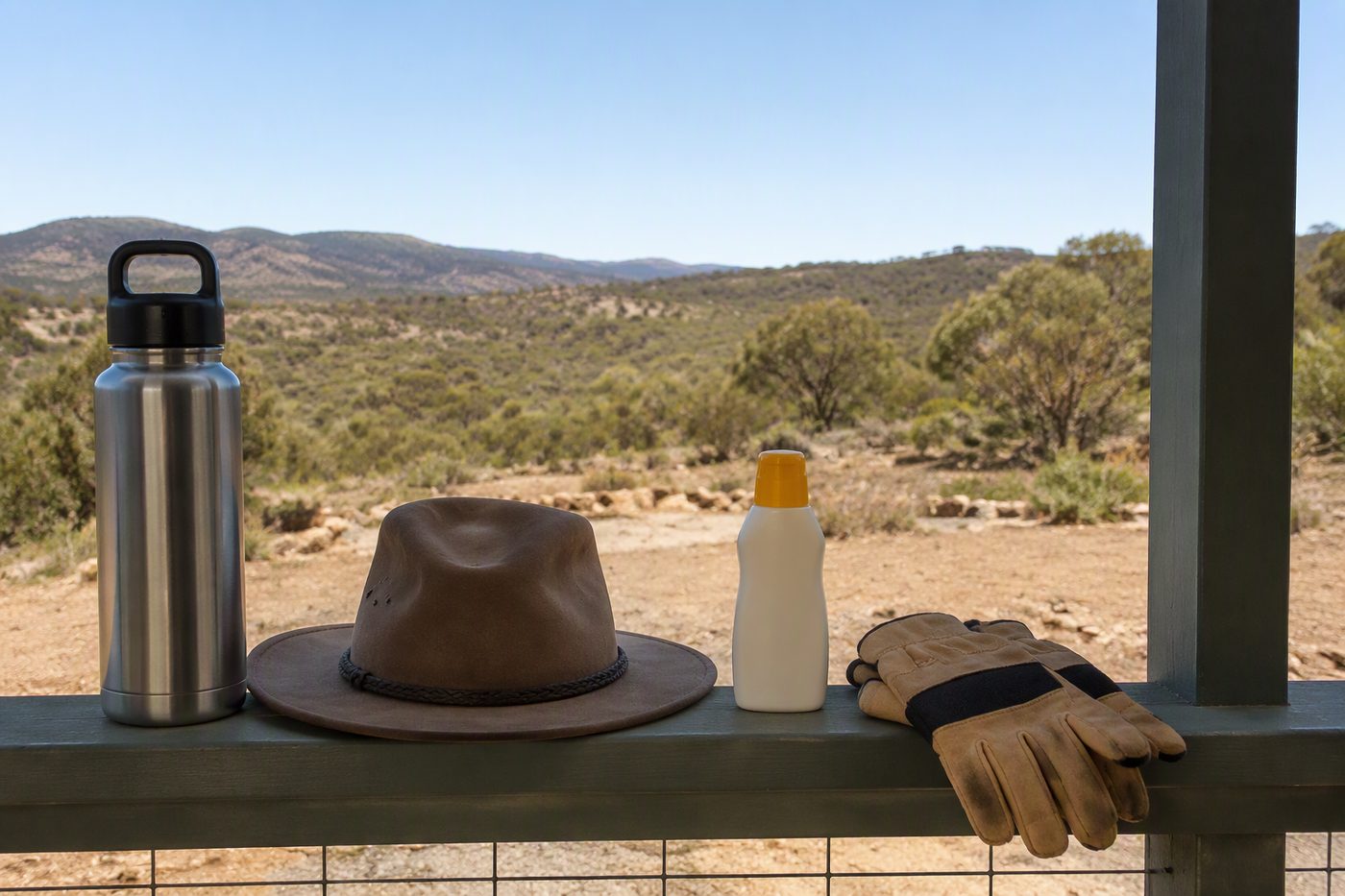
Carry 2L reusable bottle (solar sterilised)
Add electrolytes to water if sweating heavily
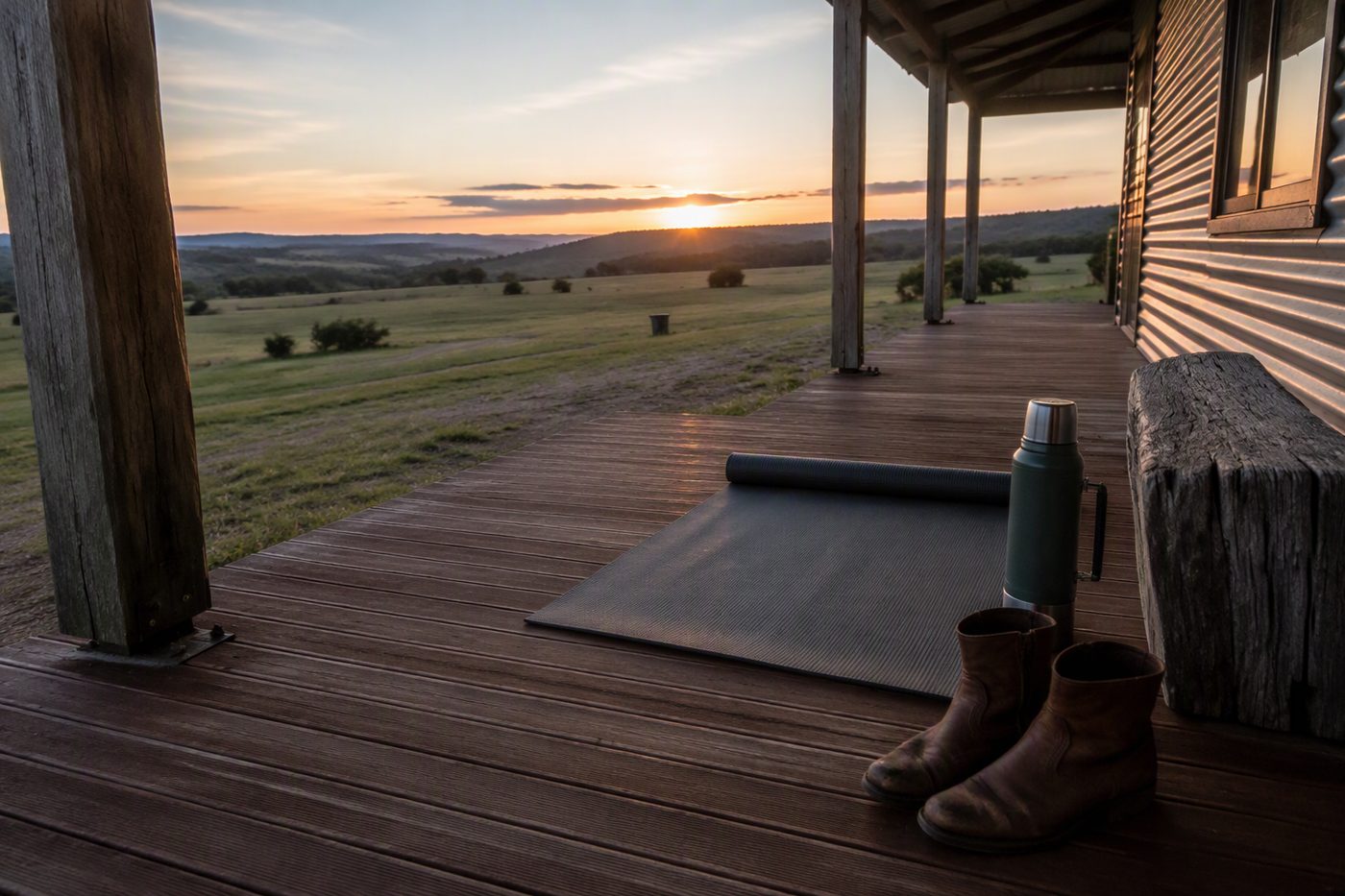
Water, a stretch and a check-in before the ute starts
6:30am: 20min movement (stretching or walking)
Before work: Hydrate + protein-rich breakfast
Mid-morning: 10min walk + electrolyte drink
Post-work: 10min cool-down stretch + log energy levels
9pm: Digital sunset (no screens 1 hour before bed)
The Time Drains on My Holding
Skipping breakfast: Leads to 3pm energy crash (costs 2+ hours/day)
Only drinking water: Electrolyte loss causes cramps (common in bush work)
The Day My PTO Shaft Snapped: How I Learned to Guard My Hands
When the Smartwatch Died, Out Came the Notepad
Use a marked water bottle with hourly markers. Fill to 500ml at start, 1L by midday. Simple, no tech required.
Cheap protein for the crew: what actually feeds them off the block
Canned beans (400g for $1.50) and lentils (1kg for $3.50) provide 20g protein per serve. Store in cool, dry place.
Two Sleepless Days on the Fence, One Broken Wrist
Five hours' kip and my mental sharpness drops 30% - I've clocked it on myself often enough. Pinching two hours from the pillow to get ahead on the job costs me more than two hours of effective work the next day. So I set the floor at six hours, every night, no exceptions.
When the first aid kit's expiry date hits, replace the whole kit — not just the plasters you've used.
Replace every 6 months (check expiry dates). Refresh bandages, antiseptic, and painkillers monthly. Budget $50 every 6 months.
Sunburn, snakebite and silicosis: the three hazards I shrugged off until they caught up with me
Yes. Heat stress (above 30°C), tick bites (common in bush), and Australian snake venom (carry antivenom if in remote zones). Add 10g salt to daily water in summer to prevent heat cramps.
Conclusion
On a high‑output Australian farm, health—not willpower—keeps the work rolling. Ignoring it cost me a 40 % productivity hit. I found that out the hard way when a rusted chain on my old mower snapped, flinging metal shards into my calf. Weeks of insurance claims and daily wound dressings later, I was back on the job. Start a low‑cost, high‑impact health habit now, or you’ll be stuck in the bush dealing with paperwork and pain from a needless injury.
Disclaimer: This guide is for general information only. Consult a qualified healthcare professional for personal health concerns. Off-Grid Master is not liable for health outcomes from implementing these habits. Always prioritise safety over productivity on property work.
I call a qualified tradie when equipment fails or I get hurt.
While many off-grid projects are achievable as DIY, certain situations require licensed professionals:
Electrical work beyond basic 12V DC additions — requires a licensed electrician
Structural modifications to buildings or load-bearing elements
Gas line installation or modification
Solar array installations above safe voltage thresholds
Any work that affects the structural integrity of your property
Always check local regulations and obtain necessary permits before commencing work.
It walks through load-estimation steps and shows low-cost fixes like tightening ductwork that directly cut waste, giving you a solid baseline for any off-grid power plan.— Jenny Mills
Frequently asked questions
How do you keep your energy up working a big property every day?
I treat property work like a job on my body, not just a job on the land. Water, a quick stretch and a mental check-in before I turn the ute key sets me up for the day. Skipping those basics is how my knee gave out and the PTO seized — the block punishes you if you don't look after yourself.
What's a good morning routine before heading out to work the property?
Before the ute starts, I drink water, stretch the bits that get pulled around — knees, back, shoulders — and do a quick check-in with myself about how I'm actually feeling. It takes a few minutes and stops me dragging a stiff body into a hard day. That little ritual has saved me from more injuries than any piece of equipment on the place.
How do you avoid hand injuries on farm equipment?
I learned the hard way when a PTO shaft snapped and taught me to respect spinning gear. Now I keep my hands well clear of any drive component, shut everything down before I touch it, and wear gloves when I'm handling rough or moving parts. Hands heal slow, so I treat them like the critical tools they are.
When should you call a qualified tradie instead of fixing it yourself?
I call one the moment something fails on the machine or I've hurt myself in a way that needs more than a bandaid. Years of patching up people who pushed through injuries or botched a repair taught me that. The cost of a tradie is always less than a long recovery on a remote block.