You're not lazy for considering hand-grinding grain off-grid. You're practical. Just don't dress it up as a hobby—hand grinding is hard graft, full stop. Here's what you actually face when the power's out and the mill is bolted to the bench.
Mill Designs: Stone Burrs, Steel Burrs and Plate Grinders
Forget those fancy electric mills. Off-grid means no power. So here's the only options that'll cut it:
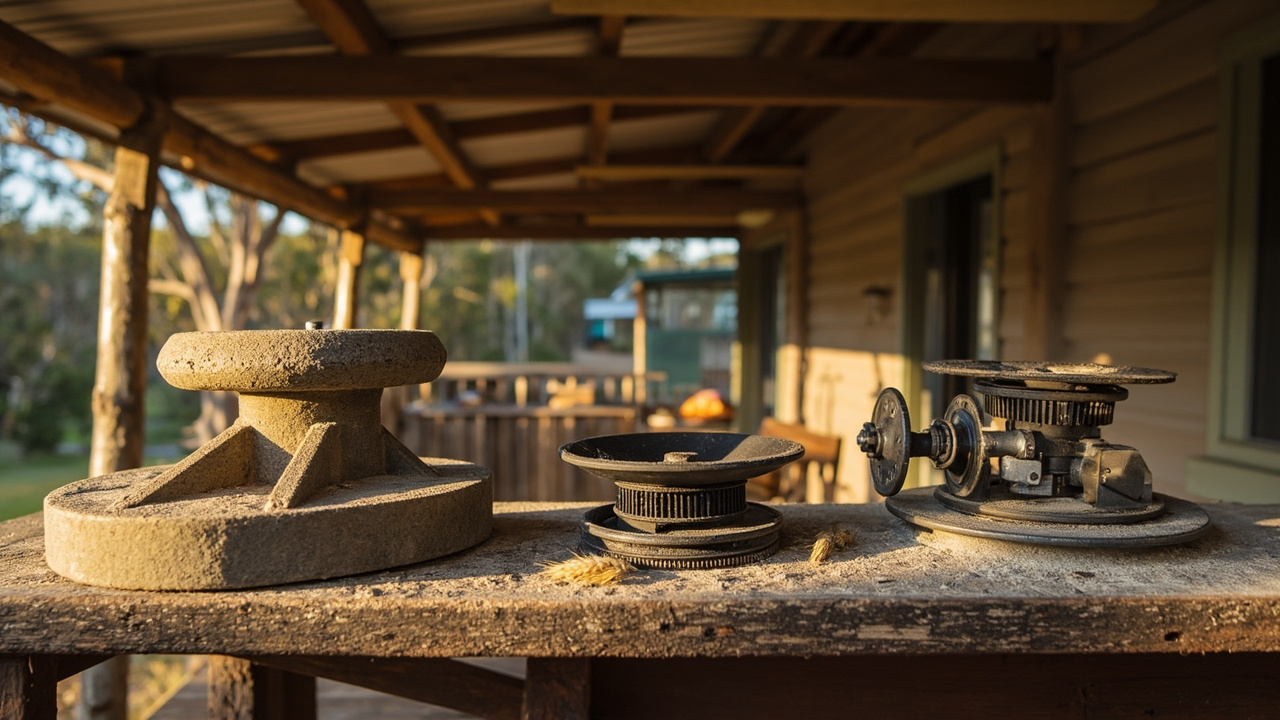
Three mill mechanisms compared side by side on a verandah bench
Hand-crank stone mills (like the Grindstone or Hammermill): Heavy, slow, but works in a power cut. Best for small batches. Price: $350-$600 AUD.
Quern stones (old-school, two rocks): Cheap ($50-$150), but you'll be grinding like a caveman. Not for daily bread. Only for emergencies.
Manual burr mills (e.g., Wheaty brand): Compact, but needs serious elbow grease. $250-$400. Better than querns, worse than stone mills.
Australian suppliers (no bullsh*t):
Grindstone Australia (Sydney): $420 for a basic stone mill. Fast shipping, no hidden fees. $420
Off-Grid Gear (Brisbane): $280 for a Wheaty manual mill. They'll ship to your shed. $280
Yield Per Kilo: What Wheat Actually Gives You
Don't expect a bag of flour from a bag of wheat. Reality check:
1kg wheat → 0.7kg flour (30% loss to bran/germ)
1kg barley
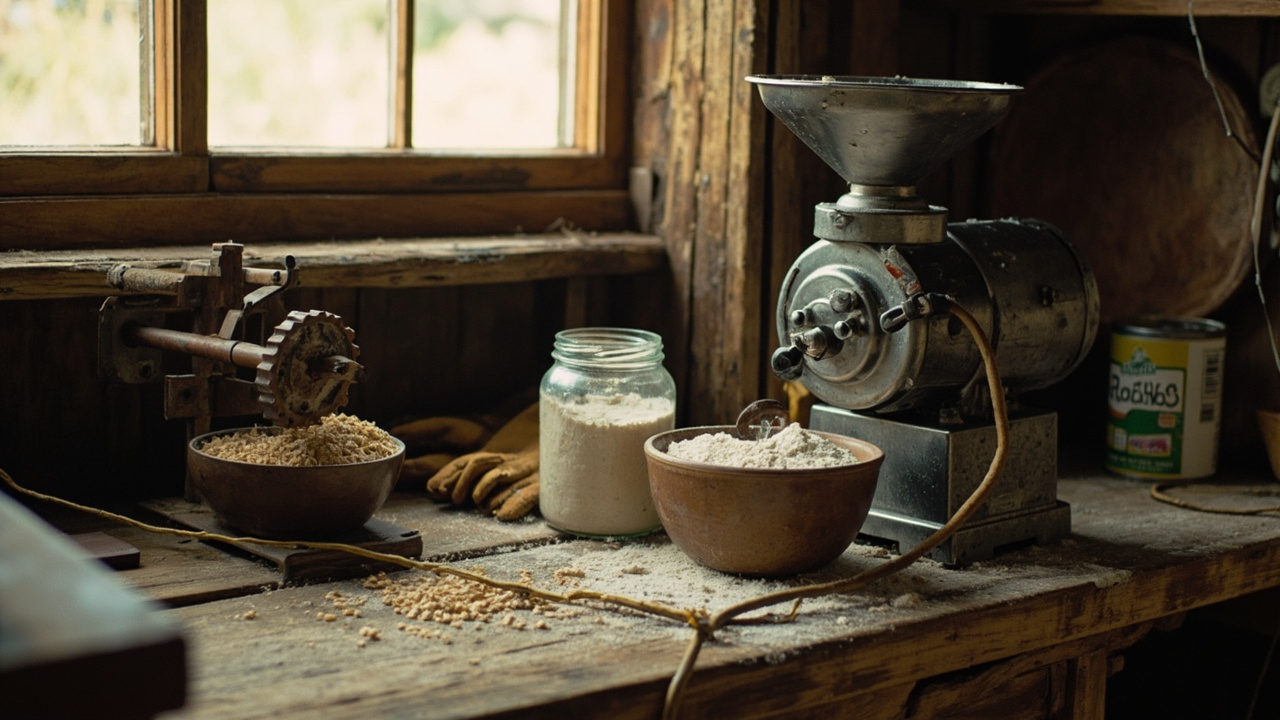
Hand crank versus motorised mill on a rural kitchen bench
→ 0.6kg flour (barley's a bit tougher)
1kg oats → 0.5kg flour (oats are messy)
So if you're growing 50kg of wheat, you'll get 35kg flour. Not 50kg. Get over it.
Hand vs Motorised Mills: The Honest Grind Comparison
Hand-crank mill (1kg wheat): 15-20 minutes of steady turning. Your arms will burn. You'll swear at the mill. It's not a hobby—it's a workout.
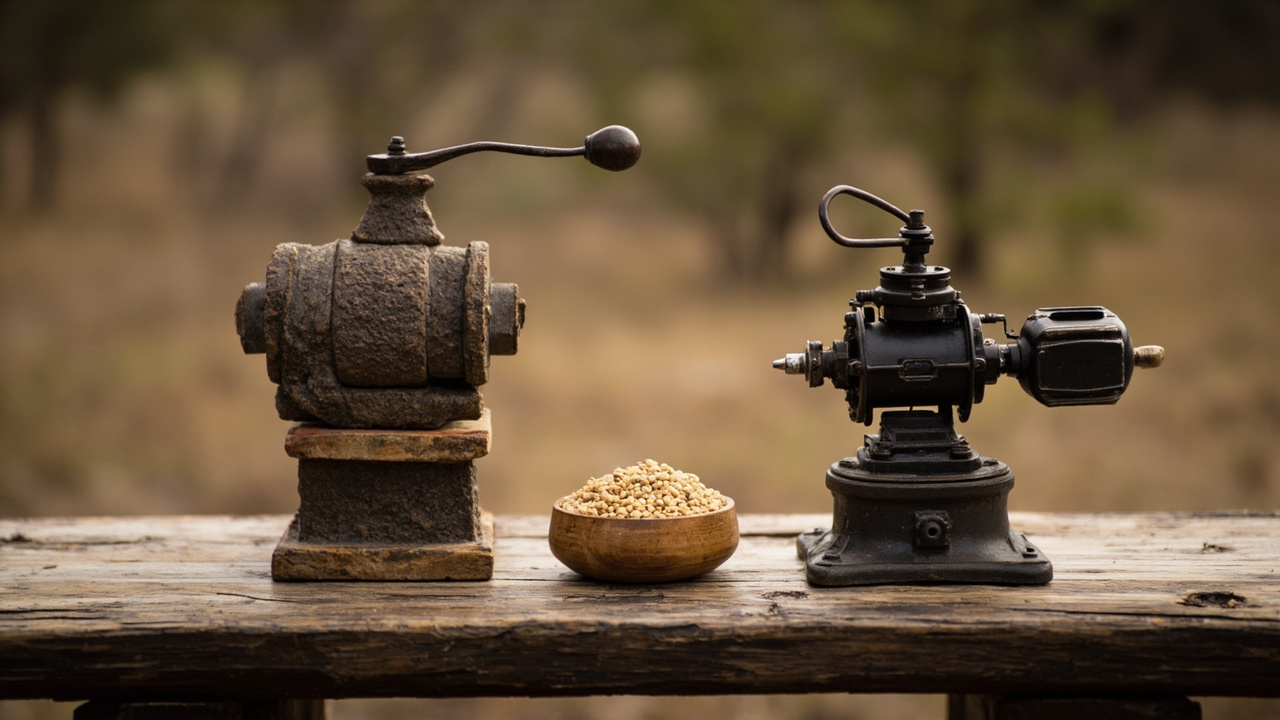
Hand mill and electric mill compared side by side
Electric mill (if you had power): 2 minutes. Zero effort. But you don't have power, so this is irrelevant.
Quern stones (1kg wheat): 45 minutes. You'll be doing it in the heat, and your back will hate you.
The Short Version: What Actually Works After a Year of This
Grind only what you need: Don't grind 10kg at once. You'll regret it. Do 500g-1kg per session.
Use dry grain: Wet grain clogs the mill. If it's humid (like in Cairns), wait for a dry day.
Store flour right: In airtight containers. Bugs love flour. No exceptions.
Don't grind rye or spelt: They're too sticky. Stick to wheat or barley.
Test your mill first: Run it on a small amount before you commit. If it jams, you'll waste time.
Bottom line: hand grinding is work. Real, shoulder-aching, sweat-on-the-brow work. It's not pretty, not fast, and you'll smell like stone dust by sundown. If you're off-grid and want bread with actual substance, this is the only path—no motor, no diesel, just you and the handle. And forget 100% yield. Flour hits the bench, packs into the burrs, scatters across the floor. Accept it or go without.
When the Mill Won't Cut No Matter How You Adjust It
While many off-grid projects are achievable as DIY, certain situations require licensed professionals:
Electrical work beyond basic 12V DC additions — requires a licensed electrician
Structural modifications to buildings or load-bearing elements
Gas line installation or modification
Solar array installations above safe voltage thresholds
Any work that affects the structural integrity of your property
Always check local regulations and obtain necessary permits before commencing work.
In this video, Skippy Grain Mills puts the Schnitzer Country hand mill through its paces with Australian wheat, showing the effort required and the fineness you can achieve, which cuts through the marketing claims.— Sarah Chen