No power bills. No diesel. Just sun and grain. Solar drying works. Here's how.
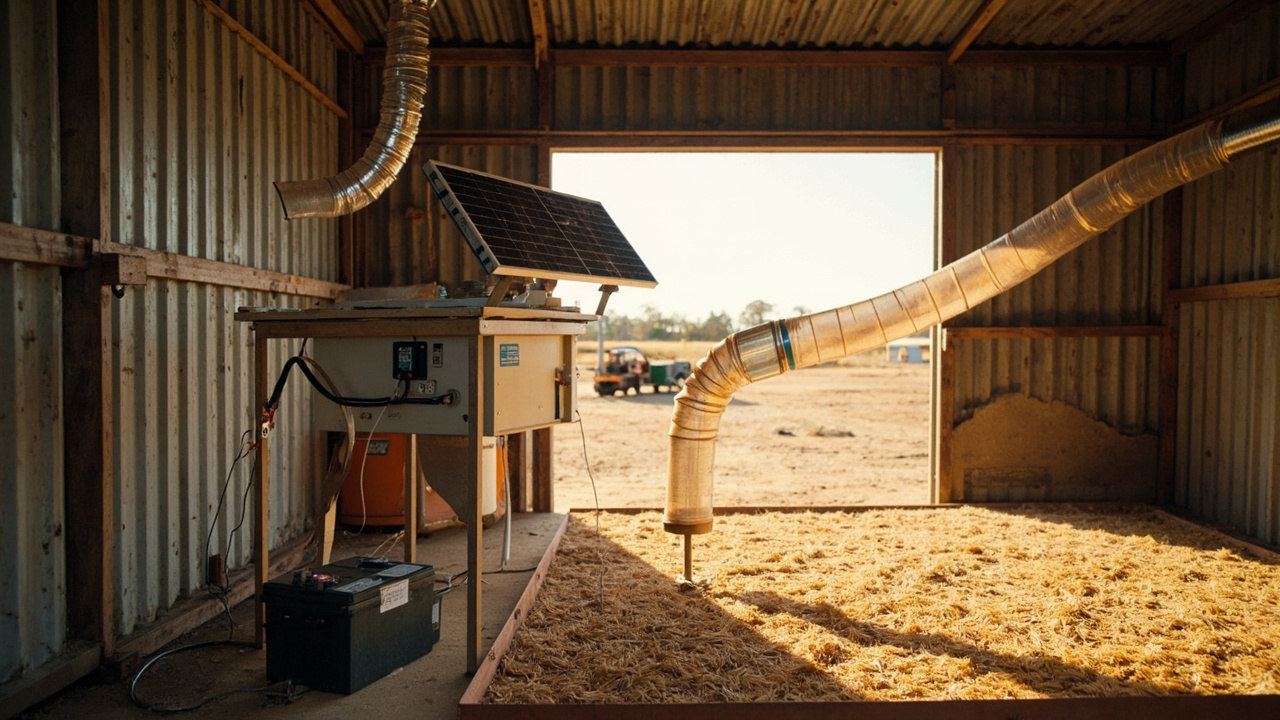
Solar collector feeds heated air through a perforated-floor drying bin; moist air vents out the top.
How It Actually Works
Batch dryers are the only way to go. You load grain into a sealed box with a black metal roof. Sun heats the air inside. Hot air pulls moisture out. Done. No fancy tech. Just physics.
Solar panel powers fan drying grain in shed
Moisture reduction is key. Wet grain (15%+) moulds. You need 12-13% for safe storage. Solar dryers cut moisture by 3-5% per day. In Australia's sun, that's 3-5 days max. No waiting.
Practical Tips (No Bullshit)
Location matters: Face the dryer north. Angle the roof 30-45 degrees. Max sun exposure. Don't put it under trees.
Grain depth: Never stack more than 15cm deep. Deeper = uneven drying. Stir every 2 hours if possible.
Check moisture: Use a cheap moisture meter ($50-$100). Don't guess. Wet grain = wasted harvest.
Australian Suppliers & Pricing
Forget imported systems. Build your own. Costs under $500. Here's how:
Materials: 2m x 1m timber frame ($80), black corrugated iron ($120), mesh screen ($30), ducting ($40). Total: ~$270.
Local suppliers (if you want to buy): Agri-Solar Solutions (QLD): Pre-made batch dryers from $650. Good for 100kg batches. www.agrisolarsolutions.com.au Outback Farm Co (WA): DIY kits with timber/mesh. $320. www.outbackfarmco.com.au
Don't pay $2k for a "solar dryer" from overseas. It's over-engineered. Your $270 DIY rig works just as well. And it's off-grid. Always.
The Bottom Line
If you're off-grid in Australia, solar drying isn't optional. It's how you keep grain from rotting. Build it. Use it. Save your harvest. No power needed. Just sun. Done.
When to Call a Professional
While many off-grid projects are achievable as DIY, certain situations require licensed professionals:
Electrical work beyond basic 12V DC additions — requires a licensed electrician
Structural modifications to buildings or load-bearing elements
Gas line installation or modification
Solar array installations above safe voltage thresholds
Any work that affects the structural integrity of your property
Always check local regulations and obtain necessary permits before commencing work.
⚠️ SAFETY WARNING: Working with electrical systems, structural modifications, or gas installations carries inherent risks. If you are not confident in your abilities, always engage a licensed professional.
Shawn walks through a simple solar dehydrator build using a cheap 10‑W panel and a 12 V fan that you can easily adapt to a grain‑drying setup; his tip on using a window‑screen frame cuts material costs and keeps airflow even.— Dave Miller