By Jenny Mills · rural nurse & homesteader · health, safety, law and the paperwork of going bush
“After my well tested at 1.8mg/L of fluoride, I learned the hard way that boiling water concentrates the very toxin you're trying to avoid.”
By Jenny Mills · rural nurse & homesteader · health, safety, law and the paperwork of going bush
“After my well tested at 1.8mg/L of fluoride, I learned the hard way that boiling water concentrates the very toxin you're trying to avoid.”
Fluoride is a dissolved ion. Boiling won't shift it. Activated charcoal jugs won't shift it. A $9 shower filter definitely won't shift it. This guide sorts what works, what doesn't, and how to actually confirm you're drinking what you think you're drinking.
Australia adds fluoride to roughly 90% of reticulated drinking water, sitting at about 0.6 to 1.1 mg/L across most of the country. The Australian Drinking Water Guidelines (ADWG) 2025 sets a health-based guideline value of 1.5 mg/L as the upper limit. By capital-city target, Brisbane/SEQ runs about 0.7 mg/L, Sydney 1.0 mg/L, Melbourne 0.9 mg/L, Adelaide 0.7–0.9 mg/L, and Perth 0.6–0.8 mg/L.
If you're on town water, you're drinking it. If you're on a tank with a fluoridated scheme feed, you're probably still drinking it. Bore water is a different question entirely — get it tested first.
Two filter technologies are proven to do the job on Australian tap water: reverse osmosis (RO) and activated alumina (AA). Everything else below the table is useful in a stack, but on its own, it's not pulling fluoride.
| Method | How it works | Power needed | Fluoride removal | Typical use |
|---|---|---|---|---|
| Reverse osmosis | Forces water through a semipermeable membrane of tiny pores that allow only water molecules through | 230V mains for tankless units, gravity-fed for some | NSF/ANSI 58: 90–97% (0.7 mg/L reduced to under 0.07 mg/L) | Whole-house point-of-use |
| Activated alumina | Adsorbs fluoride onto alumina media; pH-sensitive | None | High when pH is appropriate | Under-sink cartridges, gravity units |
| Distillation | Heating to vapour, capturing steam in a stainless steel coil, cooling to pure water | 230V | Near-total | Slow, batch use |
| Gravity-fed filters | No power, no installation, low maintenance | None | Only with AA or RO element | Campers, backup |
RO and AA are the two that consistently show up on certified test data. Distillation works but is power-hungry and slow. Plain gravity carbon blocks — including popular ceramic-carbon gravity units — are not certified for fluoride reduction.
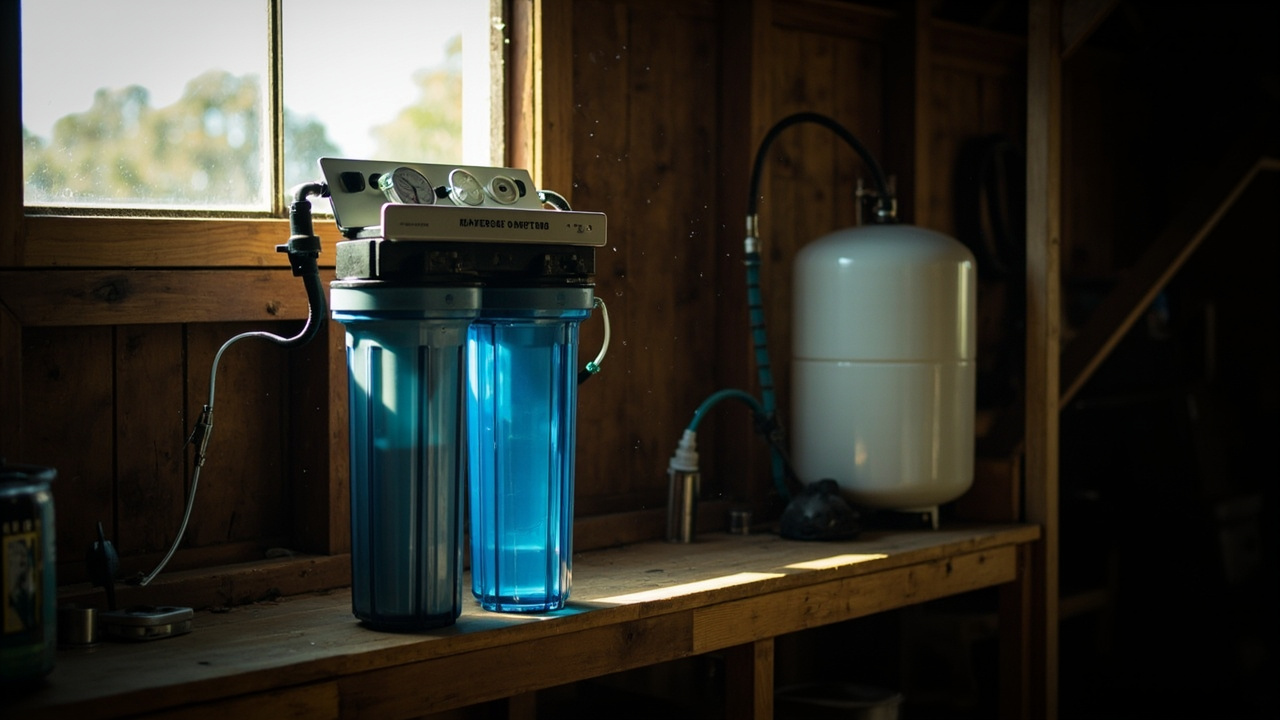
RO pushes water across a membrane that strips most dissolved solids. NSF/ANSI 58 systems are tested at 90–97% fluoride reduction. Real-world example: starting at 0.7 mg/L Brisbane supply, expect under 0.07 mg/L at the tap.
RO has trade-offs. The same membrane that strips fluoride also strips calcium and magnesium, and other minerals. Production ratio is roughly 2–4 litres of waste brine for every litre of product water depending on unit, pressure, and membrane age. Membranes need replacement on the manufacturer's schedule or performance slides off a cliff.
Two units with current published certifications:
Both are mains-pressure systems. Off-grid, you need to think about feed pressure: a header tank with a pump, or a hand-pumped/pressurised feed for an undersink unit.
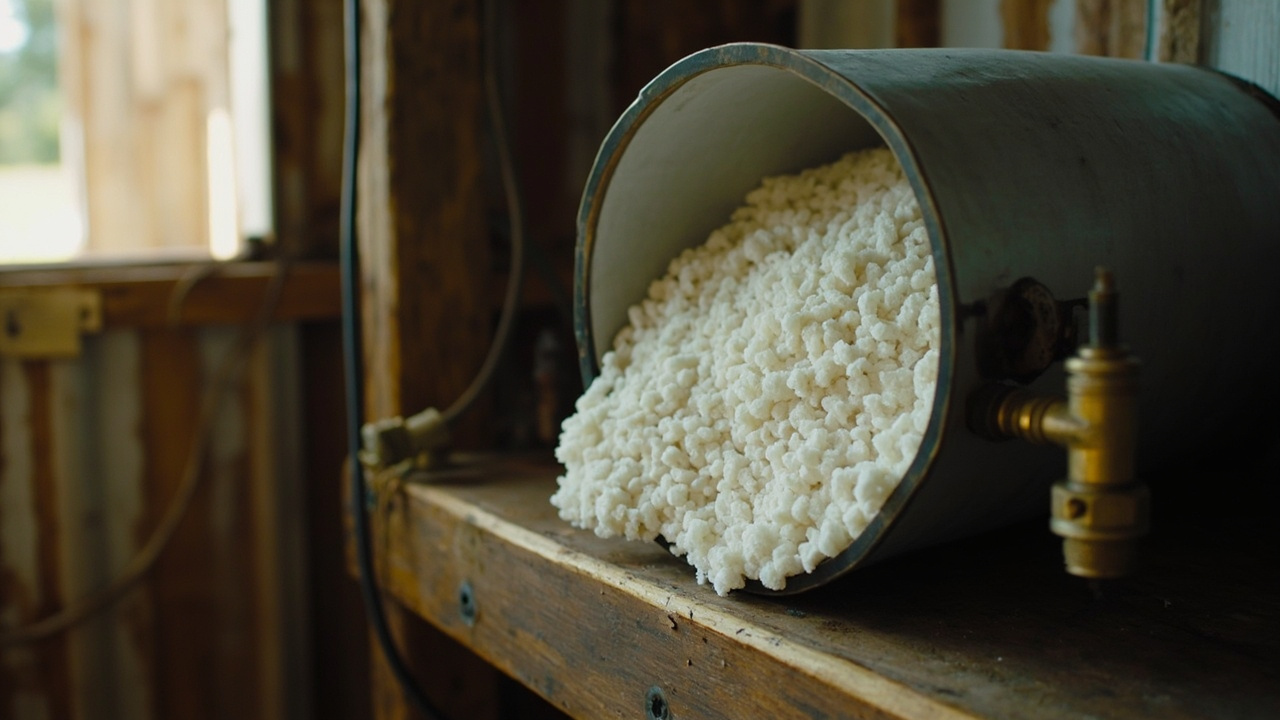
AA is a porous ceramic media that adsorbs fluoride. It's lower cost than RO, no ongoing electricity, and a solid choice where pH is appropriate (acidic to neutral water performs best; alkaline water reduces capacity).
The verified data point here is the HolyH2O Trinity, which uses Stage 2 activated alumina and was independently tested at 99.5% fluoride reduction, taking 2.0 mg/L down to 0.01 mg/L. Performance scales with contact time, so undersink units with adequate flow restrictors, or large gravity units, work best.
AA has its own gotchas: the media exhausts and must be replaced on schedule. Some AA units also take a hit on capacity once silica and other ions have loaded the bed.
Water distillers produce contaminant-free water by heating it to vapour and capturing the steam in a stainless steel coil where it cools to form pure water. Effective. Slow. Power-hungry. A 4-litre bench unit drawing around 1 kW will cycle for several hours per batch, so you're running a generator or large inverter for it. Useful as a backup or for sensitive users, not great as a primary off-grid supply.
Shower filters do not remove fluoride. Don't waste your money. Steam inhalation doesn't matter for fluoride anyway because fluoride in hot water stays dissolved and isn't appreciably airborne.
A carbon-only shower filter helps with chlorine and some VOCs. That is a different problem.
Off-grid tank water is often not fluoridated if your catchment is pure rainwater and your roof/first-flush system is clean. Confirm with a test before chasing a filter you don't need. Many QLD bush blocks are on tank, and tank rainwater typically comes in under 0.1 mg/L without any treatment.
If your tank catches from a galvanised iron roof, or supplements with bore water, or you're downstream of a fluoridated scheme that sometimes tops up your tank, get a test.
Bore water fluoride is highly variable. Some areas in Central Queensland and inland NSW sit naturally above 1.5 mg/L with no scheme input. A test is mandatory before picking a filter, because oversize waste, pH control, and pre-treatment differ wildly from a town water fit-out.
This is the step most people skip. A TDS meter is not a fluoride meter. TDS measures total dissolved solids conductivity and detects minerals like calcium and magnesium far more effectively than fluoride ions at typical tap concentrations.
To confirm fluoride removal, use a dedicated fluoride test kit or send a water sample to a NATA-accredited laboratory rather than relying on a TDS meter. If you've installed a system, test the product water at commissioning and again at every filter change interval. Filters and membranes need to be replaced according to the manufacturer's instructions to keep water pure — and you only know that if you test.
If you're on town water, your annual Consumer Confidence Report (CCR) from the utility shows actual fluoride concentrations for your zone. If you're on a bore or tank, get it lab-tested before selecting a filter and again annually.
Sydney, Brisbane, and Adelaide use chloramine as their disinfectant; the rest of Australia uses free chlorine. Carbon prefilters in most RO and AA units handle chlorine. Chloramine is harder — standard carbon is slower, and you may need a catalytic carbon stage or higher contact time. Pick the system with the right prefilter for your local disinfectant, not just for fluoride.
Every technology above has a service interval. RO membranes typically 2–3 years depending on feed water; prefilter cartridges 6–12 months; AA media every 12–24 months at residential flow rates. Log the install date, log the change dates, and keep spares in the shed. A filter left past its service interval is a bacterial soup, not a saver.
When in doubt: a NATA-accredited water test plus a conversation with a licensed plumber is cheaper than replacing the wrong filter twice.
Q: Does boiling water remove fluoride?
A: No. Fluoride is a dissolved ion; boiling concentrates it.
Q: Will a Brita or standard pitcher filter remove fluoride?
A: No. Standard carbon and jug filters improve chlorine taste but do not remove fluoride.
Q: Will a shower filter remove fluoride?
A: No. Shower filters do not remove fluoride.
Q: TDS reads low — am I good?
A: Not necessarily. TDS meters measure conductivity and detect minerals like calcium and magnesium far more effectively than fluoride ions at typical tap concentrations. Use a dedicated fluoride test kit or lab sample.
Q: How often do I need to change filters?
A: According to manufacturer's instructions. Filters and membranes must be replaced to keep water pure. Typical: RO prefilter 6–12 months, RO membrane 2–3 years, AA 12–24 months.
Q: Do I need to remove fluoride at all if I'm on tank water?
A: Possibly not — rainwater catchments usually come in well under 0.1 mg/L. Test before buying treatment.
The number of people selling ceramic "fluoride" filters on marketplaces who have never read an NSF/ANSI test report is a bloody disgrace.
Worth a watch: Is your drinking water safe? Want to get the fluoride and other chemicals out? · Gonagain