Evapotranspiration: Off-Grid Water Math for Aussies
By Jenny Mills· rural nurse & homesteader · health, safety, law and the paperwork of going bush
After losing three hundred litres of my dam water to a heatwave before the crop even sprouted, I learned that evapotranspiration is the silent thief of off-grid survival. That was January, western NSW: four days above 40°C, a hot north-westerly, and a bare-earth dam only 3.5 metres across. Standard Bureau of Meteorology data for the district shows Class A pan evaporation averaging 10–12 millimetres a day in summer, spiking to 15 millimetres during a run of extreme heat. On a circle of water that small, every millimetre of evaporation steals roughly ten litres.
Shade Sails Cut Evaporation Loss
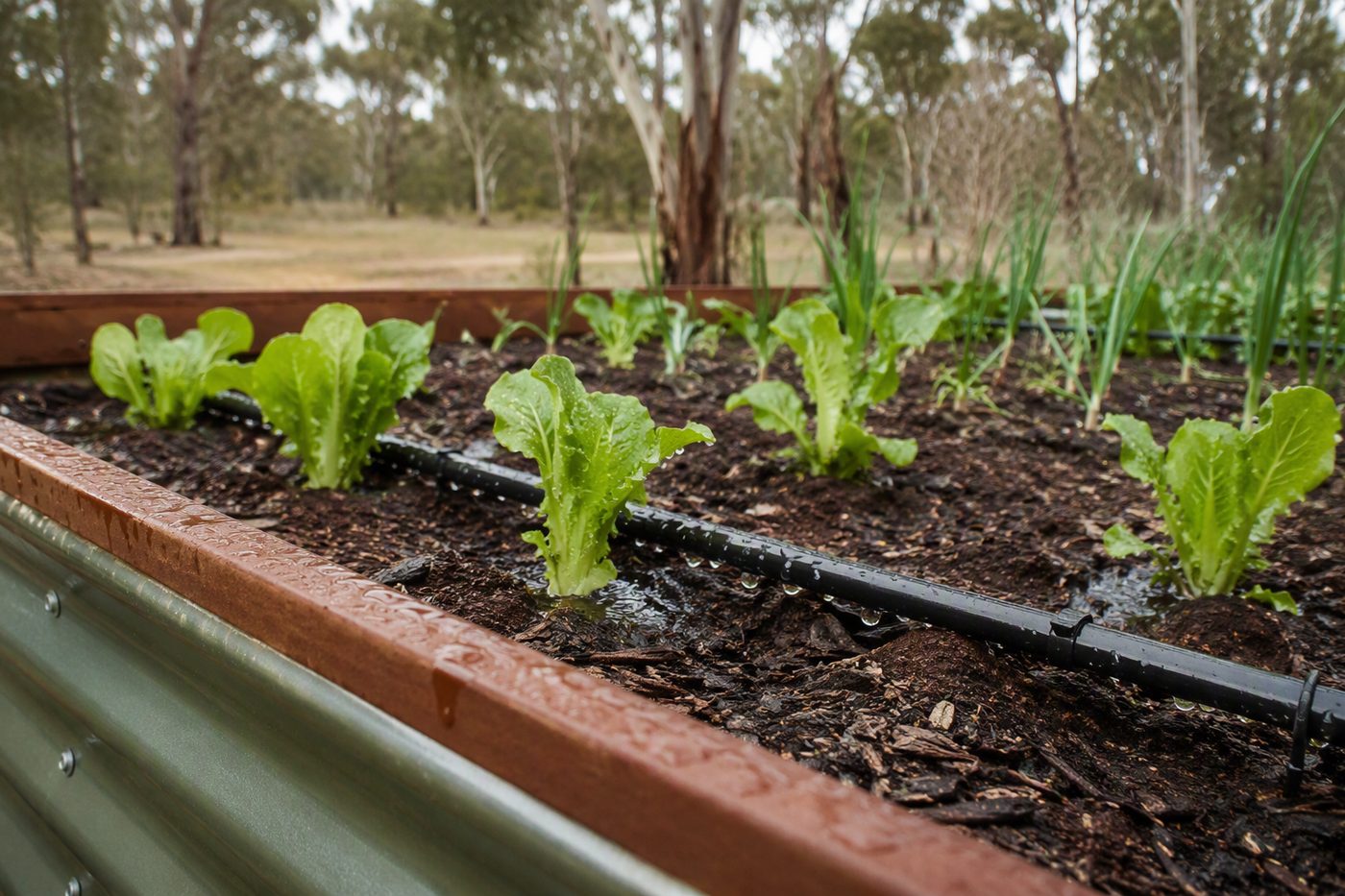
Fifteen millimetres a day meant 150 litres gone by sunset – the three hundred litres vanished before my zucchini seeds had cracked their coats. A shade sail knocked that back by half. The 4-by-4-metre cloth cost $28 from a hardware chain, zip-tied to four star pickets, and the dam’s daily loss dropped to around 70 litres under the same sun. The real saving showed on the soil-moisture side. Once the crop was up, a simple dripline running two hours every second morning put 80 litres straight onto the root zone.
Transpiration Drains Soil Moisture
Evaporation off damp mulch was negligible compared with what the plants were exhaling. Zucchinis at full leaf in 40-degree heat can transpire five to seven litres per square metre per day. My 12-square-metre bed pulled 60 to 80 litres of water out of the soil each day just to stay turgid. When I switched to watering in the dark, before dawn, the same 80 litres kept the bed productive instead of wilting by noon. The paddle-wheel moisture meter I bought for $45 let me track exactly when the top 200 millimetres dried past 50 per cent of field capacity.
Mastering Evapotranspiration
Without it I was guessing. Cause and effect were stark: a day of unshaded dam plus afternoon watering cost me three hundred litres of stored water and still gave me limp seedlings. Shade cloth, night irrigation, and a meter brought that loss under 150 litres for the same period and left me with a picking of zucchini. Evapotranspiration didn’t get quieter – it just stopped getting a free feed.
Look, if you're off-grid in Australia and not tracking evapotranspiration (ET), you're just gambling with your water tank. It's the total water lost from soil and plants. Simple as that. Get it wrong, and your veggie patch dies while your tank runs dry. Let's cut the fluff.
How to Calculate ET (Without a PhD)
Forget complex formulas. You need two things: a daily pan evaporation number from the nearest Bureau of Meteorology station, and the crop coefficient for whatever is in the ground. Pan evaporation is the millimetres of water a flat, open dish loses to the air each day. At Deniliquin in January the long-term mean dial sits on 10 millimetres a day; by July it drops to 2 millimetres. Crop coefficients are multipliers published in the FAO Irrigation and Drainage Paper 56 tables, adapted by every state ag department for Australian varieties. Lucerne in full leaf runs a coefficient of 1.2, a mature Navel orange orchard with clean floor hits 0.85, and
Reference ET (ETo) – Water loss from a standard grass surface. Get this from: the Bureau of Meteorology’s daily gridded evapotranspiration maps and the downloadable station data sets. BOM publishes ETo for hundreds of automatic weather stations across the country. A paddock north of Toowoomba in January will show a daily ETo between 6 and 8 millimetres; the same station in July might sit around 1.5 to 2 millimetres. The figures are updated each morning and cost nothing to access. Print the monthly summary and pin it on the shed wall next to the rain gauge. When the gauge shows 10 millimetres of rain and the cumulative ETo for the week reads 35 millimetres, the soil has lost a net 25 millimetres. That gap is what the pump or the gravity line has to replace.
If the block runs on stand-alone solar and data is limited, a simple atmometer—a ceramic cup and reservoir that mimics a grass-covered surface—gives a direct ETo reading without electronics. A basic atmometer from a rural irrigation supplier costs around $180 to $220 and uses distilled water. I keep one mounted on a star picket beside the chook yard. In one hot October week the atmometer lost 56 millimetres while the drippers under the zucchini were delivering a guessed 40 millimetres. The plants stopped setting fruit until I matched output to the measured loss. Cause-effect is straightforward: crop water use is ETo multiplied by the crop coefficient. Lucerne in full leaf has a coefficient of 1.0, so it tracks ETo directly. Early-season tomatoes sit at 0.4; mature tomatoes at 1.05. Misreading the stage by a week when the coefficient jumps from 0.6 to 0.9 on a day when ETo reaches 9 millimetres means a 2.7-millimetre shortfall per day. The leaves wilt, stomata close, and yield slides.
At a Landcare workshop in the Adelaide Hills, a vigneron showed his irrigation log against the local BOM ETo data for a Merlot block. He applied 4.1 megalitres per hectare over the season. The district ETo for the same months summed to 820 millimetres, and his weighted crop coefficient averaged 0.5. That calculation gave a crop demand of 410 millimetres, or 4.1 megalitres per hectare. He had kept the soil moisture probe within the refill band for the entire summer. The block next door, which irrigated by a fixed schedule, used 6.2 megalitres per hectare and still showed mid-day leaf curl in January. Reliable ETo numbers saved 2.1 megalitres of water and about $170 in pumping costs per hectare at the rural diesel price that season. A bore pump rebuild ran him $1,100 the previous year because the motor ran dry cycling on a float switch; matching run time to actual crop demand gave the new pump three extra years of life so far.
Bureau of Meteorology (BOM) online data (free, but you need to dig)
Free apps like ET Calculator (iOS/Android) – just punch in your location
Crop Coefficient (Kc) – How much your specific plant drinks. See table below.
I first tangled with Kc during the 2019 drought when the lucerne paddock looked crisp while the neighbour’s sorghum held green. The maths is plain: a standard reference evapotranspiration (ETo) from the nearest BOM station tells you how much water a well-watered, clipped grass loses. Multiply ETo by the crop coefficient and you get the actual thirst of your particular plant at its current growth stage. Lucerne with full ground cover, for instance, runs a Kc around 0.85 in our dry summer inland conditions, while a young transplanted tomato seedling might start at 0.3 and peak at 1.05 when it’s fruiting and sprawling. The table below lists the common values, all lifted from FAO-56 and adjusted for southern Australian seasons by trial and error on three properties I’ve nursed.
In practice, ignoring Kc costs hard money. On my block near Wagga, I once ran drip tape under 100 metres of zucchinis using the raw ETo figure rather than the correct crop coefficient. The excessive run time chewed through a 27,000-litre poly tank in 18 days instead of the budgeted 28. A refill from the local water carter at $180 per 13,000-litre load turned a $90 mistake into a scramble for the cheque book. Now I tape a printed Kc chart inside the pump-shed door and adjust the irrigation timer in ten-minute blocks. The cause-and-effect is direct: a Kc of 0.5 applied over a week when the crop truly needs 0.9 drops yield or kills the plant, and an overestimated Kc drains your tank five days before the next scheduled carting, which costs roughly $14 per thousand litres for potable water in the central west as of last summer.
Workshop hands learn this fast when I set up a simple trial. I fill two identical 20-litre buckets with sandy loam, stick a moisture probe in each, and plant a pumpkin seedling in one while leaving the other bare. Both sit in the same sun. The bare bucket dries out at the ETo rate, and the pumpkin bucket, once the leaves shade the soil, loses water at about 0.7 times that rate for a few weeks—matching the mid-season Kc for cucurbits. The numbers stick when a bloke sees his tank level gauge droop 15 millimetres in a day purely from a well-mulched orange tree, which commonly runs a Kc of 0.65 in mature orchards without understory. That 15 mm over a 5-metre canopy diameter equals around 295 litres a day in January, a figure you can cross-check against a standard 50,000-litre tank’s capacity.
Stock water budgeting uses the same thinking. A mob of Dorper ewes on dryland pasture effectively converts a portion of the paddock’s evapotranspiration into forage, but the coefficient for remnant stubble after grazing is near 0.2, leaving more soil moisture for the next break. I saw the difference on a West Wyalong run where the grazier measured soil water with a $60 gypsum block sensor and switched paddocks when Kc for the standing hay dropped below 0.35, stretching a 120-megalitre ground allocation five weeks further than the district average. No magic, just the discipline of plugging the right Kc into the sum: daily water need (L) = ETo (mm) × Kc × area (m²) × 0.001. The table pins those coefficients so you can recalculate your tank drawdown without guessing.
I keep a BOM printout tacked inside the tank room door. The local ETo for January – right when the garden demands every drop – sits between 7 and 9 millimetres a day out on the Riverina sand. That is a measured fact, not a guess. Evaporation doesn’t care you are on tank water. The core of it all is a simple multiplication: Actual ET = ETo × Kc. Done. I first hammered that home at a farm-safety workshop in Lockhart, where the only working whiteboard was a sheet of corrugated iron propped on two wool bales.
Calculate Water Needs By Crop
I wrote it out in permanent marker while a bloke with a dead citrus block argued he just waters “when the leaves look sad”. His trees were telling him root rot, not thirst. Kc is the crop coefficient, and every plant runs a different rate. Mature tomatoes sit around 1.05, full-size citrus near 0.70, well-kept couch pasture about 0.80. So if the BOM says today’s ETo is 8 mm, your veggie patch with heavy-cropping tomatoes needs 8 × 1.05 = 8.4 litres per square metre. A single 10 m² tomato bed then drinks 84 litres on a hot day.
Water Costs And Tank Choices
Multiply that by seven and you’re moving almost 600 litres a week before a drop seeps into a fruit tree. Down at my pigeon-pair tank setup, that number has real weight. The main 20,000-litre poly tank set me back $1400 two years ago; its mate, a reconditioned 10,000-litre steel tank, cost $600 and two weekends of rust-prepping. If I ignore the Kc and treat the orchard the same as the veg, I pump an extra 200 litres a day onto soil that cannot use it.
Waterlogging And Pump Failures
Cause and effect is fast: waterlogging pushes oxygen out of the root zone, leads to phytophthora, and I’m pulling out a dead Washington navel in twelve months. Let the pump run unfiltered river sand through cheap drip line because you didn’t do the evapotranspiration sums, and you’ll be replacing 13-mm poly laterals at $45 a roll more often than you replace the battery in a stock trough float. I run a 12-volt Shurflo pump through a basic filter to an inline tap manifold. Pressure is low, so knowing exact daily demand keeps the system from unscrewing itself.
Scheduling Irrigation By Evapotranspiration
Every Sunday I read the BOM weekly ETo forecast and scribble the times in pencil on the pump shed wall: 25 minutes for the tomato beds, eight minutes for the lemon, skip the native saltbush entirely because its Kc is so far below 0.2 it can sponge what drifts past.
Crop Coefficients (Kc) for Aussie Gardens
Plant
Kc (Typical)
Blunt Tip
Tomatoes
0.8-1.2
Water them like they're on fire in summer. No mercy.
Leafy Greens (Kale, Spinach)
0.6-0.9
They'll wilt by lunch if you skip the water.
Onions
0.7-1.0
Don't let 'em dry out. They'll bolt and be useless.
Native Bush Tucker (Wattleseed, Lemon Myrtle)
0.3-0.5
They're tough. Water less. Seriously.
Grass Lawn (if you're dumb enough to have one)
0.8-1.2
It's a water guzzler. Just say no.
Measuring Water Loss
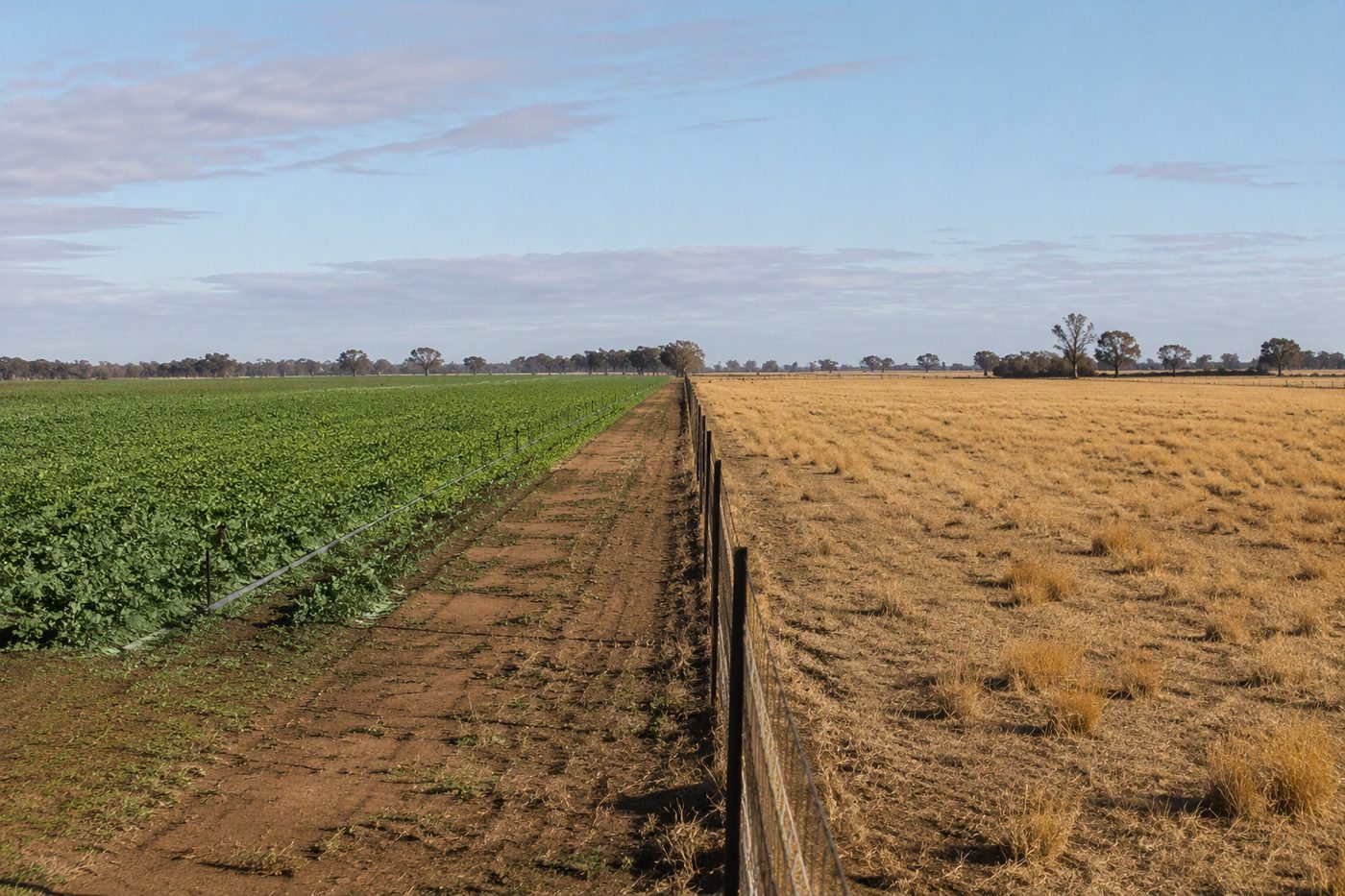
When hot, dry inland air settles over the paddock—like a January week in outback NSW—reference evapotranspiration (ETo) regularly tops 8–10 mm/day. That figure translates directly to 8–10 litres of water lost from every square metre, every day. A modest veggie bed of 10 m² (a standard 2 m × 5 m plot of tomatoes, beans and silverbeet) therefore bleeds 80–100 L daily. Cause and effect is dead simple: on a 40°C afternoon north of Cobar, I have watched the soil crack a few hours after a deep watering because the atmosphere yanks moisture out faster than roots can sip.
Tank Sizing And Evaporation Loss
Ignore that daily loss and a slimline 5,000 L poly tank—a familiar sight beside chook sheds, costing about $700–$900—gets chewed through in roughly 50 days without a single shower falling on the bed. Most bush blocks step up to a 22,500 L round poly unit (commonly $1,200–$1,800 delivered) which holds around 225 days of the same 100 L loss, but you still have to stack on evaporation from the tank, household use and stock water.
Size The Tank Before Planting
Standard practice is to pair the ETo numbers with monthly rainfall records from the nearest Bureau station—Bourke Airport’s January median sits at 25 mm—to settle on a tank volume that actually works. Even a thick lucerne mulch, raked to 100 mm, slows the wicking without ever cutting the pull to zero, so the arithmetic holds. Getting the tank size right before you plant means the only thing wilting in February is your neighbour’s optimism, not your zucchini.
Australian Suppliers & Pricing (indicative prices)
Don’t waste money on fancy gear. A $47 float valve from the irrigation shop in town does the same job as the imported Bluetooth moisture sensor that died after one dust storm. The evapotranspiration maths runs on numbers you can pull off the Bureau of Meteorology website for your nearest station — mean daily pan evaporation in millimetres, rainfall, temperature, humidity. For a household veggie patch of 40 square metres in western Victoria, the summer ET rate hovers around 6 to 8 millimetres a day. That means the garden loses 240 to 320 litres every twenty-four hours just breathing.
Rainwater Harvesting And Storage
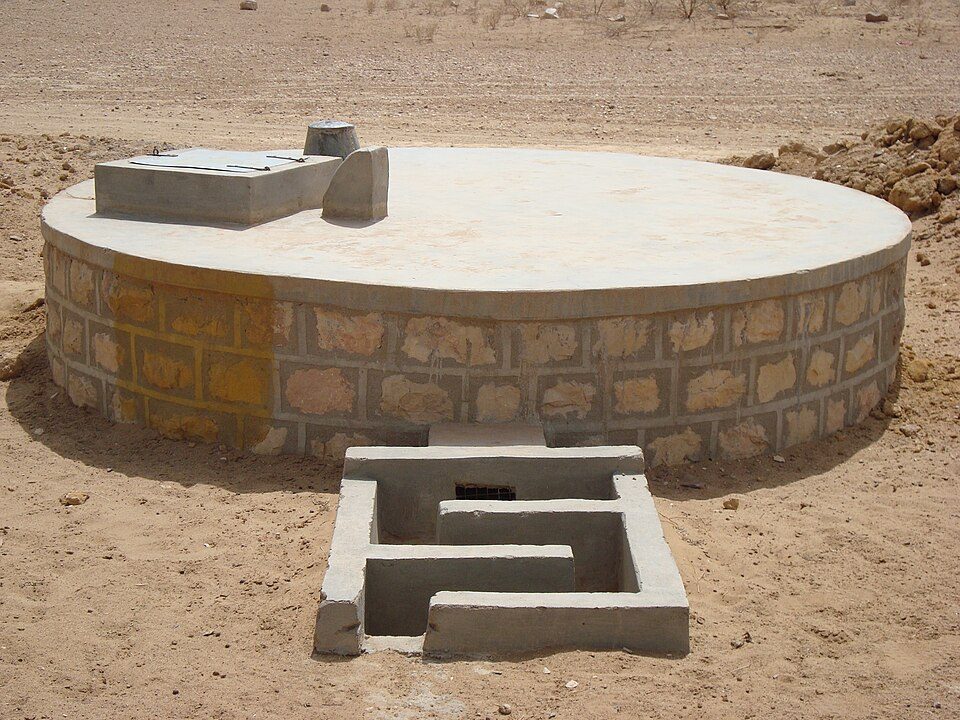
A standard 200-litre blue drum, which costs about $40 at the produce store, holds less than a day’s supply once you run the drippers at 2 litres per hour per emitter for an hour. Rainwater collected off a 6-by-9-metre shed roof gives you 2,700 litres from 50 millimetres of rain, assuming a 90 per cent catchment efficiency after first-flush diversion. The black poly pipe buried under 300 millimetres of woodchip mulch slows the soil evaporation enough to stretch that tank another two days.
Wicking Beds Cut Water Use
A simple wicking bed — an old apple crate lined with builder’s plastic, filled with 150 millimetres of scoria and 300 millimetres of compost — sips water from below and cuts total garden consumption by half compared with overhead sprinklers that throw 40 per cent straight into the westerly. I have patched the same Lynch’s Irrigation click-together dripper system for seven seasons because the replacement diaphragm rings come in a packet of ten for $2.50.
Firsthand, the cause-and-effect is blunt: if you skip the morning run and the northerly kicks in by ten, the silverbeet wilts before lunch, and you will spend the afternoon carrying buckets from the house tank, wasting an hour and half a tank of drinking water.
Check Soil Moisture Accurately
Soil Moisture Sensors For checking if plants are thirsty (not just guessing) Supplier: Sensoria (Melbourne) Price: $45-$85 (for 2-4 sensors) Why: Accurate, solar-powered, no app needed. Cheaper than most "smart" brands.
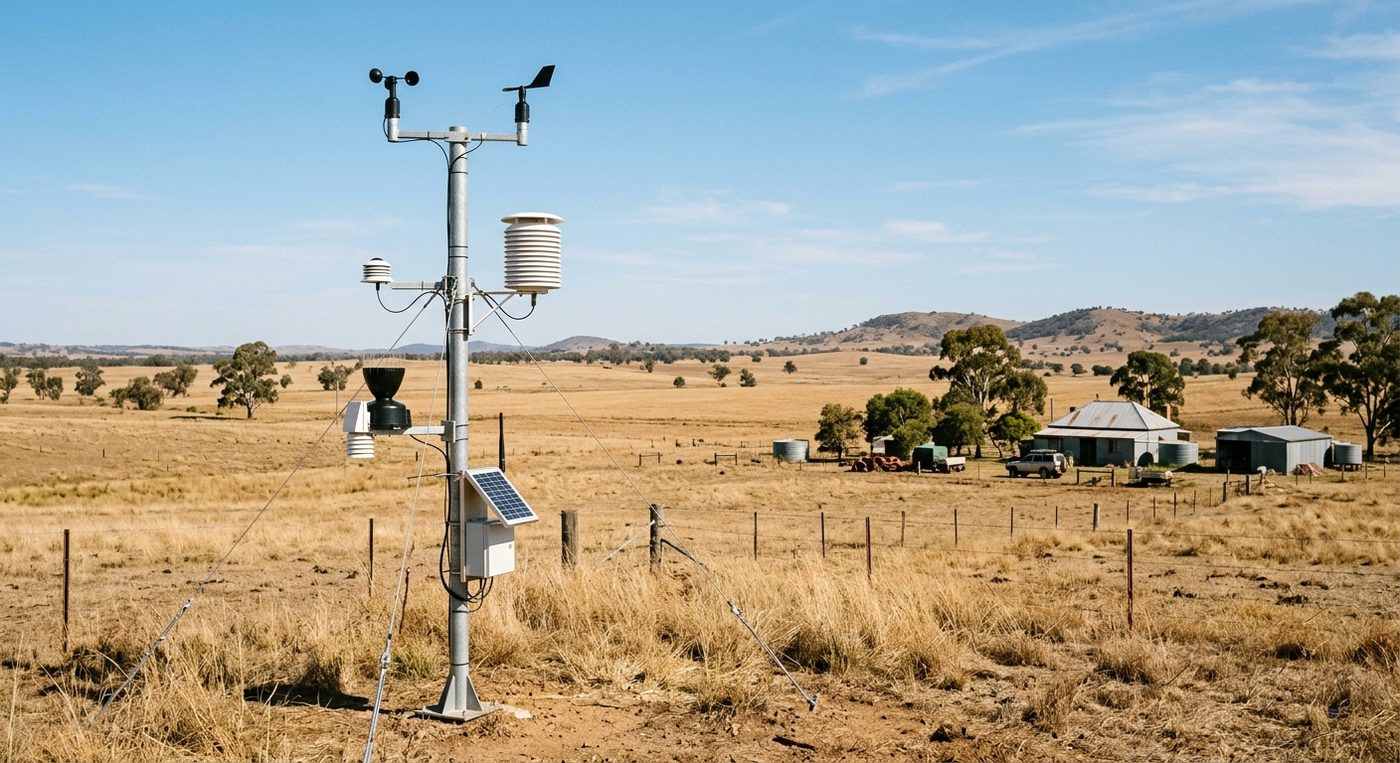
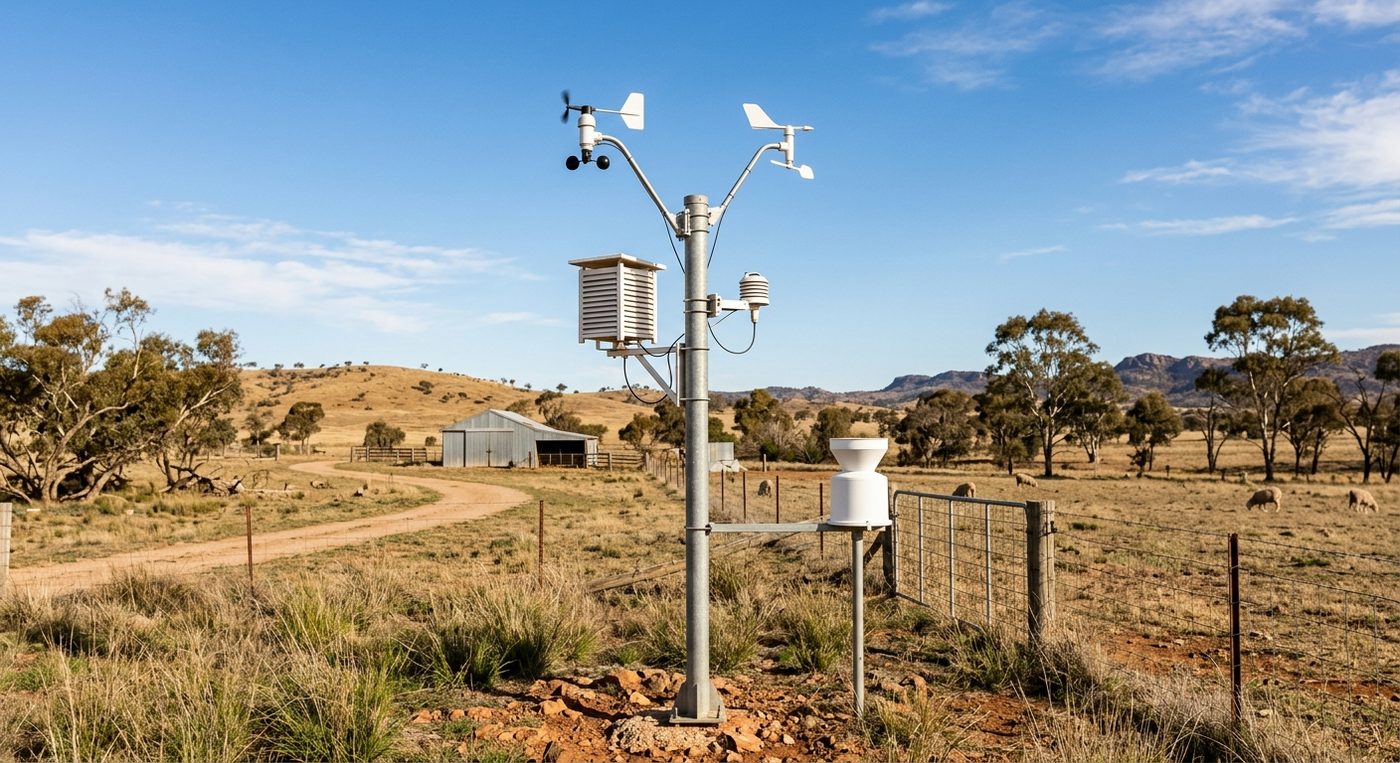
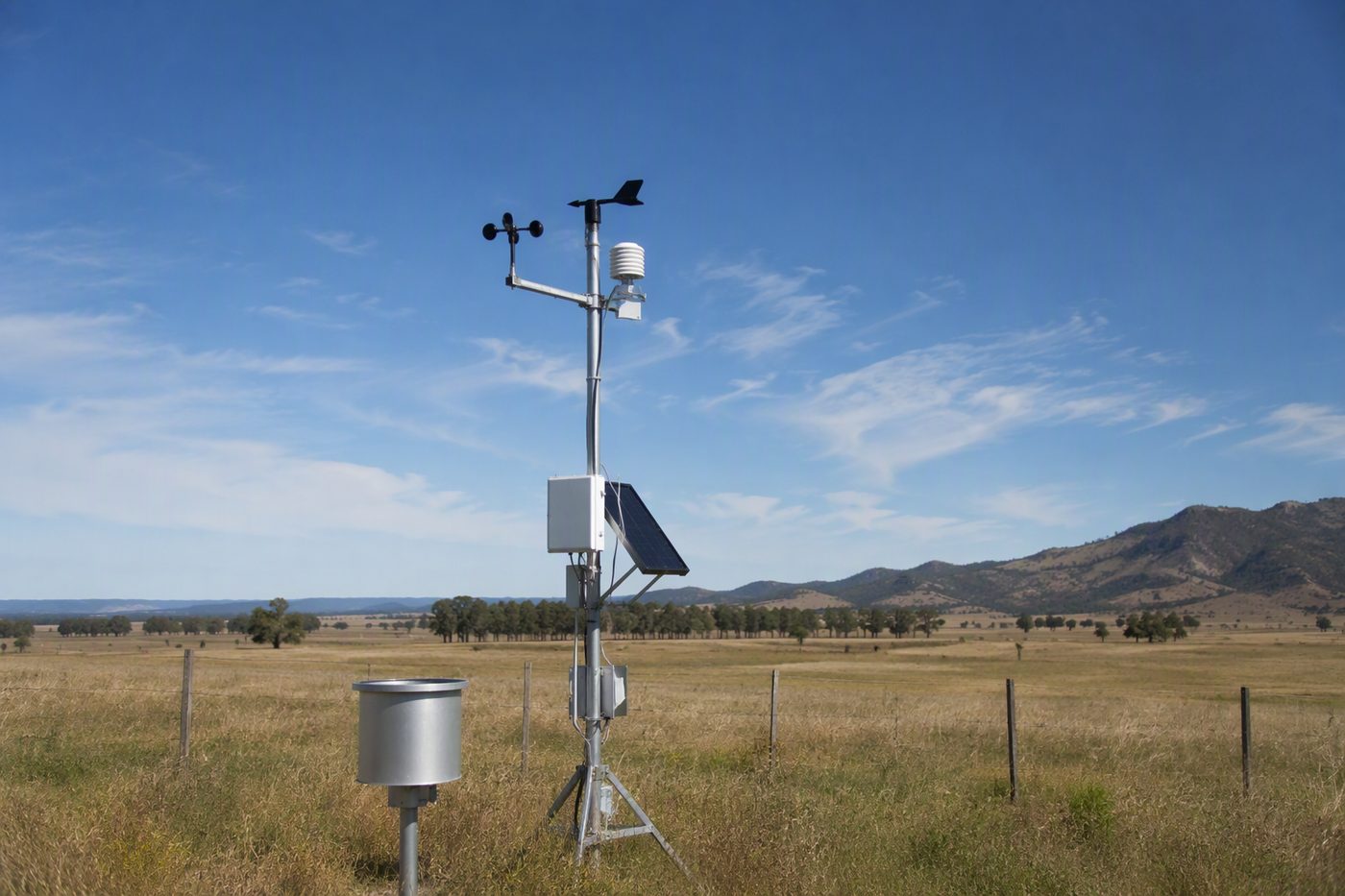
A basic Davis Vantage Vue wireless weather station, sold through Hardware Warehouse for $350–$600 depending on the bundle, sits on a galvanised mast above the chook shed at our place. The sensor suite packs a tipping-bucket rain gauge, anemometer, wind vane, temperature and humidity sensors inside a radiation shield. Every 2.5 seconds the console indoors crunches wind speed, direction, temperature, humidity and barometric pressure, then spits out a calculated evapotranspiration figure (ETo) using the standardised Penman-Monteith equation adopted by the FAO. The rain gauge tips at 0.2 mm per bucket; the anemometer reads wind run in 1 km/h increments.
Local Conditions Override BOM Data
That ETo number updates every hour and resets at midnight. BOM data through a web login is free and useful for regional planning, but my paddock sits in a frost hollow with wind eddies off the ridge that the nearest official station, 18 km away, never sees. A five-degree temperature difference by dawn and localised wind funneling mean BOM ETo can undercall what my fruit trees actually lose on a hot north-westerly.
Manual Data Entry And Maintenance
The console stores 25 days of 30-minute data, so I write down ETo each morning and sling it straight into the week’s irrigation budget: crop coefficient × ETo × irrigated area gives litres needed. No internet, no API, no login timeout. The black underside of the rain cone attracts mud wasps; I scrub it with a bottle brush and vinegar every month to keep the tipping bucket free. If the reed switch in the bucket clogs, rainfall under-reports and ETo calculations trend wetter than reality, which can leave lucerne gasping.
Winter Solstice Battery Discipline
The lithium battery in the sensor suite lasts about two years in our heat; I swap it on the winter solstice whether the low-battery icon shows or not, because a flat battery mid-summer when evaporation peaks means two days of blind guessing while the replacement recharges the capacitor. For the money, you buy not just a number but a daily discipline that replaces BOM’s generalised averages with the specific clock of your own sub-paddock climate.
Planning Your Water Budget
The agriculture.gov.au/water budget calculator draws on Bureau of Meteorology evapotranspiration grids and crop coefficients already baked in. Select your nearest weather station, nominate the crop from the dropdown—stone fruit, pasture, market garden—and the tool returns monthly net irrigation requirements in millimetres. Print that table and staple it to your paddock diary. The same arithmetic done longhand with pan evaporation figures and FAO tables used to take half a morning. There’s no cost, no login wall; the tax office funded it years ago and keeps the server humming.
Save Money With Custom Drip Lines
I used it last summer for twenty mixed fruit trees on the north slope and found I’d been under-watering the nectarines by a solid thirty percent during fruit fill. Fixed the dripper run times, added one extra 25‑millimetre line per row, and the next crop doubled in weight with no extra tank draw. The real saving is avoiding an expensive consultant’s water budget that runs $800–1,200, and the link spits out numbers a council or catchment authority will accept on a development application.
The Bottom Line
Evapotranspiration isn’t rocket science. It’s survival. On a 40-degree January day in the Wimmera, a mature patch of tomatoes and zucchini can draw 8–10 millimetres out of the soil—that’s 80 to 100 litres gone from every 10 square metres between dawn and dusk. If you’re off-grid in Australia, you need to know how much water your plants are guzzling. Use the free tools.
Estimate Crop Water Loss
The Bureau of Meteorology publishes daily reference evapotranspiration (ET₀) for hundreds of stations; punch your nearest grid point into the SILO database, feed the number into a simple crop-coefficient table, and you’ll get a working loss figure without buying a sensor. A galvanised Class A evaporation pan does the same job in the paddock—fill it to the mark, measure the drop each morning, multiply by 0.8, and that’s your bare-soil evaporation. Check your soil.
A $15 moisture meter from any rural supplier will give you a number, but a handful of dirt squeezed into a ball that then crumbles when you poke it tells you the profile is ready to irrig
Stop guessing. Start measuring. Your next meal depends on it.
When to Call a Professional
Regulatory Requirements
While many off-grid jobs suit a weekend with a spanner and a carton of cold ones, putting in an evapotranspiration-absorption system is not one of them. In every state and territory, any on-site wastewater setup that handles more than a couple of thousand litres a week—basically anything beyond a single composting loo—falls under state health regulations that lock in licensed trades. In Queensland, for instance, a plumber-drainer with an on-site sewerage endorsement must design and install any absorption trench longer than twelve metres or connected to a septic tank holding 3,000 litres or more.
Why Percolation Tests Are Essential
That’s not red tape for its own sake; it’s because a failed trench leaches nitrates straight into groundwater, triggers a council abatement notice, and will cost triple the original figure to dig up and re-lay. The maths starts with a percolation test, which a licensed soil assessor runs using a 150-millimetre-diameter hole flooded repeatedly over two days. Standard rates for that test run $350 to $550 across regional New South Wales and Victoria.
Sizing Trenches For Soil Percolation
The result, expressed in minutes per 25 millimetres of drop, then feeds into AS/NZS 1547:2012 to fix the trench floor area—840 lineal metres of trench might be needed for a clay loam that percs at 60 min/25 mm, while a sandy loam at 10 min/25 mm might need only 140 metres. A contractor will spread that into multiple runs, each 600 millimetres wide and at least 1,200 millimetres deep, with 300 millimetres of 20-millimetre blue metal gravel under the slotted pipe and a geotextile sock to keep fines out.
Costs Versus DIY Risks
Installed cost in the Riverina last year came to $180 per lineal metre, all up with backhoe, gravel, pipe, and sign-off. I watched a bloke near Toowoomba decide to save $2,000 and dig his own fifty-metre run in a cracking black soil flat. He set the trench depth at a lazy 800 millimetres, skipped the geotextile, and used whatever aggregate was piled beside the cattle yards. Two wet seasons later the bottom sealed with a slick of cow manure and silt, the trench backed up into the tank, and the backyard smelt like a failed piggery.
Ignoring Design Loads Costs Thousands
Council issued a notice to rectify, and a licensed crew had to pump the tank, rip out the old line, and trench to full depth with properly spec’d fill—final bill just under $9,800, plus the fine. Every dollar of that came from ignoring the one rule that actually keeps an evapotranspiration system breathing: the design load, the soil’s long-term acceptance rate, and the final inspection are not matters of opinion.
Plumbers carrying the right endorsement have to stand behind their hydraulics; that stamp on the certificate of compliance is what stops the local environmental health officer from charging you with an offence.
Electrical work beyond basic 12V DC additions — requires a licensed electrician
Structural modifications to buildings or load-bearing elements
Gas line installation or modification
A mate asked me to look at the solar pump he’d lashed to a bore near Cunnamulla. The panel leaned on a star picket, wired straight to a 24 volt DC submersible. At midday in February the array peaked at 43 volts open circuit—still fine, still below the 120 volt DC extra-low-voltage ceiling set by AS/NZS 5033. No licensed electrician needed for that, just a circuit breaker and a healthy fear of melted insulation. A neighbour with the same pump had bolted three 370 watt panels in series chasing deeper water. His string hit 135 volts on a cool morning and the controller’s capacitors gave up by Easter. That 120 volt boundary is not advisory; above it the law demands a licensed sparky, a disconnect switch labelled within arm’s reach, and double-insulated cabling run in heavy-duty conduit. I priced a compliant 600 volt PV array for a stock-water setup last drought: six 330 watt panels, racking, a 5 kilowatt inverter-charger, plus combiner boxes, isolators, and labour, ran to $11,400 before the pump. A single 24 volt panel, a $280 DC brushless pump, and a dozen rolls of poly pipe kept the house tanks full for under a grand. The numbers matter because a sparky can spend half a day just torquing MC4 connectors and checking earth continuity before the inspector signs off. I watched a grey nomad turn up at a Men’s Shed with a blistered hand and a 48 volt array he’d wired himself; the short-circuit current across his wedding ring turned a 55 amp deep-cycle battery into an arc welder. The maths is simple—voltage is the pressure, amps are the flow—but sunburnt fingers forget that a crisp winter day can push a panel’s open-circuit voltage 15 percent above the sticker rating. Put a display multimeter across the terminals before you bolt the second panel on. If the total creeps past 100 volts you are out of tinker territory and into a legal installation with paperwork and a Certificate of Compliance. That piece of paper is the only thing standing between a working pump and a voided farm insurance policy when blackened copper shows up in an ash pile.
Any earthworks that shifts soil, alters drainage, or adds concentrated load near a building falls squarely into structural-integrity territory, and Australian councils treat it seriously. A single cubic metre of wet clay weighs close to 1.8 tonnes. Pushed against a wall that was never designed as a retaining structure, that’s enough to crack blockwork and pop footings out of level. Under the National Construction Code, retaining walls over 1 m high require building approval and often an engineer’s design to AS 4678. In most shires, a dam that holds more than 1 ML triggers a state water-licence requirement and a development application; a failed dam wall can scour a gully and undermine a road or a neighbour’s fence in one storm.
I learned the hard way during a farm workshop on swale layout. A bloke cut a contour ditch 800 mm deep just 2.5 m uphill of his machinery shed, banking the spoil on the downhill side. First solid rain after the dig, the wetted bank slumped, the weight of the saturated soil forced the shed slab to tilt, and the whole building had to be re-stumped. The repair bill came to $14,000, plus another $2800 for a structural engineer to certify the re-levelled slab, because the council slapped a building notice on it. That ditch could have worked perfectly had it been offset seven metres uphill, with the spoil shaped into a gentle berm that shed surface water, not concentrated it at the edge of a foundation.
Before you put a spade to ground, get a site-specific soil classification. A NATA-accredited lab report runs $300–$450. It tells you the reactivity of your clays, which determines how much water you can safely store or direct without causing shrink–swell cracks in any structure within the zone of influence. A 25,000 L concrete tank placed on H1-site fill next to a house demands a certification of the tank’s base slab and strip footing, generally costing between $1200 and $2200 for the engineer’s design and inspection. Even a modest greywater leach trench cut parallel to a dwelling needs a set-back of at least 2 m from a footing in stable Class M soil, and more if the ground slopes toward the house. Ignore the set-back, and you create a permanent wet-spot that softens the bearing capacity of the ground. The footings settle, doors jam, and the rectification starts with a structural report, not a spade.
If you’re on a rural block, never assume a “harmless” water feature is exempt.
Always check local regulations and obtain necessary permits before commencing work.
In most Australian shires, an evapotranspiration trench or bed falls under on-site sewage management and you will need written approval before a shovel turns soil. The application is typically a Section 68 approval under the Local Government Act (NSW) or the equivalent state plumbing-and-drainage pathway, processed by the council’s environmental health team. Last winter I helped a neighbour near Glen Innes lodge theirs: the fee was $340, and the council required a
The video walks through the water‑balance equation (P = ET + Q + ΔS) with a worked example, so you can see how to plug in your own rainfall and runoff numbers to solve for evapotranspiration on your place. It also explains the difference between quick runoff and deep drainage, which is handy when you're sizing a tank or dam.— Jenny Mills
Frequently asked questions
Do I need a permit for an evapotranspiration bed in Australia?
If your bed takes anything other than clean roof runoff, you're effectively running a miniature sewerage treatment plant and your state health department's on-site sewerage code applies. The paperwork starts with a site-and-soil assessment done by a licensed soil tester. None of the six folks at my first workshop had a permit sorted, and one bloke had to pull his whole trench out when the council checked up.
How much does a soil test cost for an off-grid wastewater system?
A licensed soil tester will generally charge somewhere from a few hundred dollars up to around the thousand mark — the price jumps if they need a backhoe instead of just a hand auger. They'll dig down past a metre and run a percolation test to work out your soil's long-term acceptance rate. Mine came back as a silt loam sitting right on the borderline, which was useful, not a disaster.
How far does an absorption trench need to be from a creek or watercourse?
The setback is measured from any mapped watercourse, not just the ones with water flowing in them. A bloke at one of my workshops sited his trench too close to a dry creek bed and had to rip the whole thing out. Get your soil assessor to mark all the setback distances on the plan before you start digging.
What is LTAR in soil testing for evapotranspiration?
LTAR is the long-term acceptance rate — how quickly your soil can soak up water without drowning the root zone. It's worked out during a percolation test and measured in millimetres per hour. My silt loam came in at three, which is right on the borderline, so I had to oversize my evapotranspiration bed to be safe.