Deep Cycle Battery Lifespan: Maximizing Years from Your Investment
I've seen too many batteries die before their time because people treat the cycle count as a magic number. In my experience a deep‑cycle battery is done when it can no longer deliver 80% of its name‑plate capacity after repeated full charge‑discharge cycles. That Rockhampton job proved it: a lead‑acid bank in a hot shed sat with the charge controller never kicking in, the cells overheated, and the bank never recovered. Keep an eye on temperature, respect the depth of the draw, stay within the discharge limits, and never let a pack sit dead. She’ll be right if you mind those things.

By Dave Miller · off-grid sparky · 22 years wiring solar, batteries and sheds in central QLD
“After ten years and a dozen failed banks, I learned that central QLD heat kills batteries faster than deep discharge.”
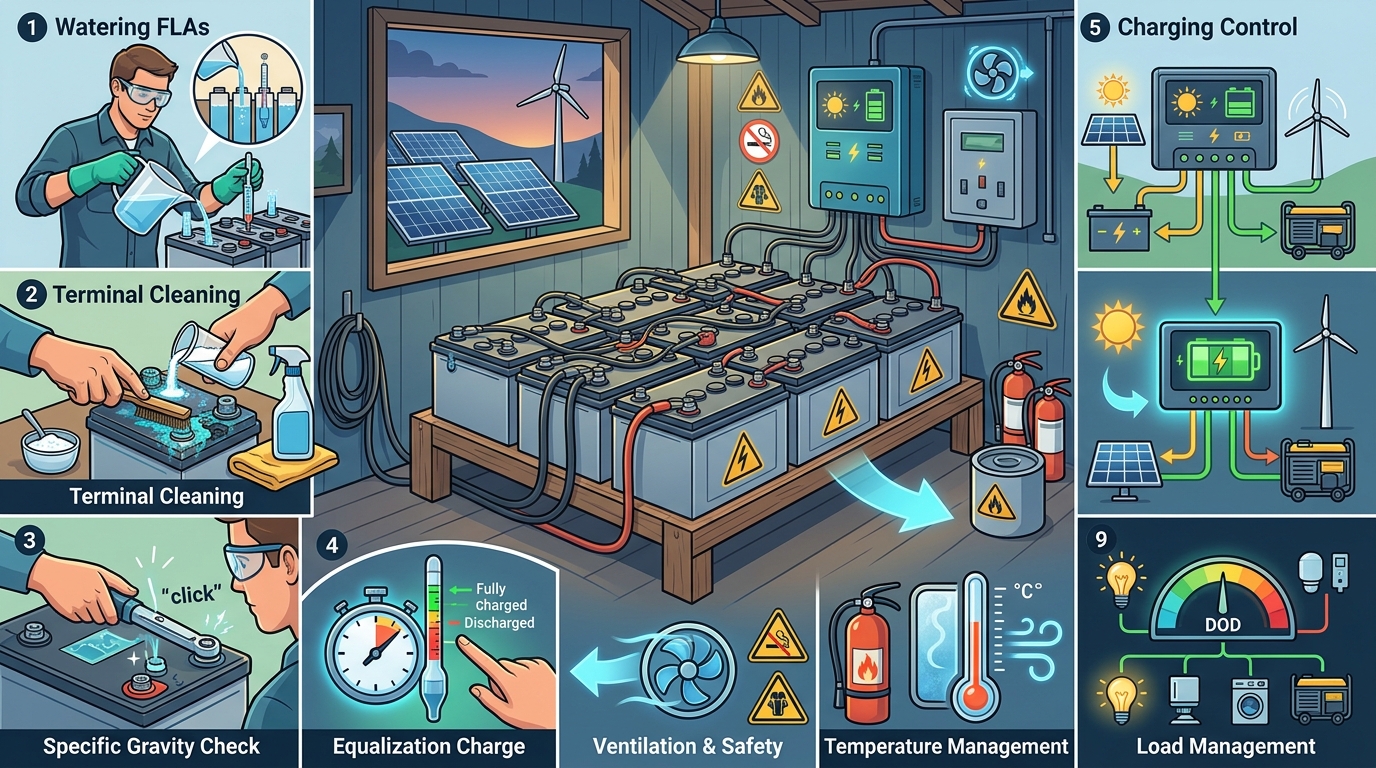
Cycle Life: The Number That Decides How Long Your Battery Lasts
After twenty‑two years wiring solar and battery banks across central Queensland, I know that a deep‑cycle battery’s life is measured in cycles – the number of full charge‑discharge repetitions before capacity falls below 80 % of its original rating. I watched that lesson bite a bloke in a shed near Rockhampton: he drained his bank to 20 % every night, whatever the weather, and never checked the electrolyte levels. The bank died, and he had to pay three thousand dollars for a replacement. Real‑world lifespan depends on discharge depth, operating temperature, charging practice, and routine maintenance. The fix is straightforward: make sure the voltage climbs to at least 14.4V before you switch to float, otherwise sulphation will eat the plates.
What Determines Battery Life
I’ve spent 22 years wiring solar, batteries and sheds across central Queensland, learning how to squeeze extra years out of deep‑cycle packs. I’ll show you the proven steps that can double or triple your battery’s life and protect the return on your investment.
Depth of Discharge Impact
In my 22 years wiring off‑grid solar setups across central Queensland, I’ve watched more batteries die from deep cycling than from any other cause. The biggest factor that decides a battery’s lifespan is how far you run it down each charge. All battery chemistries experience accelerated aging with deep discharges.
| Chemistry | 50% DoD Cycles | 80% DoD Cycles | 100% DoD Cycles |
|---|---|---|---|
| LiFePO4 (Lithium) | 6,000-8,000 | 3,000-5,000 | 2,000-3,000 |
| Lead-Acid (Flooded) | 1,200-1,500 | 500-700 | 300-400 |
| AGM Lead-Acid | 800-1,000 | 400-600 | 200-300 |
| Gel Lead-Acid | 1,000-1,200 | 500-700 | 250-350 |
| LTO (Lithium Titanate) | 15,000+ | 10,000+ | 7,000+ |
Real DoD Limits That Keep Batteries Alive in Central Queensland
- Conservative (15-20 year life): Limit daily discharge to 30-40% of capacity
- Balanced (10-12 year life): 50% daily discharge limit
- Acceptable (5-7 year life): 70-80% occasional discharge
- Avoid: Regular 100% discharge (kills lead-acid in 1-2 years)
When Your Battery Runs Hot, It Dies Early
I’ve learned the hard way that battery chemistry hates heat. Every 15 °F (8 °C) above 77 °F (25 °C) typically doubles the rate of chemical degradation. Keep the cells shaded and ventilated, or the capacity will drop fast.

| Temperature | Lead-Acid Life | LiFePO4 Life | Action Required |
|---|---|---|---|
| 95°F (35°C) | 50% of rated | 80% of rated | Improve ventilation |
| 77°F (25°C) | 100% (baseline) | 100% (baseline) | Ideal operating temp |
| 50°F (10°C) | 85% capacity | 95% capacity | Normal operation |
| 32°F (0°C) | 65% capacity | 80% capacity* | Reduce loads |
| 14°F (-10°C) | 40% capacity | No charging* | Emergency only |
*LiFePO4 cannot be charged below freezing without damage. Discharge only.
Keeping Batteries From Overheating: My Field Checklist
- Insulated battery box: Reduces temperature swings
- Ground burial: Natural temperature regulation (60°F year-round at 4ft depth)
- Ventilation: Exhaust fans for hot climates
- Basement location: Stable temperatures, prevents freezing
- Heating pads: For LiFePO4 in cold climates (use battery power sparingly)
How I Charge My Batteries to Extend Their Life
How you charge matters as much as how you discharge. Poor charging practices are a leading cause of premature battery failure.
Lead-Acid Charging
- Bulk phase: Charge at 10-20% of Ah rating until 14.4V reached
- Absorption phase: Hold 14.4-14.8V for 2-4 hours (critical for longevity)
- Float phase: Maintain 13.2-13.8V indefinitely
- Equalization: Monthly 15.5V charge for 2-3 hours (flooded only)
LiFePO4 Charging
- Voltage limit: Never exceed 14.6V (14.4V recommended max)
- Current limit: 0.5C maximum (100A for 200Ah battery)
- No float needed: 100% SoC then disconnect or maintain 13.6V
- No equalization: Will damage cells
Where I See Charging Go Wrong
- Undercharging lead-acid: Chronic sulfation reduces capacity permanently
- Overcharging LiFePO4: Above 14.6V causes electrolyte breakdown
- Incomplete absorption: Stopping at bulk phase leaves batteries stratified
- Charging frozen batteries: Physical damage to plates or cells
When to Service Your Battery, Depending on Its Chemistry
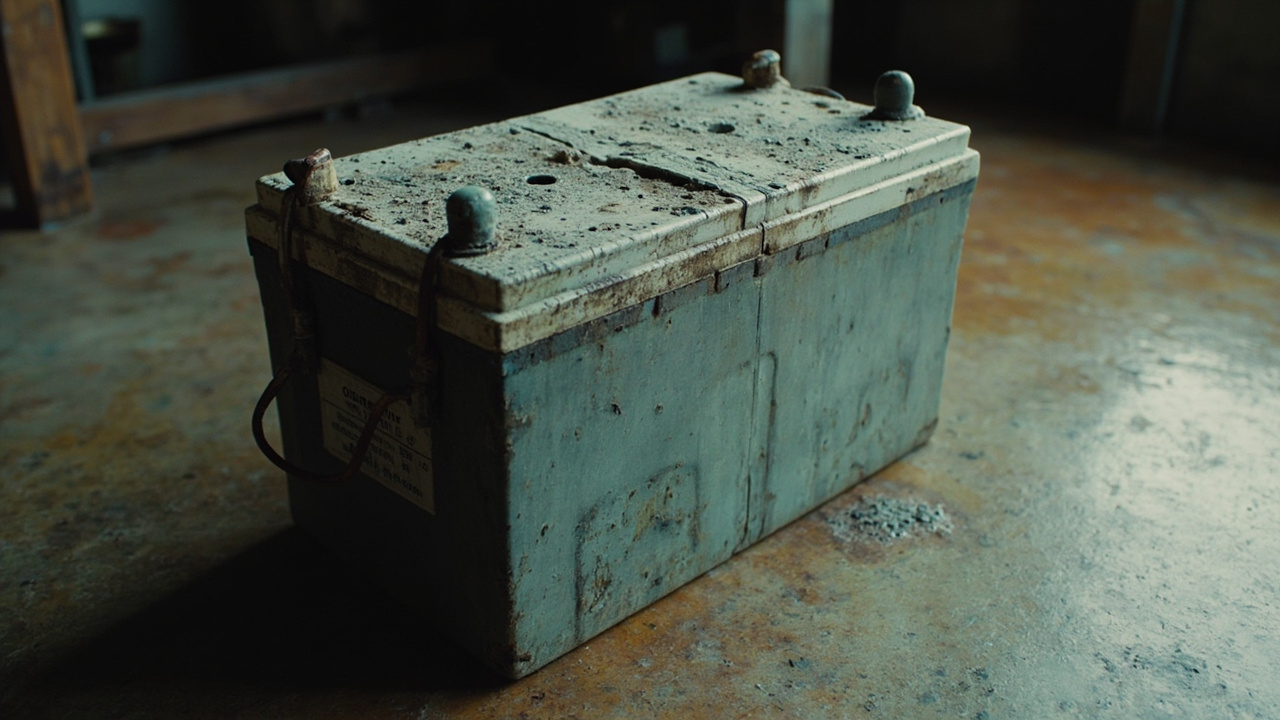
My monthly inspection routine for flooded lead‑acid batteries
- Check electrolyte levels (add distilled water if low)
- Clean terminals and apply anti-corrosion spray
- Check specific gravity (should be 1.265-1.275 fully charged)
- Inspect for case bulging or cracks
Quarterly Inspection of AGM and Gel Lead‑Acid Batteries
- Clean terminals and check connections
- Check resting voltage (12.8V+ = good charge)
- Inspect for case swelling
- Verify ch arge controller settings
My Annual LiFePO4 Maintenance
- Check cell balance (max 0.05V difference between cells)
- Inspect BMS connections
- Clean terminals
- Verify capacity with discharge test
What I Look For When a Battery Shows Its Age
Recognize these warning signs to plan replacement before complete failure:
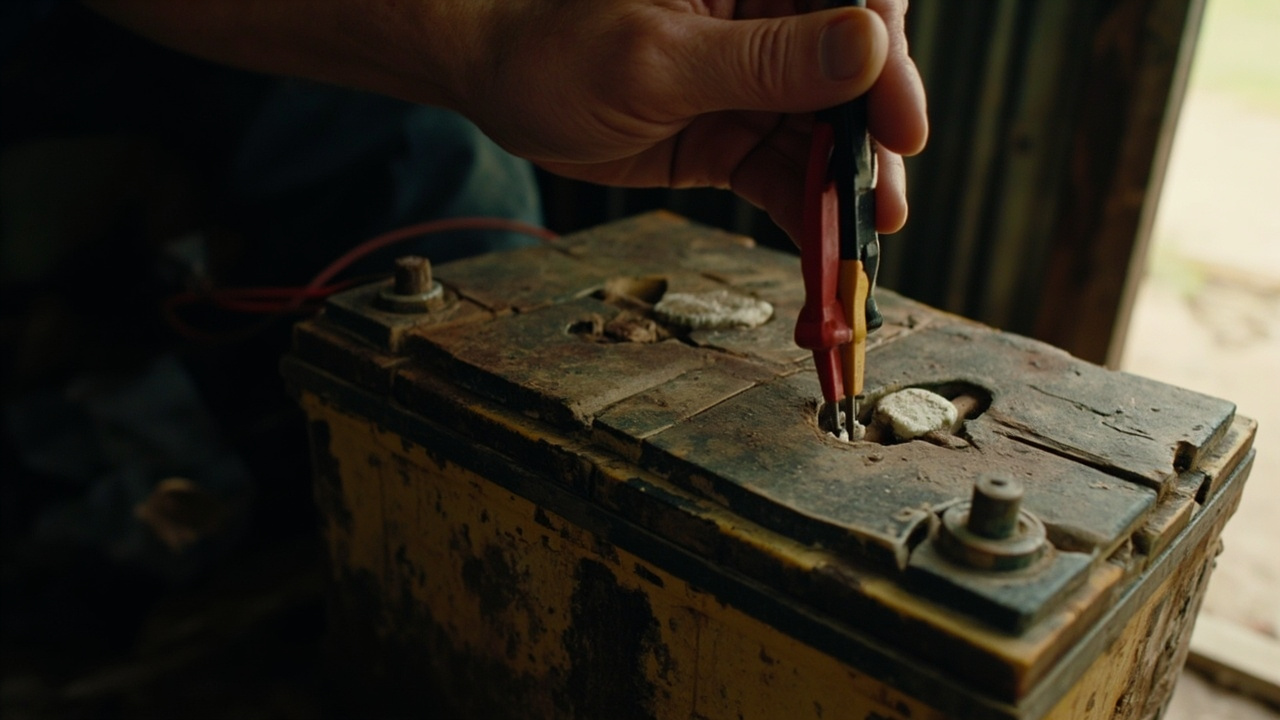
What I Watch For in an Aging Lead‑Acid Battery
- Rapid voltage drop under load: Internal resistance increasing
- Longer absorption phase: Reduced chemical efficiency
- Case bulging: Overheating or overcharging damage
- Excessive water consumption: Overcharging or aging plates
- Specific gravity won't rise: Sulfation or plate degradation
LiFePO4 Aging Signs
- Reduced capacity: Won't reach full voltage during charge
- Cell imbalance: BMS working harder to balance
- Voltage sag: Higher internal resistance
- Swelling: Electrolyte decomposition (safety hazard)
How Different Loads Change Battery Lifespan
| Use Pattern | Flooded Lead-Acid | AGM | LiFePO4 |
|---|---|---|---|
| Daily deep cycle (50% DoD) | 4-6 years | 3-5 years | 12-15 years |
| Weekend cabin (20% DoD) | 8-10 years | 6-8 years | 20+ years |
| Seasonal use (100 cycles/yr) | 10-12 years | 8-10 years | 25+ years |
| Grid backup (rare use) | 8-10 years* | 5-7 years* | 15-20 years |
*Lead-acid degrades from time regardless of use. Limit 5-7 years even if rarely cycled.
Worth a watch: How to Use Your Lithium Battery for 10+ yrs: Storage, Reuse & Care Tips · LiTime Power
Disclosure: some links in this article are affiliate links. If you buy through them we may earn a small commission at no extra cost to you.