Running water to a toilet is one of the first things people assume they need to give up when they go off-grid. Then they discover it isn't actually the water that's the issue; it's the sewer line. Composting toilets sidestep the entire wet-reticulation problem, but only if you pick the right configuration and maintain it properly. This guide covers what the verified sources confirm about how composting toilets work, what your maintenance commitment looks like, and where the Australian regulatory lines sit.

By Sarah Chen · environmental engineer · water, waste and everything that flows downhill
“After my first composting toilet choked with 40kg of wet kitchen scraps, I learned that dry bulk is the only thing that saves the smell.”
Composting Toilets for Off-Grid Properties: 2026 Guide
How Composting Toilets Actually Work
A composting toilet is a human waste management system for situations where traditional sewer or septic systems are not available or practical. The science underneath is straightforward: aerobic decomposition balances four variables — nitrogen from the waste, carbon from a bulking agent (coco coir or peat moss are common), oxygen, and moisture. Fresh human faeces is roughly 75% water; urine (the diverted stream) is about 95% water. Most modern designs focus on separating liquids from solids, which is what keeps the solids-side moisture in the workable range.
Get the moisture content between 40% and 60% and the biology handles itself. Let it swing above or below that range and you either get anaerobic sludge or stalled decomposition. Anaerobic conditions are the primary cause of sewage smells in composting systems, which is why urine diversion features show up on most modern units.
Most modern composting toilet units use urine diversion to prevent anaerobic conditions. That single design choice is the difference between a system that works in a bathroom attached to your living area and one that you tolerate because the alternative is worse.
Off-Grid Toilet Options Compared
Composting toilets aren't the only off-grid option. The broader category covers seven distinct system types:
- Composting bucket toilets
- Urine diversion toilets
- Sump fields
- Rotating composting toilets
- Moldering toilets
- Incinerator toilets
- Conveyor toilets
Each has trade-offs:
Bucket composting toilets are cheap but can become messy sludge requiring frequent maintenance. They're the entry point and are useful as a stopgap or for low-use sites.
Urine diversion toilets separate the liquid stream at the pedestal and are the most efficient composting toilets in the dry-decomposition sense, but they require user compliance and a urine management plan.
Rotating and moldering toilets are chamber systems — larger capacity, slower turnover, better suited to permanent dwellings than to weekenders.
Incinerator toilets burn waste at high temperatures into sterile ash but require electricity or fuel, are expensive, and generate emissions. They're useful where compost-out logistics are impossible (boats, some high-use cabins) but they trade one waste-stream problem for an energy and emissions problem.
Sump fields (also called soak pits or french drains) are water-based disposal systems. Rules vary by state and council: in many Australian jurisdictions greywater or sump disposal requires sign-off under specific local instruments, so check with your council before designing one. They are the wet option and need ongoing maintenance to prevent backups.
Conveyor toilets move waste through a heated chamber and are uncommon in residential off-grid settings.
Self-Contained vs Central Systems
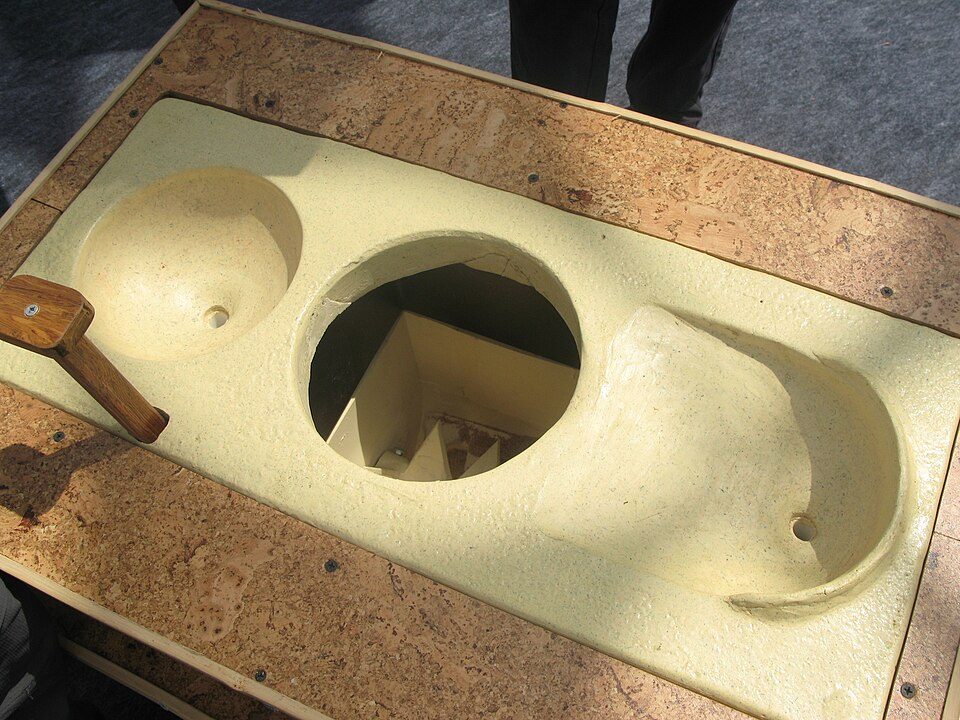
The verified sources split composting toilets into two structural categories:
Self-contained (drum) systems integrate the composting chamber directly beneath the toilet pedestal. They're simpler to install and lower cost, but capacity is limited.
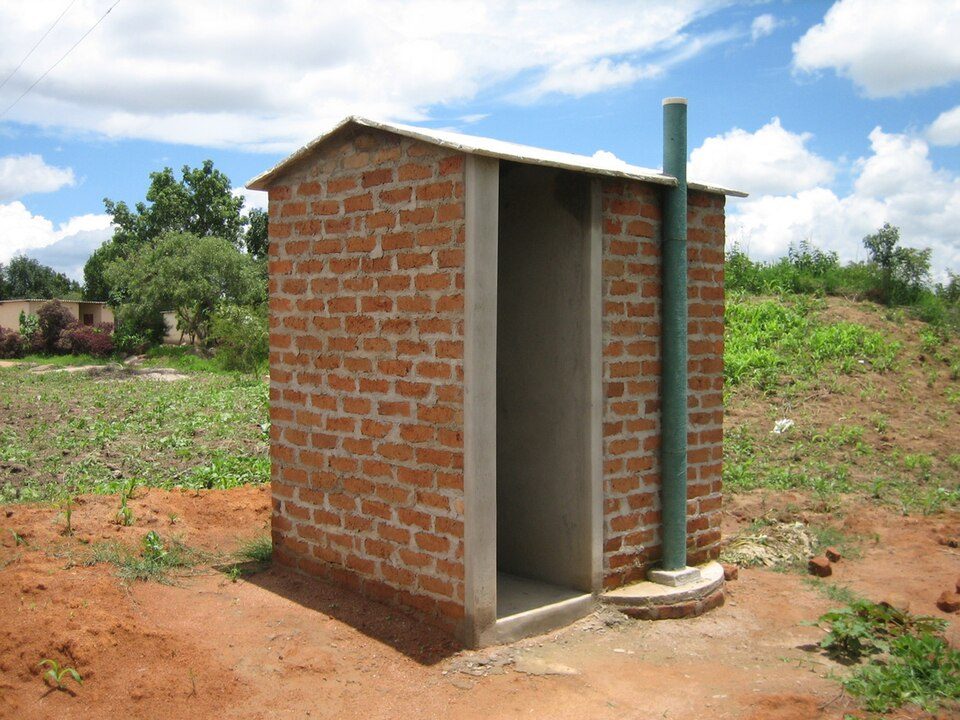
Central (chamber) systems place the composting chamber below floor level or in an adjacent utility space, connected to the pedestal by a chute. They handle higher loads and longer intervals between emptying, but they're a more involved build.
Indoor composting toilets typically consist of two main parts: a porcelain toilet pedestal and a composting chamber located underneath it. Indoor composting toilets generally have a larger capacity than urine-diverting toilets, allowing for extended maintenance intervals — that's the trade: self-contained drum units are compact, central systems go longer between services.
Cover Materials and Carbon Balance
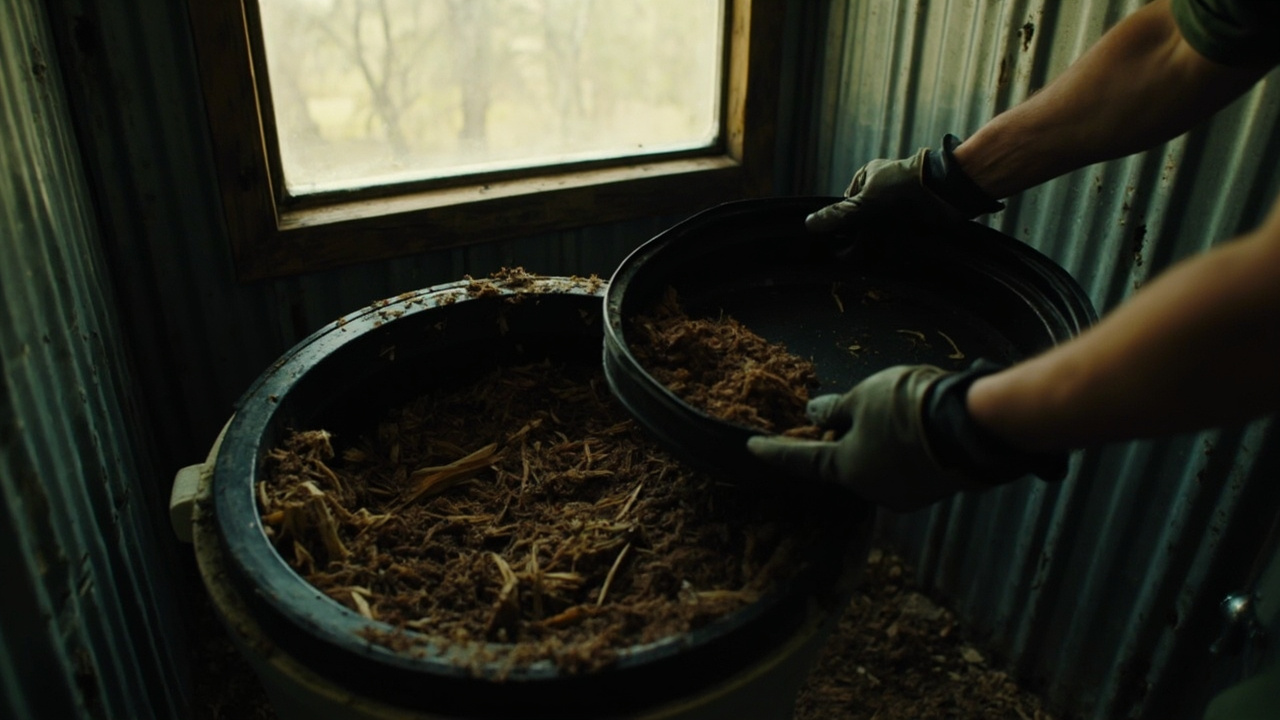
Most indoor composting toilets utilize dry materials such as hemp or peat to cover waste, reduce odors, and aid composting. The principle is carbon-to-nitrogen ratio: nitrogen-heavy waste needs a carbon-heavy cover to keep the biology aerobic.
Common cover materials in Australian conditions:
| Material | C:N approx. | Notes |
|---|---|---|
| Coco coir | ~80:1 | Readily available, consistent texture |
| Peat moss | ~50–200:1 (variable) | Effective but sustainability concerns |
| Hemp hurd | ~70:1 | Used in commercial systems |
| Sawdust (hardwood) | ~100–500:1 (variable) | Cheap, often available as offcut. Avoid softwood/resinous sawdust — terpenes and resins can inhibit composting |
A cup of cover material per solid-waste deposit is the typical starting point; adjust to keep the pile loose and crumbly rather than damp.
Ventilation and Power Requirements
Many composting toilet designs use a small 12V DC or 230V AC fan to provide constant ventilation, pulling air through the waste and out through a roof vent. The fan runs continuously and is sized to maintain negative pressure in the chamber — odours exit through the vent, not into the room.
In Australian off-grid practice, 12V DC fans are the standard because they pull cleanly off a battery bank without needing an inverter. A typical draw is small (often under 5W continuous) but the fan must run 24/7, which factors into your daily energy budget.
The roof vent needs to clear the eave line by the required distance per your local building code and must be sealed against rain ingress. Inadequate ventilation is the single most common cause of composting-toilet failure.
Water Savings
The reference point is a standard flush toilet, which uses 1.6 gallons (6 litres) or more per flush to transport waste to a septic tank or municipal sewer. A composting toilet uses effectively zero water per use. Using the 6 L/flush baseline at roughly 5 flushes per person per day, a four-person household saves on the order of 40+ kL per year not pulled from rainwater tanks or a bore. The exact figure scales with flush frequency and per-person load — use the baseline assumptions that match your household rather than the headline number.
That water saving matters in central Queensland where tank capacity is finite and dry spells are long. The catch is that greywater from the shower, laundry, and kitchen still requires a legal disposal path. A composting toilet does not exempt you from greywater compliance — it just removes one stream from the problem.
Urine as a Resource
Urine contains nitrogen, phosphorus, and potassium (NPK) and can be returned to the soil as a fertiliser — but not as fresh, undiluted direct application. Fresh urine can carry pathogens, pharmaceuticals, and hormones, and WHO guidance along with most Australian regulators recommends storage before land application: typically several months at ambient temperature, or heated to around 20 °C for at least 2 months. Do not apply stored urine to edible crops intended for raw consumption (salad greens, strawberries, root crops); for other crops, apply at least 1 month before harvest and incorporate into the soil rather than leaving it on foliage. If your system separates urine, route it (after storage and dilution) to non-edible ornamental plantings, or to fruit trees with the timing and root-crop restrictions above observed.
Treat urine the same way you'd treat any liquid fertiliser: store covered, dilute, and apply to soil not foliage.
Maintenance Reality
There's a common perception that composting toilets are maintenance-free. They aren't. The frequency depends entirely on system size versus load.
Self-contained drum systems in a two-person full-time household typically need emptying on the order of every 1–3 months, depending on capacity, cover-material practice, and whether the unit includes urine diversion. Central chamber systems go longer — six months to a year between services is achievable with a four-person household on a properly sized unit. Manufacturer-specified intervals vary; treat any quoted number as manufacturer-dependent and verify against the unit's installed capacity versus your actual load.
Ongoing maintenance includes:
- Adding cover material after each solid deposit
- Monitoring moisture content (the 40–60% target)
- Checking the vent fan operation
- Periodic stirring on systems with mechanical mixing
- Emptying the finished compost (humus-like, reduced volume) into a secondary curing bin
- Servicing the urine diversion drain
Odor-free operation depends entirely on keeping the system in its aerobic window. Modern composting toilets are odor-free and pleasant to use when managed correctly — "when managed correctly" is doing all the work in that sentence.
Safety: When to Call a Licensed Professional
The hard line: composting toilet installation is not a fully DIY task in every case.
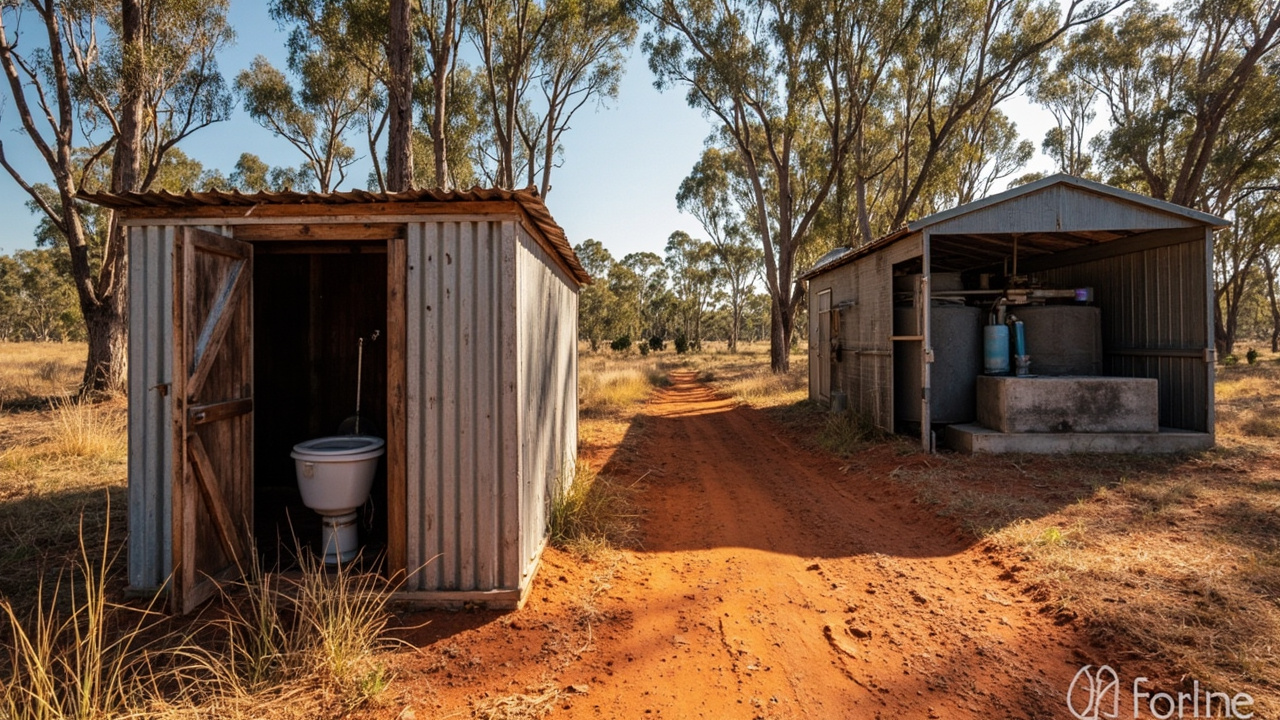
Call a licensed plumber or builder when:
- You are connecting any plumbing fixture or modifying drainage
- You are penetrating the roof for a vent stack (roof plumbing work in Australia is regulated)
- You are running 240V wiring to a fan or heater element (requires a licensed electrician per AS/NZS 3000)
- You are building a chamber system into a new structure (structural and waterproofing considerations)
- Local council requires an inspection or permit for the installation
Always verify before installation:
- Local building codes and permitting requirements for your jurisdiction. Australian councils vary significantly — what passes in one shire may not in another.
- Greywater system compliance still applies; a composting toilet does not remove your obligation to dispose of bathroom and laundry water legally
- Septic or holding tank requirements if you're also managing other waste streams
Composting Toilets Have Gone Mainstream
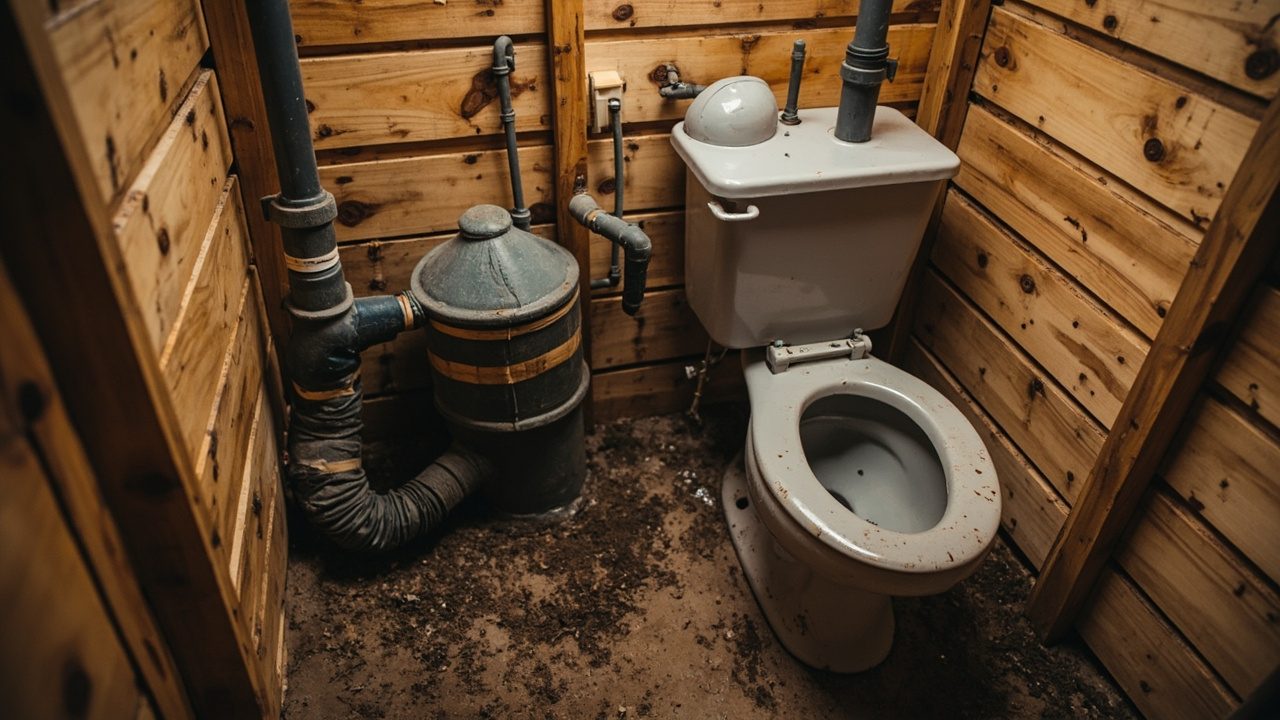
Composting toilets have become more mainstream over the past 10 years due to growing popularity among RV, off-grid, and tiny home users. The supply side has caught up: units that were specialty items a decade ago are now stocked by mainstream plumbing and tiny-home retailers in Australia. That doesn't mean every product on the market is good — it means the technology is no longer fringe.
FAQ
Do composting toilets smell?
Modern composting toilets are odor-free and pleasant to use when properly ventilated and maintained. Smell is the symptom of anaerobic conditions — usually from too much moisture or not enough ventilation.
How often do you empty a composting toilet?
Self-contained units: typically weeks to a few months depending on use, capacity, and whether urine is diverted. Central chamber systems: months to a year. The interval is set by system capacity and load, and the manufacturer's stated service interval for your specific unit.
Do composting toilets work in winter?
Aerobic decomposition slows as temperatures drop. Cold-climate installations need either insulation, a heated chamber, or acceptance of a slower cycle. Central Queensland conditions are favourable for year-round operation without heating.
Can you use normal toilet paper?
Yes, in moderation. Rapidly biodegradable paper breaks down faster. Avoid wet wipes, even "flushable" ones — they don't compost.
What about the end product?
Finished material from a well-managed system is humus-like and substantially reduced in volume. Local regulations vary on land application; check your council's stance before spreading.
Are composting toilets legal in Australia?
Yes, with conditions. The key step is to verify local building codes and permitting requirements for your jurisdiction before purchase or installation. Approval pathways differ between states and between councils within a state.
Sources
- https://waterlesstoiletshop.com/best-composting-toilets-for-off-grid-cabins/
- https://www.ecohome.net/en/guides/4163/composting-toilets-buyers-guide-2026-the-types-maintenance-requirements-and-legal-permits/
- https://wasted.earth/blog/the-ultimate-guide-to-off-grid-toilets/
- https://www.shoptinyhouses.com/pages/the-best-composting-toilet-buyers-guide-and-review
Worth a watch: Award-Winning Waterless Composting Toilet for Tiny Homes | Australia ByDesign: Innovations Season 6 · Ecoflo Wastewater Management