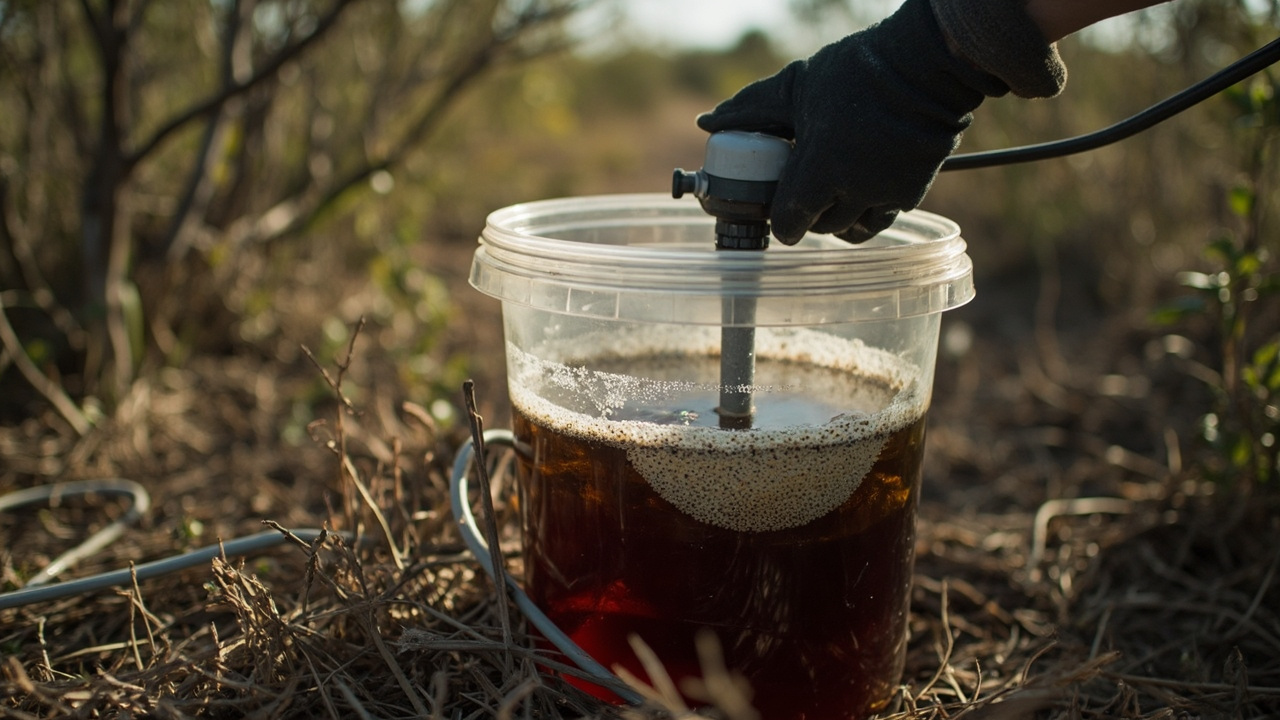
Look, if you're off-grid in Australia and not brewing compost tea, you're wasting money on synthetic stuff. It's cheap, it works, and it's the only way to get your soil alive without breaking the bank. No fluff. Just results.
By Fiona Gallagher· permaculture designer · food, animals and preservation on 12 acres in Tassie
“After one failed batch on my 12 acres, I learned that without oxygen, compost tea just becomes a smelly soup that kills your soil instead of feeding it.”
Four-step compost tea brewing flow with key tips for aeration, feeding and application.
Why Aeration Is Non-Negotiable
Without aeration, you're not making tea. You're making sludge. Aerobic microbes need oxygen to thrive. Stagnant brew = pathogen party. You don't want that.
Aerated compost tea brewing in bucket
Use a cheap aquarium pump ($15-$25 from Bunnings or eBay). 1-2 air stones per 20L bucket.
Run it 24-48 hours. If it smells like rotten eggs? Dump it. You messed up.
Don't use plastic buckets. They leach chemicals. Use food-grade plastic or old 20L drums (no paint).
Pro Tip: If your pump dies mid-brew, don't panic. Stir it vigorously every 2 hours with a clean stick. Better than nothing.
Simple Australian Recipes (No Fancy Gear)
Forget the $50 "compost tea starter" kits. You've got what you need in your backyard.
Basic Brew (For General Use)
10L water (rainwater or bore water - no chlorine), 2L mature compost (from your worm farm or garden pile), 1 tbsp molasses (yes, the cheap stuff from Woolies). Stir daily. Brew 24-48 hours. Strain through old t-shirt.
Cost: ~$2 per brew. Uses what you've got.
Tomato & Veggie Boost (For Fruiters)
Same as above, but add 100g crushed eggshells (from your kitchen) and 50g kelp meal (from local supplier). Brew 48 hours. Use every 2 weeks during fruiting.
Cost: ~$3.50 per brew. Kelp meal: $12 for 500g from Gardeners (Brisbane).
When to Use It (And When to Stop)
Timing matters. Dribbling tea on dry soil is pointless.
Before planting: Water seedlings with tea 24hrs before planting. Roots get a head start.
During growth: Apply every 2 weeks in spring/summer. Stop when it's cold (below 10°C). Microbes sleep.
Not for: Seedlings under 5cm tall. They'll drown. And never use on plants with fungal issues (like powdery mildew).
Strewth, if your plants are sick, tea won't fix it. Fix the soil first.
Practical Tips (Learned the Hard Way)
Don't use fresh manure. It's got pathogens. Wait 6 months on cow/poultry manure.
Strain it. Seriously. A coffee filter or old t-shirt. No chunks in your spray bottle.
Use within 24 hours. After that, it's dead. No point keeping it.
Test on one plant first. Some plants (like succulents) hate it.
Australian Suppliers (No Overpriced Bull)
Molasses: Woolworths ($4.50 for 1L). Use the cheap cane stuff.
Air Pumps:Bunnings ($18 for 10L aquarium kit). eBay has them for $12.
Compost: Your own. If you need more, Urban Garden sells $20 for 20L (Sydney).
The Bottom Line
Compost tea isn't magic. It's soil food. It works if you do it right. Skip the aeration, skip the molasses, skip the timing – and you're just wasting time. Do it properly, and your off-grid garden will thrive without a single dollar of synthetic input. That's the Australian way.
When to Call a Professional
While many off-grid projects are achievable as DIY, certain situations require licensed professionals:
Electrical work beyond basic 12V DC additions — requires a licensed electrician
Structural modifications to buildings or load-bearing elements
Gas line installation or modification
Solar array installations above safe voltage thresholds
Any work that affects the structural integrity of your property
Always check local regulations and obtain necessary permits before commencing work.
Homestead Corner's video spells out the simple recipe—1:5 compost to water, 24‑hour brew, and how to keep it aerobic with a cheap pump—so you can replicate it on a remote block without any fancy gear.— Fiona Gallagher