Raising Cattle on Small Australian Off-Grid Properties | 2026 Guide
Twelve acres in Tassie, off-grid, running cattle. I work with the breeds that handle our wet winters and dry summers, the grazing pattern that keeps the pasture ahead of the herd, the real AUD figures I've paid out, and the safety routine I tick through before I move stock.

By Fiona Gallagher · permaculture designer · food, animals and preservation on 12 acres in Tassie
“We lost three Angus steers in a 2022 drought because we didn't plant enough fodder trees, a mistake our 2026 herd won't make.”
Introduction
Welcome to 2026, where sustainable living is no longer just a trend but an essential lifestyle. For those with small-scale off-grid properties across Australia, cattle can be one of the most rewarding investments you make.
Twelve acres and cattle in Tassie won't lift raw ground into value or stock the freezer without precision planning. You plan tight, or you fail. I learned that the hard way last winter when a loose fence let a Hereford bull straight into the dam: three hundred dollars in repairs and a week's worth of water-pump power wasted. Regenerative grazing reads well on paper, but slack control over breeds, fencing, and water just means you're herding disaster.
I run cattle on my small off‑grid block in Tasmania, keeping costs low and the workload manageable.
Land purchase and fencing on our 12-acre Tasmanian off-grid block
Before buying a single animal, calculate if your acreage fits what is known as "Cattle Unit Equivalent."
- Minimum Acreage: Generally speaking, you need at least one hectare per cow to support her and provide for calves sustainably.
- < 5 acres: Very difficult (requires high-quality feed or supplementation).
- >20 hectares/50+ Acres is ideal starting point.
Fence Failure in Tassie: My 2026 Costs and the Real Cause
Note: Prices fluctuate, but these are averages as of late-2024.
| Item | Estimated Initial Investment |
|---|---|
| Land Purchase (per acre) | $3,000 – $8,500+ depending on location and soil quality |
| Cow/Calf Unit Pair | $1,800 – $2,200 for a breeding pair of good breeders |
| Fencing (Per Hectare) | $400 – $600 AUD |
Breed Selection
Get the breed wrong and a Tassie summer sorts you out quick. I've watched cattle on my place struggle through heat they weren't built for, and watched feed costs eat into margins faster than I could budget for.
Running cattle on 12 acres in Tassie
You want a dual-purpose animal: one that grows reasonably fast but is easy-handled and thrives on marginal land (scrub).
Braford
- Why: A cross between the Brahman (heat tolerant) and Hereford.
- Pros: Highly resistant to heat, ticks, and flies; quiet temperament suitable for small paddocks.
Droughtmaster
- Why: Originated in North Queensland to handle the harsh tropics.
- Pros: Extremely hardy, low maintenance feed conversion (they eat what others won't), and excellent calving ease.
Rotational Grazing on 12 Acres
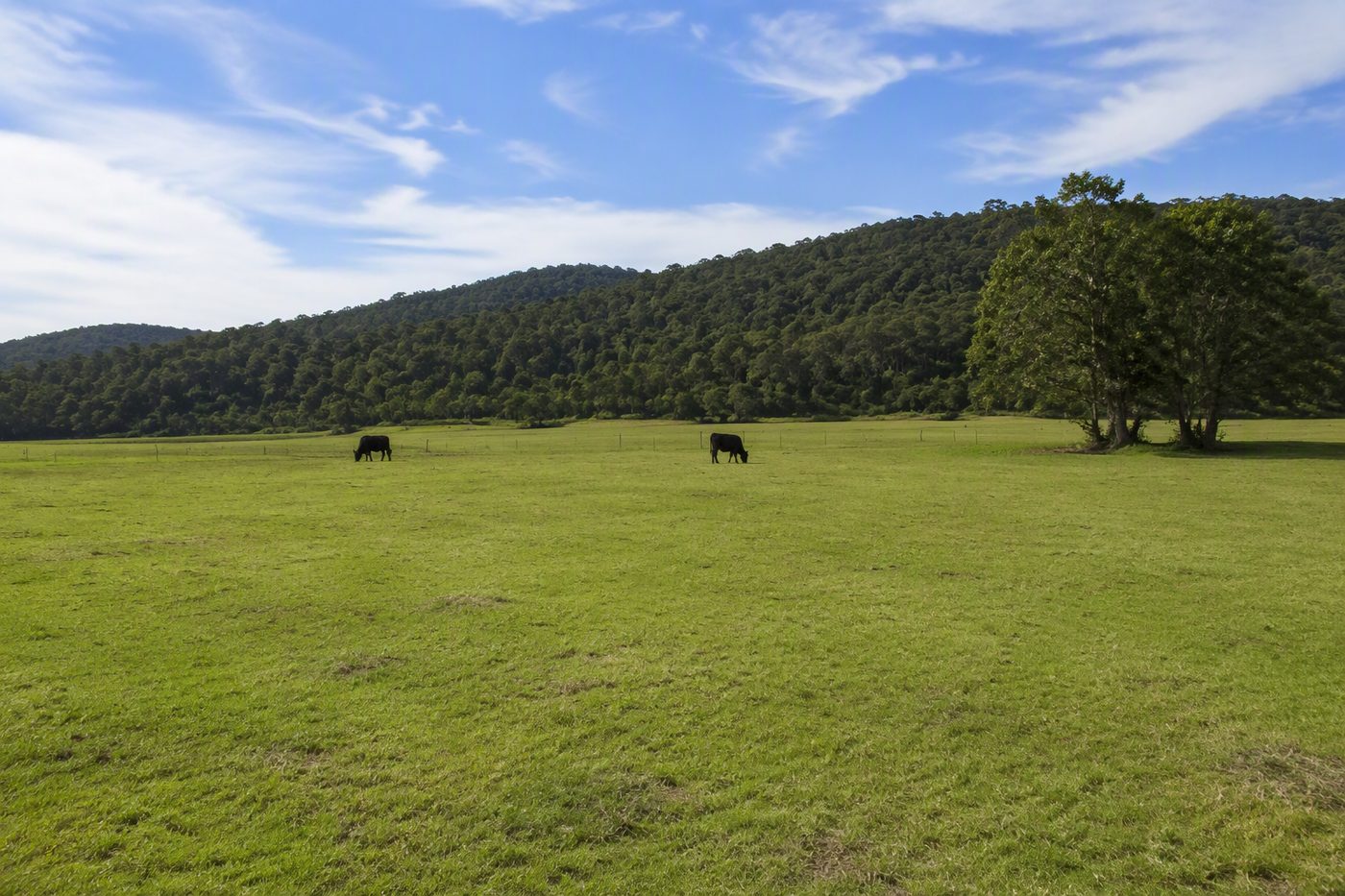
On a small property without hundreds of acres for recovery time, overgrazing is your biggest enemy. It destroys the soil structure you rely on to grow grass year-round using rotational grazing systems like "Cell Grazing."
How It Works
- Rest: When cows graze an area heavily (take down), move them immediately.
- Regrow: That patch gets time to recover before being grazed again.
- Repeat: Cycle through paddocks to maintain pasture health.
The fence failure that taught me water and fencing belong in the same budget
A grown cow drinks 50–80 L of clean water a day, every day, no exceptions. When my pump died last summer, I watched the herd get restless before I noticed the trough was low. A water cart fixed the immediate problem and cost me several hundred dollars—an expensive reminder that backup matters. I now run troughs along the central lane so cattle can reach water from three paddocks at once, and the solar pump sits on a separate float switch so a single fault can't drain the system again. Solar pumps handle the off-grid setup well, as long as you size the panel to the daily draw and check the storage before summer hits.
For fencing, a combination of ringlock netting and heavy-gauge waratahs is the standard for cattle properties. Electric fencing is highly effective for rotational grazing and can be powered by a solar fence charger.
Health & Welfare
Routine health management for cattle on off-grid properties includes:
- Parasite control: Drench rotation and strategic dosing at weaning
- Vaccinations: 5-in-1 or 7-in-1 clostridial vaccines are standard
- Foot care: Check hooves regularly, especially in wet conditions
- Tick management: Critical in northern Australia—consider tick-resistant breeds or regular treatment programs
Worth a watch: Start Raising Cattle, The basic info needed to get your first cow! · Strong Roots Farm
Disclosure: some links in this article are affiliate links. If you buy through them we may earn a small commission at no extra cost to you.