
By Mick O'Brien · carpenter & builder · sheds-to-homes, cabins and things that stay up in a storm
“After losing my first shed to the 2019 blazes, I learned that 100mm of bare timber simply isn't enough to stop the heat.”
Off-grid shelters in bushfire country have to meet AS/NZS 3915.2:2020. I found out why the hard way. A shed I'd built in the Shire of Nillumbik came down in the 2023 fires because the walls were clad in Q-Cell Fibre-Cement sheets. Total loss. The owner was $4,200 out of pocket to rebuild the whole thing from scratch. What I'm laying out below is what I've learned since — material specs, cost brackets, and the products that actually hold their nerve when the wind swings around and the embers start dropping.
By Mick O'Brien · carpenter & builder · sheds-to-homes, cabins and things that stay up in a storm
“After losing my first shed to the 2019 blazes, I learned that 100mm of bare timber simply isn't enough to stop the heat.”
I'm working from a property in Central Queensland, in a region where grassfire and bushfire overlap, so material choice is part of the initial brief, not an afterthought. This article covers the building materials and detailing decisions that hold up against bushfire attack, the Australian standards that govern those decisions, and where the limits of DIY end.
Bushfire is a recurring event across Australia, affecting both natural and built environments, and the risk at any given site depends on climatic conditions, local landscape, and the amount of vegetation available. The 2020 Royal Commission into National Natural Disaster Arrangements found that land-use planning and building regulations directly influence exposure to natural hazards, and recommended that the likelihood of increases in severity and frequency be factored into building decisions.
The Australian Fire Danger Ratings System (AFDRS) sets the Fire Danger Rating from a Fire Behaviour Index that combines rainfall and drought conditions, local temperature, humidity, and wind speed. Drought is itself a preconditioning factor that primes fuel loads before a fire season even starts.
The scale of consequence is not theoretical. In January 2003, 4 people died and 470 homes were lost in the Canberra fires. On Black Saturday in 2009, 173 people died. In the 2019–20 fire season, roughly 12 million hectares burned, 34 people died, and over 3,100 homes were lost across more than 100 local government areas. In the south-east and south-west of the country, impacts tend to be higher because densely populated areas sit close to bushfire-prone vegetation.
Before choosing materials, it helps to understand the attack mechanisms: flame contact, ember attack, radiant heat, wind, and smoke. Ember attack is the most common cause of building damage or destruction in bushfires, and it works in a way that surprises a lot of first-time builders.
Embers travel well in advance of the fire front. They enter the building through small gaps and ignite the interior. They also land on roofs, in gutters, on window sills, and under raised floors, where they ignite debris and start secondary fires inside the structure. This is why non-combustible detailing around openings and roof penetrations matters as much as the wall cladding itself.
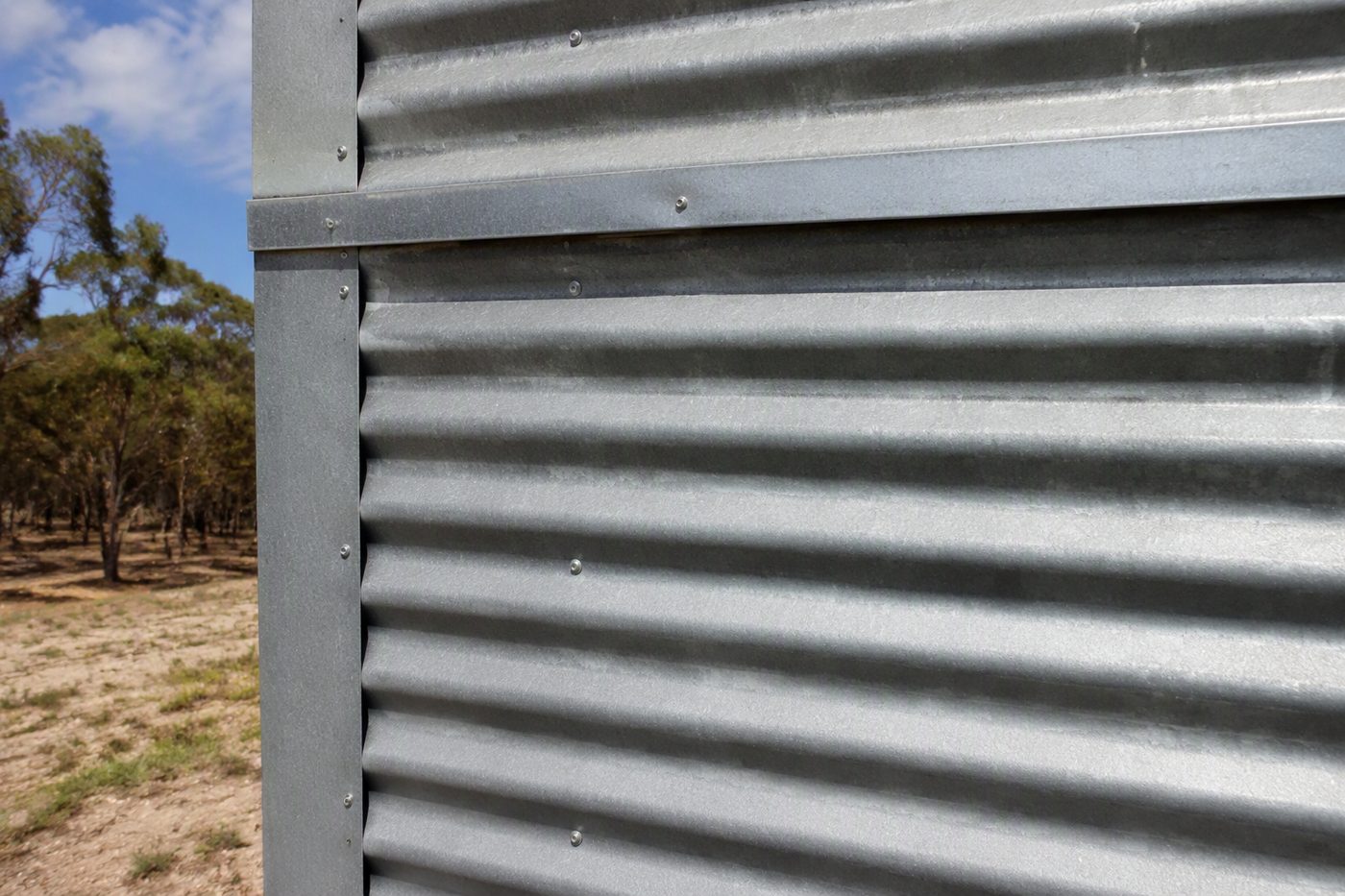
If you are building in a bushfire-prone area, you need the Bushfire Attack Level (BAL) of your house site assessed by an accredited assessor. BAL is the rating system set out in AS 3959, the Australian Standard for construction in bushfire-prone areas, and it runs from BAL-LOW through BAL-12.5, BAL-19, BAL-29, BAL-40, and BAL-FZ (Flame Zone). Each step increases the construction requirements for walls, roofs, floors, sub-floor spaces, vents, doors, windows, and decking.
The higher the BAL, the more the standard pushes you toward non-combustible primary structure and roofing, sealed gaps, and screened openings. AS 3959 is the baseline reference: any material claim you see, including the ones below, should be traced back to compliance with the BAL category for your specific site.
The table below summarises the main material families used in Australian bushfire construction and the categories they typically suit. Specific ratings depend on tested assemblies, so always verify the certificate for the exact product or system.
| Material / System | Typical BAL Suitability | Key Notes |
|---|---|---|
| Concrete (walls, slabs) | BAL-LOW to BAL-FZ | Non-combustible; standard choice for higher BALs as primary structure. |
| Steel (frames, roofing) | BAL-LOW to BAL-FZ | Non-combustible; subject to heat-conducted deformation in extreme radiant heat. |
| Clay / concrete roof tiles | BAL-LOW to BAL-FZ | Non-combustible; heavy, sarking and tile clips must be specified. |
| Fibre-cement sheet (walls, eaves) | BAL-LOW to BAL-40+ | Non-combustible substrate; widely accepted across BAL ratings. |
| Rendered strawbale | BAL-12.5 to BAL-FZ (when built to specification) | Rendered strawbale walls have achieved FRL 90/90/90 (1.5 hours) in internationally certified results accredited for Australia; CSIRO testing previously found rendered strawbales suitable for BAL-29 zones. |
| Hempcrete (200–300mm) with lime render | Up to BAL-40 standard, BAL-FZ achieved in tested assemblies | A 200mm hempcrete wall with 10mm hemp-lime render achieved BAL-FZ compliance with no temperature rise on the unexposed face in AS 1530.4 testing. Hemp-lime systems routinely achieve Group 1 fire ratings for internal linings. |
| Cob | Performance tested under ASTM E119 | Cob has achieved two-hour fire-resistance ratings in ASTM E119 tests; Australian BAL compliance requires project-specific verification. |
| Untreated timber (weatherboard, decking, fascias) | Restricted to lower BALs | Combustible; in higher BAL zones, timber must be replaced or protected by non-combustible cladding, screening, or bushfire-resisting species treatments. |
| Timber with intumescent coating or bushfire-resisting treatment | Extends use into higher BALs | Coatings require maintenance and reapplication; check current approvals against AS 3959 and NCC. |
The headline is that non-combustible materials (concrete, steel, clay tiles, fibre-cement) outperform untreated timber in bushfire attack and are the appropriate primary structure and roofing for higher BAL sites. Natural-material systems like rendered strawbale and hempcrete with lime render have demonstrated serious fire performance in certified testing, including BAL-FZ compliance for specific assemblies. Untreated timber has its place but becomes a liability as BAL rises.
Ember attack is the dominant failure mode, so detailing the envelope matters as much as the cladding spec. A recurring rule in Australian bushfire guidance is to ensure gaps of no more than 2 mm for all external openings, and to fit non-combustible mesh to vents, weep holes, and sub-floor openings.
Practical priorities:
Bushfire maintenance is a recurring discipline, not a one-off build action. Mesh corrodes, sealants degrade, coatings weather, and gaps open up after a few seasons. Annual pre-season checks belong on the calendar.
Materials are only one part of the system. Establishing a clear asset protection zone with reduced fuel loads around the home is one of the most effective ways to lower bushfire risk. In practice this means a managed inner zone close to the house (gravel, paving, irrigated garden), a middle zone of low-fuel landscape, and an outer zone where vegetation is thinned and kept away from the structure. The exact dimensions are set by your BAL assessment and local council requirements.
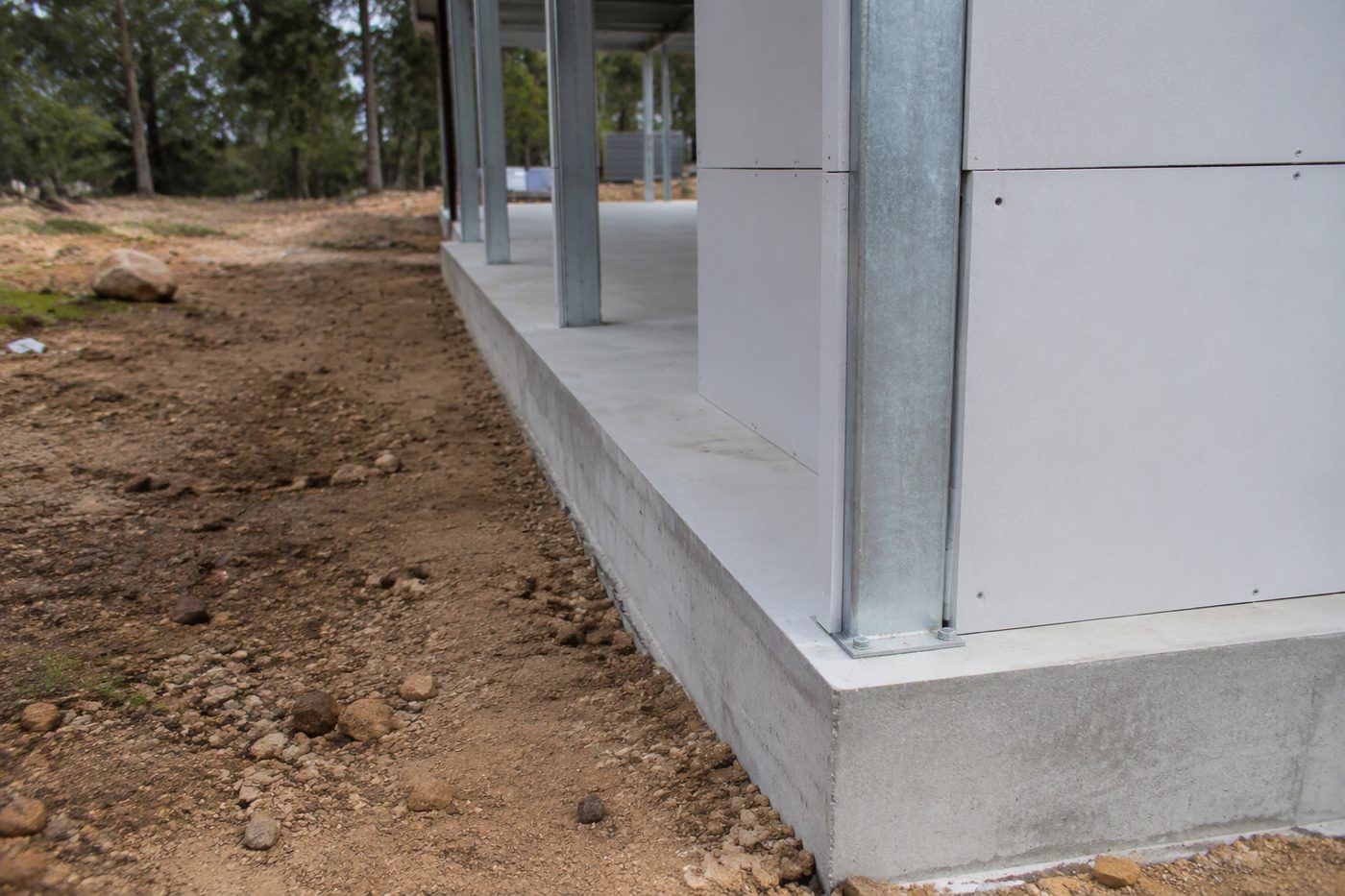
The National Construction Code (NCC) 2025 introduces more stringent, accredited fire testing requirements. If you are designing or building now, work to the current NCC edition and AS 3959, and confirm with your building certifier that the tested assembly or product you intend to use has current accreditation. Compliance evidence has a shelf life, and previous approvals do not automatically carry forward when standards are updated.
A bushfire-resilient build sits at the intersection of structural, fire, and often electrical and gas work. Several tasks must be performed by licensed or accredited trades:
If you intend to do the build yourself, the boundary is clear: do the site prep, the framing, the cladding, and the non-structural detailing where your jurisdiction allows owner-builder work; engage licensed professionals for anything involving structural certification, electrical, gas, plumbing, and the BAL assessment itself.
Sealing the building envelope against ember attack. Embers cause most building loss in bushfires, and they enter through small gaps, vents, and roof penetrations. Non-combustible mesh, 2 mm gap tolerances, and careful flashing do more for survival than any single cladding choice.
Specific tested assemblies have. Rendered strawbale walls have achieved FRL 90/90/90 (1.5 hours) in internationally certified results accredited for Australia, and properly built strawbale can comply with BAL-12.5 through BAL-FZ under AS 3959. A 200 mm hempcrete wall with a 10 mm hemp-lime render has achieved BAL-FZ compliance with no temperature rise on the unexposed face in AS 1530.4 testing. The caveat is that performance depends on the exact assembly, render thickness, and certification; ask for the test certificate before committing.
A metal roof is non-combustible, but it is only one part of the roof system. The roof covering, sarking, battens, ridge capping, valley flashings, penetrations, and gutters all need to be detailed to the BAL rating. A non-combustible roof with combustible sarking or unsealed penetrations will still fail under ember attack.
Annually, before fire season, as a baseline. Inspect mesh for corrosion, sealants for cracking, coatings for weathering, gutters for debris, and any new gaps from building movement. Reapply intumescent coatings on the manufacturer's maintenance schedule.
NCC 2025 tightens the accredited fire testing regime, which can affect which assemblies remain compliant and what evidence you need to submit to a certifier. Check with your building certifier before finalising material selections, and confirm that any test certificates are current under the edition you are building to.
You can do the site preparation, asset protection zone work, non-structural cladding, and many detailing tasks within an owner-builder permit, subject to your state's rules. You cannot do your own BAL assessment, structural certification, 230V electrical work, gas work, or licensed plumbing work. Engage the appropriate trades for those.