Bunnings Off-Grid Guide: Tools Worth the Trip, Traps to Avoid (No Bullsh*t)
Bunnings is the off-gridder’s second-best friend. Your best friend is still the bloke down the road who’s got a shipping container full of salvaged water pipe and won’t stop talking about ferrocement. Bunnings is open on Sunday, stocks 99% of the fiddly bits that stop a shack turning into a mouldy tent, and has a snag out front that doubles as a client meeting room.
By Mick O'Brien· carpenter & builder · sheds-to-homes, cabins and things that stay up in a storm
“After fixing too many fit-outs built around shiny weekend-special inverters that couldn't start a bar fridge, I learned to spec the load first and walk the aisles second.”
Bunnings is the off-gridder’s second-best friend. Your best friend is still the bloke down the road who’s got a shipping container full of salvaged water pipe and won’t stop talking about ferrocement. Bunnings is open on Sunday, stocks 99% of the fiddly bits that stop a shack turning into a mouldy tent, and has a snag out front that doubles as a client meeting room. The trap is that most of the power and water gear on the shelves is built for a quarter-acre block in suburbia, not a 12-volt shack at the end of a dirt track.
I’ve lost count of the number of fit-outs I’ve fixed after someone blew their budget on a shiny inverter that couldn’t start a bar fridge. This guide is what I tell mates over a beer: what’s worth the trip, what stays on the hook, and what you won’t find in any aisle.
Quick answers
Can I build a complete off-grid system just from Bunnings? No — you’ll get all the fittings, hose, and brackets you need, but the core solar and water storage gear has to come from specialists.
What’s the single smartest off-grid buy at Bunnings? The $65 Holman expandable drip irrigation kit; it saves more water than a 500-litre tank and takes 20 minutes to install.
Do Bunnings solar panels work for a permanent shack? The 200 W house-brand panels will keep a camping fridge running for a weekend, but for daily use you need 400 W-plus panels and an MPPT controller that Bunnings simply doesn’t sell.
Two-column comparison of hardware store buys worth making versus common traps for off-grid builds.
Water leak detector
Bunnings sells the Holman Water Leak Detector for about $45. It’s a puck-shaped Zigbee sensor that pairs with the Holman WX1 hub or Home Assistant if you’re that way inclined. It’s loud enough to wake you if a tank overflow starts weeping at 2 am, and the battery lasts 18 months on a CR123A. Worth picking up if you’ve got a pump shed or an internal header tank that could flood the floor. The aisle is plumbing, usually near the irrigation timers.
Smart Sensors And Shut-Off Valves
Avoid the cheaper stand-alone beepers with no smarts — they’ll chirp while you’re away and nobody hears a thing. Not stocked: inline flow meters with an actual shut-off solenoid. For a gravity-fed system you’ll need to buy a brass shut-off valve and an ESP32-based sensor from an electronics supplier.
Drip irrigation
The Holman 25-metre starter kit ($65–$75) lives in the garden watering aisle and it’s the best value on the shelf. It includes a pressure reducer, filter, punch, and enough 13 mm poly tube and drippers to run two long rows of veg. The drippers are turbulent-flow type that don’t clog as fast as cheap button drippers.
Poly drip line doing the rounds of a bush vegie patch — 20 minutes with a punch and you’re watering.
For bigger runs, the Holman and Pope 13 mm pressure-compensating inline dripper tube is worth every cent — about $1.50 per metre in 50-metre rolls. Emitter spacing is 30 cm or 50 cm. At 100 kPa it puts out roughly 2 litres per hour per emitter, and I’ve tested a 50-metre run on a 200-litre header tank just 600 mm above ground and it still drips evenly at the far end.
Choose Quality Drip Tape
Avoid the no-name packs of 50 button drippers for $10. They split after one summer and the flow rates vary so much your capsicums will be bone-dry while the parsley drowns. Not stocked: Netafim Techline or Rivulis drip tape with true turbulent labyrinth. If you’ve got more than 200 metres of beds, order by the 400-metre roll from an irrigation wholesaler.
Thermal curtains
Bunnings stocks a ready-made thermal curtain range under the SunSmart and Venetian labels, starting around $40 a panel for a 223 cm drop. They’ve got a bonded acrylic foam backing that blocks around 60–70% of radiant heat. In a steel-framed weekender with single glazing, that’s the difference between a 5-degree morning at the breakfast table and a 12-degree one. Take the dimensions of your windows and check the clearance to the floor — if you hang them closer than 20 mm to a bare slab they’ll wick moisture and go musty.
Invest In Genuine Cellular Blinds
Avoid the $25 blockout curtains without a thermal backing. They’ll stop light but not heat soak. Not stocked: genuine cellular (honeycomb) blinds with an R-value above 2.5. You’ll need to order those from a specialist blind maker, and they’ll cost three times as much but actually trap a dead-air layer.
Window film insulation
The 3M Sun Control range, about $55 for a 1.5-metre-by-3-metre roll, is tucked in the paint section near the window tint. It’s a static-cling film that cuts 40% of solar heat gain and provides some winter insulation by reflecting long-wave radiation back inside. I’ve used it on north-facing louvres in a shed in western NSW; internal temperature dropped 7 degrees on a 38-degree day compared to bare glass. Cut it 5 mm smaller than the glass so it doesn’t peel at the edges. Soapy water and a credit card squeegee are all you need.
Avoid the $20 no-name tint from the automotive aisle. It’s made for curved car windows and shrinks in a flat pane within a month. Not stocked: Low-E rigid panels or secondary glazing tracks. If you want double-glazing performance in a steel frame, you’ll be buying acrylic sheets and magnetic strips from a plastics fabricator.
Self-watering pots
Bunnings carries two worth a look: the plastic Northcote range ($15–$80 depending on size) and the heavy terracotta-look Maze self-watering pots ($30–$120). Both use a reservoir in the base and a wicking column that pulls water up to the potting mix. I run a dozen of the 40 cm Northcote pots for herbs on a verandah that cops the afternoon sun; I fill the reservoir once a week in January instead of twice a day. The water inlet tube acts as an overflow so you can’t drown the roots.
Avoid any pot where the wicking foot is just a cheap piece of felt. It rots and the capillary action fails after three months. Not stocked: large-capacity wicking planters like Vegepod raised-bed kits — Bunnings has small Vegepod units online but never the full 2-metre model in store. Order direct from the manufacturer and save $50 on shipping.
Compost worms
A 1,000-count box of Tiger or Red Wriggler worms from the Tumbleweed brand costs about $35 and sits in the nursery section near the worm farms. The worms are packed in moist peat and arrive lively. They’ll process 500 grams of kitchen scraps a day once the farm is established, which keeps the bin smell to wet soil instead of rotting cabbage. Keep the farm in the shade with hessian on top, and add a handful of dolomite lime every two weeks so the pH doesn’t crash to vinegar.
Avoid the $15 “worm egg” packs. Only about 20% ever hatch in my experience because the moisture content is wrong by the time they hit the shelf. Not stocked: bulk cocoons for large-scale beds. If you want 10,000 worms for a bathtub wormery, buy from a worm breeder in your state — you’ll pay around $70 and get a bucket of active adults.
Wicking bed
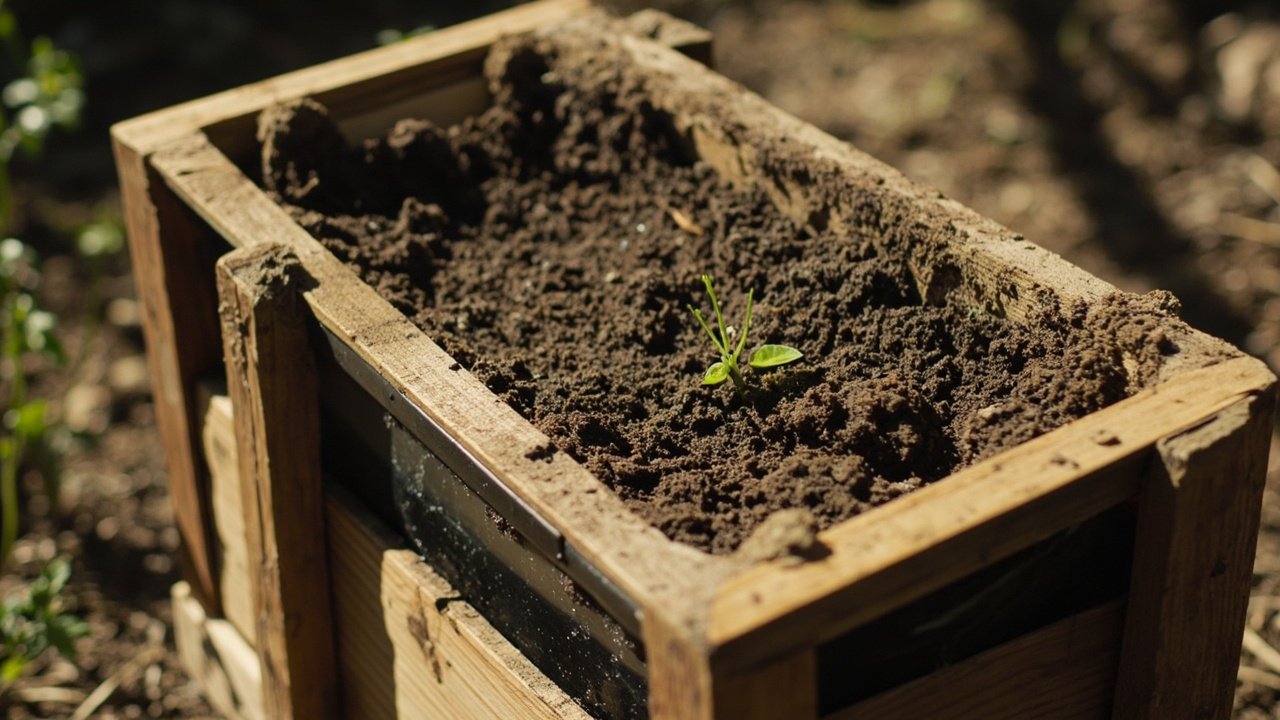
Bunnings stocks the Birdies modular wicking bed trays — about $70 for a 1.2-metre round kit that includes the liner, overflow, and geotextile. They’re quick to assemble and the water reservoir holds about 60 litres underneath 30 cm of soil. I’ve run a pair of these behind a shed on just the water from the shower, and silverbeet grew like a weed. Also look at the WaterUps wicking cell conversion kit ($40) if you already have a corrugated raised bed — it replaces the need for ag pipe and scoria.
Wicking bed with visible water reservoir.
Avoid any wicking bed where the overflow hole is higher than 250 mm from the base. Taller reservoirs create a saturated zone that rots roots in a cold snap. Not stocked: 50-mm polyethylene wicking cells in bulk. You’ll be buying pre-cut kits with a steep markup. For a 5-metre bed, source the cells from an aquaponics supplier and spend half the cash.
Solar panel bird mesh kit
Bunnings stocks a kit branded Whites or R-Clip for about $60 including 30 metres of PVC-coated mesh and stainless steel clips. The mesh is 12 mm × 12 mm, which keeps starlings and miners from building nests under the panels without trapping heat. I fit this kit to every ground-mount array I build because bird droppings on panels cut output by 10% and the mess attracts ants. The clips snap into the panel frame’s mounting channel without drilling, so you won’t void the warranty.
Mesh clipped into the frame channel on a ground-mount — no drilling, no voided warranty, no starlings.
Avoid using chicken wire from the building aisle. It’s uncoated steel that rusts and leaves stains down your roof, plus the 25 mm gaps are big enough for a myna to wriggle through. Not stocked: micro-mesh kits with 6 mm holes for pigeon pressures; order those from a commercial solar installer merchant along with purpose-made edge clamps.
Grey water systems
The only off-the-shelf kit worth considering at Bunnings is the Grey Flow diverter valv
Grey water system with barrel and garden hose.
e, about $130 in the plumbing aisle. It’s a manual 3-way valve that lets you switch laundry water between the sewer/septic and a 25 mm poly pipe to the garden. It does not filter or store water, and it’s rated for temporary diversion only under NSW and SA health regs. For a weekend shack, that’s often enough if you’re just watering fruit trees. Grab a 1-metre sock filter sleeve ($8) to catch lint and hair before the pipe hits the dripline.
Avoid any “grey water treatment” kit under $500 — nothing in a Bunnings box will disinfect the water to a standard that lets you store it for more than 24 hours. Not stocked: underground grey water diversion devices with a grease trap, like the Aqua2use units. You’ll have to order those through a plumbing merchant and get council sign-off in most shires.
Water tank stand
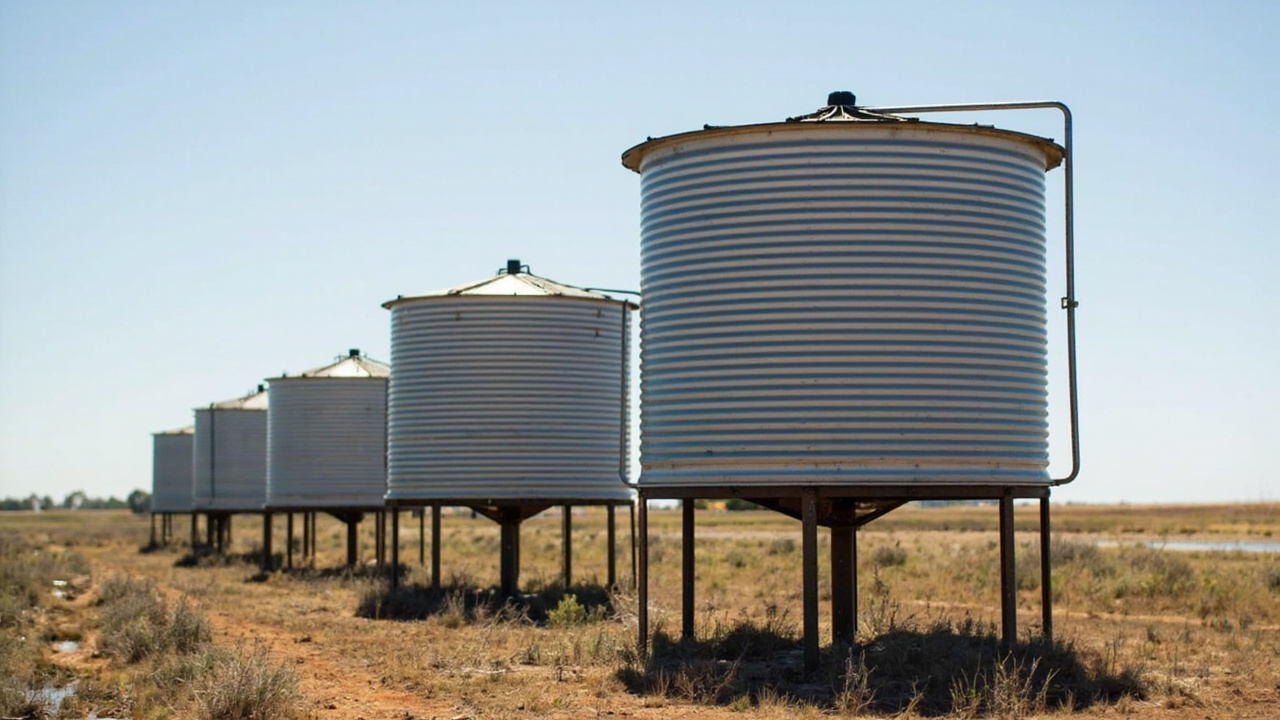
Bunnings sells a round steel tank stand for a 500-litre slimline tank, typically about $180 in the garden aisles. It’s welded from 2 mm tube, stands 600 mm high, and has four legs with a ring that supports the tank base. Two of these side-by-side work fine for a gravity-fed drinking water supply if you just want enough head to fill a kettle. The stand comes with a basic zinc coating, so paint it with cold gal before it sees weather.
Raised water tank supported by steel stand in bushland
Avoid stacking Besser blocks higher than three courses to support a tank — I’ve seen them topple in high wind and the tank ruptured. Not stocked: engineered steel stands for 5,000-litre or larger tanks. Bunnings simply doesn’t carry a platform rated for the 5-tonne load. For anything over 1,000 litres, get a stand built by a registered fabricator to AS 1170, with a concrete footing designed for your soil class.
Bunnings dripper line
The 13 mm pressure-compensating dripper line from Pope or Holman is about $1.50 per metre and hangs on a roll in the plumbing and irrigation area. I use the 30 cm emitter spacing for wicking beds and the 50 cm spacing for native shrubs. The check valve inside each emitter stops the dripper emptying the line when the pump turns off, so you get instant drip next morning instead of a 30-second air purge.
Avoid the laser-drilled soaker hose sold next to it. Soaker hose loses 30% of its water to evaporation before it hits the root zone and it blocks up with iron bacteria in bore water within six months. Not stocked: heavy-wall 16 mm dripper line with socket-weld fittings for permanent buried installations. For underground orchard runs, buy a roll of Netafim from a rural ag supplier and a set of barbed connectors from the same place.
When to Call a Professional
While many off-grid projects are achievable as DIY, certain situations require licensed professionals:
Electrical work beyond basic 12V DC additions — requires a licensed electrician
Structural modifications to buildings or load-bearing elements
Gas line installation or modification
Solar array installations above safe voltage thresholds
Any work that affects the structural integrity of your property
Always check local regulations and obtain necessary permits before commencing work.
⚠️ SAFETY WARNING: Working with electrical systems, structural modifications, or gas installations carries inherent risks. If you are not confident in your abilities, always engage a licensed professional.
He walks through the Bunnings‑purchased panels, batteries and inverter that make a workable off‑grid system for a grand. You get a clear view of the panel wattage, battery capacity and inverter specs that actually work in a small shack.— Mick O'Brien
Frequently asked questions
Is Bunnings actually any good for off-grid gear?
Short answer, yeah. I've called Bunnings the off-gridder's second-best friend and I stand by that. It's where I head for plenty of the bits covered in this guide, from water leak detectors through to thermal curtains. Just don't expect it to replace the local know-how of a bloke who's actually living the life.
What off-grid stuff at Bunnings is actually worth buying?
The guide runs through the kit I reckon is worth the trip: water leak detectors, drip irrigation gear, thermal curtains, window film insulation, self-watering pots, compost worms, wicking bed materials, solar panel bird mesh kits, grey water bits, and water tank stands. Some of it's proper handy, some of it's hit and miss, which is exactly why I wrote the bloody thing.
What's the catch with buying off-grid gear at Bunnings?
Half the battle is knowing which products on the shelf are actually up to the job and which are marketing fluff. The guide has a whole section on traps to avoid because plenty of off-grid-looking gear in there is built for weekend gardeners, not people relying on it day in, day out. Read the labels and don't assume a higher price tag means it'll still be standing in fifty years.
Can you get grey water systems and water tank stands at Bunnings?
Yeah, both are covered in the guide. Bunnings stocks the bits and pieces for grey water setups and tank stands, and I go through what's worth grabbing and what to leave on the shelf. For anything that has to carry serious weight or hold water long-term, I'll be the first to tell you to yarn with someone who's actually installed one.