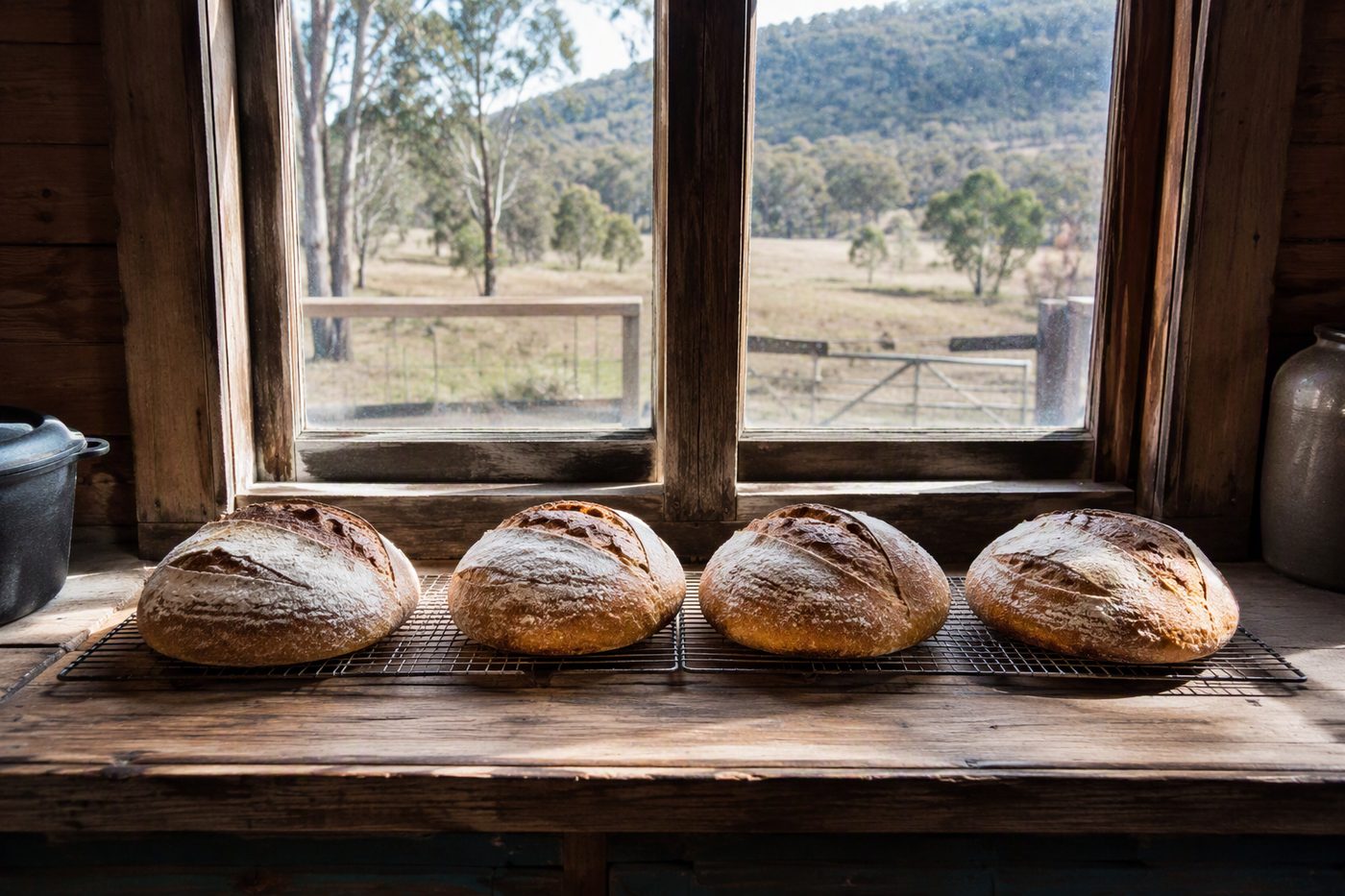
After five failed loaves of dense brick, I finally learned that Tasmania's cold dampness demands 22% more water than the recipe says. It is a specific, local reality. When you are baking in the Huon Valley, the ambient humidity and cooler air temperatures change how your dough behaves. You cannot simply copy a standard recipe from a dry, warm climate and expect the same result. The moisture in the air affects hydration rates, and the cold slows down fermentation. This is why my early attempts turned into inedible bricks. The solution was not better flour or stronger yeast, but adjusting the liquid content to match the environment.

By Fiona Gallagher · permaculture designer · food, animals and preservation on 12 acres in Tassie
“After five failed loaves of dense brick, I finally learned that Tasmania's cold dampness demands 22% more water than the recipe says.”
The Art of Off-Grid Baking | Off-Grid Master
For those looking for practical methods, I recommend watching "10 Ways to Cook Bread Over Campfire + Super Easy Bread Recipe!" by Outdoor Boys. It runs through ten fire-based bread methods, including a basic no-knead dough you can mix in a camp oven and finish directly on the coals. This approach is practical enough for a quick Saturday bake when you’re off-grid. You do not need a modern oven to produce good bread. You need heat, time, and the right dough consistency. The camp oven method allows you to control the heat source directly, which is crucial in variable weather conditions.
When I am working on my block, I often have various tools on hand. While not directly related to baking, I keep a TDS Meter - TDS EC Temp Meter, Professional Detection Device, Accurate Measurement ($14.89) nearby for water quality checks. I also have Raven R1603-5 PTFE Thread Seal Tape Professional Grade, High Density Premium PTF ($60.13) for plumbing fixes, and Professional Hydrion Chlorine Test Strips CH-1000, Range 0-1000 100 strips ($76.32) for testing water safety. These items reflect the broader off-grid lifestyle where every tool has a purpose.
I am Fiona Gallagher. I left a chef's career in Melbourne for a bush block in the Huon Valley and never looked back. I run a subtropical-to-cool-temperate food forest, keep chooks, goats and bees, and preserve roughly 400 kg of produce a year. I design for calories first and aesthetics second — if you can't eat it, it goes in the chook run. This perspective shapes my approach to baking. Bread is a staple, a calorie-dense food that can be made from basic ingredients. In an off-grid context, efficiency and reliability are key. You want a recipe that works with what you have, in the conditions you are in.
While many off-grid projects are achievable as DIY, certain situations require licensed professionals. Electrical work beyond basic 12V DC additions requires a licensed electrician. Structural modifications to buildings or load-bearing elements need professional oversight. Gas line installation or modification, solar array installations above safe voltage thresholds, and any work that affects the structural integrity of your property must be handled by qualified experts. Always check local regulations and obtain necessary permits before commencing work. Baking is a safe DIY project, but other aspects of off-grid living are not. Know the difference.
Worth a watch: 10 Ways to Cook Bread Over Campfire + Super Easy Bread Recipe! (Ultimate Camping/Survival Superfood) · Outdoor Boys