By Jenny Mills· rural nurse & homesteader · health, safety, law and the paperwork of going bush
“After burning my first batch of stills and losing $120 to a failed fermentation, I learned that precision in sugar-to-water ratios is the only thing separating usable fuel from a dangerous mess.”
Make Your Own Biofuel Alcohol: Off-Grid Fuel Guide (No Fluff)
Right. You want to run your off-grid generator or tractor on homemade alcohol fuel? Good. But listen close: this isn't about filling up your ute. It's about making ethanol for engines that can handle it. And no, you can't just brew it like beer and pour it in your car. Legally. Or safely.
If you want a fuel you can produce from stuff that grows or that you'd otherwise throw out, alcohol-based fuels and biodiesel are the two realistic options for an off-grid workshop. This guide covers the verified fundamentals: what works, what's dangerous, and where the lines are that you shouldn't cross without a licensed professional.
I'll keep this practical. Specs, lists, and warnings first. If you're after the science essay, this isn't it.
What "Biofuel Alcohol" Actually Means
When off-gridders say "biofuel alcohol," they usually mean one of two things:
1. Ethanol (ethyl alcohol) — made by fermenting sugars, then distilling. Burns in petrol-style engines, usually at high concentrations like E85 or E100 in modified engines.
2. Methanol (methyl alcohol) — a simple wood-style alcohol. Used as a transesterification reagent to make biodiesel from oils and fats; not used as a finished fuel in normal diesel setups.
Both are legitimate. Ethanol is a fuel itself; methanol is mostly a process chemical on the path to biodiesel. The facts below cover both paths because the off-grid alcohol question usually ends up touching both.
Ethanol: Quick Facts
Spec / Detail
Notes
Feedstocks
Sugarcane, molasses, grain, fruit waste, starchy crops
Process
Ferment sugars with yeast → distill
Engine compatibility
Standard petrol engines are not rated for high-ethanol blends (E85/E100) due to material issues with fuel pumps, seals, and fuel lines
Modified engines
E100-capable engines exist and run well on hydrous ethanol
Hygroscopicity
Absorbs water from the atmosphere, which causes phase separation and corrosion if not managed
Flammability
Highly flammable; invisible flame in daylight
Currency / region
This guide is written from Central Queensland, AUD pricing implied
In my experience these systems work, but ethanol is not "free fuel." The distilling equipment, water management, and storage add up fast.
Biodiesel: Quick Facts
Spec / Detail
Notes
Feedstock
Any waste vegetable oil or animal fat, including high free fatty acid (FFA) material
Vegetable oil, lye (sodium or potassium hydroxide), methanol
Catalyst options
Sodium hydroxide, potassium hydroxide; for high-FFA oils, sulfuric acid first-stage
Settling
After reaction, mixture separates: glycerin sinks, biodiesel floats
Output
Useable in diesel engines without modification
Standard
DIN 51606 (German) — biodiesel meeting this has been accepted by VW for warranty repair on vehicles from 1996 onward
Method example
The Foolproof Method (Aleks Kac) — a two-stage acid/base process requiring no titration or pH meter
How Biodiesel Is Actually Made
The verified process has four key steps:
Alcohol biofuel process flow with safety notes.
1. Collect and prepare oil/fat. Strain out food solids and water.
2. Mix with alcohol and catalyst. Vegetable oil is combined with methanol and a catalyst such as lye. The chemical reaction is called transesterification — it separates glycerin from the oil and creates biodiesel.
3. Settle and separate. Once the reaction completes, the mixture is allowed to settle. Glycerin sinks to the bottom; biodiesel floats on top, allowing separation.
4. Wash and dry the fuel. Biodiesel is washed to remove residual catalyst and soap, then dried.
Why Two-Stage Methods Exist
In a single-stage base-catalysed reaction, sodium ions from lye combine with free fatty acids (FFA) to form soap. Soap formation diminishes yield because it bonds methyl esters to water, and it makes washing and water separation harder. The more degraded the oil (higher FFA), the worse this gets.
The Foolproof Method is a two-stage approach: an acid first-stage handles the FFAs, then a base second-stage does the transesterification. The source documents state it requires no titration and no pH meter, can handle any waste vegetable or animal fat regardless of FFA content, and has produced many thousands of gallons of biodiesel that met DIN 51606 in two professional analyses two years apart.
That said: two-stage biodiesel processes are described as advanced methods and not for beginners. If you've never made biodiesel, learn the single-stage base method first.
Ethanol at a Glance
Ethanol production is conceptually simpler than biodiesel but operationally harder:
Ferment a sugar source with yeast. Cane sugar and molasses are common in Australia because of the sugar industry.
Distill the wash to concentrate alcohol. A basic reflux still won't get you past ~95% ABV because ethanol forms an azeotrope with water.
Dehydrate (optional) for fuel-grade concentrations suitable for E100 engines.
A common pitfall: ethanol is hygroscopic. It pulls water from humid air during storage. Phase-separated ethanol/water in a fuel tank causes misfires, corrosion, and hard starting. Plan sealed, dry storage from day one.
For engines: standard petrol engines aren't compatible with high-concentration ethanol due to material issues with fuel pumps, seals, and lines. If you want to burn E85 or E100, the engine needs conversion components rated for alcohol fuels. This isn't an off-the-shelf bolt-on for most vehicles.
Safety
This is where most off-grid biofuel projects go wrong, not in the chemistry.
Methanol
Toxic if ingested, inhaled in significant quantities, or absorbed through skin.
Vapours are invisible and flammable; flame is nearly invisible in daylight.
Store in chemical-resistant containers, away from living spaces and ignition sources.
Use lab supplies and PPE: safety glasses, chemical-resistant gloves, lab coat or apron.
Lye (Sodium Hydroxide / Potassium Hydroxide)
Strongly caustic. Causes serious skin and eye damage.
Reacts exothermically when mixed with methanol and water — add slowly, never to a hot liquid.
Same PPE rule: glasses, gloves, chemical-resistant containers.
Strong Acids (for two-stage methods)
Sulfuric acid and phosphoric acid are used in the Foolproof Method's first stage. Same hazards class as lye, different direction: acid burns instead of alkali burns.
Add acid to water, never water to acid.
Ethanol
Highly flammable. Vapour is heavier than air and pools low.
Distillation runs require ventilation and no open flames anywhere nearby.
"Safety is paramount" is not a throwaway line with ethanol — stills have started house fires.
When to Call a Licensed Professional
Plumbing and gas fitting for any still setup that ties into a fixed fuel line or LPG burner.
Electrical work for pumps, controllers, or any 230V heater element wired into your shed. In Queensland, anything beyond like-for-like replacement is legally restricted electrical work.
Chemical waste disposal for accumulated glycerin, wash water, and contaminated solvents. These cannot go down the drain or onto the ground in quantity.
Engine conversions to E85/E100 fuel systems. Fuel line replacement, injector recalibration, and fuel pump upgrades are not backyard jobs if you want the engine to last.
Equipment and Suppliers
The verified source for chemicals and equipment is Duda Energy (Duda Diesel), a U.S.-based supplier. They stock:
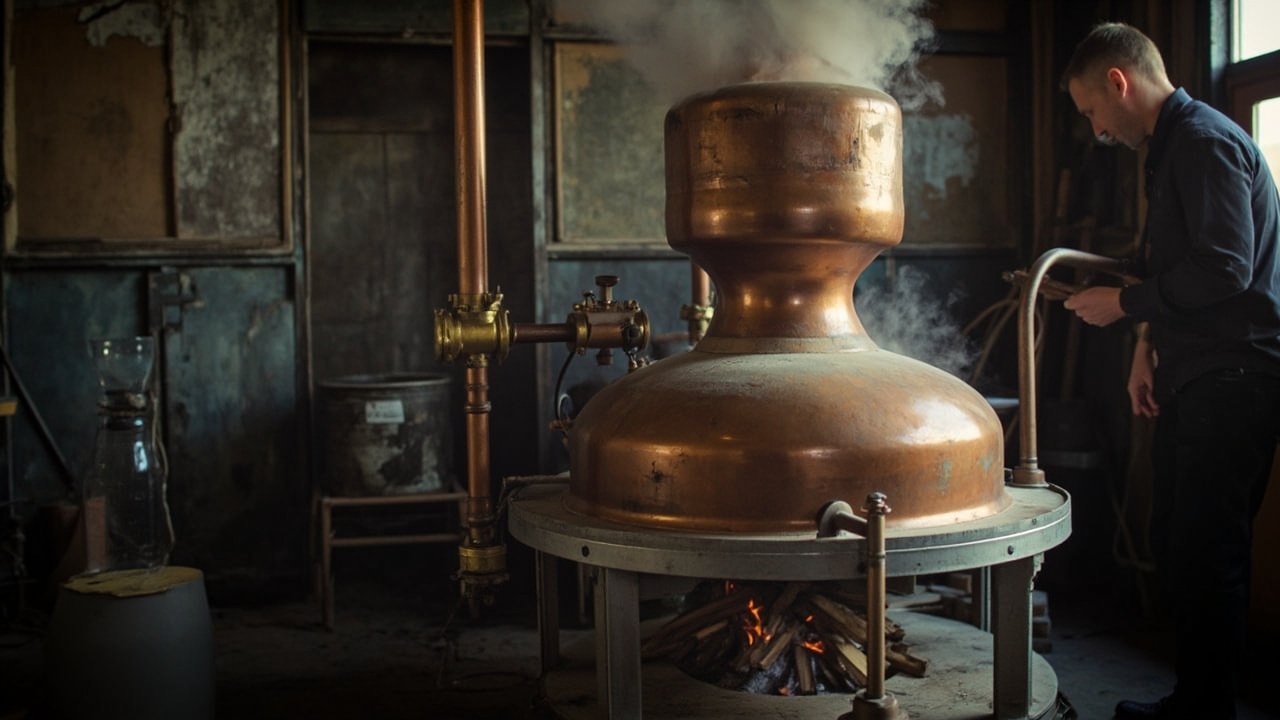
Copper still in rustic Aussie off‑grid shed
Methanol
Sodium hydroxide (lye)
Potassium hydroxide
Sulfuric acid
Phosphoric acid
Titration supplies
Dry wash resins
Note: Duda Diesel is US-based. Australian buyers will face shipping costs, customs considerations, and currency conversion. Methanol and food-grade lye are also available from Australian lab chemical suppliers and some hardware/cleaning outlets in smaller quantities. Verify the supplier is licensed to sell the specific chemical grade in your state.
Realistic Limitations
A few things to set expectations straight:
Yield. Biodiesel yields are roughly 80–90% of the oil volume processed, depending on method and oil quality. The remaining volume is glycerin and losses.
Time. Single-stage reactions take hours plus settling. Two-stage methods are longer.
Quality control. Without lab titration, you're trusting the process — not measuring the result. This is why the Foolproof Method's no-titration claim is significant: it shifts control from operator measurement to process design.
Storage. Both fuels degrade. Biodiesel can oxidise and grow microbes over months. Ethanol absorbs water. Plan storage accordingly.
Legality. I won't make claims about Australian fuel excise or vehicle compliance here because the verified source material doesn't cover Australian-specific law. Before you put home-brewed fuel in a registered vehicle, confirm the current state and federal rules yourself.
One Aside
If you've read this far and think "I'll just ferment some fruit and run my ute on it" — you won't. Not without engine modifications, not without a still, and not without the fuel storage sorted. The off-grid alcohol dream is real but it's a workshop project, not a weekend one.
FAQ
Can I run my standard diesel ute on home-brewed biodiesel?
Yes — biodiesel is described as suitable for use in diesel engines without modifications. Vehicles from VW's 1996 range onward have accepted DIN 51606-compliant biodiesel for warranty repair, per the verified source. Confirm your own manufacturer's current policy before relying on this.
Can I run my standard petrol car on E85 or E100?
No. Standard engines are not compatible with high-concentration ethanol due to material issues with fuel pumps, seals, and fuel lines. You need a conversion or a factory flex-fuel engine.
Why does the Foolproof Method need no titration?
The two-stage acid/base design (Aleks Kac) is built around the highest expected FFA content in used cooking oil, so the chemistry handles worst-case feedstock without operator measurement of acid value.
Is methanol safe to have around the house?
Methanol, lye, and strong acids are hazardous. The sources specifically recommend lab supplies and PPE: safety glasses, gloves, lab coats, and chemical-resistant containers. Treat them with the same respect as pool chlorine and thinners, not like cooking ingredients.
What do I do with the glycerin?
Glycerin separates out and sinks during settling. It's a byproduct, not waste exactly, but in volume it is a chemical waste stream. Don't pour it down the drain or onto soil. Use a licensed waste disposal service for accumulated quantities.
Where do I get the chemicals in Australia?
Duda Diesel ships internationally. Domestic Australian options include lab chemical suppliers and some hardware or cleaning-product outlets for food-grade lye. Confirm the supplier is licensed for the chemical and quantity in your state, and that the grade is appropriate for fuel production.
Living Earth Systems walks through the full ethanol‑from‑mash process, demonstrating a water‑jacketed condenser setup and real‑time temperature monitoring to keep the heads and tails separated. That practical detail on controlling reflux saves you the trial‑and‑error I’ve seen in many backyard attempts.— Jenny Mills