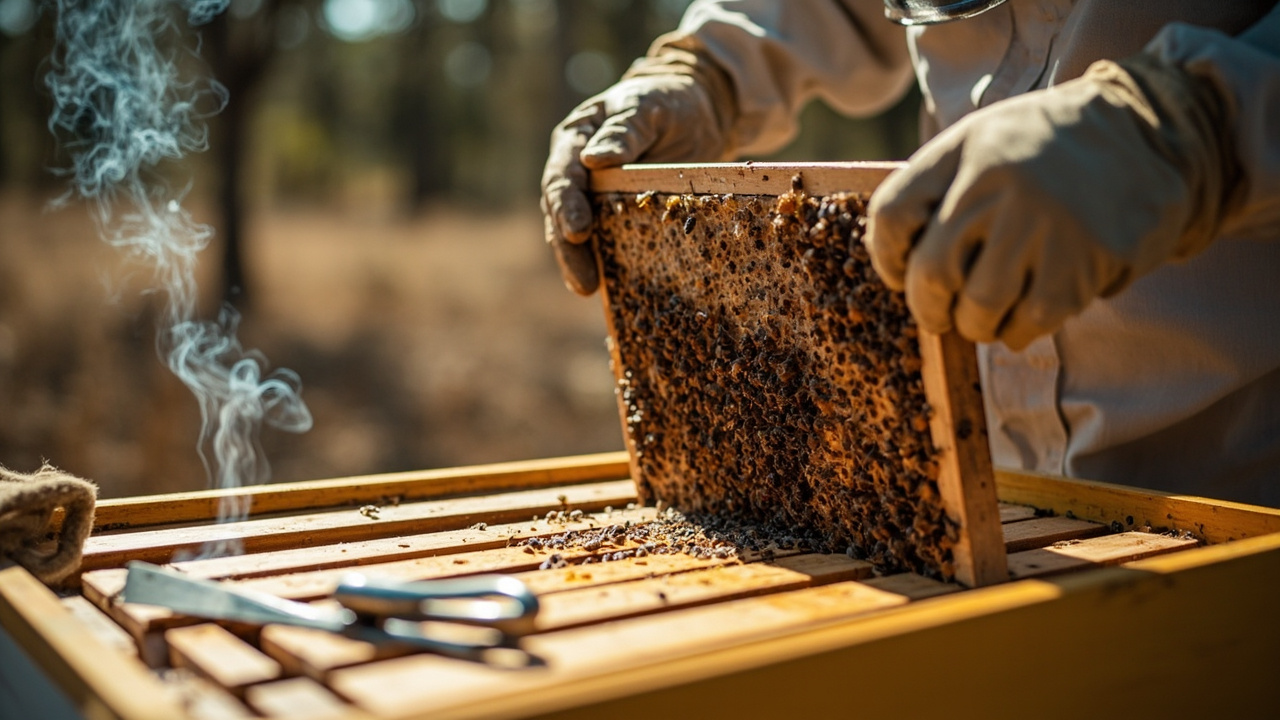
Beekeeping for Off-Grid Australian Properties
I hauled the first hive down the track on Tuesday, only to cop a Tasmanian council fine because the spot sat three metres too close to the neighbour’s property line, and the rain turned the ground into a sucking bog that drowned the queen before she’d even laid an egg. Beekeeping fits the off‑grid life on my Tasmanian block, providing honey, beeswax and pollination for the food gardens; however, the presence of Australia’s native bees and established European honey‑bee colonies means a hive on the rural 12‑acre block works, and it’s not without cost or risk.

By Fiona Gallagher · permaculture designer · food, animals and preservation on 12 acres in Tassie
“After three years and five failed hive setups on our Tassie acreage, I finally learned that keeping bees is less about harvesting honey and more about enduring the swarms.”
Introduction
Why Keep Bees?
On my 12‑acre block in Tassie I count over 1,500 native bee species, but only the European honey bee makes sense for this place. It’s already entrenched, shrugs off the occasional cold snap, and pumps out a surplus we can bottle, trade, or sell. A well‑maintained hive here regularly drops 20‑40 kg of honey a year when the weather cooperates—enough to give our food store a real boost and a solid way to barter for stuff I can’t grow.
Bees Provide Wax And Pollination
The bees don't just make honey; they give us wax for candles, skincare, and natural wood finishes, which fits the self-sufficient life on this Tassie block. The real kicker is the pollination, as our fruit trees, veggie patch, and forage crops see measurably higher fruit set when active bee populations are present. We've got the studies to back that up, and for any off-grid place aiming for food self-sufficiency, bees are easily the highest-return investment you can make.
Key Considerations
Hive Placement: Position your hive with morning sun to encourage early foraging, and provide shade from afternoon heat during summer. The hive entrance should face north-east in southern Australia to capture the morning sun while avoiding prevailing cold south-westerly winds. Ensure there is a clear flight path — bees navigate by landmarks and can become confused and aggressive if their path is frequently blocked. The hive should be on stable ground with good drainage, and raised slightly off the ground to prevent moisture wicking from the soil.
Assess Local Forage Sources
Local Flora: Bees need a reliable forage source throughout the year. Before setting up, assess what plants, trees, and wildflowers are within a 3km radius of your property. Spring and summer nectar sources are critical for honey production and buildup, while autumn forage helps the colony enter winter in strong condition. Properties with good diversity of flowering plants across multiple seasons support healthier, more productive hives. Eucalypts are a cornerstone of Australian bee forage but their nectar flows are irregular and climate-dependent.
Site Setup
Water Sources: Bees need water, and they will find it — often in your neighbour's pool or on damp paving. Providing a water source near the hive prevents bees from wandering and reduces the risk of drowning in pools or ponds. A shallow tray with stones or floating corks for landing, refreshed daily, is all that is needed. In summer, evaporation is rapid so check it twice daily.
Understanding And Managing Bee Swarms
Swarm Management: Swarming is how bees reproduce — the colony splits and a new queen leaves with about half the workers to find a new home. It is natural but can be unwelcome for beekeepers. Swarms typically occur in spring when the colony is strong and expanding. Understanding swarm biology and performing regular inspections during swarm season allows you to intervene with artificial swarming techniques. A swarm in your neighbour's letterbox is not the best introduction to beekeeping for your community.
Mandatory Hive Registration Requirements
Legal Requirements in Australia: This is a critical consideration. All hives in Australia must be registered with the state Department of Agriculture or Primary Industries. Registration is generally free or low-cost and allows authorities to track hive movements in the event of disease outbreaks. In some states, a minimum registration and adherence to the Australian Honey Bee Industry Biosecurity Code of Practice is mandatory. Some local councils also have bylaws restricting the number of hives per property, particularly in semi-rural areas. Check with both your state authority and local council before purchasing your first hive.
Getting Started
Equipment & First Steps
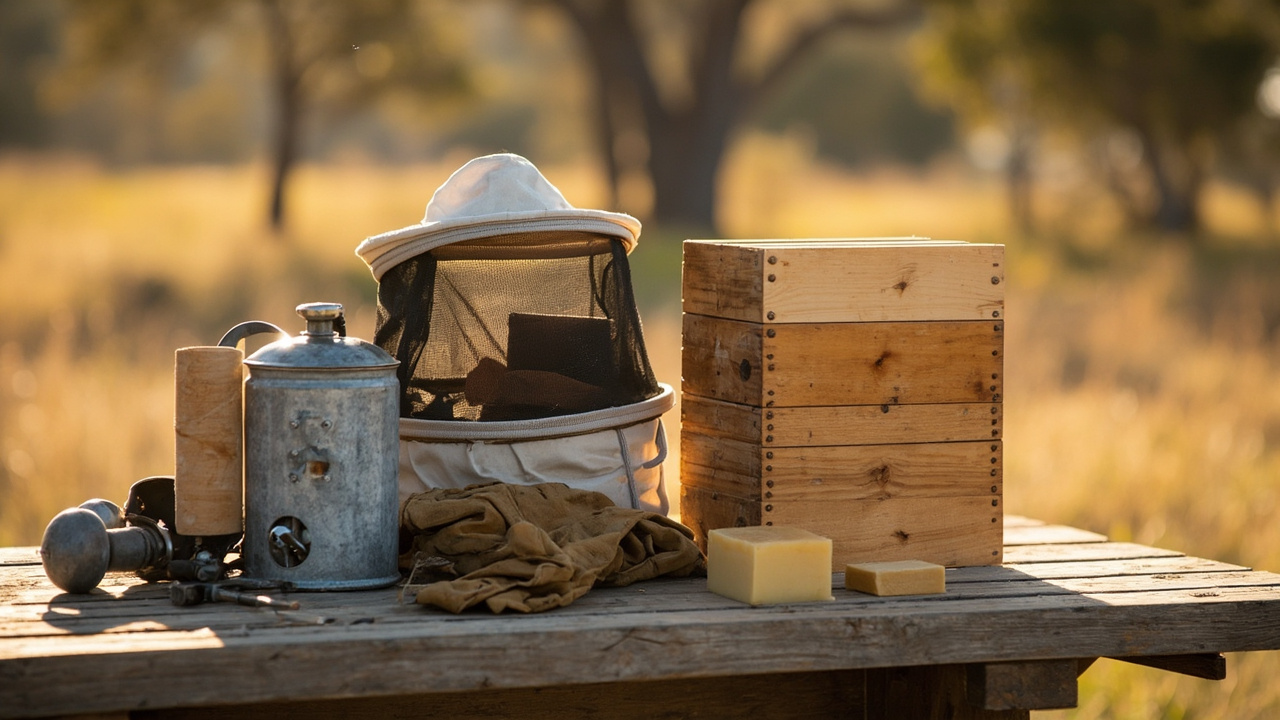
Equipment Needed: The basic setup for one hive includes a brood box (where the queen lives and eggs are laid), one or two super boxes (where honey is stored above the brood), frames and foundation sheets (for bees to build comb), a lid, a hive floor, and basic tools. You will also need a bee suit, gloves, a smoker, and a hive tool. Quality equipment is worth investing in — cheap plastic foundation and poorly fitted boxes create ongoing problems.
Buy A Local Nucleus Colony
First Hive Setup: The easiest path is to buy a nucleus colony (a small established colony with a laying queen, brood, and workers) from a local beekeeper. Nucleus colonies are typically available from spring through autumn. Avoid mail-ordering bees unless absolutely necessary — the stress of transport is significant. Place the nucleus in your prepared brood box in the evening, close the entrance with grass to encourage the bees to imprint on their new home, and leave them undisturbed for one week before your first inspection.
Harvest Honey While Leaving Winter Stores
Harvesting Honey: In a productive year, a strong colony will fill one to two supers with honey. Harvest only what the colony does not need for its own winter stores — typically at least two full frames of capped honey should be left as winter feed. Extract honey using a radial or tangential extractor, or use the crush-and-strain method for simplicity. Always leave adequate stores for winter — feeding sugar syrup to bees is a workaround but should not be the primary winter strategy.
Costs and Considerations
Cost & Regulatory Pitfalls
I blew three hundred bucks on a starter kit with one hive, a bee suit, a smoker, a hive tool and basic gear just to have the council tell me my spot near the creek violated a new zoning bylaw about buffer zones from neighbours. That nucleus colony of bees typically costs $150-$300 depending on region and availability, but I found mine sitting on a pallet in a shed in Launceston.
Budget For Your First Hive
A fully assembled, established hive ready to split can cost $500-$800 or more, which is what I need if I ever want to expand beyond this single box without buying another suit. Budget $300-$1,500 to get your first hive operational, depending on how much new equipment you purchase versus sourced secondhand, because I'm still scraping together coins to fix the rust on my smoker after that first failed hive placement burned my fingers.
Manage Time And Expectations
Management time is a genuine cost, and I learned that the hard way after losing a hive to a council ban on keeping bees within 20 metres of a property line last winter. Expect to spend 2-4 hours per month on routine inspections during spring and summer, less during winter. If you travel frequently, bees need periodic checks — you cannot simply leave them for months without any oversight and expect them to thrive.
Hive Registration Is Mandatory
On my twelve acres in Tassie, I learned the hard way that hive registration isn't optional, even if the local council is slow to update their rules or a failed hive placement lands you in hot water. New South Wales, Victoria, Queensland, South Australia, and Western Australia all have registration requirements, and while annual registration is typically free or costs less than $50, skipping it is a gamble I don't take. Failure to register can result in fines, and more importantly, you will not be notified of disease outbreaks in your area.
Recommended Products
Gear & Suppliers
I order bee suits, smokers, hive tools and frames with foundation sheets from Amazon using the offgridmaster‑20 code. Spending a bit more on decent gear is worth it—cheap suits and flimsy smokers become safety hazards, and the few dollars saved don’t justify the risk.
Shop on Amazon: View on Amazon
Conclusion
I tried to set up a hive in the damp corner of my 12-acre Tasmanian block last winter, but the council fined me for not having a water trough within the mandatory five metres of the apiary, forcing me to move the swarm to the windy northern ridge where the eucalyptus nectar flows in spring. Beekeeping is one of the most rewarding livestock pursuits for Australian off-grid property owners. The upfront costs are modest, the time commitment is manageable, and the returns — in honey, wax, pollination, and personal satisfaction — are significant.
Legal Requirements And Setup
The legal requirements around registration and biosecurity are straightforward to satisfy and exist to protect both your hive and the broader bee industry. If your property has adequate forage, good placement options, and you can commit to monthly inspections during the active season, bees are an excellent addition to any off-grid setup.
Worth a watch: Living Off Grid and raising Honey Bees. · North Country Off Grid
No single listing we can vouch for at AU prices — these are tagged searches for the right gear class.
Disclosure: some links in this article are affiliate links. If you buy through them we may earn a small commission at no extra cost to you.