At Beecher, Central Queensland, the heat hits battery banks differently than it does in Hobart. I design off-grid systems for rural blocks and remote stations, and battery safety is the part I will not cut corners on. This guide walks through the Australian rules, the hazards, and the practical habits that keep a battery bank from becoming a hazard on your property.

By Dave Miller · off-grid sparky · 22 years wiring solar, batteries and sheds in central QLD
“After that 48V lithium pack caught fire in my shed last summer, I learned one rule: never let a damaged cell sit unmonitored for more than ten minutes.”
Off-Grid Battery Safety Guide: Australian Battery Bank Rules
Why Battery Safety Matters Off-Grid
In 2022, the ACCC recorded a 92% increase in reported lithium-ion battery incidents compared to 2020 (CASA, citing ACCC data). Off-grid homes concentrate more energy in one place than the average suburban house, which makes disciplined safety habits even more important.
The two chemistry families I work with most each carry distinct hazards:
- Lithium-ion: prone to thermal runaway, very difficult to extinguish once ignited, and can reignite after appearing out.
- Lead-acid (flooded, AGM, gel): off-gases hydrogen during charging and contains sulfuric acid electrolyte in flooded variants.
Both can kill or burn you if handled casually. Both are manageable if you follow the rules.
The Core Australian Framework
The Best Practice Guide: Battery Storage Equipment – Electrical Safety Requirements (Version Final 1.0, published 06/07/2018) was developed by industry associations including Ai Group, Clean Energy Council, Consumer Electronics Suppliers Association, CSIRO, and Smart Energy Council, with input from energy network operators, certification bodies, consumer and electrical safety regulators. The guide is voluntary (not mandatory), but it is the reference document that serious installers and inspectors work to.
Key definitions from the guide that you will see on product datasheets:
| Term | Definition |
|---|---|
| Battery module (BM) | One or more cells linked together, possibly with incorporated electronics for monitoring, charge management and/or protection. |
| Pre-assembled battery system (BS) | One or more cells, modules or systems plus a battery management system and protective devices; does not include the inverter (PCE). |
| Pre-assembled integrated BESS | A complete integrated package with the inverter (PCE), cells/modules, protection devices and other components, supplied in a dedicated enclosure with AC output. |
The guide applies to lithium-based battery storage equipment rated at equal to or greater than 1kWh and up to and including 200kWh when measured at 0.1C. Most residential off-grid battery banks fall inside this range, which is why the document is directly relevant to property owners.
Products can comply via one of four mandatory methods, each pairing a primary safety standard with a secondary standard and additional requirements. Ask your installer which method your equipment complies with and keep the certificate on file.
Specs and Requirements at a Glance
| Item | Requirement / Note |
|---|---|
| Applicable chemistry | Lithium-based (guide scope); lead-acid covered by AS/NZS wiring rules and battery installation standards |
| Capacity range covered by guide | ≥1 kWh to ≤200 kWh at 0.1C |
| Compliance route | One of four methods in the Best Practice Guide |
| Compliance status | Voluntary for the guide itself; AS/NZS 3000 and product safety standards remain mandatory |
| Wh calculation for transport | Wh = V × Ah; for mAh: (V × mAh) / 1000 |
| Transport class (CASA) | <100 Wh cabin OK, 100–160 Wh airline approval, >160 Wh prohibited (except mobility aids as cargo) |
| Fire behaviour (Li-ion) | Thermal runaway; water cooling required |
| Ventilation (lead-acid) | Required — hydrogen off-gassing |
| DC switching | DC arcs do not self-extinguish like AC; use DC-rated isolators |
| PPE for lead-acid | Goggles, acid-resistant gloves, apron |
| Guide publisher | Industry consortium led by Ai Group, CEC, CESA, CSIRO, Smart Energy Council |
Lithium-Ion Specifics
Lithium-ion is the default for most new off-grid battery banks because of energy density and cycle life. The trade-off is the failure mode: a single cell going into thermal runaway can cascade through a module.
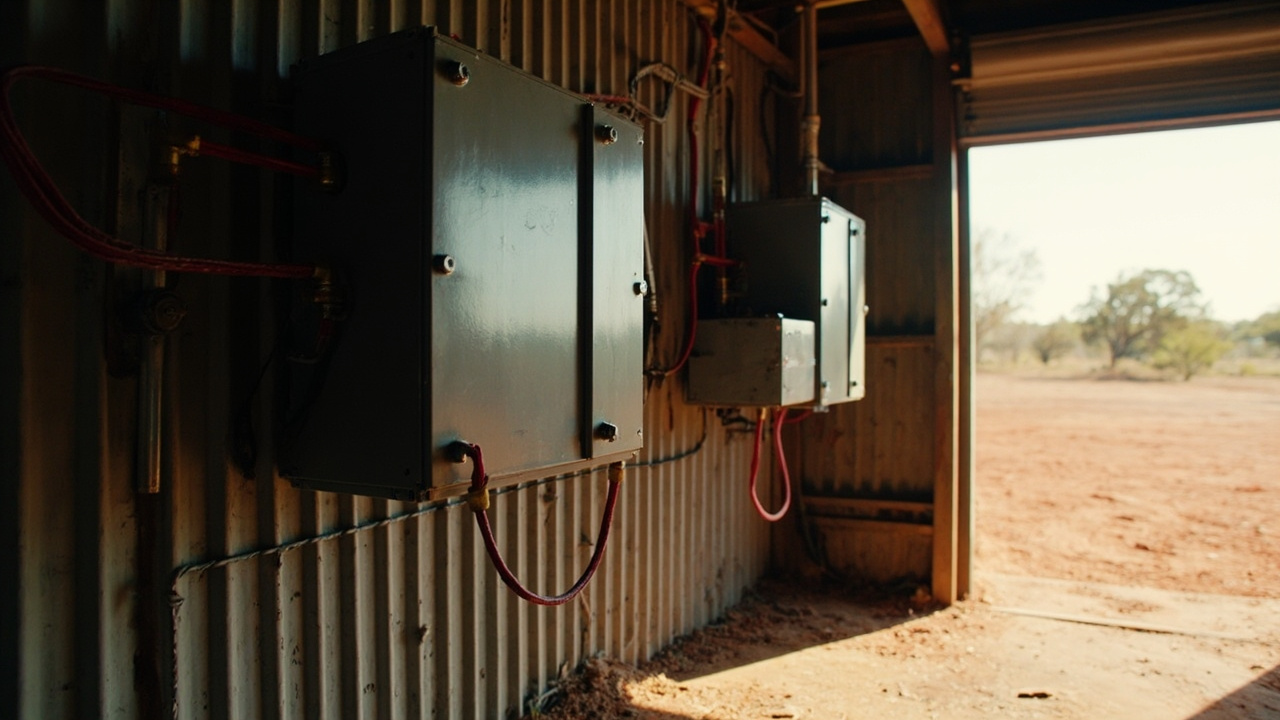
Practical rules I follow:
- Use equipment that complies with the Best Practice Guide and keep the certificate of compliance with the install paperwork.
- Mount the battery bank on a non-combustible surface with airflow around it.
- Keep the area free of combustible storage — no timber offcuts, fuel cans, rags.
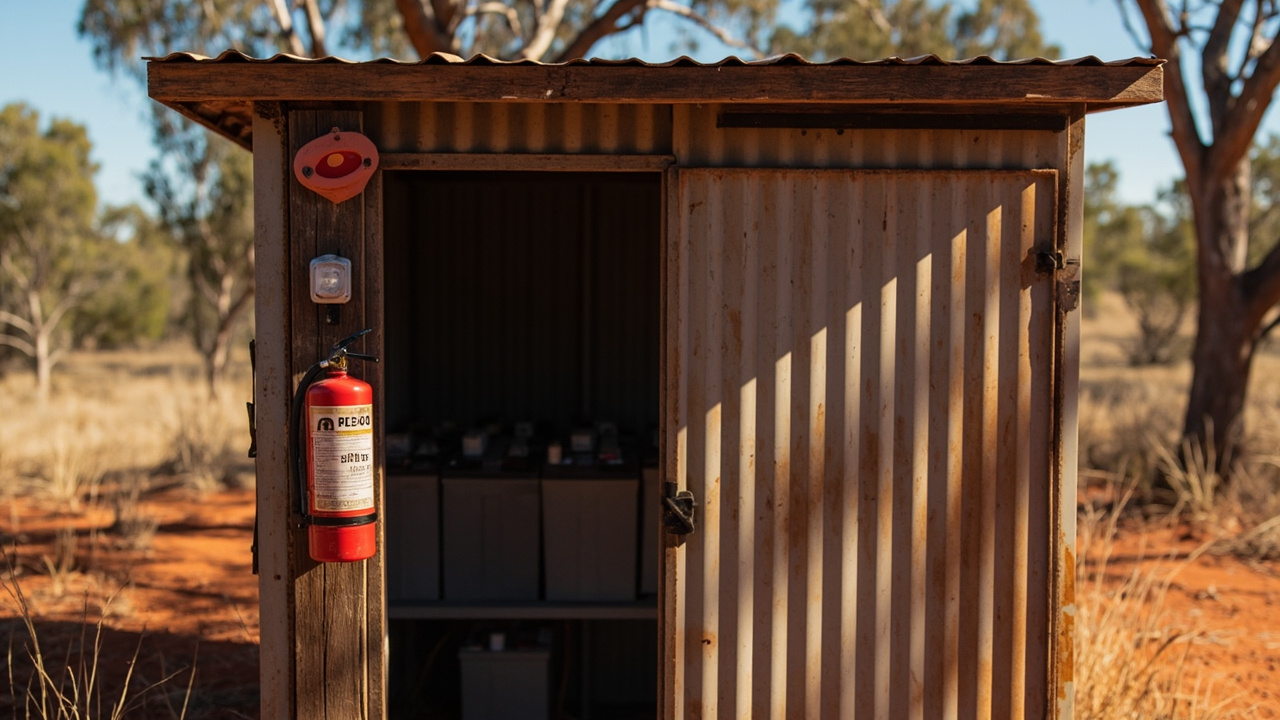
- Install a smoke/heat detector rated for the chemistry in the battery room or enclosure.
- Have a plan for water-based cooling or copious water application if a cell vents. Standard dry-powder extinguishers on a lithium fire are largely ineffective.
- Never charge a swollen, punctured, or impact-damaged battery. Isolate and arrange disposal through a chemical waste or battery-recycling channel.
The Sigenergy SigenStor is one modular all-in-one stack example I have seen on supplier sites, combining inverter, BMS, storage and EMS in a single enclosure from around 8 kWh expandable past 40 kWh, managed via the mySigen app. Treat any specific product as a candidate to verify against the Best Practice Guide's four compliance methods before purchase.
Lead-Acid Specifics
Flooded lead-acid is still common on rural blocks because it is cheap per kWh and tolerant of rough handling. It is also the chemistry that punishes carelessness hardest.
- Hydrogen gas: released during charging, especially at high absorb voltages. The battery enclosure or room must vent to outside air. A sealed room is an explosion risk.
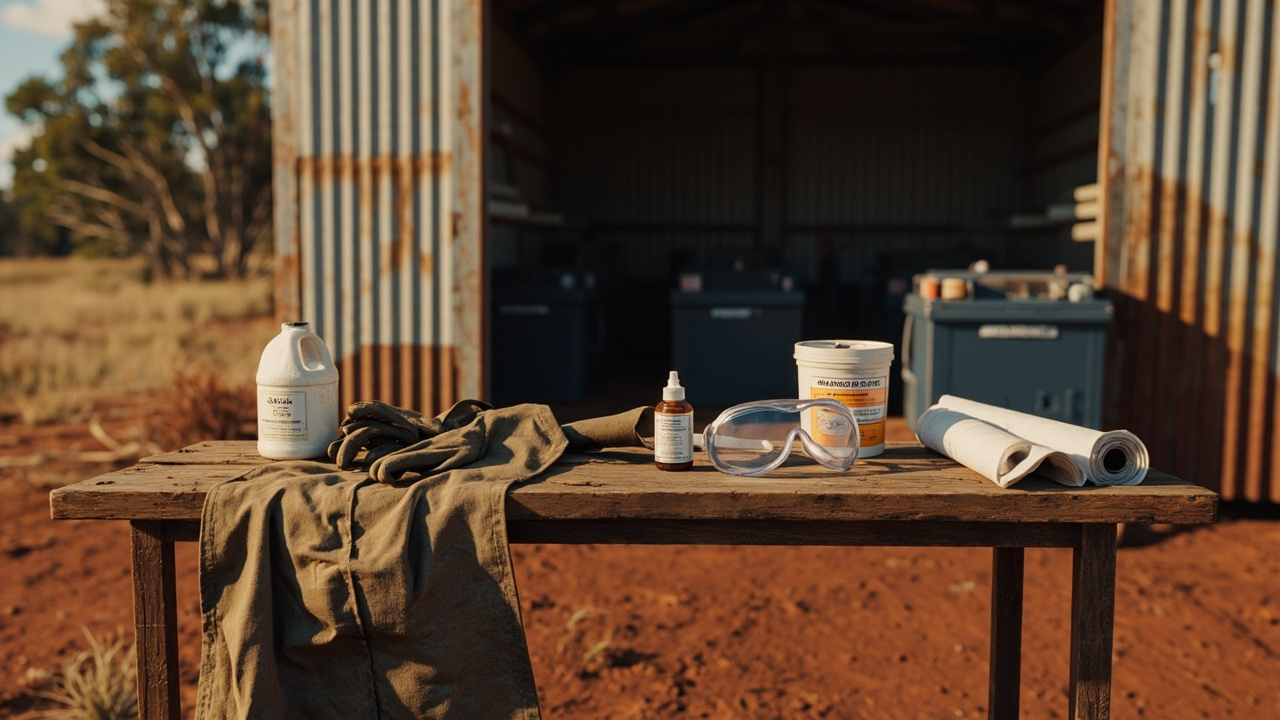
- Sulfuric acid: PPE is non-negotiable — goggles, acid-resistant gloves, long sleeves, water on hand for flushing splashes.
- Electrolyte level: check and top up with distilled water on flooded cells. Do this on a flat, stable surface with good lighting.
- Strap and brace: batteries are heavy. An unsecured bank becomes a projectile in a vehicle rollover or a flood.
- DC arcs: when you break a live lead-acid circuit under load, the arc does not self-extinguish the way an AC arc usually does. Use DC-rated isolators and turn charging sources off before disconnecting.
Sizing and Installation Approach
Battery bank sizing for off-grid in Central Queensland is a winter problem, not a summer one. The longest nights, the most overcast stretches, the air-conditioning load that runs through February nights — these are what kill undersized banks. In my experience, off-the-shelf kits are usually optimistic on what they can run for how long. Engineering the bank against your worst-case week, with a margin, is the rule.
A few installation habits that survive scrutiny:
- DC isolator at the battery bank, rated for DC voltage and prospective fault current.
- Fusing on every parallel string. A single shorted cell in one string can discharge the entire bank through the bad string if it is not fused.
- Cable sizing calculated for voltage drop at the maximum discharge current over the full run length — not just ampacity.
- Ventilation sized to the charge current for flooded lead-acid.
- Clear labelling on every isolator, fuse, and breaker.
For inverter selection where motor loads dominate — bore pumps, compressors, welders — inverters with high surge capacity (some hybrid inverters like certain Deye models are marketed for this) need to be sized against the locked-rotor current of the largest motor, not just running watts.
Transporting Batteries by Air
If you or your installer fly in spares or fly out a faulty pack, CASA rules apply:
- <100 Wh: phones, laptops, cameras — carry in cabin.
- 100–160 Wh: power tools, mobility aids — airline approval required.
- >160 Wh: prohibited in passenger baggage except mobility aids, which must be shipped as dangerous goods cargo.
Spare batteries and power banks must go in the cabin, not in checked luggage. Devices with secured batteries must be switched off completely (not in sleep or hibernation) and protected from damage and accidental activation. Terminals on spares should be protected with tape, original packaging, or a separate plastic bag per battery to prevent short circuits.
Always check with your airline before flying, as airlines may limit the number of spare batteries and power banks you can carry.
Battery Bank Safety Checklist
- [ ] Equipment complies with the Best Practice Guide via one of the four methods; certificate filed
- [ ] Battery bank on non-combustible surface with clear working space
- [ ] DC-rated isolator at the bank
- [ ] Fuses on every parallel string
- [ ] Ventilation verified (flooded lead-acid)
- [ ] Smoke/heat detector in battery enclosure
- [ ] PPE stocked for lead-acid maintenance
- [ ] Water source or copious water plan for lithium thermal runaway
- [ ] Spare batteries carried per CASA rules
- [ ] Bank engineered for worst-case winter week, not summer average
When to Call a Licensed Professional
Battery work is electrical work. In Australia, the line between legal DIY and required licensed work is sharp. Call a licensed electrician (and where relevant, a CEC-accredited designer/installer) when:
- You are installing a new battery bank, BESS, or integrated energy storage system above the low-voltage threshold.
- You are adding or altering circuits that connect to the battery bank, inverter, or switchboard.
- You are unsure whether your existing battery enclosure meets AS/NZS 3000 and the Best Practice Guide.
- A lithium battery is swollen, has vented, has been punctured, or has been in a fire or flood.
- A lead-acid cell has leaked electrolyte.
- You need a Certificate of Compliance for the installation.
A sparkie will not lecture you on whether you are tough enough to do it yourself; they will tell you which clamps, lugs, and isolators will pass inspection.
FAQ
Do I have to follow the Best Practice Guide?
The guide is voluntary. The underlying product safety standards and AS/NZS 3000 wiring rules are mandatory. Following the guide is the simplest way to demonstrate that your lithium-based battery storage equipment has been assessed against a recognised industry benchmark.
How do I know if my battery falls under the guide?
If it is lithium-based and rated at 1 kWh or more up to 200 kWh (measured at 0.1C), the guide applies. Most residential off-grid battery banks are in this range.
What is the fastest way to calculate watt-hours?
Wh = V × Ah. For milliamp hours: (V × mAh) / 1000. The result determines the CASA cabin/cargo class.
Can I put a lithium battery bank inside my house?
Equipment compliant with the guide can be safely installed in or outside a house. Still consider mounting location, ventilation, and distance from sleeping areas.
How do I put out a lithium battery fire?
Standard chemical extinguishers are largely ineffective once a lithium-ion cell is in thermal runaway. Water is the practical option — applied in volume to cool adjacent cells and prevent propagation. Evacuate, call 000, and let the fire service manage the event.
Are power-tool batteries treated differently to phone/laptop batteries?
Yes. Power tools often exceed 100 Wh and require airline approval between 100 Wh and 160 Wh. Anything over 160 Wh is prohibited in passenger baggage except approved mobility aids.
Sources
- https://www.casa.gov.au/packright/lithium-batteries
- https://batterysafetyguide.wordpress.com/
- https://www.theoffgridshop.com.au/blogs/article/off-grid-batteries-101-how-to-choose-the-right-storage-system-for-your-solar-setup
Worth a watch: SAFETY AND TOOLS For Solar And Battery's For OFF GRID Set Ups · The Off-Grid Shop
Disclosure: some links in this article are affiliate links. If you buy through them we may earn a small commission at no extra cost to you.