By Fiona Gallagher · permaculture designer · food, animals and preservation on 12 acres in Tassie
“After losing twelve hens to mites in my first year, I learned that three weeks per paddock is the only rotation that saves your flock.”
By Fiona Gallagher · permaculture designer · food, animals and preservation on 12 acres in Tassie
“After losing twelve hens to mites in my first year, I learned that three weeks per paddock is the only rotation that saves your flock.”
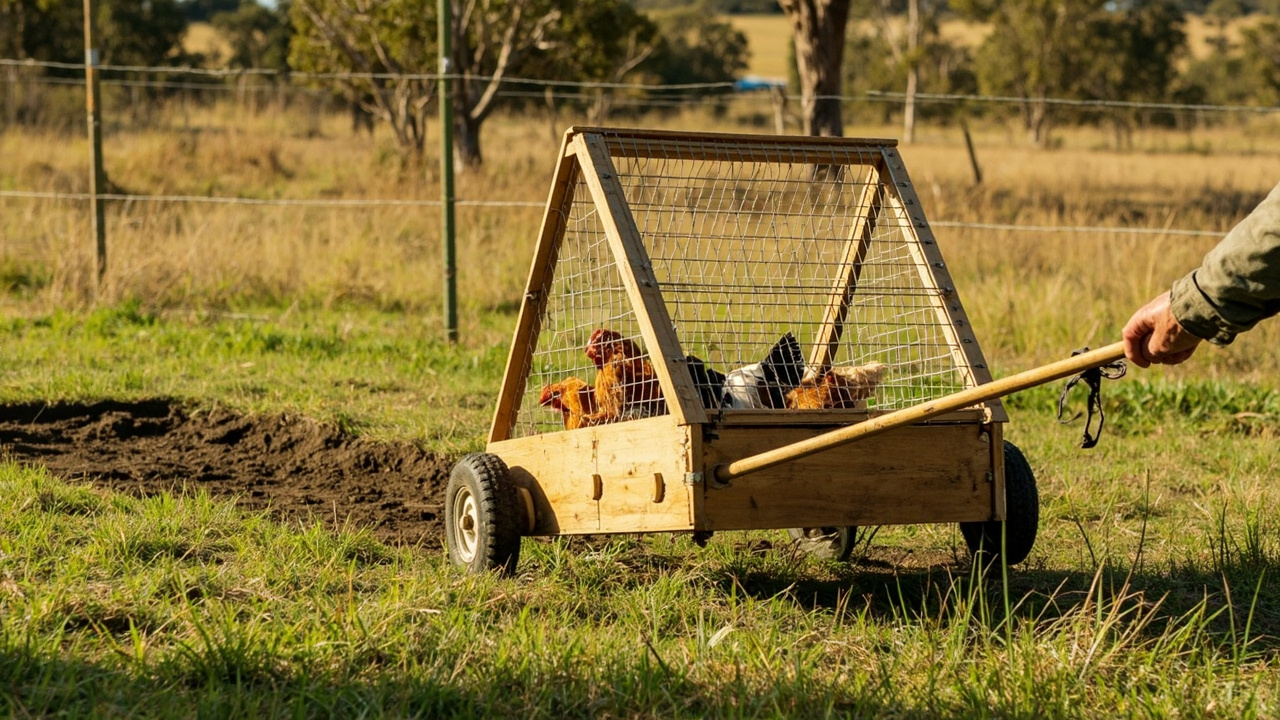
I rotate my chickens across the yard each few weeks and watch the soil improve, the pest load drop, and the egg yield climb. This guide covers the setup, the budget, and compliance with AS/NZS standards.
My birds rotate through fresh ground every few days. Soil stays active, pest cycles break, and egg numbers climb. I'll cover the pen layout, what you'll spend, and the AS/NZS compliance that catches people out.
Rotating chickens prevents overgrazing, cuts parasite buildup, and spreads manure through the garden. On our place, a solid rotation knocked feed costs back by up to 30% — the chooks do the work instead of the feed bag.
| System | Setup Cost (AUD) | Rotation Frequency | Pros | Cons |
|---|---|---|---|---|
| Strip Rotation | $500–$800 | Every 2–3 weeks | Maximises soil nutrients | Requires more space |
| Keyhole Rotation | $600–$900 | Every 4–6 weeks | Reduces fencing needs | Slower nutrient cycling |
| Free-Range with Fencing | $400–$700 | Monthly | Low maintenance | Higher parasite risk |
A: 2–4 days with 2–3 helpers. Prioritise fencing and shelter first.
A: Yes, but ensure it meets AS/NZS 1255.1:2014 standards for predator-proofing.
A: Check local bylaws—many areas allow up to 50 chickens with proper permits.
A: Every 2–4 weeks depending on chicken numbers and pasture size.
A: Rotate regularly to reduce parasite load. Quarantine new birds for 30 days.
My rotation setup turns 12 acres into a working system, not a holding paddock. I buy gear built for Tassie's salt air — cheap fittings corrode in a season, and the AS/NZS standards exist because half-measures fail. Maintenance runs weekly: gates, hinges, wire, water lines. Skip a round and the whole system falls over.
Disclaimer: Always check local council regulations and AS/NZS standards before installation. Consult a vet for health concerns. Off-Grid Master is an affiliate of Amazon Australia.
Worth a watch: How to make a portable chicken tractor to improve your garden | DIY Projects | Gardening Australia · Gardening Australia