

10 Years Offgrid 800W Solar Efficiency — Essential knowledge for Australian off-grid living
10 Years Off-Grid on 800W Solar: Family of 4 Guide
After 22 years wiring solar, I've noticed most off-grid advice obsesses over bigger systems, more panels, higher capacity. I went the other way. Instead of building a massive setup to run my life as-is, I redesigned how I live to run on bugger-all power.
A Family's Decade Of Simplicity
That is exactly what one New Zealand family did. For nearly a decade, a family of four lived fully off-grid in rural far-north New Zealand on just 800W of solar panels and 1.4kWh of usable battery storage. No grid fallback. No massive battery bank. Just disciplined energy use, clever appliance choices, and a genuine embrace of simplicity. Their story, shared by the Earthbuild NZ channel, is one of the most practical and inspiring off-grid accounts you will find anywhere.
Video credit: Earthbuild NZ on YouTube.
My Original 800W Setup: Compact but Functional
To appreciate what this family achieved, you need to understand just how minimal their system was:
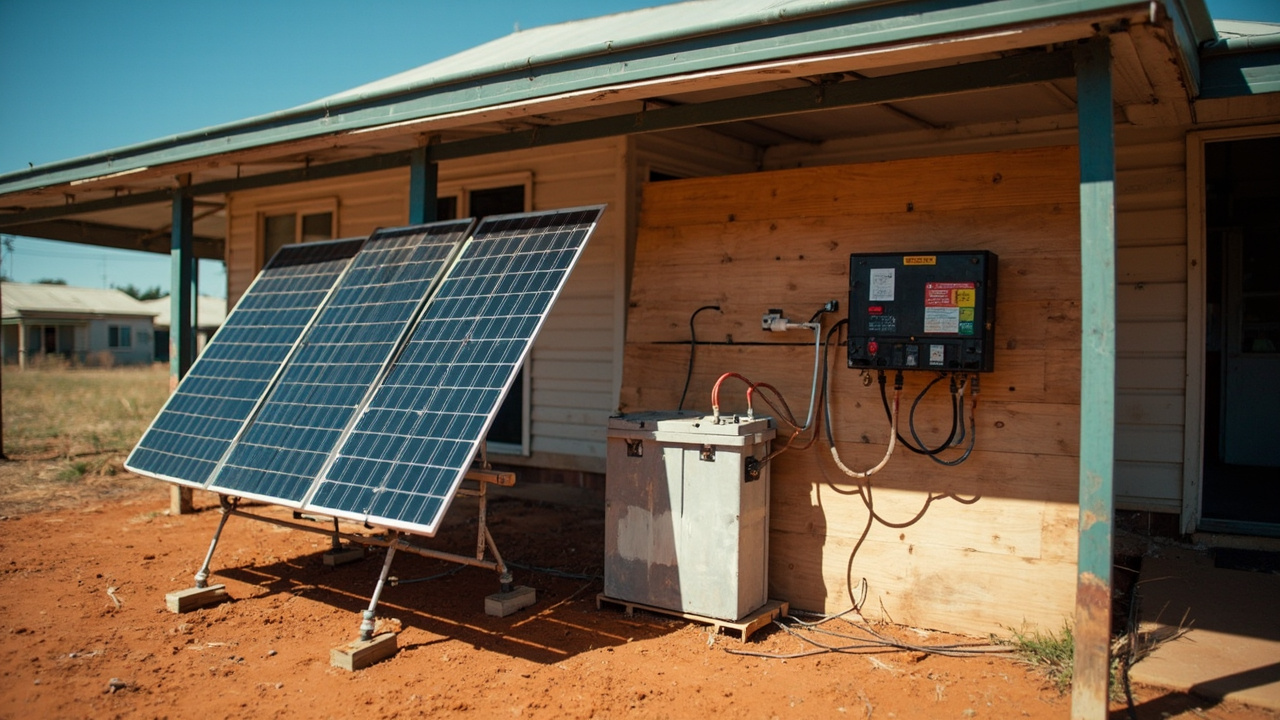
- Solar panels: 3 x 275W (825W total)
- Charge controller: 60A PWM
- Battery bank: 4 x 100Ah lead crystal batteries at 12V (approximately 1.4kWh usable)
- Inverter: 2,000W Victron
- Backup: Honda 5,000W petrol generator
My setup stores about 1.4kWh. NZ homes burn through 15 to 20kWh daily. That 1.4kWh is under 10% of what a normal house needs. In Australia, where I work, the average home sits at 16 to 22kWh per day. So this rig covers roughly 7% of most households' consumption.
And yet: it worked. For nearly ten years.
What the 800W System Actually Powered
I know the limits of a tiny 800W system as well as the capabilities of a larger setup. Here’s the practical reality of 800W and 2,000W of inverter capacity:
What worked
- Laptop and phone charging
- Internet (essential for their work)
- LED lighting throughout the house
- A chest freezer repurposed as a fridge (more on this below)
- Cold-wash washing machine
- Most power tools in the workshop
- A low-wattage vacuum cleaner
- A guitar amplifier (priorities matter)
- A low-wattage coffee machine (the one indulgence they refused to give up)
What we never powered
- Electric water heating
- Anything with a heating element: toaster, kettle, hair dryer
- Electric cooking
- Microwave
- Hot washes in the washing machine
- A freezer (separate from the fridge-converted chest freezer)
- Any single appliance drawing over 1,500W
- Multiple high-draw appliances simultaneously
I Count Watts, Not the Number of Appliances.
After ten years running 800W of solar for a family of four in central QLD, here's what I learned: think in watts, not appliances. Forget asking if you can run a fridge. Ask whether you can run one that pulls 50W instead of 150W. Same goes for power tools—I stopped asking if I could fire them up and started asking when I should, to catch the peak solar harvest.
This shift in thinking unlocks three key strategies:
1. I schedule heavy loads when the sun is strongest
When the sun is up, the 825 W array pushes against the 2,000 W inverter limit and runs everything for free. The panels churn out more than I can burn, so I fire up the washing machine, the vacuum, power tools and any other discretionary loads between 10 am and 2 pm.
In winter when the sun's weak or the sky stays grey for days, I run lights, the fridge and the internet. That's it. No deprivation—just how it is. Our grandparents lived this way. Half the world still does.
2. I only buy appliances that sip power
I run a chest freezer as a fridge; it’s a hack that keeps the kitchen alive when the sun’s down and the batteries are flat. An upright fridge blows its cold air out every time you crack the door—cold air is heavy and slides straight to the floor. Open a chest from the top and the cold stays put, pooling in the bottom of the box. I set a small chest freezer to fridge temps with an external controller, and it draws 30% to 50% less power than a comparable upright. On our 800W array in central QLD, that gap means the difference between a week of hot food and a kitchen that actually works.
Other efficiency choices that compound over years:
- LED lighting: A 10W LED produces the same light as a 60W incandescent. Across a house with 15 lights, that is 750W saved.
- DC fridge: Some off-grid specific fridges run directly on 12V or 24V DC, eliminating the inverter conversion losses (typically 10% to 15%). Over 24 hours of continuous fridge operation, that saving adds up.
- Laptop over desktop: A laptop draws 30 to 60W. A desktop with monitor can draw 150 to 400W.
- Battery-powered tools: Charge them during peak sun, use them anytime. Effectively shifts solar energy to whenever you need it.
3. I swapped grid power for practical non‑electric options where it made sense
I’ve been running 800 W for ten years now, and I can tell you straight: trying to power an electric stove, an electric water heater, or electric space heating is a dead end. Those loads will swallow the whole array. Instead, I stick with purpose‑built alternatives—gas cooktop, solar hot water, wood heating—that keep the demand within the 800 W envelope.
- Wood stove: The family installed a wood burner that served triple duty: space heating, water heating (via a wetback to a hot water tank), and cooking (both stovetop and oven). One appliance, three functions, zero electricity.
- Gas cooktop and oven: LPG is widely available in rural Australia and NZ. A 45kg gas bottle lasts a typical family 2 to 4 months for cooking and costs $80 to $150 to refill. That is a fraction of the solar and battery capacity you would need for electric cooking.
- Solar hot water: Though not used by this family, evacuated tube solar hot water systems are highly effective in Australia and can eliminate the single largest household energy draw without any electrical input.
Use our master off-grid calculator to model how alternative energy sources (gas, wood, solar thermal) reduce your electrical system requirements.
The Real Problems That Bit Me
This family is refreshingly honest about the downsides. Living tiny is not all Instagram aesthetics and morning yoga:
What a run of overcast days does to your system
One cloudy day left me with only 1.4kWh of usable battery, so I fired up the generator. Three days straight I ran it three times a day—morning, late‑afternoon before dusk, and again later. Watching the state‑of‑charge tick down was enough to wear a bloke down.
The upside was that the tiny bank let the generator bring it from near‑empty to full in one to two hours. I hated firing it up so often, but each stint was over quickly.
We skipped the freezer
That freezer running 24/7 with its compressor cycles blew the tiny battery every night. We ended up making more frequent trips to the shops for perishables, which cost us fuel and time we didn't have. That is the hidden cost of undersized systems that people rarely factor in during planning.
Workshop power demand outgrows the system
The workshop grew. I threw more power at the table saws, band saws, and thicknessers. The 2,000W inverter couldn't handle it. Those joinery tools pull 1,500W to 2,500W each. Every time I needed to do real work, I fired up the generator. It's noisy. Smells like burnt diesel. Wrecks the flow in the shed.
Dying batteries
Ten years on, my lead‑acid bank was cactus. Usable capacity fell through the floor, and the voltage sagged the instant we turned on a load. That’s what happens with lead—after five to eight years of daily cycling they’re done. LiFePO4 batteries, on the other hand, still hold more than 80 % of their capacity after 3,000 to 5,000 cycles, which translates to roughly 8 to 14 years of daily use.
My Only Change: Almost Nothing
Ten years on, the family would barely alter their original plan. That compact system forced them to:
- Declutter their lives of unnecessary appliances and gadgets
- Develop excellent energy awareness and conservation habits
- Find creative alternatives that often improved their quality of life
- Reduce their environmental footprint far beyond what a large solar system would achieve
We still toast our bread on the stove. We air‑dry the clothes and our hair. We heat meals in pots instead of a microwave. We whisk everything by hand. It’s a way of life that suits us.
Why I Upgraded My 800 W Solar Array and What I Installed
After ten years I finally swapped the dead batteries. I skipped a custom bank for the 800 W array and bought a complete bundled system at current market rates. The new unit stores several times the capacity of the old bank for roughly the same price, because solar gear has become cheaper over the last decade.
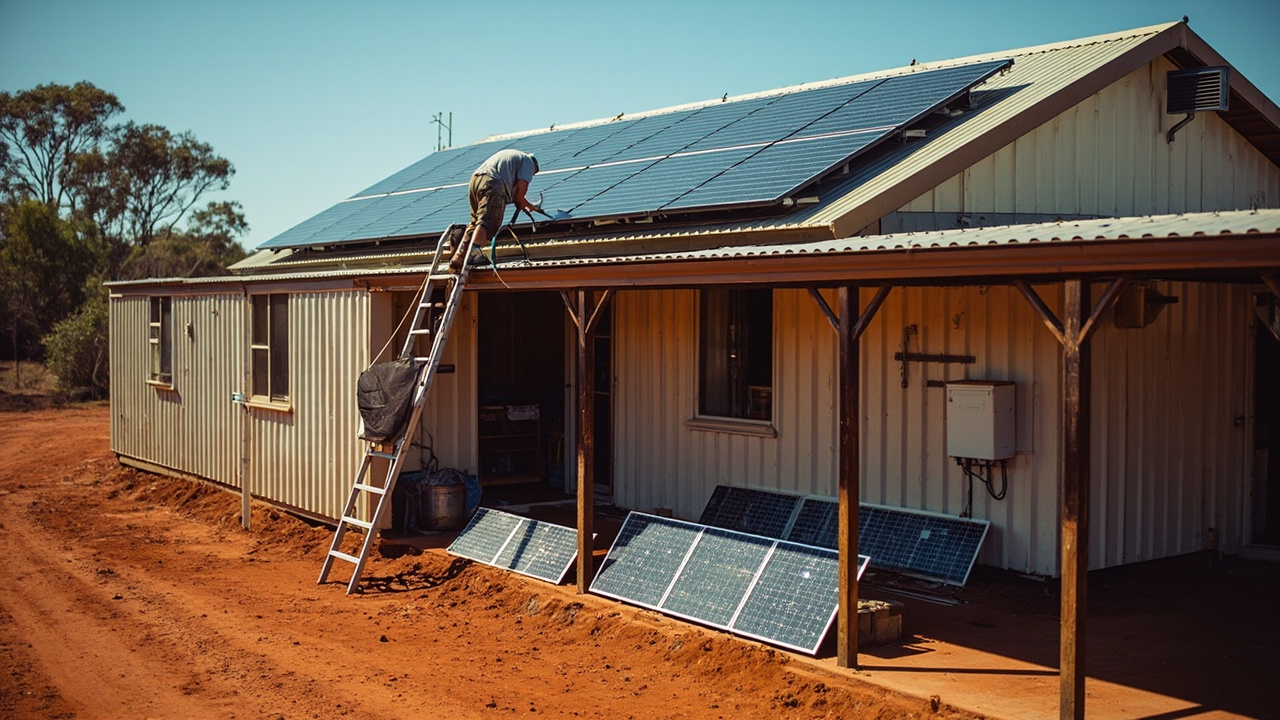
Our upgraded system puts out 3 to 6kWh daily—still way short of the 15 to 20kWh that average Kiwi households use. After ten years of learning the hard way, we've cut the pointless loads and now run the stuff that actually matters: a proper freezer, hot water washes, power tools without worrying about load, and a kettle that doesn't make me wince.
Running the 800W Solar Setup on My Central Queensland Property
I have found Australia beats New Zealand hands down for an efficiency‑first approach; our average solar irradiance is higher, so even a small panel array puts out more power than you might expect. Summer days stretch longer, giving us a wider charging window before sunset, and the Aussie habit of living outdoors cuts indoor power use in the warm months.
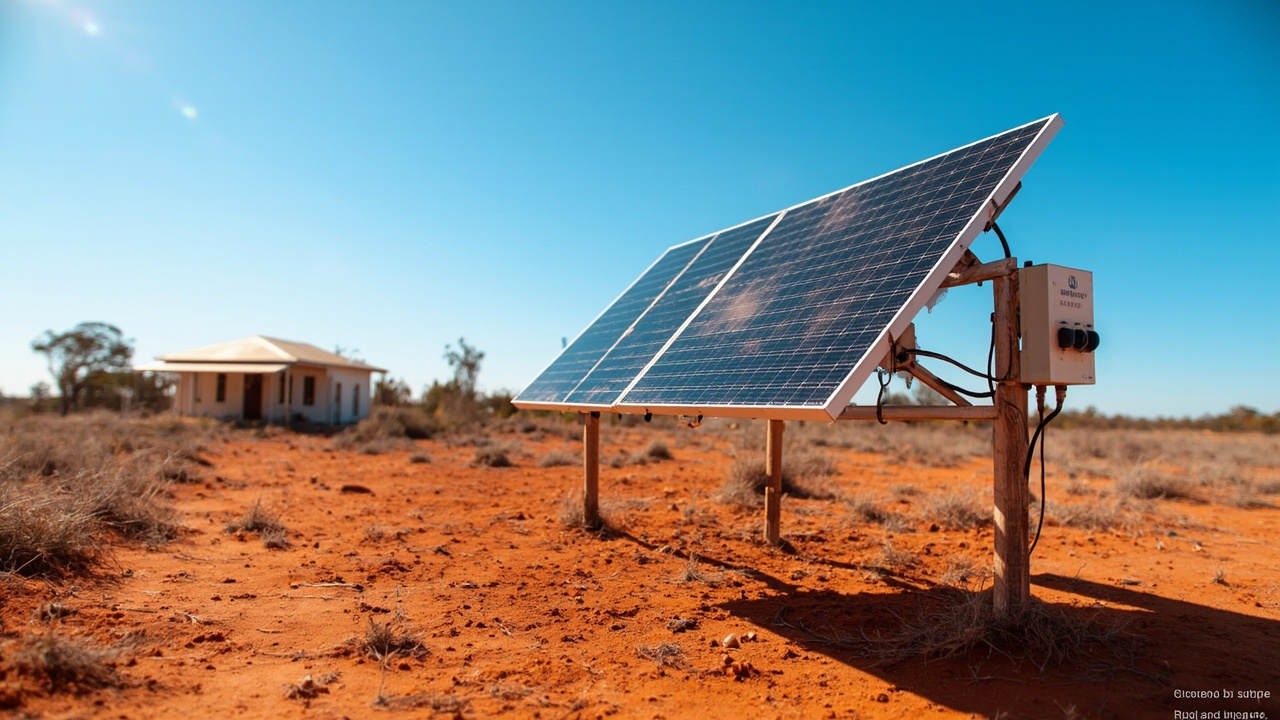
My 800W to 1kW Starter System for Off‑Grid Australia
On a tight budget, for a weekender, shed or temporary dwelling on an off‑grid block, I built a minimal‑but‑functional system in 2025/2026. Here’s what it looks like.
- Panels: 2 x 400W or 4 x 200W monocrystalline ($300 to $600)
- Charge controller: 30A MPPT ($100 to $250)
- Battery: 1 x 100Ah LiFePO4 12V ($400 to $700), giving roughly 1.2kWh usable
- Inverter: 2,000W pure sine wave ($200 to $500)
- Generator backup: 2,000W inverter generator ($600 to $1,500)
- Estimated total: $1,600 to $3,550 AUD
I run LED lights, charge phones and laptops, power a DC fridge, and keep Starlink online—40 to 75W—plus a few small appliances when the sun is high. Air conditioning, electric cooking, and any high‑draw power tools are out; for those jobs I’m stuck with gas, wood, or the generator.
Run the numbers on your specific appliance list with our solar calculator to see exactly how a small system maps to your usage patterns.
The efficiency upgrades I made paid for themselves
Before spending money on more panels or bigger batteries, consider these investments that reduce your energy needs:
- Insulation: Properly insulating your dwelling reduces heating and cooling loads by 40% to 70%. In a container or shed conversion, adding 50mm of rigid foam board to walls and ceiling costs $500 to $1,000 and pays for itself within the first winter.
- Gas hot water: An instantaneous gas hot water system costs $800 to $1,500 installed and eliminates the need for 3 to 5kWh of daily electrical hot water heating.
- Chest freezer as fridge: A 200L chest freezer with an external thermostat controller costs under $400 and uses 30% to 50% less power than a standard fridge.
- 12V LED lighting: Running lights directly on 12V DC from the battery eliminates inverter losses. A complete 12V LED lighting kit for a small dwelling costs $50 to $150.
- Thermal mass cooking: A thermal cooker (like a Thermos Shuttle Chef) lets you bring food to the boil on the stove, then transfer it to an insulated container where it continues cooking for hours using retained heat. Zero ongoing energy input.
What 800W Did for My Family’s Carbon Footprint
Most blokes skip this bit, but it’ll bite you hard. I’ve seen a big off‑grid rig that’s not automatically green just because it runs on the sun. Those panels cost a fortune in mined silicon, silver, and aluminium. My lithium batteries eat up cobalt and a massive chunk of power to manufacture. That 20 kWh bank you’re bragging about? The environmental hit from churning that out is no joke.
In my experience, a small, efficiency‑first rig slashes the impact. Three panels and one small battery carry a vastly lower manufacturing footprint than thirty panels and ten large batteries. If you want genuine environmental sustainability instead of just “free” power, the efficiency‑first path is the only honest way.
Size Supply To Match Demand
Large systems aren’t a mistake when you need a workshop, keep the air‑con running in 40‑degree heat, or feed a family of six. I start by cutting demand first, then I size the supply to match. Most people do it the other way—keep every appliance, keep every habit, then bolt on a huge system to cover it.
My Generator Reality Check
The family's advice on generators is worth emphasising: buy quality, and budget for it from day one.
I’ve been running a family of four off‑grid for ten years on 800W of solar in central QLD. A cheap $300 to $500 no‑name generator usually conks out in months, cannot be repaired because parts are unavailable, and ends up in landfill. My Honda 5000W has run faultlessly for the entire decade. The per‑year cost of the Honda works out to a fraction of replacing cheap generators every 1 to 2 years.
Worth Knowing
In central Queensland I run Honda and Yamaha inverter generators—they’re the reliable workhorses. For a small off‑grid system, a 2,000‑3,000 W inverter generator is enough. Expect to pay $1,500 to $3,000; with regular oil changes, fresh spark plugs and a quick air‑filter clean the unit will keep running for 10‑15 years.
Key Takeaways
- Efficiency first, capacity second. Reduce your energy needs before sizing your system. Every watt you do not need is a watt you do not have to generate, store, or pay for.
- Gas and wood handle the heavy lifting. Cooking, water heating, and space heating are far more efficiently done with gas or wood than electricity. This dramatically shrinks your required solar and battery capacity.
- Small systems teach discipline. The habits developed on a tiny system persist even after upgrading. This family's consumption on their new, much larger system is still 70% below the national average.
- Lead batteries have a lifespan. Plan for battery replacement at 5 to 8 years with lead-based chemistry, or invest in LiFePO4 from the start for 10+ years of service.
- A quality generator is mandatory. Even with the best solar system, there will be times you need backup power. Buy once, buy well.
- Simplicity is its own reward. Less stuff means less maintenance, less storage, less cost, and often, more contentment.
What I installed and why it lasted
Here's what I've used to keep a tight, high‑efficiency off‑grid setup:
- Efficient DC Fridge (12V Compressor): Purpose-built for off-grid use, these run directly on 12V or 24V DC, eliminating inverter conversion losses. Look for models with adjustable thermostat and low-wattage compressors.
- 12V LED Lighting Kit: Run your lights directly from the battery without inverter losses. Warm white LEDs in the 2700K to 3000K range create a comfortable ambience while drawing minimal power.
- Gas Cooking Appliances (LPG): A quality gas cooktop or camp stove handles all your cooking needs without touching your solar system. Look for dual or triple burner models with piezo ignition.
- Wood Stove (Small Combustion): A compact wood burner for heating, cooking, and water heating. Some models include a wetback for connecting to a hot water cylinder. Essential for cold-climate off-grid living.
- Small Solar Panel Kit (200W): Perfect for a starter system, weekender, or secondary building. Portable kits with folding panels and built-in charge controller make setup quick and easy.
Prices and availability vary. For efficiency-first off-grid living, investing in quality appliances that draw less power will always outperform investing in more panels and batteries.
Worth a watch: Jayco Expanda Outback Off-Grid 800 w Solar · David Stinton
Disclosure: some links in this article are affiliate links. If you buy through them we may earn a small commission at no extra cost to you.